
Podcast
Huberman Lab book recommendations
The Huberman Lab podcast is hosted by Andrew Huberman, Ph.D., a neuroscientist and tenured professor in the department of neurobiology, and by courtesy, psychiatry and behavioral sciences at Stanford School of Medicine. The podcast discusses neuroscience and science-based tools, including how our brain and its connections with the organs of our body control our perceptions, our behaviors, and our …
Recently mentioned books
-
The Lancet
-
Leisure, the Basis of Culture
-

A Fighter's Heart
-
Immortality
-
10 to 25
-
The Self-driven Child
-

Awakenings
-
The Creative Act
-
What Emotions Really Are
-
The Neuroscience of Emotion
-
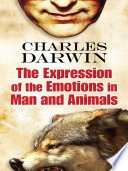
The Expression of the Emotions in Man and Animals
-

The Variations of Animals and Plants Under Domestication, Volume 1
-
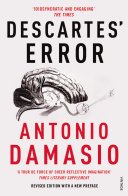
Descartes' Error
-
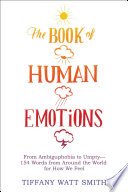
The Book of Human Emotions
-
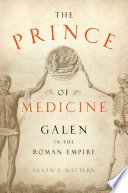
The Prince of Medicine
-
The Fertility Formula
-
Attention Span
-
Lithium Salts in the Treatment of Psychotic Excitement
-
The Psychology of Money
-
The Art of Spending Money
Most recommended on Huberman Lab
-
Dopamine Nation
Dr. Anna Lembke's Dopamine Nation was frequently recommended by host Andrew Huberman on the Huberman Lab podcast during episodes in 2022, 2023, 2024, and 2025. Huberman praised the book for elucidating the biological mechanisms of addiction, explaining how rapid dopamine spikes lead to tolerance and lower baseline levels, and framing addiction as a neurochemical disruption rather than a mere lack of willpower.
Discussed“Well, you may be encouraged to learn that um the great Anna Lembke, my colleague at Stanford, right an MD and psychiatrist like you who wrote Dopamine Nation has a book”
Where to get it
-
Why We Sleep
On the Huberman Lab podcast, host Andrew Huberman repeatedly recommended Matthew Walker's book, Why We Sleep, crediting it with shifting public consciousness away from a dismissive attitude toward rest and toward recognizing sleep as vital for mental and physical health. Huberman integrated Walker's research and findings from the book into episodes on learning, caffeine, alcohol, and overall physiological performance.
Discussed“Matt Walker, UC Berkeley with the book Why We Sleep transformed what we now understand and I and others have been, you know, arguing that people need sleep.”
Where to get it
-
Altered Traits
On the Huberman Lab podcast, Andrew Huberman frequently praised and recommended Daniel Goleman and Richard J. Davidson's 'Altered Traits', referencing it alongside guest Richard Davidson to explain the neuroscience and brain plasticity changes driven by meditation.
Discussed“There was a paper I wrote many, many years ago with my dear friend and colleague um Daniel Goleman, who I wrote the book Altered Traits with.”
Where to get it
-
Deep Work
Cal Newport's book "Deep Work" was discussed on Huberman Lab in several episodes between 2021 and 2025. Andrew Huberman expressed admiration for the book, noting its positive influence on his work life and its strategies for minimizing distractions and avoiding constant context switching. Guest Dr. Marc Berman mentioned the book while discussing the need for separate office spaces dedicated strictly to focused work, and future guest Cal Newport appeared on the podcast to discuss how the book's concepts influence his thoughts on productivity.
Discussed“I don't know if Kale Newport talks about this in his deep work, but, you know, I've heard people talking about in an office, you might want to have like a separate area of your office for deep work.”
Where to get it
-
The 4-hour Chef
On the Huberman Lab podcast, Timothy Ferriss's book The 4-Hour Chef was repeatedly highlighted as a valuable resource. Host Andrew Huberman and recurring guest Dr. Justin Sonnenburg recommended the book across several episodes for its sauerkraut recipe and practical instructions on fermenting cabbage at home. Huberman also praised Ferriss's foresight regarding nutrition and skill acquisition trends, noting that many concepts in the book have been supported by scientific data.
Recommended“I'll just refer people to a resource in Tim Ferriss's book, The 4-Hour Chef. He actually gives an excellent recipe for making your own sauerkraut”
Where to get it
-
The Creative Act
Rick Rubin's book 'The Creative Act: A Way of Being' came up on multiple episodes of Huberman Lab in late 2022 and late 2023. Host Andrew Huberman enthusiastically recommended the title to his listeners, sharing that he had read it multiple times and found it exceptionally rich with wisdom applicable to everyday life. Huberman discussed the unique structure of the book and how it illuminates fundamental aspects of human creativity, urging his audience to explore its digestible chapters.
Discussed“As I went into your book, the example that you give, this idea that ideas and creativity are a little bit like a cloud.”
Where to get it
-
A Fighter's Heart
Sam Sheridan's A Fighter's Heart was recommended and discussed by host Andrew Huberman on Huberman Lab. Huberman praised the book as an insightful exploration of martial arts and recommended it for its examination of the human spirit and the deep bonds formed through shared physical struggle.
Recommended“There's a great book by a guy named Sam Sheridan uh called A Fighter's Heart. He's actually a Harvard grad. Yeah. I think he was an art major there. His dad was a Navy Seals.”
Where to get it
-
Jaws
On Huberman Lab, Andrew Huberman and guest Dr. Staci Whitman discussed the book Jaws by Sandra Kahn and Paul R. Ehrlich during episodes focused on oral microbiome, facial development, and airway health. The hosts highlighted the book's exploration of nasal versus mouth breathing and its impact on jaw structure.
Discussed“and then of course the book Jaws which was published by Paul erck and Sandra Khan my amazing colleagues at Stanford years ago”
Where to get it
-
The Molecule of More
On Huberman Lab, host Andrew Huberman repeatedly recommended and discussed The Molecule of More by Daniel Z. Lieberman and Michael E. Long across several episodes from 2021 to 2025. Huberman highlighted the book as an essential read for understanding dopamine pathways, motivation, and everyday pursuit, while also exploring the concept of Here and Now molecules.
Discussed“so we're going to talk about all all of those in the book The molecule of more wonderful book”
Where to get it
-
Trauma : the Invisible Epidemic
On Huberman Lab, Andrew Huberman repeatedly recommended Dr. Paul Conti's book, Trauma: The Invisible Epidemic, praising it as a definitive and exceptional resource for understanding trauma, its features, and its treatment options.
Recommended“And for your book, which is incredible, I will go on record saying I think this is the definitive book on trauma and I really encourage people to to read it and will continue to encourage people to read it.”
Where to get it
-
Breath
On Huberman Lab, Andrew Huberman, Dr. Staci Whitman, and other hosts recommended James Nestor's Breath: The New Science of a Lost Art. The speakers discussed the book while highlighting the benefits of nasal breathing, exploring airway health, and examining how modern habits contribute to shrinking jaws and changing facial structures.
Discussed“James now um phrases it were dis evolving okay so faces are shrinking Jaws are shrinking”
Where to get it
-
Mindset
The book Mindset by Carol S. Dweck came up across multiple episodes of Huberman Lab. In the January 24, 2022 episode, Dr. Alia Crum referenced the concept of a growth mindset as a familiar example of how beliefs shape motivation. Later, in the March 27, 2023 and April 8, 2024 episodes, Andrew Huberman discussed Dweck's groundbreaking research and the origins of the growth mindset terminology. In the July 17, 2023 episode, Huberman also examined a foundational study on the topic co-authored by Dweck and Claudia Mueller.
Discussed“So this is the essence of growth mindset long before Carol Dweck coined the phrase 'growth mindset.'”
Where to get it
-
Spark
Spark by John J. Ratey and Eric Hagerman was discussed across multiple episodes of Huberman Lab. Andrew Huberman and guests like Coleman Ruiz referenced the book as an early academic work exploring brain plasticity, movement, and the relationship between exercise and cognitive function, with Huberman also recommending reading from paper to enhance focus.
Discussed“There's this idea that was at least to me first put forth in a book called Spark. Do you know John Ratey's book? It's some It's you know, came out some years ago. He's a a physician. Believe it trained at Harvard Med.”
Where to get it
-
The Body Keeps the Score
Bessel van der Kolk's book The Body Keeps the Score was discussed on the Huberman Lab podcast by host Andrew Huberman and guests like Dr. Lisa Feldman Barrett and Coleman Ruiz. The speakers acknowledged the catchy and pioneering impact of the book's title regarding trauma, while also discussing and clarifying scientific nuances surrounding how trauma is processed and represented across the brain and body.
Discussed“I think it that whole verbiage comes from this notion and the quite pioneering although I would say somewhat outof-date book the body keeps the score I think is it was an important book best title of any book you could imagine in the psychology space because it's so catchy am and I want to give proper respect to um”
Where to get it
-
The Comfort Crisis
Michael Easter's book 'The Comfort Crisis' was frequently discussed and endorsed on 'Huberman Lab' by host Andrew Huberman and the author. Huberman shared that reading the book fundamentally changed his daily life, inspiring him to incorporate practices like rucking and doing hard things voluntarily. Huberman and Easter also discussed themes from the book, including how modern sedentary life reduces natural energy expenditure, the value of silence, and Easter's thirty-day research trip to the Arctic.
Discussed“Michael Easter is is at a university out in Las Vegas and he got access to one of these. And he wrote the comfort crisis about getting outdoors, getting away from things and basically carrying weight on your back and walking as a therapy of sorts.”
Where to get it
-
Wherever You Go, There You Are
Andrew Huberman and his guests on Huberman Lab frequently referenced Jon Kabat-Zinn's book 'Wherever You Go, There You Are' to illustrate mindfulness, presence, and meditation practices. Huberman shared that he was first introduced to meditation through this book during high school as part of a program. Rick Rubin also named it as his favorite book about meditation during a discussion on health and thought stimulation, highlighting its impact on his perspective toward mindfulness.
Discussed“Many years ago, I read the book by Jon Kabat-Zinn, "Wherever You Go, There You Are."”
Where to get it
-
A World Without Email
Cal Newport's book A World Without Email was discussed on the Huberman Lab podcast by host Andrew Huberman. Huberman praised the work alongside the author's previous publication, Deep Work, highlighting the career, relationship, and personal value of reducing constant distractions and context switching.
Discussed“We have a future guest on this podcast named Cal Newport; he wrote the book Deep Work, and he has another book called The World Without Email. He's a computer science professor at Georgetown where he talks extensively about the tremendous career, but also relationship and life value of doing essentially what you're describing.”
Where to get it
-
Outlive
On Huberman Lab, Andrew Huberman repeatedly recommended Peter Attia and Bill Gifford's book Outlive: The Science and Art of Longevity. Huberman stated that he had read the book cover to cover multiple times, praised its focus on health span and longevity, highlighted its extensive section on emotional health and personal well-being, and noted its crucial role in counteracting the aging process through training.
Discussed“your book outlive beautifully covered these and I tend to regurgitate some of what you say on this podcast”
Where to get it
-
Projections
On Huberman Lab, Karl Deisseroth's Projections was recommended by Andrew Huberman, who praised the book for combining scientific rigor with compelling storytelling about the brain. Huberman and guest Sam Harris also discussed the text during explorations of consciousness, psychiatry, and narrative writing.
Recommended“it's a wonderful it's it's a masterful book really and one that as a scientist and um somebody who is a bra uh fellow brain explorer uh hits all the marks of of rigor and is incredibly interesting and there's a ton of storytelling. Definitely uh check out the book.”
Where to get it
-
The 4-Hour Body
On Huberman Lab, Andrew Huberman and guest Tim Ferriss discussed The 4-Hour Body across multiple episodes. Huberman praised Ferriss for being ahead of nutrition trends and noted that he owns the book and listens to its Blinkist version. Ferriss talked about the Slow Carb Diet, the 'Damage Control' chapter, and his mindset while writing the protocols.
Discussed“My first question for you is about your mindset around the time that you wrote The 4-Hour Body and The 4-Hour Work Week, but in particular, The 4-Hour Body, because the protocols in that book are so very useful.”
Where to get it
-
The Circadian Code
On Huberman Lab, host Andrew Huberman recommended Satchin Panda's book The Circadian Code to listeners seeking to optimize their sleep, energy, and health. Huberman highlighted the book while discussing the physiological benefits of time-restricted feeding, intermittent fasting, and meal timing. He frequently referenced Panda's expertise as a former colleague at the Salk Institute, directing his audience to the text for evidence-based guidance on circadian rhythms.
Recommended“Those books include 'The Circadian Code' and a more recent book, 'The Circadian Diabetes Code,' both of which we've provided links to in the show note captions.”
Where to get it
-
The Denial of Death
On Huberman Lab, Andrew Huberman recommended Ernest Becker's Pulitzer Prize-winning book The Denial of Death, describing it as a genuinely difficult read that explores the central thesis that human behavior is driven by the fear of death. Huberman later referenced the book in relation to how people's perception of time changes near the end of life, and guest Ari Wallach cited the work to explain how cultural artifacts serve as psychological defenses against mortality.
Discussed“Um you know if you read uh the denial of death you learn about this.”
Where to get it
-
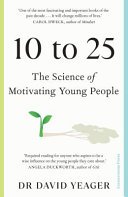
10 to 25
David Yeager's book 10 to 25 was discussed on Huberman Lab. Host Andrew Huberman introduced Yeager as the author of the text, highlighting its focus on social appraisal, self-appraisal, and the science of motivating young people. Additionally, guest Joe Liemandt referenced the book to explain how high-standards and high-support frameworks can be successfully implemented in education.
Recommended“his book 10 to2 the science of motivating kids is all about high standards and high support and it is that combination that you want from a school”
Where to get it
-
5 Types of People Who Can Ruin Your Life
On Huberman Lab, Andrew Huberman discussed Bill Eddy's book 5 Types of People Who Can Ruin Your Life. Huberman shared that he tore through the book after a trusted acquaintance recommended it, and he praised the work, ultimately recommending it to listeners seeking guidance on dealing with high-conflict individuals.
Discussed“Bill Eddie was on this podcast. He's a therapist and lawyer and he wrote the book uh I think it was like five types of people that will ruin your life.”
Where to get it
-
Awakenings
On Huberman Lab, Dr. Masud Husain mentioned Oliver Sacks's Awakenings while discussing the history and neurological application of L-dopa for conditions like Parkinson's disease. Andrew Huberman also referenced Sacks and his famous case studies during a broader conversation on behavioral traits.
Discussed“So initially we tried Leodopa L-dopa which is the drug that Oliver Saxs describes in Awakenings and many people have seen the film and it's used a lot in Parkinson's disease for treatment.”
Where to get it
-
Best-Selling Series by Dr. Anna Lembke. Dopamine Nation Finding Balance in the Age of Indulgence (hardcover) & the Official Dopamine Nation Workbook. a Practical Guide to Finding Balance in the Age of Indulgence (paperback)
Dr. Anna Lembke's book Dopamine Nation: Finding Balance in the Age of Indulgence was featured on Huberman Lab. Andrew Huberman recommended the book during episodes on August 16, 2021, and September 27, 2021, praising it as fantastic for understanding dopamine, pleasure, and addiction. Huberman also referenced the book during his interview with Lembke to discuss paths to recovery from addiction.
Recommended“Has this amazing book, Dopamine Nation: Finding Balance in the Age of Indulgence. If you haven't read the book, I highly encourage you to check it out. It's fantastic.”
Where to get it
-
Chatter
Andrew Huberman mentioned Ethan Kross's book on Huberman Lab while discussing a forthcoming work by the same author and directing listeners to show notes. A host also brought up the book to discuss negative self-talk and inner dialogue.
Discussed“I'm also excited to tell you that Dr Ethan cross soon has another book coming out entitled shift managing your emotions so they don't manage you and I tremendously enjoyed chatter his first book and I very much look forward to reading shift when it comes out”
Where to get it
-
How Emotions Are Made
Lisa Feldman Barrett's book How Emotions Are Made was discussed on Huberman Lab by host Andrew Huberman and the author herself across multiple episodes. Huberman praised the work as a wonderful guide for understanding emotions and the brain. Feldman Barrett shared that she originally wrote the book to convey important emotional knowledge for both herself and her daughter.
Recommended“The first one is entitled 'How Emotions Are Made,' and the second book, which includes information about emotions but extends beyond that, is entitled 'Seven and a Half Lessons About the Brain.'”
Where to get it
-
Longitude
On Huberman Lab, Andrew Huberman recommended Dava Sobel's book Longitude as an essential read for anyone interested in why modern society functions the way it does. Huberman shared that he previously taught the book for four years, describing it as a wonderful story about the discovery and development of timekeeping devices.
Recommended“an important book for anyone to read who's interested in basically why we”
Where to get it
-
Mastery
On the Huberman Lab podcast, Andrew Huberman frequently recommended Mastery by Robert Greene, placing it among his top book suggestions. Huberman shared that he first encountered Greene's insights through this text, praising it as a practical guide for discovering and pursuing one's purpose and understanding the importance of mentorship.
Discussed“I first learned about Robert's work from reading the book Mastery, which to my mind is a brilliant exploration and a practical tool for how to think about and pursue one's purpose.”
Where to get it
-
On Death and Dying
On Huberman Lab in episodes addressing grief, Andrew Huberman discussed Elisabeth Kübler-Ross's famous book On Death and Dying. Huberman cited the psychologist's pioneering work to address myths and misunderstandings regarding grief and to outline the recognized stages of denial, anger, bargaining, depression, and acceptance.
Discussed“Some of the myths and misunderstanding arrive from the beautiful work of Elizabeth Kubler-Ross, a psychologist who wrote the famous book on death and dying. The different stages of grief very quickly are denial, anger, bargaining, depression, and acceptance.”
Where to get it
-
Relax Into Stretch
On Huberman Lab, Andrew Huberman discussed Pavel Tsatsouline's book Relax Into Stretch. Huberman praised the book's core concept, highlighting how the nervous system and mental state inhibit natural flexibility and how progressive relaxation and muscular contraction can improve mobility. He noted that these stretching techniques have long roots in martial arts circles.
Discussed“I love your book relax into stretch I think it's a really important concept this idea that the nervous system and our mental state is preventing inhibiting a good amount of our natural flexibility that we can work with the mental state and Progressive relaxation and contraction of muscles and related tissues to”
Where to get it
-
Seven and a Half Lessons about the Brain
Lisa Feldman Barrett's book Seven and a Half Lessons about the Brain was featured on Huberman Lab. Host Andrew Huberman recommended the book as a wonderful and more recent follow-up to her earlier work, How Emotions Are Made, and discussed it with the author while exploring emotions and broader concepts of brain function.
Recommended“The first one is entitled 'How Emotions Are Made,' and the second book, which includes information about emotions but extends beyond that, is entitled 'Seven and a Half Lessons About the Brain.'”
Where to get it
-
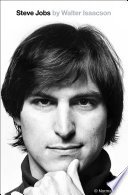
Steve Jobs
Walter Isaacson's biography of Steve Jobs came up on two episodes of Huberman Lab. In October 2024, the host discussed the book with Ari Wallach, reflecting on how Steve Jobs appeared to have a clear sense of his own mortality. Later, in October 2025, Andrew Huberman and Steven Pressfield discussed the title during the episode "How to Overcome Inner Resistance," with Huberman praising the biography as spectacular and noting his personal interest in the subject.
Discussed“I've listened to and read Steve Jobs' biography. - Mm. - And I think it's spectacular. I had a particular interest in it because- - What's the title? Because I've never read it. - I think it's "Steve Jobs" - Oh, I see. - by Walter Isaacson.”
Where to get it
-
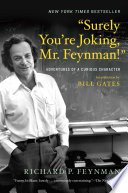
Surely You're Joking, Mr. Feynman!
On Huberman Lab, Andrew Huberman referenced Richard Feynman's autobiographical book to illustrate a playful spirit and lifelong tinkering. In another episode, Huberman cited Feynman's book to argue that understanding the physical world at a reductionist level adds to, rather than detracts from, a sense of beauty.
Recommended“If you read any of the books about Fineman or by Fineman, surely you're joking, Mr. Fineman or what do you care what other people think?”
Where to get it
-
The Anxious Generation
On Huberman Lab, Dr. Read Montague discussed The Anxious Generation by Jonathan Haidt in a February 2026 episode while addressing modern challenges and smartphone use. Host Andrew Huberman also referenced the book later that year in October 2024, connecting Haidt's insights on technology to discussions about human cognitive focus.
Discussed“I have just read this book the anxious generation.”
Where to get it
-
The Art of Spending Money
On the Huberman Lab podcast, Andrew Huberman mentioned Morgan Housel's book The Art of Spending Money during discussions centered on personal finance, money management, and future perspectives.
Discussed“but also his second book u the art of spending money.”
Where to get it
-
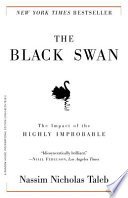
The Black Swan
On the Huberman Lab podcast, Andrew Huberman discussed Nassim Nicholas Taleb's book, The Black Swan, across multiple episodes, specifically in "The Science & Treatment of Bipolar Disorder" in July 2022 and "Therapy, Treating Trauma & Other Life Challenges" in June 2022. Huberman expressed his appreciation for the work, noting that it served as a valuable source of knowledge. He mentioned that it was a book he owned and had previously read, and that he occasionally listened to the Blinkist version for its key takeaways.
Recommended“For example, I'm a fan of Tim Ferris's *4-Hour Body*, which has provided me with much knowledge, as well as Nassim Taleb's *The Black Swan* and Matt Walker's *Why We Sleep*, the latter being a book I've read several times and frequently listen to summaries of on Blinkist due to the many takeaways it offers.”
Where to get it
-
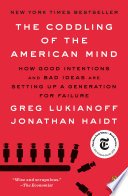
The Coddling of the American Mind
On the Huberman Lab, Andrew Huberman mentioned 'The Coddling of the American Mind' by Greg Lukianoff and Jonathan Haidt while discussing how technology and interactions impact human cognitive abilities and focus.
Discussed“But I think between what you're saying and what Jonathan Haidt, who was on this podcast, the author of 'Anxious Generation,' 'Coddling of the American Mind,' professor at NYU, etc., has said, I'm starting to really believe that, yes, the human brain can focus on past, present, or future, or some combination, but that something about the architecture of our”
Where to get it
-
The Creative Habit
The Creative Habit by Twyla Tharp was discussed on the Huberman Lab podcast by host Andrew Huberman. Huberman recommended the book, stating that it inspired him to host Tharp on the show and praising how it outlines schedules, habits, and routines to foster creative expression. He also referenced the book while discussing spontaneous movement and aging during a conversation with Dr. Christof Koch.
Recommended“I knew I wanted to host Twilight on this podcast after listening to her book, The Creative Habit, where she spells out how to build a schedule, habits, and routines that make your best creative expressions come to life.”
Where to get it
-
The Development of the Unconscious Mind (Norton Series on Interpersonal Neurobiology)
On the Huberman Lab podcast, Andrew Huberman referenced the work of Allan N. Schore while discussing social bonding and neuroscience. In episode #59, Huberman reached for Schore's book 'Right Brain Psychotherapy', describing it as wonderful and technical. Similarly, in episode #51, the host recommended Schore's educational videos and his accessible book 'Right Brain Psychotherapy', praising it for its excellent references and insights into interpersonal neurobiology and attachment.
Recommended“I'm looking down briefly at the floor here because I'll just reach for the book. He has a wonderful book called 'Right Brain Psychotherapy.'”
Where to get it
-
The Emperor of All Maladies
On Huberman Lab, Dr. Alex Marson and Dr. Mark Hyman discussed Siddhartha Mukherjee's The Emperor of All Maladies. Dr. Marson recommended the book as a comprehensive biography detailing the long history of cancer as a disease.
Recommended“If anyone's really interested, I would highly recommend the this book The Emperor of All Maladies, which is a which is really a biography of cancer as a disease and talk about I mean, the long history of going back as far as there's records of tumors of various kinds and and the misery associated with that.”
Where to get it
-
The Expression of the Emotions in Man and Animals
Charles Darwin's The Expression of the Emotions in Man and Animals was referenced on Huberman Lab by guests Ralph Adolphs and Dr. Dacher Keltner. They discussed Darwin's contributions to understanding human emotion, specifically referencing his insights on the principle of antithesis, valence, and the annotation of expressive behaviors.
Discussed“Some are further apart and the simplest dimension which is one that Charles Darwin already mentioned in his book the expression of the emotion in man and animals he called it principle of antithesis is veilance which is approach or avoid pleasant or unpleasant this basic veilance dimension.”
Where to get it
-
The Nature of the Beast
On Huberman Lab, host Andrew Huberman repeatedly recommended 'The Nature of the Beast: How Emotions Guide Us' by David J. Anderson and Ralph Adolphs. Huberman praised the book as a scientifically grounded and crucial read for understanding emotions, contrasting its findings with common psychological myths.
Recommended“I have read this book several times and can tell you that it contains numerous insights firmly grounded in scientific research.”
Where to get it
-
The Prince of Medicine
On Huberman Lab, Andrew Huberman recommended Susan P. Mattern's The Prince of Medicine. He mentioned the book as a resource to learn about early, barbaric medical practices involving Galen, and suggested it to listeners interested in detailed historical topics.
Recommended“wonderful book, by the way, folks is the Prince of Medicine about Galen, if you ever want to learn about how we learned about medicine back when it was truly barbaric.”
Where to get it
-
The Psychology of Money
Morgan Housel's The Psychology of Money was discussed and recommended across episodes of Huberman Lab in late 2024 and 2026. Host Andrew Huberman expressed high praise for the book, noting that he read and loved its insights into financial decision-making. Huberman recommended both The Psychology of Money and Housel's subsequent book, Same as Ever, to listeners while exploring themes related to the psychology surrounding money and happiness.
Recommended“Morgan Howell, who did a really wonderful episode on the psychology of money. Um, and I I really love his first book”
Where to get it
-
The Salt Fix
On the Huberman Lab podcast, host Andrew Huberman brought up Dr. James DiNicolantonio's book The Salt Fix across multiple episodes. He cited the book to support the claim that increasing salt intake while consuming relatively unprocessed foods can vastly reduce sugar cravings. Huberman praised the title as an interesting read that challenges conventional narratives about sodium, providing detailed insights into the physiological relationships between salt, potassium, and sugar consumption, as well as the rationale behind various dietary recommendations.
Recommended“and indeed many people find, and it's a reviewed a bit, and some of the data are reviewed in the book The Salt Fix, that when people increase their salt intake in a backdrop of relatively unprocessed foods, that sugar cravings can indeed be vastly reduced”
Where to get it
-
The Secret Pulse of Time
On Huberman Lab, Andrew Huberman recommended Stefan Klein's The Secret Pulse of Time. He discussed the book in relation to human time perception and mentioned it while exploring how perception changes during experiences like grief and dying.
Recommended“There's a wonderful book, um, in addition to yours. Uh, there turns out there's another great book out there. Um, How dare someone No no audio version, but it's called The Secret Pulse of Time, and it's about time perception.”
Where to get it
-
The Spinal Engine
Serge Gracovetsky's The Spinal Engine was brought up on the Huberman Lab podcast by host Andrew Huberman and guest Dr. Kelly Starrett. The speakers discussed the book's conceptual framework, which emphasizes the human trunk as a primary driver of power in movement rather than merely a supporting chassis, and noted how its exploration of ancient movement patterns continues to influence modern kinesiology.
Discussed“a book that makes the rounds from time to time is a book called the spinal engine by Serge grovy and he really talks about the trunk as a driver of power”
Where to get it
-
The Variations of Animals and Plants Under Domestication, Volume 1
On the Huberman Lab podcast, Charles Darwin's work "The Variations of Animals and Plants Under Domestication, Volume 1" was referenced by guests Ralph Adolphs and Dr. Dacher Keltner. The speakers cited Darwin's observations on emotional expression and the principle of antithesis to discuss the neuroscience of valence and human emotions.
Discussed“Some are further apart and the simplest dimension which is one that Charles Darwin already mentioned in his book the expression of the emotion in man and animals he called it principle of antithesis is veilance which is approach or avoid pleasant or unpleasant this basic veilance dimension.”
Where to get it






Guests who recommended books
- Jordan Peterson (12)
- Coleman Ruiz (9)
- Dr. Staci Whitman (7)
- Ralph Adolphs (6)
- Dr. Mark Hyman (6)
- Kelly Starrett (6)
- Michael Easter (5)
- Josh Waitzkin (5)
- Peter Attia (5)
- Rick Rubin (5)
- Ido Portal (4)
- Marc Andreessen (4)
- Richard Davidson (3)
- Dr. Bernardo Huberman (3)
- Robert Greene (3)
- Tim Ferriss (3)
- Noam Sobel (3)
- Arthur Brooks (2)
- Joe Liemandt (2)
- Dr. Dacher Keltner (2)
- Dr. Alex Marson (2)
- Alan Aragon (2)
- James Sexton (2)
- Ryan Soave (2)
- Lori Gottlieb (2)
- Dr. Laurie Santos (2)
- Dr. Shanna Swan (2)
- Ari Wallach (2)
- Jamil Zaki (2)
- Martha Beck (2)
- Diego Bohórquez (2)
- David Yeager (2)
- Dr. Lisa Feldman Barrett (2)
- Chris Voss (2)
- Maya Shankar (2)
- Susanna Søberg (2)
- David Buss (2)
- Anna Lembke (2)
- Lex Fridman (2)
- Dr. Chris Thompson (1)
Latest mentions
“the World Health Organization published something in the Lancet years ago on fiber fiber synthesis I think they called it and they found that the vast majority of population really doesn't especially western countries just are not getting enough fiber”
“and and the greatest writer about this is Yseph Peeper the the mid 20th century German philosopher his most important book was leisure the basis of culture that's his most inflecting”
“There's a great book by a guy named Sam Sheridan uh called A Fighter's Heart. He's actually a Harvard grad. Yeah. I think he was an art major there. His dad was a Navy Seals.”
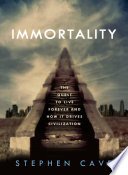
“I mean Steven Cave at Cambridge has written a has a really beautiful book called immortality. Have you actually seen it? Have you read it?”
“his book 10 to2 the science of motivating kids is all about high standards and high support and it is that combination that you want from a school”
“there's a great book called um self-driven child that alpha parents read that you have basically six years right or seven years in middle and high school”
“So initially we tried Leodopa L-dopa which is the drug that Oliver Saxs describes in Awakenings and many people have seen the film and it's used a lot in Parkinson's disease for treatment.”
“As I went into your book, the example that you give, this idea that ideas and creativity are a little bit like a cloud.”
“Paul Griffith's philosopher wrote a book some years ago, I think 97 or so, what emotions really are, uh, where he first kind of made the claim that, well, they don't really exist”
“And so David Anderson and I did that in our book a decade ago or so now the neuroscience of emotion where we listed some features of emotions that helps to answer the question”
“Some are further apart and the simplest dimension which is one that Charles Darwin already mentioned in his book the expression of the emotion in man and animals he called it principle of antithesis is veilance which is approach or avoid pleasant or unpleasant this basic veilance dimension.”
“Some are further apart and the simplest dimension which is one that Charles Darwin already mentioned in his book the expression of the emotion in man and animals he called it principle of antithesis is veilance which is approach or avoid pleasant or unpleasant this basic veilance dimension.”
“If you have no emotions as we know from Antonio Damasio's original work in his book Daycart's error uh which he put out just as I was starting as a posttock in Iowa 1994”
“There's a great book uh Tiffany Watts Smith has a book I think it's called the book of human emotions which is basically like a little uh dictionary an entry from a toz of all the different emotion words in different languages”
“wonderful book, by the way, folks is the Prince of Medicine about Galen, if you ever want to learn about how we learned about medicine back when it was truly barbaric.”
“some fertility experts will also recommend other things. And for that, I'll just cue you to Natalie Crawford's excellent book on the titled the fertility formula as well as her podcast episode that she did with us”
“She wrote an an excellent book called Attention Span if anybody's like really interested in this.”
“And as all good physician scientists do, he wrote up his results. And he wrote it up in a paper entitled lithium salts in the treatment of psychotic excitement. Okay, back then they didn't call it mania, they called it psychotic excitement. This is a paper that was published September 3rd, 1949 in the Medical Journal of Australia, a classic”
“Morgan Howell, who did a really wonderful episode on the psychology of money. Um, and I I really love his first book”
“but also his second book u the art of spending money.”