

Person
Robert Greene books: every book Robert Greene wrote and recommended
Across 11 podcasts. Every show Robert Greene appears on, in one place — not just one.
Books by Robert Greene
-
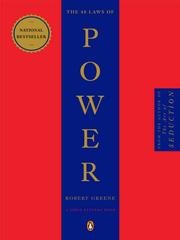
The 48 Laws of Power
-
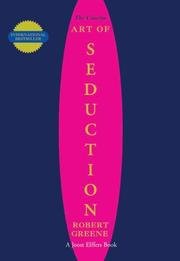
The Art of Seduction
-
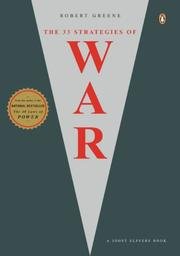
The 33 Strategies of War
-
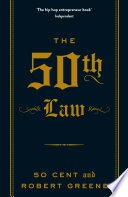
The 50th Law
-
The Laws of Human Nature
-
Mastery
-
The Daily Laws
Robert Greene’s most recommended books
- Frames Of Mind by Howard Gardner
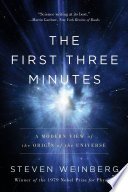
- The First Three Minutes by Steven Weinberg
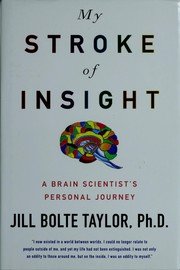
- My Stroke of Insight by Jill Bolte Taylor
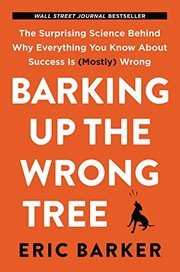
- Barking Up the Wrong Tree by Eric Barker
- by Unknown
- Desert Solitaire by Edward Abbey
- Five Minds for the Future by Howard Gardner
- From Pieces to Weight by 50 Cent
- Ghost Town Living by Brent Underwood
- Homo Ludens by Johan Huizinga
Robert Greene is an American author of books on strategy, power, and seduction who has written seven international bestsellers, including 'The 48 Laws of Power', 'The Art of Seduction', 'The 33 Strategies of War', 'The 50th Law', 'Mastery', 'The Laws of Human Nature', and 'The Daily Laws'. During various podcast appearances, Greene recommended several foundational and inspiring books. He highly recommended J.A. Baker's 'The Peregrine', noting its status as a favorite of filmmaker Werner Herzog, and he recommended Brent Underwood's 'Ghost Town Living'. Greene also suggested Edward Abbey's 'Desert Solitaire' for its beautiful and sublime prose, and he referred listeners to Howard Gardner's 'Frames of Mind' to explain the distinct types of human intelligence. Furthermore, he recommended 50 Cent's autobiography, 'From Pieces to Weight', and praised Carol Tavris and Elliot Aronson's 'Mistakes Were Made (but Not by Me)' for its insights into accountability. Finally, Greene named Fyodor Dostoevsky's novel 'The Possessed' as one of his absolute favorites and recommended Roberto Calasso's 'The Ruins of Kos' as a brilliant philosophical work that stirs the soul.
Books recommended by Robert Greene
-
The 48 Laws of Power
The 48 Laws of Power by Robert Greene and Joost Elffers is a provocative guide examining historical strategies for acquiring and navigating power.
Discussed“He um actually had the 48 laws of power and um when he died his estate had the book and they auctioned it. Somebody bought it for $300,000.”
Where to get it
-
Mastery
Mastery by Robert Greene is a non-fiction book that explores the paths to true expertise by examining the lives of historical figures, contemporary masters, and the dynamics of mentorship.
Discussed“I talked in Mastery about Temple Grandin, who was born with severe autism. She was able to find her way to become an incredibly brilliant professor, academic, writer, and expert on animal behavior and autism. She found her way there, even when at three or four years old, she couldn't speak any language and was going to be hospitalized.”
Where to get it
-
Frames Of Mind
Frames of Mind by Howard Gardner is a landmark psychology text that introduces the theory of multiple intelligences, arguing that human cognitive capacity is better understood as a set of distinct faculties rather than a single general intelligence score.
Recommended“Well I like to refer people to this book by Howard Gardner called five frames of intelligence I think. I'm sorry, I might not have the title exactly right, but the point of this book is that there are five kinds of intelligence.”
Where to get it
-
The Art of Seduction
The Art of Seduction by Robert Greene is a psychological exploration of power dynamics, human desire, and the subtle strategies behind interpersonal charm and influence.
Discussed“that's a myth that I try to explode in The Art of Seduction”
Where to get it
-
The First Three Minutes
The First Three Minutes is a popular science book by physicist Steven Weinberg that details the current scientific understanding of the universe's formation during the first few moments after the Big Bang.
Recommended“you know like I read a book called the first three minutes which is about the first three minutes of the universe it's an Incredible Book”
Where to get it
-
My Stroke of Insight
My Stroke of Insight by Jill Bolte Taylor is a compelling memoir and scientific exploration detailing the author's personal experience of a severe stroke and her subsequent recovery.
Discussed“And so she wrote a book about that called My Stroke of Insight about how she found her ways somehow logically as a as a scientist back to those sensations she had during her stroke.”
Where to get it
-
Barking Up the Wrong Tree
Barking Up the Wrong Tree by Eric Barker is a popular psychology book that examines common assumptions about success, productivity, and human behavior through scientific studies and counterintuitive insights.
Recommended“um Eric Barker writes a fantastic blog and book of the same name barking up the wrong tree he says Clarity is violence”
Where to get it
-
John Gray's Seven Types of Atheism is a philosophical exploration examining how various secular ideologies and modern belief systems retain fundamentally religious and abrahamic roots.
Recommended“he has a book called The Ruins of Kos that's just one of the most brilliant books you'll ever read”
Where to get it
-
Desert Solitaire
Desert Solitaire is a famous autobiographical work by writer Edward Abbey that reflects on his experiences as a park ranger in southeastern Utah and offers a passionate defense of the American wilderness.
Recommended“I I told him to read this book called Desert Solitaire by the writer Edward Abby. It's a beautiful beautiful book and it's very sublime.”
Where to get it
-
Five Minds for the Future
Five Minds for the Future by Howard Gardner is an insightful non-fiction book that explores various forms of intelligence and provides valuable perspectives on mental capabilities required in a changing world.
Recommended“When you're very young, they direct you towards intellectual and mental pursuits as well, and there's a book I recommend for everybody—it's Howard Gardner's 'Five Frames of Mind.'”
Where to get it
-
From Pieces to Weight
From Pieces to Weight by 50 Cent is a raw and revealing autobiography detailing the famous rapper and entrepreneur's journey from street life in South Queens to mainstream music and business success.
Recommended“and he talks about it in his his really great autobiography from pieces to weight. I highly recommend that book.”
Where to get it
-
Ghost Town Living
Ghost Town Living by Brent Underwood is a non-fiction account detailing the author's experiences buying and living in the abandoned mining town of Cerro Gordo in California.
Recommended“He's amazing person and he wrote a book and I kind of helped him a little bit with the book called Ghost Town Living. I highly recommend this book. It's it's great.”
Where to get it
-
Homo Ludens
Homo Ludens by Johan Huizinga is a seminal historical and sociological study examining the crucial role of play in the formation of culture and human civilization.
Recommended“it's a book called homo ludens by Dutchman Johan henka written in like the 30s”
Where to get it
-
Human, All Too Human
Why people recommend it: Human, All Too Human by Friedrich Nietzsche is a profound collection of aphorisms and reflections that critically examine morality, human nature, and cultural norms.
Recommended“uh an early book called human all to human it's just the most amazing book”
Where to get it
-
In Search of the Miraculous
Why people recommend it: This profound spiritual and philosophical work details the teachings of George Gurdjieff, offering a pragmatic approach to self-awareness and inner transformation.
Recommended“He wrote a book called In Search of the Miraculous. So, I highly recommend people. And it's not woo-woo stuff. He was a very, very practical man.”
Where to get it
-
Longitude
Longitude by Dava Sobel is a historical non-fiction book that tells the dramatic story of John Harrison, an eighteenth-century clockmaker who spent decades developing the marine chronometer to solve the deadly navigational problem of determining longitude at sea.
Recommended“I taught it for four years, and one of the books was 'Longitude,' which is a wonderful story about the discovery of timekeeping devices.”
Where to get it
-
Machiavellis Virtue
Machiavelli's Virtue by Harvey Claflin, Jr.
Recommended“the if the my favorite book about makavelli is called Machiavelli's virtue by Harvey Mansfield it's a fantastic book”
Where to get it
-
Maps of Meaning
Maps of Meaning by Jordan B.
Recommended“Your maps of meaning was a very important book for me. I read it actually to help me with my war book, believe it or not.”
Where to get it
-
Mistakes Were Made (but Not by Me)
Mistakes Were Made (but Not by Me) by Carol Tavris and Elliot Aronson investigates the psychology of self-justification, exploring how the human brain distorts reality to protect the ego from acknowledging error.
Recommended“mistakes were made but not by me I recommend that book highly it came out about 10 years ago I think it's Elliot Aronson”
Where to get it
-
Principles of Neural Science, Fifth Edition
Principles of Neural Science, Fifth Edition by Eric R.
Recommended“One book I’ll leave as a mystery, not to be mysterious, but because it's a science book; I'll just tell you that it’s 'Principles of Neuroscience.'”
Where to get it

The other 25 books Robert Greene recommended or discussed, ranked
- The Peregrine by J. A. Baker
- The possessed by Фёдор Михайлович Достоевский
- A Clockwork Orange by Anthony Burgess
- Demons by Fyodor Dostoevsky
- Ego Is the Enemy by Ryan Holiday
- Enlightenment Now by Steven Pinker
- Frankenstein by Mary W. Shelley
- Journey To Ixtlan by Carlos Castaneda
- Leaders by Richard Nixon
- Lolita by Vladimir Nabokov
- Rules for Radicals by Saul Alinsky
- The 33 Strategies of War by Robert Greene
- The Better Angels of Our Nature by Steven Pinker
- The Daily Laws by Robert Greene
- The Dialogues of Plato by Plato
- The Fall of Public Man by Richard Sennett, Holly Stevens, Wallace Stevens
- The Laws of Human Nature by Robert Greene
- The Nineties by Chuck Klosterman
- The Odyssey by Homer
- The Origin of Consciousness in the Breakdown of the Bicameral Mind by Julian Jaynes
- The Passions of the Soul by René Descartes
- The Past Is a Foreign Country by David Lowenthal
- The power of the charlatan by Grete de Francesco
- The prince by Niccolò Machiavelli
- The Woman in White by Wilkie Collins
Questions about Robert Greene’s book recommendations
What book does Robert Greene recommend most?
Frames Of Mind by Howard Gardner. Robert Greene recommended it in 4 episodes, with 4 explicit recommendations.
How many books has Robert Greene recommended on podcasts?
We have found 45 books Robert Greene recommended or discussed, across 22 episodes of 11 podcasts. Ad reads and passing mentions are not counted.
What books are on Robert Greene's reading list?
The books Robert Greene has recommended most on podcasts are Frames Of Mind by Howard Gardner, The First Three Minutes by Steven Weinberg, My Stroke of Insight by Jill Bolte Taylor, Barking Up the Wrong Tree by Eric Barker and by Unknown. The full book list below has all 45.
What books has Robert Greene written?
The 48 Laws of Power (1998), The 33 Strategies of War (1998), The Art of Seduction (2001), The 50th Law (2009), Mastery (2012), The Laws of Human Nature (2018) and The Daily Laws (2021).
What did Robert Greene recommend on The Daily Stoic?
The 48 Laws of Power, The Art of Seduction and The First Three Minutes, among 13 books in all.
What is the latest book Robert Greene recommended?
My Stroke of Insight, discussed on Modern Wisdom (2026-10-12).
People who recommend the same books
Appearances
Other mentions (90: passing, ad reads, own books), the 30 most recent
“So, um, I wrote the 48 Laws of Power when I was 39 essentially, and I'd been, um, pretty much a loser up until then. Parents about to give up on me, their their son who can't seem to hold a job for more than a few months. I finally write this book.”
“Um, so what I tell people is you could go on through your 20s and your 30s following a career path that makes you money...”
“Well, you know, I wrote a book on on human nature, laws of human nature. It's about 560 pages, kind of dense, no imagery. It's kind of first glance, it looks incredibly intimidating.”
“they don't know what their career is what I call in Mastery their life's task and I talk a lot about it in interviews and in my in the book Mastery”
“and that's what I compiled in Mastery”
“you know in in my book laws of human nature I talk about Aristotle Onasis who in the 60s was the wealthiest man in the world”
“I remember when I was working with 50 Cent on the book the 50th law”
“and I I talk in laws of human nature about strategies for doing that one of them is there's somebody that you Envy in the world”
“and I just improvised what would turn into the 48 Laws of Power”
“I have a chapter in laws of human nature about the nature of your attitude creates your circumstances”
“I know I'm sounding not like the guy who wrote the 48 Laws of Power”
“When I wrote like the 48 laws of power, there's an evil side to it.”
“So, in back in the day when I did the 48 laws of power, I'd actually go to a library, if you can believe that, right? I'm that old. And the library, you know, was like a magical journey.”
“And um I taught Ryan my system of taking note cards because I discovered when I was doing the 48 laws, I did a lot of research for that book in a very condensed period of time that the material was overwhelming me.”
“So let's say I'm writing a chapter um in in the laws of human nature on envy and the the story that I used for envy is about Mary Shel, the author of Frankenstein and that relationship with that woman who was very envious of her.”
“So, I wrote about this in mastery. the value of, you know, people now say the 10,000 hour rule has been debugged, which is a bunch of nonsense.”
“And when I wrote like the 48 laws of power, it's kind of a, you know, there's an evil side to it. There's a dark side to it. I won't deny it. And the tendency for people nowadays in our hyperartisan environment would be demoralized, to judge, you know, manipulation.”
“So, I don't want to talk down to readers, but I actually also feel great empathy for people who have to work in bad jobs, don't feel like they've understood their life's task to quote something from mastery.”
“And so for me, I probably had the style prior to the 48 laws. I've been writing my whole life.”
“So the the kind of anger and violence of 48 was inappropriate to seduction, a little more appropriate to war, certainly appropriate to the book for 50 Cent, but not for mastery and not so much for human nature and certainly not for the sublime book.”
“So the the kind of anger and violence of 48 was inappropriate to seduction, a little more appropriate to war, certainly appropriate to the book for 50 Cent, but not for mastery and not so much for human nature and certainly not for the sublime book.”
“Well, you know, some of the stories in in the 48 laws. I mean, there's a story of they had in in in Italy in the Renaissance these men that were called contieres who were like mercenary soldiers...”
“So, in mastery, I talk about Leonardo da Vinci and how his paintings are so uncanny and weird because they feel like they're real life. They feel alive and and he does it through detail.”
“And so I remember early on when the 48 laws of power maybe I don't know how much later after that but I got contacted by this man who was a librarian head librarian at a library in Dade County Florida in a very urban mostly black neighborhood. And he said there were these kids that would come in they”
“well I when I wrote the 48 Laws of Power I tried to”
“well when I wrote the 48 Laws of Power I tried to I have somebody through my whole life loves playing games”
“I hate to say it, but this is a chapter I'm writing right now for my book on mastery. I explain how that comes from biology—you are marked as a unique individual at birth; the combination of variants in your chromosomes is mathematically impossible to replicate.”
“and so and I explain in Mastery where that comes from biologically your DNA how you are marked as a unique individual at Birth”
“Well, uh to me uh it's why I wrote the book Mastery. Um the way I fill my emptiness and have done it for since I was a kid is through my work”
“Well, to me, it's why I wrote the book Mastery.”