
Person
Michael Pollan's book recommendations
Across 9 podcasts. Every show Michael Pollan appears on, in one place — not just one.
Michael Pollan’s most recommended books
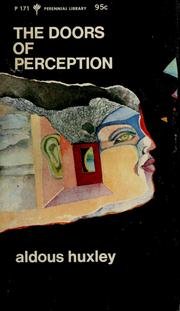
- The doors of perception by Aldous Huxley
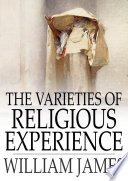
- The Varieties of Religious Experience by William James
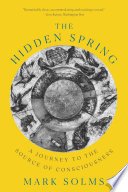
- The Hidden Spring: A Journey to the Source of Consciousness by Mark Solms
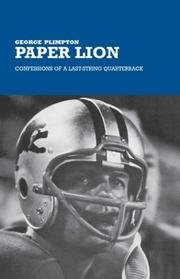
- Paper Lion by George Plimpton
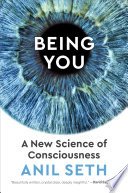
- Being You by Anil Seth
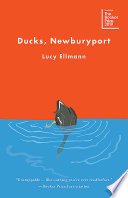
- Ducks, Newburyport by Lucy Ellmann
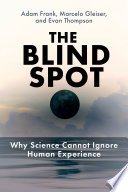
- The Blind Spot by Adam Frank
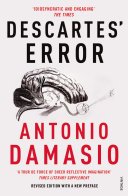
- Descartes' Error by Antonio Damasio
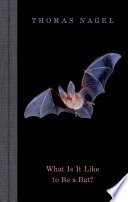
- What Is It Like to Be a Bat? by Thomas Nagel
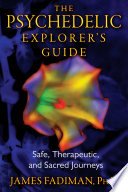
- The Psychedelic Explorer's Guide by James Fadiman
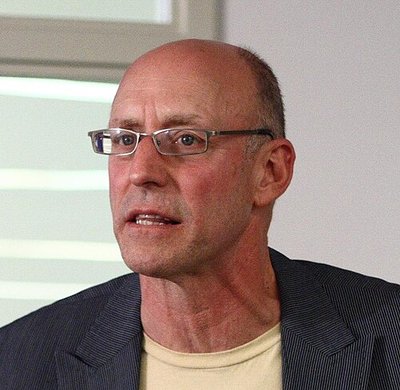
Michael Kevin Pollan is an American journalist, specializing in food, who is a professor and the first Lewis K. Chan Arts Lecturer at Harvard University. Concurrently, he is the Knight Professor of Science and Environmental Journalism and the director of the Knight Program in Science and Environmental Journalism at the UC Berkeley Graduate School of Journalism, where in 2020 he cofounded the UC Berkeley Center for the Science of Psychedelics, in which he leads the public-education program. In various podcast interviews, Pollan has shared foundational books that shaped his thinking and writing. He credited George Plimpton's Paper Lion as the direct inspiration for his approach to participatory immersion journalism. Discussing his work on consciousness and science, Pollan recommended The Blind Spot by Adam Frank, Marcelo Gleiser, and Evan Thompson as a powerful critique of Western science. He also highlighted Lucy Ellmann's thousand-page, single-sentence stream-of-consciousness novel Ducks, Newburyport as an influential read during his own writing process. Additionally, Pollan recommended Anil Seth's Being You as a top primer on neuroscientific perspectives of the self and perception, and previously suggested James Fadiman's The Psychedelic Explorer's Guide as a useful manual for navigating psychedelic experiences.
Books recommended by Michael Pollan
-
The doors of perception
The Doors of Perception by Aldous Huxley is a classic philosophical essay chronicling the author's psychedelic experiences and exploring the nature of human consciousness.
Discussed“and Aldous Huxley believed this and talked about it indoors of perception that he had had some access to this field.”
Where to get it
-
The Varieties of Religious Experience
The Varieties of Religious Experience by William James is a foundational work of psychology and philosophy based on the author's landmark lectures on human consciousness and spirituality.
Discussed“In my case, I thought back to William James who had written in varieties of mystical experience that you can't really judge the veracity of a big insight on a mystical experience”
Where to get it
-
How to Change Your Mind
How to Change Your Mind by Michael Pollan is a comprehensive exploration of the history, science, and cultural renaissance surrounding psychedelic-assisted therapies.
Discussed“I mean, one of the inspirations for the book was the experiments with psychedelics I did for How to Change Your Mind.”
Where to get it
-
The Hidden Spring: A Journey to the Source of Consciousness
The Hidden Spring: A Journey to the Source of Consciousness by Mark Solms is a neuroscience book that argues consciousness originates in the brainstem rather than the cortex and arises specifically from felt uncertainty when tasks cannot be automated.
Discussed“And he's written a really interesting book called The Hidden Spring. And his theory is that consciousness arises when you can't automate things.”
Where to get it
-
A World Appears
A World Appears by Michael Pollan is a non-fiction work that explores human consciousness, the self, and the boundaries of mystical and meditative experiences.
Discussed“So, basically it yeah, the book grew out of the psychedelic experiences and some meditation experience.”
Where to get it
-
Paper Lion
Paper Lion by George Plimpton is a classic work of participatory immersion journalism that follows the author as he attempts to train and play as a quarterback for the Detroit Lions.
Recommended“And that goes to, um, my parents, when I was like 13, gave me a copy of a book by George Plimpton called Paper Lion.”
Where to get it
-
Being You
Anil Seth's Being You is an exploration of human consciousness and perception, presented from the perspective of an English neuroscientist who treats the self as a perception rather than a fixed internal essence.
Recommended“There were several books on consciousness I like, but the one I want to recommend is Being You by Anil Seth. He's an English neuroscientist, and it's a book about the self, and he treats the self as a perception.”
Where to get it
-
Ducks, Newburyport
Ducks, Newburyport by Lucy Ellmann is a massive, highly experimental stream-of-consciousness novel told almost entirely through a single, sprawling sentence spanning roughly one thousand pages.
Recommended“Another book that was really influential as I was working on the stream of consciousness is a stream of consciousness novel by Lucy Ellmann called Ducks, Newburyport. It's a thousand pages, one sentence, and that sounds really daunting”
Where to get it
-
The Blind Spot
The Blind Spot by Adam Frank, Marcelo Gleiser, and Evan Thompson is a critical examination of Western science that argues against strict materialism by reintegrating human experience into the scientific process.
Recommended“Well, a book that was really influential in the writing of this book is a book called The Blind Spot. It's by a philosopher, Evan Thompson, and two physicists, Adam Frank and Marcelo Gleiser. It's a critique of Western science.”
Where to get it
-
Descartes' Error
Descartes' Error by Antonio Damasio is a foundational work in neuroscience that examines how emotions are deeply intertwined with human reasoning and decision-making.
Discussed“And in a way, this is the lesson of Antonio Damasio's first book in 1994, Descartes' Error it was called. And he was basically showing that feelings and emotions should be admitted into the decision-making process.”
Where to get it
-
What Is It Like to Be a Bat?
Thomas Nagel's philosophical essay What Is It Like to Be a Bat? explores the fundamental nature of consciousness and the limitations of physicalist explanations.
Discussed“You know, there's the famous definition of Thomas Nagel, who wrote this great essay called What Is It Like to Be a Bat? And he his test for consciousness is if it is like anything to be a creature, that creature then is conscious.”
Where to get it
-
The Botany of Desire
The Botany of Desire by Michael Pollan is a fascinating exploration of the co-evolutionary relationships between humans and four specific plants, demonstrating how domesticated species like apples, tulips, cannabis, and potatoes have successfully fulfilled human desires while securing their own survival and global spread.
Discussed“and back when I was working on botony of Desire I got very interested in the in the the the desires that other species gratify in us as part of their evolutionary strategy”
Where to get it
-
The Psychedelic Explorer's Guide
The Psychedelic Explorer's Guide by James Fadiman is a practical manual designed to help individuals safely navigate psychedelic experiences, offering valuable advice for those looking to find and evaluate guides.
Recommended“there's a very good book called the psychedelic explorers manual”
Where to get it
-
Drug Use for Grown-Ups
Drug Use for Grown-Ups by Carl L.
Discussed“and i just read his book um yeah drug use for grown-ups it's a really interesting and courageous book”
Where to get it
-
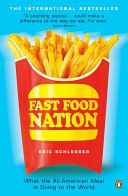
Fast Food Nation
Discussed“This is before I wrote Omnivore's Dilemma, but there was a sense beginning in 2002, and I can date this to uh when Eric Schlosser uh published Fast Food Nation, which uh was a a surprise bestseller.”
Where to get it
-
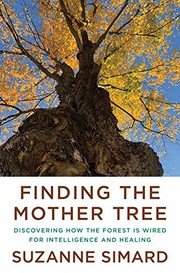
Finding the Mother Tree
Finding the Mother Tree by Suzanne Simard is a scientific memoir detailing the author's pioneering research into how trees communicate, share resources, and function cooperatively within complex forest ecosystems.
Discussed“suzanne simard just wrote this really interesting book about this called searching for the mother tree”
Where to get it
-
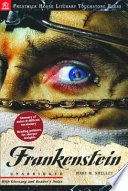
Frankenstein
Frankenstein by Mary W.
Discussed“You know, in Frankenstein Dr. Frankenstein made a monster that was intelligent, but he also gave it consciousness.”
Where to get it
-
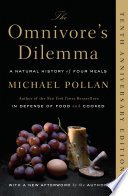
The Omnivore's Dilemma
The Omnivore's Dilemma by Michael Pollan is a widely discussed non-fiction book that explores the modern American food chain and the ethical, ecological, and health consequences of what people choose to eat.
Discussed“I was writing a piece uh that became a chapter in The Omnivore's Dilemma on the meat industry and how [ __ ] up it is and um and feed lots and and the drugs they give the animals.”
Where to get it

Books by Michael Pollan
-

Omnivore's Dilemma. A Natural History of Four Meals
-

The Botany of Desire
-
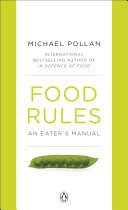
Food Rules
-
In Defense of Food
-
A Place of My Own
-
This Is Your Mind On Plants
-
Second Nature
-
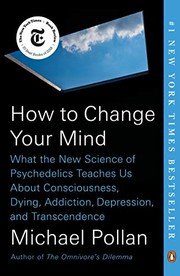
How to Change Your Mind
-
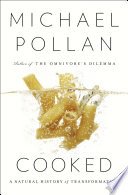
Cooked
-
Bringing it to the table
-

Cannabis, Forgetting, and the Botany of Desire
-

Michael pollan collection 3 books set
-
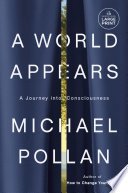
A World Appears
Appearances
Other mentions (17: passing, ad reads, own books)
“And he, you know, actually, when I was writing my first book, Second Nature, I was trying to figure out how to behave in the garden”
“I wrote a book called botany desire, which really looked at how plants have mastered our desires as their, as their evolutionary strategy”
“that's the subtitle of Botany desire was a plant's eye view of the world.”
“I remember how nervous I was when I published how to change your mind. I was talking about my own psychedelic experience.”
“I subsequently put it in a book called This Is Your Mind on Plants, which came out a couple of years ago. And it's one of three chapters in that book.”
“I wrote about it in uh Botany of Desire when I was writing about cannabis.”
“Oh, my my writing, my professional magazine writing really began with uh some pieces I wrote for my first book, Second Nature, that uh are about the garden.”
“It's certainly after Un Vogue's Dilemma, which is 2006.”
“I got interested in that two ways, one through meditation and the other through the psychedelic experiences I had for for my book how to change your mind.”
“I mean, I'll never forget this one experience I had on psilocybin for my for my book. I had a complete dissolution of self.”
“So I'm very interested in the science of psychedelics and I wrote about it in How to Change Your Mind.”
“I interviewed some of these people for How to Change Your Mind, and I would ask them to describe their trip, and this woman who smoked for 50 years had had this incredible trip.”
“So in How to Change Your Mind, I tried LSD and psilocybin and 5-MeO-DMT and all these things that were really scary and hard for me, but this was harder.”
“cooked was a book i wrote a few years ago about cooking”
“So I I decided I like the word psychedelic and I try and I would try in my book to rescue it from all the incrustation of '60s dayglow, you know, acid rock, all that stuff, ‑ and see if we could we could reclaim it cuz cuz it means the right thing.”
“I wrote about Anam botany of desire there's a long chapter on cannabis and I've always been curious about that desire because it doesn't seem on its face to be so helpful or adaptive”
“and in fact I've written about this abiding and universal desire of humans to change their consciousness for a long time I wrote about Anam botany of desire there's a long chapter on cannabis and I've always been curious about that desire because it doesn't seem on its face to be so helpful or adaptive”