
Person
Jordan Peterson books: every book Jordan Peterson wrote and recommended
Across 12 podcasts. Every show Jordan Peterson appears on, in one place — not just one.
Books by Jordan Peterson


Jordan Peterson’s most recommended books
- The Gulag Archipelago by Aleksandr Isaevich Solzhenit︠s︡yn
- The Brothers Karamazov by Fyodor Dostoevsky
- Crime and Punishment by Fyodor Dostoevsky
- Irreversible Damage by Abigail Shrier
- Notes from Underground by Fyodor Dostoevsky
- 1984 by George Orwell
- The Origins and History of Consciousness by Erich Neumann
- The Discovery Of The Unconscious by Henri F. Ellenberger
- The Great Mother by Erich Neumann
- The Neuropsychology of Anxiety by Jeffrey Alan Gray
Jordan Bernt Peterson is a Canadian psychologist, author, and media commentator. He received widespread attention in the late 2010s for his views on cultural and political issues. Often described as conservative, Peterson self-identifies as a classical liberal and traditionalist. On The Jordan B. Peterson Podcast, he frequently recommended foundational fiction and non-fiction works to his audience. Peterson recommended Leo Tolstoy's book Confession as a meaningful meditation on success, suffering, and existential recovery. When discussing the profound depth of great fiction, he frequently highlighted the works of Fyodor Dostoevsky, urging listeners to read Crime and Punishment as a thrilling masterpiece, and citing The Brothers Karamazov, Notes from Underground, and The Devils as deeply compelling works that fundamentally transformed his worldview. In addition to literature, Peterson turned to analytical and evolutionary texts. He brought up David E. Jones's An Instinct for Dragons to provide an evolutionary explanation for the concept of dragons, and recommended Henri Ellenberger's historical text The Discovery Of The Unconscious to support a conversation regarding the long-documented history of social contagions.
Books recommended by Jordan Peterson
-
The Gulag Archipelago
The Gulag Archipelago by Aleksandr Solzhenitsyn is a monumental historical exposé documenting the brutal realities of the Soviet forced labor camp system through personal testimony and archival research.
Discussed“This was while I was reading Soljenitson's book on the Gulleg archipelago and various accounts of totalitarian brutality in Nazi Germany and and so forth and some psychoanalytic work and and that's where the story part emerges.”
Where to get it
-
The Brothers Karamazov
The Brothers Karamazov by Fyodor Dostoevsky is a complex philosophical novel that delves deeply into faith, doubt, free will, and morality through the turbulent relationships of the Karamazov family.
Recommended“For me, Dostoevsky, the Russian novelist, sort of top of that list. His books, The Brothers Karamazov and Crime and Punishment and Notes from Underground, The Devils, are unbelievably compelling works of fiction and they're deep.”
Where to get it
-
Crime and Punishment
Crime and Punishment by Fyodor Dostoevsky is a psychological masterpiece that explores the crushing guilt, moral torment, and eventual redemption of a destitute former student who commits a brutal murder in St.
Recommended“I've recommended to people frequently that if they're interested in fiction, they might consider reading Dossi. And I would say read Crime and Punishment because it's like the world's greatest thriller. It's an amazing book.”
Where to get it
-
Irreversible Damage
Irreversible Damage by Abigail Shrier is a 2020 book that examines the surge of teenage girls adopting transgender identities, attributing the trend largely to social contagion among peer groups.
Discussed“I had a period of illness and when I came back to start my podcast up again in earnest, I interviewed Abigail Shrier and she wrote Irreversible Damage.”
Where to get it
-
Notes from Underground
Notes from Underground by Fyodor Dostoevsky is a foundational existential novella that explores the depths of human alienation, paradoxical free will, and psychological spite.
Discussed“So, Dostoyevsky wrote a very famous book called Notes from Underground, and in Dostoyevsky was an absolute prophet.”
Where to get it
-
1984
1984 by George Orwell is a classic dystopian novel exploring totalitarianism, surveillance, political tribalism, and the systematic control of information.
Discussed“and then I read 1984 by George Orwell and Brave New World.”
Where to get it
-
The Origins and History of Consciousness
The Origins and History of Consciousness by Erich Neumann is a profound psychological and mythological study that explores the historical evolution of human awareness through archetypal symbolism.
Recommended“and also um Eric neyman's book uh the Origins and history of Consciousness that's a harder one”
Where to get it
-
The Discovery Of The Unconscious
The Discovery of the Unconscious is a sweeping historical and psychological masterwork by Henri F.
Recommended“There's a great book called um the history of the unconscious by Henri Alberge and he traces the history of psychoanalytic thought way back before memer and documents the hysteria so to speak which was the Freudian version of social contagion literally back it's 300 years so it's very well documented it's a great book by the way very useful”
Where to get it
-
Maps of Meaning
Maps of Meaning by Jordan B.
Discussed“I think that might be true because maps of meaning was very dense and academic and then the following two books were quite popular and more descriptive and and helpful rather than conceptual.”
Where to get it
-
The Great Mother
The Great Mother by Erich Neumann is a profound psychological study exploring the symbolism of the feminine and the historical development of human consciousness through archetypes.
Recommended“and also another book called the great mother which is study of the symbolism of the feminine it's a great book”
Where to get it
-
The Neuropsychology of Anxiety
The Neuropsychology of Anxiety by Jeffrey Alan Gray and Neil McNaughton is a rigorous scientific text that examines the biological, behavioral, and neuroanatomical systems underlying anxiety and response inhibition.
Recommended“he he wrote a book called The neuros pychology of anxiety which I think is one of the best Neuroscience books ever written”
Where to get it
-
The Lord of the Rings
The Lord of the Rings by J.R.R.
Discussed“How do you return home like the Hobbit does at the end of the well the Hobbit and at the end of the Lord of the Rings, right?”
Where to get it
-
Fossil Future
Fossil Future by Alex Epstein argues that fossil fuels are essential for human flourishing and that eliminating them prematurely would cause widespread societal collapse and death.
Discussed“so I had the Good Fortune to speak again today with Alex Epstein who I spoke with two years ago almost to the day um Alex is the author of two influential books one the first one the moral case for fossil fuels and the second one fossil future”
Where to get it
-
The Idiot
The Idiot by Fyodor Dostoevsky is a profound 19th-century Russian novel that follows the compassionate, innocent, and deeply misunderstood Prince Myshkin as he navigates the cynical and corrupt high society of St.
Discussed“do you ever read the idiot no yeah well I'm probably half idiot and half rol nikov”
Where to get it
-
The Population Bomb
The Population Bomb is a 1968 book by biologist Paul R.
Discussed“So Paul Erick who wrote the population bomb and his du kicking around made a very famous bet with an economist Julian Simon”
Where to get it
-
Inferno
Inferno by Dante Alighieri is a classic epic poem describing a journey through the underworld and the various circles of hell.
Discussed“Dante, who wrote Dante's Inferno, is one of the figures of the classic age, the Renaissance, let's say, classic European age, who who really formulated much of the modern vision of hell.”
Where to get it
-
Bible
Bible by Bible is the foundational canonical text of Judaism and Christianity, comprising ancient narratives, laws, poetry, and prophetic writings that have shaped Western civilization.
Discussed“He is the temple; he is the Torah; he is the covenant; he is prophecy fulfilled.”
Where to get it
-
War on the West
The War on the West by Douglas Murray is a cultural commentary examining contemporary criticisms of Western civilization and the ideological battles shaping modern political discourse in America and Britain.
Discussed“So I'm talking today to Douglas Murray who just wrote this book on democracies and death cults, Israel and the future of civilization.”
Where to get it
-
In Order to Live
In Order to Live by Yeonmi Park and Maryanne Vollers is a harrowing memoir detailing the author's dramatic escape from North Korea and her subsequent journey toward freedom.
Discussed“she wrote this book called in order to live which is a harrowing book although i don't think it's as harrying to read as it is harrowing to talk to her”
Where to get it
-
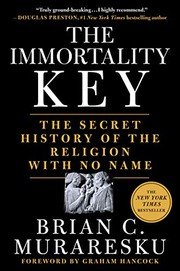
Immortality Key
Immortality Key by Brian C.
Recommended“brian murray rescue's work in the immortality key which is an amazing book”
Where to get it



The other 346 books Jordan Peterson recommended or discussed, ranked
- Harry Potter and the Philosopher's Stone by J. K. Rowling
- The Sacred and the Profane by Mircea Eliade
- 12 Rules for Life by Jordan B. Peterson
- Beyond Order by Jordan B. Peterson
- Infidel by Ayaan Hirsi Ali
- The Selfish Gene by Richard Dawkins
- The Skeptical Environmentalist by Bjørn Lomborg
- Ordinary Men by Christopher R. Browning
- Brave New World by Aldous Huxley
- The Moral Case for Fossil Fuels by Alex Epstein
- Systemantics by John Gall
- A Billion Wicked Thoughts by Ogi Ogas
- Angela's Ashes by Frank McCourt
- Animal Farm by George Orwell
- Pinocchio by Carlo Collodi
- The Ecological Approach To Visual Perception by James J. Gibson
- The sacred mushroom and the cross by John Marco Allegro
- Laptop from Hell by Miranda Devine
- The Parasitic Mind by Gad Saad
- The Beauty Myth by Naomi Wolf
- Values by Mark Carney
- Symbolism, the Sacred and the Arts by Mircea Eliade
- Nietzsche: Beyond Good and Evil by Friedrich Nietzsche
- The Bell Curve by Richard J. Herrnstein, Charles Murray
- The Wealth and Poverty of Nations by David S. Landes
- Demons by Fyodor Dostoevsky
- Faust by Johann Wolfgang von Goethe
- Fear and Loathing in Las Vegas by Hunter S. Thompson
- Hitler's Table Talk by Hugh R. Trevor-Roper
- Paradise Lost by John Milton
- The pilgrim's progress by John Bunyan
- The user illusion by Tor Nørretranders
- Woke Racism by John McWhorter
- The Anxious Generation by Jonathan Haidt
- Apocalypse Never by Michael Shellenberger
- How to Spend $75 Billion to Make the World a Better Place by Bjørn Lomborg, Bjorn Lomborg
- Stranger in a Strange Land by Robert A. Heinlein
- Study Guide by SuperSummary
- The Boy Crisis by Warren Farrell, John Gray
- The Electric Kool-Aid Acid Test by Tom Wolfe
- The Master and Margarita by Mikhail Bulgakov
- A Confession by Leo Tolstoy
- History of Religious Ideas by Mircea Eliade
- Satan's silence by Debbie Nathan, Michael R. Snedeker
- The Devils by Фёдор Михайлович Достоевский
- The Order of Things by Michel Foucault
- Why Men Earn More by Warren Farrell
- Confession by Лев Толстой
- DMT: The Spirit Molecule by Rick Strassman
- Hamlet by William Shakespeare
- Im Westen nichts Neues by Erich Maria Remarque
- Johann Gutenberg and his Bible by Janet Thompson Ing
- Jordan Peterson, God, and Christianity by Chris Kaczor
- One Day in the Life of Ivan Denisovich by Aleksandr Solzhenitsyn
- Shamanism: archaic techniques of ecstasy, tr by Mircea Eliade
- Ten Global Trends Every Smart Person Should Know by Ronald Bailey, Marian L. Tupy
- The Da Vinci Code by Dan Brown
- The doors of perception by Aldous Huxley
- The Language Instinct by Steven Pinker
- The Rape of Nanking by Iris Chang
- The Road to Wigan Pier by George Orwell
- The Structure of Scientific Revolutions by Thomas S. Kuhn
- White Fragility by Dr. Robin DiAngelo
- Own Your Past Change Your Future by Dr. John Delony
- Behave by Robert M. Sapolsky
- iGen by Jean M. Twenge
- Live Not by Lies by Rod Dreher
- Case Against the Sexual Revolution by Louise Perry
- The Book that Made Your World by Vishal Mangalwadi
- Prey by Ayaan Hirsi Ali
- Breaking the spell by Daniel C. Dennett
- Letter to the American Church by Eric Metaxas
- Recapture the Rapture by Jamie Wheal
- Shattered assumptions by Ronnie Janoff-Bulman
- Wind in My Hair by Masih Alinejad
- Are We Smart Enough to Know How Smart Animals Are? by Frans De Waal
- Catching Fire by Richard Wrangham
- Colonialism by Nigel Biggar
- Lost and Broken by Congressman Adam Smith
- Unmasked by Andy Ngo
- A Deadly Misunderstanding by Mark D. Siljander
- Atlas Shrugged by Ayn Rand
- Choice by Robert P. Murphy
- Feminism against Progress by Mary Harrington
- New Right by Michael Malice
- Study Guide to Human Action, a Treatise on Economics by Robert P. Murphy
- The Daily Laws by Robert Greene
- The Devil and Karl Marx by Paul Kengor
- The master and his emissary by Iain McGilchrist
- The Respondent by Greg Ellis
- Way of the Warrior Kid by Jocko Willink
- Awakening From the Meaning Crisis by Christopher Mastropietro
- Bad Therapy by Abigail Shrier
- Lost in TransNation by Miriam Grossman
- The Case for Trump by Victor Davis Hanson
- The Natural Order of Money by Roy Sebag
- Demonic males by Dale Peterson
- Light of the Mind, Light of the World by Spencer Klavan
- Sledgehammer by David Friedman
- The Goodness Paradox by Richard Wrangham
- The Hero with a Thousand Faces by Joseph Campbell
- The Mindful Body by Ellen J. Langer
- The Saad Truth about Happiness by Gad Saad
- You Can Do It! by Rob Schneider
- Brain Train by Richard Palmer, Chris Pope
- Cool it by Bjørn Lomborg
- Dante's Inferno by Dante Alighieri
- Doom by Niall Ferguson
- End of Race Politics by Coleman Hughes
- Expressly Human by Mark Changizi, Tim Barber
- False Alarm by Bjorn Lomborg
- Fear and Loathing at Rolling Stone by Hunter S. Thompson
- Free Speech And Why It Matters by Andrew Doyle
- Hillbilly Elegy by J D Vance
- Holy Bible (NIV) by Various Authors,
- Kill the Boer by Ernst Roets
- Lady Chatterly's Lover by Chris Chundamala
- Life at the Bottom by Theodore Dalrymple
- Man's Search for Meaning by Viktor E. Frankl
- Manhood by Josh Hawley
- New Science of Narcissism by W. Keith Campbell, Carolyn Crist
- Otherhood by Melanie Notkin
- Question of Power by Robert Bryce
- San Fransicko by Michael Shellenberger
- The 48 Laws of Power by Robert Greene, Joost Elffers
- The Aristocracy of Talent by Adrian Wooldridge
- The Book of revelation by Rupert Thomson
- The Coddling of the American Mind by Greg Lukianoff, Jonathan Haidt
- The elegant universe by Brian Greene
- The Madness of Crowds by Douglas Murray
- The Mismeasure of Man by Stephen Jay Gould
- The origins of virtue by Matt Ridley
- The Rational Optimist by Matt Ridley
- The Satanic rituals by Anton Szandor LaVey
- There's no such thing as a dragon by Jack Kent
- This Is Your Brain on Birth Control by Sarah Hill
- Troubled by Rob Henderson
- Truths by Vivek Ramaswamy
- We've Got Issues by Phillip C. McGraw
- When Race Trumps Merit by Heather Mac Donald
- Wonderworks by Angus Fletcher
- A Discourse on the Method by René Descartes
- An Instinct for Dragons by David E. Jones
- Bible PerVERSIONS by Eric Neumann
- Different by Frans de Waal
- Eyewitness by DK Publishing
- Fabianism and the empire by George Bernard Shaw
- Manliness by Harvey C. Mansfield
- Megafauna by Gabrielle Balkan
- Red Famine by Anne Applebaum
- The Bitcoin Standard by Saifedean Ammous, James Fouhey
- The Blank Slate by Steven Pinker
- The descent of man by Charles Darwin
- The Fiat Standard by Saifedean Ammous
- The Master and Margarita by Михаил Афанасьевич Булгаков
- The Open Society and Its Enemies by Karl Popper
- This Book Changed Everything by Vishal Mangalwadi
- This Side of Paradise by F. Scott Fitzgerald
- Winter Notes on Summer Impressions by Fyodor Dostoyevsky
- 2010: Odyssey Two by Arthur C. Clarke
- A Brief History of Time by Stephen Hawking
- A Hunter-Gatherer's Guide to the 21st Century by Heather Heying
- A theory of justice by John Rawls
- A Tragic Legacy by Glenn Greenwald
- Abraham Lincoln by Carl Sandburg
- Alice's Adventures in Wonderland by Lewis Carroll
- Best Children's Stories by Jacob Grimm
- Cambridge Handbook of Intelligence by Robert J. Sternberg
- Cancer as a Metabolic Disease by Thomas Seyfried
- Capitalism in America by Alan Greenspan
- Carl Panzram Papers by Carl Panzram
- Cato by Joseph Addison, Christine Dunn Henderson, Mark E. Yellin
- Collected Poems of Donald J. Trump by Donald Trump
- Communicating with Kids by Stephanie Davies-Arai
- Computational physics by Steven E. Koonin
- Conservatism by Yoram Hazony
- Covid-19: The Great Reset by Thierry Malleret, Klaus Schwab
- Cues by Vanessa Van Edwards
- Deceit and Self-Deception by Robert Trivers
- Deep Undercover by Jack Barsky, Cindy Coloma
- Dennett's philosophy by Ross, Don, Andrew Brook, David Thompson
- Dr. Seuss's Sleep Book (Classic Seuss) by Dr. Seuss
- Enlightenment Now by Steven Pinker
- Euclid's Elements by Euclid, Dana Densmore
- Everything I Want To Do Is Illegal by Joel Salatin
- Evolutionary Psychology in the Business Sciences by Gad Saad
- Exodus by Leon Uris
- False Alarm by Bjørn Lomborg
- Fear and Loathing on the Campaign Trail '72 by Hunter S. Thompson
- Fifty Shades of Grey by E. L. James
- Fifty Shades Trilogy: Fifty Shades of Grey / Fifty Shades Darker / Fifty Shades Freed by E L James
- Fortitude by Dan Crenshaw
- Frankenstein by Mary W. Shelley
- Generation me by Jean M. Twenge
- Genesis by Bernard Beckett
- Gone with the Wind by Margaret Mitchell
- Good Natured by Frans B. M. de Waal
- Great American Hypocrites by Glenn Greenwald
- Greenlights by Matthew McConaughey
- Guantanamo Diary by Mohamedou Ould Slahi
- Hania by Henryk Sienkiewicz
- Hansel and Gretel (First Edition) by Jacob and Wilhelm Grimm, Rachel Louise Lawrence
- Hate Inc by Matt Taibbi
- Heart of Darkness by Joseph Conrad
- Hell's Angels by Hunter S. Thompson
- Heroes by Stephen Fry
- History of madness by Michel Foucault
- Hitler by Ian Kershaw
- Hitler's Table Talk by Heinrich Heim
- Hitler's Table Talk by Adolf Hitler
- Homestead Tsunami by Joel Salatin
- Household Tales by Gebrüder Grimm [Brothers Grimm]
- How Innovation Works by Matt Ridley
- How Would a Patriot Act? by Glenn Greenwald
- I'm Glad My Mom Died by Jennette McCurdy
- In the Beginning Was the Word by Dallas A. Brauninger
- Incognito by David Eagleman
- India, the Grand Experiment by Vishal Mangalwadi
- Insane Clown President by Matt Taibbi
- Island by Aldous Huxley
- JACK. STRAIGHT FROM THE GUT. by Jack Welch
- Lady Chatterley's Lover by D. H. Lawrence
- Lament for a nation by George Parkin Grant
- Les Miserables by Victor Hugo
- Lessons for the Young Economist by Robert P. Murphy
- Little Science, Big Science by Derek J. de Solla Price
- Living the Braveheart Life by Randall Wallace
- Macbeth by William Shakespeare
- Made in America by Matt Hughes
- Madness and Civilization by Michel Foucault
- Male and female by Margaret Mead
- Margaritas by Mamie Fennimore
- Mastery by Robert Greene
- Math That Matters by Marian Small
- Measuring the Mind by Adrian Wooldridge
- Moby Dick by Herman Melville
- MOBY-DICK; or, THE WHALE by Herman Melville
- Mythos by Stephen Fry
- No Place to Hide by Glenn Greenwald
- Nostalgia by Clay Routledge
- Not with a Bang But a Whimper by Theodore Dalrymple
- On Liberty by John Stuart Mill
- One Flew Over the Cuckoo's Nest by Ken Kesey
- Outlive the Science and Art of Longevity by Peter Attia
- Panic by Sharon M. Draper
- Pastured Poultry Profit$ by Joel Salatin
- Peacemaking among Primates by Frans B. M. de Waal
- Pearl Harbor by Randall Wallace
- Political Ponerology by Michael Rectenwald, Andrew M. Lobaczewski
- Prodigal Son by Gregg Hurwitz
- Psychological Types by Carl Jung
- Psychopathology and Differential Diagnosis: History of psychopathology by Henry Kellerman
- Silent Spring by Rachel Carson
- Snow White by The Brothers Grimm
- Snow White by Gebrüder Grimm [Brothers Grimm]
- Some Day the Sun Will Shine and Have Not Will Be No More by A. Brian Peckford
- Sources of the Self by Charles Taylor
- Soviet Marxism by Herbert Marcuse
- Spoilt Rotten The Toxic Cult Of Sentimentality by Theodore Dalrymple
- Superabundance by Marian L. Tupy
- Supernatural by Clay Routledge
- T. E. Hulme and the Ideological Politics of Early Modernism by Henry Mead
- Taboo by Eric Kaufmann
- The 33 Strategies of War by Robert Greene
- The 50th Law by 50 Cent, Robert Greene
- The Arc of a Covenant by Walter Russell Mead
- The Art of Seduction by Robert Greene
- The Art of War by Sun Tzu
- The Better Angels of Our Nature by Steven Pinker
- The Big Guy by Miranda Devine
- The Big Sleep by Raymond Chandler
- The Bodies of Others by Naomi Wolf
- The Book of Dragons by Edith Nesbit
- The book of Exodus by Chadwick, G. A.
- The Book of Job by John E. Hartley
- The Brain That Changes Itself by Norman Doidge
- The Canceling of the American Mind by Greg Lukianoff, Rikki Schlott
- The Children by David Halberstam
- The Communist Manifesto by Friedrich Engels, Karl Marx
- The Confessions by Saint Augustine (of Hippo)
- The Consuming Instinct by Gad Saad
- The culture code by Daniel Coyle
- The Dead Sea Scrolls and the Christian Myth by John Marco Allegro
- The Denial of Death by Ernest Becker
- The Dialogues of Plato by Plato
- The Divine Comedy by Dante Alighieri
- The Dying Citizen by Victor Davis Hanson
- The Ethics of Aristotle by Aristotle
- The Fellowship of the Ring by John Ronald Reuel Tolkien, Christina Scull
- The Feminine Mystique by Betty Friedan
- The Folly of Fools by Robert Trivers
- The God Delusion by Richard Dawkins
- The Greatest Story Ever Told--So Far by Lawrence M. Krauss
- The Hobbit by J.R.R. Tolkien
- The Imitation of Christ by Thomas à Kempis
- The Islamic Jesus by Mustafa Akyol
- The Kingdom of God Is Within You by Лев Толстой
- The Last Temptation of Christ by Nikos Kazantzakis
- The Laws of Human Nature by Robert Greene
- The Lion King by Unknown
- The Master by Colm Tóibín
- The Master-Singers of Nuremberg (Die Meistersinger Von Nurnberg) Opera in Three Acts by Richard Wagner
- The Matter With Things by Iain McGilchrist
- The Mystery of Capital by Hernando De Soto
- The New Puritans by Andrew Doyle
- The Odyssey by Homer
- The Origin of Species by Charles Darwin
- The Parent Revolution by Corey A. DeAngelis
- The Pendragon Cycle by Stephen R. Lawhead
- The Picture of Dorian Gray by Oscar Wilde, Oscar Wilde, Oscar Wilde
- The Politically Incorrect Guide to Capitalism by Robert P. Murphy
- The prince by Niccolò Machiavelli
- The Quest for Cosmic Justice by Thomas Sowell
- The red book = by Carl Gustav Jung
- The Republic by Plato
- The Right Nation by John Micklethwait
- The Right to Sex by Amia Srinivasan
- The shape of the river by William G Bowen, William G. Bowen, Derek Bok
- The Sovereignty of Good by Iris Murdoch
- The Terror of Existence by Theodore Dalrymple
- The Tower of Babel by Morris West
- The Tragedy of the Commons by Garrett James Hardin
- The Trial by Franz Kafka
- The Wealth of Nations by Adam Smith
- The World of Gurus by Vishal Mangalwadi
- Tools for the Master's work, comprising over 250 sermon outlines [&c.] collected by J. Ellis by Jesus Christ
- Troy by Stephen Fry
- True Identity: The Bible for Women (NIV) by Various Authors,
- Twilight of the Idols by Friedrich Nietzsche
- Understanding Urban Warfare by John Spencer
- Ungifted by Scott Barry Kaufman
- Unsettled by Steven E. Koonin
- Viral by Matt Ridley, Alina Chan
- War and Peace by Leo Tolstoy
- We Who Wrestle with God by Jordan B. Peterson
- What is Life? by Erwin Schrödinger
- What is Project 2025? by Unknown
- When the New Age Gets Old by Vishal Mangalwadi
- Wicked Thoughts by M.D. Eric Watford
- Wired to Create by Dr Scott Barry Kaufman, Carolyn Gregoire
- With liberty and justice for some by Glenn Greenwald
- Words With Power by Northrop Frye
- You Can Farm by Joel Salatin
- You're Teaching My Child What? by Miriam Grossman
- Zen and the Art of Motorcycle Maintenance by Robert M. Pirsig
- Zorba the Greek by Nikos Kazantzakis
Questions about Jordan Peterson’s book recommendations
What book does Jordan Peterson recommend most?
The Gulag Archipelago by Aleksandr Isaevich Solzhenit︠s︡yn. Jordan Peterson recommended it in 11 episodes, with 2 explicit recommendations.
How many books has Jordan Peterson recommended on podcasts?
We have found 366 books Jordan Peterson recommended or discussed, across 290 episodes of 12 podcasts. Ad reads and passing mentions are not counted.
What books are on Jordan Peterson's reading list?
The books Jordan Peterson has recommended most on podcasts are The Gulag Archipelago by Aleksandr Isaevich Solzhenit︠s︡yn, The Brothers Karamazov by Fyodor Dostoevsky, Crime and Punishment by Fyodor Dostoevsky, Irreversible Damage by Abigail Shrier and Notes from Underground by Fyodor Dostoevsky. The full book list below has all 366.
What books has Jordan Peterson written?
Maps of Meaning (1999), 12 Rules for Life (2015) and Beyond Order (2021).
What did Jordan Peterson recommend on The Jordan B. Peterson Podcast?
The Gulag Archipelago, The Brothers Karamazov and Crime and Punishment, among 348 books in all.
What is the latest book Jordan Peterson recommended?
Pinocchio, discussed on The Jordan B. Peterson Podcast (2026-09-27).
People who recommend the same books
Appearances
Other mentions (499: passing, ad reads, own books), the 30 most recent
“That's what I do in this book, We Who Resil with God.”
“This is from Toltoy's Leo Toltoy who was a great Russian author. He wrote Warren Peace and Anacredina.”
“like the snitch that Harry Potter chases in in the Quidditch game in in the Harry Potter series, right?”
“Shoes signify identity. Shoes are part of the uniform of work. Let's say there's soldiers boots. There's Dorothy's red shoes in the Wizard of Oz.”
“So this tour is an explication and a further exploration of the themes in my newest book, which is called We Who Resa with God. And it will be published in November.”
“The book we who wrestle with God is about stories.”
“this tour is a explication and a further exploration of the themes in my newest book which is called we who wrestle with God and it will be published in November.”
“The the book, we who wrestle with God, is about stories. And the biblical library that I'm assessing in this book is a collection of stories”
“You see the same thing in the figure of Voldemort, say in Harry Potter or the figure of Sauron in the Lord of the Rings.”
“You see the same thing in the figure of Voldemort, say in Harry Potter or the figure of Sauron in the Lord of the Rings.”
“It's exploration into the heart of darkness, right? What's the theme? Confront what terrifies you voluntarily.”
“really, probably culminating to some degree in this new book, the topic of this tour, we who wrestle with God.”
“Tonight we're going to investigate what it means to believe I would say and we're going to do that in relationship to the biblical stories which is what this book that the tour is based on is about.”
“I'll be hitting the road again with Tammy and my crew in November when my book comes out, but this is the end of the first run of the public events that are associated with We Who Wrestle with God.”
“I wrote a chapter in my first book. The title was do not allow your children to do anything that makes you dislike them.”
“Um so I have this new book, which is the name of this tour, We Who Wrestle with God, and it's a great joke on the New York Times that it hit number one on the best-seller list, which I'm quite grateful for, let's say.”
“And that's outlined in We Who Wrestle with God, and we got a little bit farther tonight in its investigation than I did in the book.”
“Now, when I wrote Maps of Meaning, I started to figure something out. I made a hypothesis in that book that I've been working on differentiating for still I'm doing that now on stage, still trying to work it through.”
“I would like to think that the work that I've done particularly in my book Maps of Meaning in We Who Wrestle with God, I'm working on that as well in a new book called The Foundation of the World, which is an analysis of the gospel stories, is a continuation of that integration tradition.”
“I would like to think that the work that I've done particularly in my book Maps of Meaning in We Who Wrestle with God, I'm working on that as well in a new book called The Foundation of the World, which is an analysis of the gospel stories, is a continuation of that integration tradition.”
“I would like to think that the work that I've done particularly in my book Maps of Meaning in We Who Wrestle with God, I'm working on that as well in a new book called The Foundation of the World, which is an analysis of the gospel stories, is a continuation of that integration tradition.”
“It also reminds me of the Peterson lectures I listened to on The Lion King, Peter Pan, and Pinocchio.”
“It also reminds me of the Peterson lectures I listened to on The Lion King, Peter Pan, and Pinocchio.”
“It also reminds me of the Peterson lectures I listened to on The Lion King, Peter Pan, and Pinocchio.”
“He's the author of numerous books, including his latest, The Pattern Seekers: How Autism Drives Human Invention.”
“He's the author of a number of books, The Coddling of the American Mind, The Righteous Mind, The Happiness Hypothesis, and most recently, The Anxious Generation, which is the focus of our discussion today.”
“He's the author of a number of books, The Coddling of the American Mind, The Righteous Mind, The Happiness Hypothesis, and most recently, The Anxious Generation, which is the focus of our discussion today.”
“He's the author of a number of books, The Coddling of the American Mind, The Righteous Mind, The Happiness Hypothesis, and most recently, The Anxious Generation, which is the focus of our discussion today.”
“The book we were discussing discussing is the anxious generation. When did it come out? It came out uh in March of 2024. And right and viewers and listeners can go to anxiousgeneration.com.”
“He also wrote a book gad called the sad truth about happiness.”