
Book · 2017 · Health & Fitness
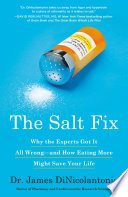
The Salt Fix
Why the Experts Got It All Wrong--and How Eating More Might Save Your Life
The Salt Fix by Dr. James DiNicolantonio has been mentioned in 1 episode across 1 podcast (1 episode recommends it and 0 episodes discuss it), through . Most frequently brought up by Andrew Huberman (1 episode) on Huberman Lab (1 episode).
- episode
- 1
- podcast
- 1
- person
- 1
- episode recommends it
- 1
Several reviews and studies, including those discussed in "The Salt Fix," indicate that when people increase their sodium intake against a backdrop of minimally processed foods, their cravings for sugar can indeed be significantly diminished.
What they say about it
- Identifies the author and credentials“authored by Dr. James DiNicolantonio”2
The best things said about it
I mentioned "The Salt Fix," which I believe is an interesting read, noting that much of the information runs counter to conventional narratives about salt.
The resource is a book that was authored by Dr. James DiNicolantonio. He's not a medical doctor. He's a scientist, so he's cardiovascular physiology as well, I believe, as a doctor of pharmacy, and the title of the book is "The Salt Fix.
Andrew Huberman Huberman Lab · Mar 2022 The resource is a book authored by Dr. James DiNicolantonio, who is a scientist in cardiovascular physiology and a doctor of pharmacy. The title of the book is "The Salt Fix.
That's when things really do seem to get hazardous, and it makes sense to avoid very high salt intake, so "The Salt Fix" describes the rationale behind those recommendations.
The Salt Fix" also describes, in detailed terms, the relationship between salt intake, potassium intake, and the relationship to sugar consumption.
Why people recommend it
Dr. James DiNicolantonio's The Salt Fix challenges conventional medical narratives surrounding sodium intake, exploring the history of salt and its physiological impacts on the human body. The book was featured extensively on the Huberman Lab podcast, where host Andrew Huberman recommended it as an engaging read that runs counter to standard health guidelines. Huberman noted that the author is a cardiovascular physiologist and doctor of pharmacy who provides deep scientific rationale for understanding safe and optimal ranges of sodium consumption. During the episode, the host detailed how the book examines the complex biochemical relationships linking salt intake, potassium balance, and sugar consumption. Specifically, Huberman cited reviews and studies discussed within the text indicating that increasing sodium intake against a backdrop of minimally processed foods can significantly diminish sugar cravings by aligning the neural pathways for salty and sweet tastes. The book is presented as a valuable corrective to decades of generalized dietary advice, offering a nuanced look at how electrolyte balance influences overall mental and physical performance, blood pressure regulation, and metabolic health. Listeners are encouraged to reevaluate their relationship with salt based on the physiological mechanisms outlined by the author.
Every mention
Andrew Huberman The resource is a book that was authored by Dr. James DiNicolantonio. He's not a medical doctor. He's a sci… 1
“The resource is a book that was authored by Dr. James DiNicolantonio. He's not a medical doctor. He's a scientist, so he's cardiovascular physiology as well, I believe, as a doctor of pharmacy, and the title of the book is "The Salt Fix."”
Mentioned on the show without a named speaker5
“The resource is a book authored by Dr. James DiNicolantonio, who is a scientist in cardiovascular physiology and a doctor of pharmacy. The title of the book is "The Salt Fix."”
“That's when things really do seem to get hazardous, and it makes sense to avoid very high salt intake, so "The Salt Fix" describes the rationale behind those recommendations.”
“"The Salt Fix" also describes, in detailed terms, the relationship between salt intake, potassium intake, and the relationship to sugar consumption.”
“Several reviews and studies, including those discussed in "The Salt Fix," indicate that when people increase their sodium intake against a backdrop of minimally processed foods, their cravings for sugar can indeed be significantly diminished, which syncs with how the neural pathways for salty and sweet interact.”
“I mentioned 'The Salt Fix,' which I believe is an interesting read, noting that much of the information runs counter to conventional narratives about salt.”