Podcast
Dwarkesh Patel's book list: the books mentioned on Dwarkesh Podcast
Books from the latest episodes

Most recommended on Dwarkesh Podcast
-
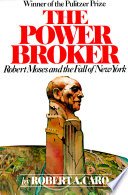
The Power Broker
Robert A. Caro's The Power Broker was discussed on the Dwarkesh Podcast by host Dwarkesh Patel and guests like Kenneth T. Jackson and Byrne Hobart. Jackson praised the biography as one of the best books he had ever read, highlighting Caro's exhaustive research and the staggering scope of Robert Moses's urban achievements. Patel and Hobart also referenced the book to analyze political incentives, urban planning strategies, and the evolving tone across Caro's chapters.
Discussed“The Power Broker came out. It was an immensely influential book. And we were concerned about so much power being centralized and given, delegated to one person so they could build.”
Where to get it
-
How Asia Works
Joe Studwell's book How Asia Works was referenced by Dwarkesh Patel across multiple episodes of the Dwarkesh Podcast. Patel brought up the book to analyze the postwar economic development and industrial success of countries like Korea, Taiwan, and Japan. He cited Studwell's arguments regarding labor abundance, land reform, reparations used to build industrial capacity, and the imposition of tariffs as developmental economic strategies used by Asian tigers.
Discussed“There's a book, How Asia Works, by this economist Joseph Studwell, where he is trying to analyze why Korea, Taiwan and Japan did so well after World War II. In the case of Korea, he tells a story”
Where to get it
-
The Art of War
On the Dwarkesh Podcast, guest Sarah Paine referenced Sun Tzu's The Art of War across several interviews between October 2023 and July 2025. Paine discussed Samuel B. Griffith's English translation of the text, highlighting specific military concepts such as disrupting alliances to isolate an adversary and the strategic implications of 'death ground.' She also contrasted Sun Tzu's classic Eastern military treatise with Japanese Bushido literature.
Discussed“Here you have Sun Tzu, who's China's big guru, Art of War, who's talking about how it's really important to disrupt alliances.”
Where to get it
-
The Prize
The Prize by Daniel Yergin was discussed on the Dwarkesh Podcast by host Dwarkesh Patel and author Daniel Yergin. Patel and Yergin explored the history of the oil industry, discussing Yergin's perspective that oil was a major strategic component and motivation behind conflicts such as World War I and World War II. Yergin explained the origins of the book's title from Churchill's words, and Patel highlighted lessons learned regarding the industry's early adaptability in the face of competing innovations like the electric light bulb.
Discussed“Last year, I interviewed Daniel Yergin, who wrote this big history of oil. He has like 300 pages about World War II in his book and specifically claims that Barbarossa was motivated by Hitler's desire to get the oil fields.”
Where to get it
-
The prince
On the Dwarkesh Podcast, Ada Palmer and Dwarkesh Patel discussed Niccolò Machiavelli's The Prince. Palmer recommended reading the book with an appreciation for Machiavelli's profound patriotism and explained that he wrote it during exile as a private job application to demonstrate his loyalty to the Florentine regime. The hosts analyzed historical contexts, the volatility of Italian politics, and common misconceptions regarding Machiavelli's views on political means and ends.
Discussed“He writes The Prince.”
Where to get it
-
The Secret of Our Success
Joseph Henrich's book The Secret of Our Success was discussed on the Dwarkesh Podcast in early 2025 by host Dwarkesh Patel and guest Scott Alexander. Patel cited Henrich's work while exploring how humans acquire social norms, how traditional societies developed complex food processing methods through cultural evolution, and how these concepts contrast with modern artificial intelligence models.
Discussed“But we have so many innate biases to follow social norms. I mean Joe Heinrich's The Secret of our Success is all about this. Even if kids aren't in the conventional school system, I think it's sometimes noticeable that they aren't following social norms in the same ways.”
Where to get it
-
Talent
Talent by Tyler Cowen and Daniel Gross was discussed on the Dwarkesh Podcast by host Dwarkesh Patel and guest Jimmy Soni in episodes from 2022. Dwarkesh Patel brought up the book while interviewing Tyler Cowen in September 2022 to explore insights on talent spotting, its relationship to Bryan Caplan's work, and the unpredictable nature of human potential. Patel also mentioned reading the book with Fin Moorhouse in July 2022, and Jimmy Soni referenced its section on Peter Thiel during an April 2022 episode.
Discussed“Is there something you've learned about talent spotting through writing the book that um you wish wasn't so that you find it disturbing or you find it disappointing in some way?”
Where to get it
-
Open Borders
On the Dwarkesh Podcast, Dwarkesh Patel praised Bryan Caplan and Zach Weinersmith's Open Borders as a binge-worthy graphic novel, and later asked Caplan whether the book addressed the tradeoff between national and global IQ. Patel also brought up the book to discuss the path from economic writing to policy changes regarding immigration. Bryan Caplan discussed the foreign translations of his book during a conversation about his travels in Eastern Europe.
Discussed“I don't remember the exact figures, but didn't Bryan address this in his Open Borders book as well, that even if the national IQ lowers on average, if you're still raising the global IQ, that still nets out positive, or am I remembering that wrong?”
Where to get it
-
The beginning of infinity
The Beginning of Infinity by David Deutsch was discussed on the Dwarkesh Podcast. Sarah Fitz-Claridge recommended the book for its insights into the evolution of creativity and anti-rational memes. Dwarkesh Patel also referenced Deutsch's ideas, including the concept of humans as universal explainers, during conversations with his guests.
Discussed“So in the fabric of reality um you discuss the possibility that virtual reality generators could plug in directly into our nervous system and give us sense data that way.”
Where to get it
-
Against the Grain
On the Dwarkesh Podcast, host Dwarkesh Patel and guests Kyle Harper and Charles C. Mann discussed James C. Scott's book Against the Grain. Patel and Harper cited the book to explore Scott's arguments regarding why early agriculturalists succeeded, how agriculture forced human populations into abusive nation-states, and historical instances where people chose to abandon state control to live as foragers.
Discussed“James Scott has an interesting theory in Against the Grain. I don't know if it originates with him, but he argues that one of the reasons that the early agriculturalists were so successful...”
Where to get it
-
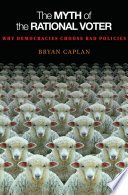
The Myth of the Rational Voter
Bryan Caplan's book The Myth of the Rational Voter came up in discussions on the Dwarkesh Podcast. Garett Jones praised the book while explaining how politicians balance voters' preferences against economic growth. Michael Huemer named it as a favorite work explaining the realities of how politics operates. Dwarkesh Patel also brought up the book during a conversation with Tyler Cowen to discuss its perspectives on education and the free market.
Recommended“Yeah, that's a great point from Bryan Kaplan's excellent book on Myth of the Rational Voter. I think his stories are right, which is that politicians facing reelection have this tradeoff between giving voters what the voters say they want and giving the voters the economic growth that will help the politicians get reelected.”
Where to get it
-
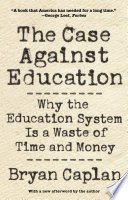
The Case against Education
On the Dwarkesh Podcast, host Dwarkesh Patel referenced Bryan Caplan's The Case against Education across multiple episodes in 2021 and 2022. Patel mentioned the book while speaking with guests such as Tyler Cowen, Steve Hsu, and Sarah Fitz-Claridge. He used Caplan's work to discuss arguments regarding educational attainment, signaling, whether schooling serves as a proxy for traits like conscientiousness, and what students actually retain after compulsory education.
Discussed“Now, the way I read your book about talent, it seems like also a critique of Brian's book, The Case Case Against Education.”
Where to get it
-
The making of the atomic bomb
On Dwarkesh Podcast, host Dwarkesh Patel and guest Leopold Aschenbrenner discussed Richard Rhodes's book The Making of the Atomic Bomb. Patel strongly recommended the book as a history of World War II and used its accounts of the Manhattan Project to explore counterfactual history, German calculations of critical mass, military planning, and parallels to contemporary AI development. Aschenbrenner also cited an anecdote from the book regarding secrecy and Leo Szilard.
Discussed“There's an amazing anecdote in The Making of the Atomic Bomb about this. Secrecy was one of the most contentious issues early on. Leo Szilard really thought a nuclear chain reaction and an atomic bomb were possible.”
Where to get it
-
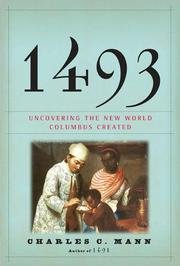
1493
Charles C. Mann's book 1493 was discussed on the Dwarkesh Podcast in September 2022 and June 2025. In the 2022 episode, Dwarkesh Patel and guest Charles C. Mann discussed the themes of the book, including historical events and gender ratios in silver mines. In June 2025, Patel brought up 1493 with guest Ken Rogoff as a historical example of Ming Dynasty paper currency instability and inflation, which Rogoff found to be a fascinating illustration.
Discussed“There’s a really interesting book by Charles Mann. I think it's called 1493. It’s about how during the Ming Dynasty in 17th-century China, they kept issuing different paper currencies and it was super unstable.”
Where to get it
-
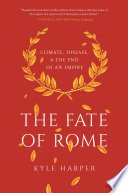
The Fate of Rome
Kyle Harper's book The Fate of Rome came up on the Dwarkesh Podcast when David Reich recommended it as an account of historical disease and climate disruptions during the Roman period. Host Dwarkesh Patel later interviewed Harper, referencing specific data from the book, including population decline graphs, mortality rates during the Black Death, and the economic conditions of the early Roman empire. The discussion highlighted how plagues like Yersinia pestis contributed to the transformation and fall of the empire.
Discussed“You have this graph in The Fate of Rome. You show human population over the last few thousand years. I assume that these two downspikes are both the bubonic plague, Yersinia pestis, right?”
Where to get it
-
The Complacent Class
On the Dwarkesh Podcast, host Dwarkesh Patel referenced Tyler Cowen's book The Complacent Class multiple times across different episodes. In October 2021, while speaking with Byrne Hobart, Patel brought up the book to frame a discussion on society's growing preferences for optionality. Earlier, in July 2020 during an episode featuring Tyler Cowen himself, Patel quoted the book regarding predictions of a great reset and questioned Cowen about whether dynamism would return following subsequent crises. Patel also noted a perceived contradiction between the themes in The Complacent Class and Cowen's work on big business.
Discussed“one way of reading tyler accounts complacent class is basically just a way of like our preference we've just our preferences for optionality have grown a lot”
Where to get it
-
The Smartest Guys in the Room
On the Dwarkesh Podcast, Dwarkesh Patel connected Garett Jones's research in Hive Mind to Bethany McLean and Peter Elkind's The Smartest Guys in the Room while discussing intelligence and corporate fraud. In an episode with McLean herself, Patel returned to the book's title to question whether readers could learn from documented frauds, and later asked McLean about the role of investigations. McLean explained that the Justice Department's investigations and publicly obtained internal documents were essential sources for her book about Enron.
Discussed“I'm really curious to ask you this, because in Hive Mind you're talking about the fact that higher IQ people on average are more cooperative in prisoner's dilemma type situations and I just interviewed Bethany McClean on the podcast. She wrote the Smartest Guys in the Room which is about Enron.”
Where to get it
-
Stubborn Attachments
On Dwarkesh Podcast, Dwarkesh Patel brought up Tyler Cowen's book Stubborn Attachments across multiple episodes. In an August 2020 episode with Robin Hanson, Patel asked if Hanson agreed with Cowen's argument that promoting continuous economic growth is the best way to care for the long term. Earlier in July 2020, while interviewing Cowen, Patel used the book to highlight a perceived contradiction with Cowen's other work and noted how the book's views aligned with common sense morality.
Discussed“tyler cotton writes and stubborn attachments that if you really care about the long term the best you can do is just promote economic growth uh do you agree with that”
Where to get it
-
The Decadent Society
On the Dwarkesh Podcast in late 2020, guests Charles Murray and Caleb Watney, along with host Dwarkesh Patel, referenced Ross Douthat's The Decadent Society. The speakers brought up the book to illustrate the concepts of societal stagnation and decay. Specifically, they utilized Douthat's work to examine major political and sociological phenomena, including falling fertility rates and future demographic shifts.
Discussed“ross stout that the new york times columnist wrote a book called i guess the title is the decadent society”
Where to get it
-
The Origin of Species
Charles Darwin's The Origin of Species was discussed on the Dwarkesh Podcast in March and April 2026. Dwarkesh Patel and his guests, Michael Nielsen and Terence Tao, analyzed the book alongside Newton's Principia Mathematica, comparing their publication dates, conceptual simplicity, and the historical progression of scientific discovery. Michael Nielsen praised Darwin's work for providing comprehensive evidence connecting natural selection to biology and geology.
Discussed“So Principia Mathematica is released in 1687. The Origin of Species is released in 1859.”
Where to get it
-
The Principia
The Principia by Isaac Newton was referenced across multiple episodes of Dwarkesh Podcast in 2026. Guests Adam Brown and Michael Nielsen, alongside host Dwarkesh Patel, discussed Newton's foundational laws of gravity published in 1687. They used the historic text to examine how science progresses, contrasting Newtonian physics with general relativity and evolutionary theory.
Discussed“The reigning theory of gravity at the time of Einstein stretches all the way back to Newton in the late 17th century, Newton's laws, in his Principia in 1687.”
Where to get it
-
The years of Lyndon Johnson (Volumes 1-3)
On Dwarkesh Podcast, guests Dwarkesh Patel and Byrne Hobart referenced Robert Caro's biographical volumes on Lyndon B. Johnson. Patel used the third volume to compare senate seniority systems, while Hobart discussed the first volume to analyze Johnson's political and financial operational skills, contrasting his background and tactics with those of historical figures like Coke Stevenson.
Discussed“This reminds me of this wonderful biography of LBJ that Robert Caro wrote. In volume three, which is about him taking over the Senate...”
Where to get it
-
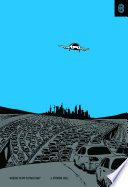
Where Is My Flying Car?
J. Storrs Hall's book Where Is My Flying Car? was discussed by Dwarkesh Patel across multiple episodes of the Dwarkesh Podcast. Patel cited the book while analyzing transportation systems and city design, specifically pointing out the inefficiency of intersecting grid roads in modern cities. He also referenced arguments from the book regarding how measured GDP growth can reflect efficiency gains rather than increases in total output.
Discussed“I really like I read this in um the book where is where is my flying car but that it's basically crazy that our cities are designed with roads like all intersect with each other”
Where to get it
-
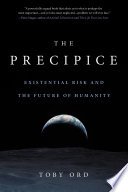
The Precipice
On the Dwarkesh Podcast, Joseph Carlsmith recommended Toby Ord's The Precipice, noting his personal involvement in the project and the profound impact of its ideas. Separately, Dwarkesh Patel referenced the book while discussing existential risk and whether expanding human presence into space could mitigate those threats.
Recommended“probably my primary recommendation that this is somewhat self-serving because I helped with this this project is the book The precipice by Toby ORD um I you know maybe familiar to many many of your listeners”
Where to get it
-
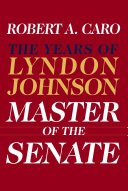
Master of the Senate
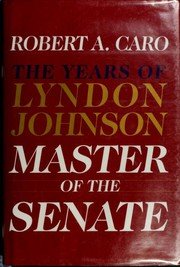
On the Dwarkesh Podcast, Dwarkesh Patel referenced Robert A. Caro’s Master of the Senate during interviews about political power and biography. Patel cited the third volume of Caro’s Johnson biographies to examine Lyndon Johnson's persuasiveness and political effectiveness. He also discussed Caro's research process, specifically mentioning an interview the author conducted with former Georgia Senator Herman Talmadge regarding his impressions of Johnson as a freshman senator.
Discussed“Master of the Senate, you make two points about how Johnson is effective, or at least this is the way I read it. One is that he is very persuasive if you're talking to him.”
Where to get it
-
MOBY-DICK; or, THE WHALE
On the Dwarkesh Podcast, Trenton Bricken brought up Herman Melville's Moby-Dick to illustrate an artificial intelligence evaluation in which a model successfully retrieved specific details from the text. In another episode, Marc Andreessen referenced the whaling industry depicted in the book to draw historical parallels to modern venture capital.
Discussed“I think in an early Anthropic paper with needle in the haystack, like can the model retrieve—I think it was Moby Dick… There was some passage about, say, hot dogs. A lot of hot dog talk in Moby Dick?”
Where to get it
-
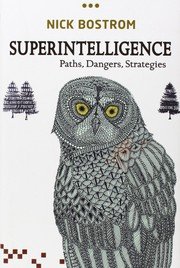
Superintelligence
On the Dwarkesh Podcast, guests referred to Nick Bostrom's Superintelligence when discussing artificial intelligence and safety. Daniel Kokotajlo noted that the book discussed oracle AIs similar to modern language models, and Carl Shulman cited the publication as an effective effort to draw public attention to AI risks and preparation in advance.
Discussed“I think the Alignment community did not really expect LLMs. I mean, if you look in Bostrom Superintelligence, there’s a discussion of Oracle AIs which are sort of like LLMs.”
Where to get it
-
The Better Angels of Our Nature
On the Dwarkesh Podcast, guests referenced Steven Pinker's The Better Angels of Our Nature in discussions about historical violence. Richard Hanania mentioned reading the book about a decade prior while talking about historical declines in violence and international relations, while Dwarkesh Patel cited Pinker's empirical evidence regarding changes in violence as political power centralized and governments formed.
Discussed“so i haven't um i read pinker you know when it came out better angels of our nature about a decade ago i don't remember him having that argument about nato”
Where to get it
-
The Economics of World War II
Mark Harrison's The Economics of World War II was discussed on the Dwarkesh Podcast by Byrne Hobart and Pradyu Prasad. Hobart mentioned the book to examine differing national economic conditions and material consumption during the war, while Prasad praised the text as a valuable source of statistics.
Discussed“I recently read a book The Economics of World War II which was comparing a bunch of countries and how their economies performed in World War II and one of the things that stood out about the U.S was that in a lot of terms of material consumption, the U.S didn't really look like a country going through a war.”
Where to get it
-
The Fabric of Reality
On Dwarkesh Podcast, host Dwarkesh Patel brought up David Deutsch's book The Fabric of Reality across multiple episodes. Patel referenced the text to explore philosophical and scientific concepts, discussing Deutsch's exploration of virtual reality generators plugging directly into the human nervous system and his argument regarding Gödel's incompleteness theorem and the importance of human creativity.
Discussed“So in the fabric of reality um you discuss the possibility that virtual reality generators could plug in directly into our nervous system and give us sense data that way.”
Where to get it
-
Land Is a Big Deal
On Dwarkesh Podcast, Dwarkesh Patel highly recommended Lars A. Doucet's book Land Is a Big Deal, noting that it fundamentally shifted his perspective on economics. Patel and Doucet discussed several concepts from the book, including Ricardo's law of rent, the administrative costs of income taxes, how surrounding communities drive land value, and the revenue potential of a land value tax.
Discussed“um and one of them has to do with um there's a there's an image in the book that um this guy um put together for me I'll show it to you later um but what it does is that it shows uh the rate of return”
Where to get it
-
The Laws of Trading
Agustin Lebron’s book The Laws of Trading was featured on an episode of Dwarkesh Podcast, where host Dwarkesh Patel praised it as a transformative work that shifts a reader's worldview. Patel discussed specific chapters with Lebron, focusing particularly on adverse selection, technical debt compared to financial debt, and claims regarding the timeframe required to train profitable traders. Lebron also reflected on how his discussions of motivation in the book related to a trader's mindset.
Recommended“today i have the pleasure of speaking with augustine lebron who is the author of the laws of trading a trader's guide to better decision making for everyone um this is one of those books uh you know tyler cowan calls these quake books that completely um shift the models you have of the world um i i really really”
Where to get it
-
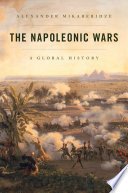
The Napoleonic Wars
On Dwarkesh Podcast, Dwarkesh Patel interviewed Alexander Mikaberidze about his book The Napoleonic Wars. Mikaberidze explained that he wrote the global history to correct omissions regarding regions outside Europe, detailing chapters that covered the economic dimensions of the conflict, the expansion of British rule in India, and his view of Napoleon as the last enlightened despot.
Discussed“today i have the pleasure of interviewing professor alexander mika beretza who is a professor of history and the ruth herring noel endowed chair at louisiana state university and he's the author of the napoleonic wars a global history”
Where to get it
-
Conflict
On Dwarkesh Podcast, Conflict: The Evolution of Warfare from 1945 to Ukraine by David Petraeus and Andrew Roberts was featured when host Dwarkesh Patel interviewed Andrew Roberts. Patel praised chapters of the book, discussed the four key tenets of strategic leadership outlined within it, and used its points on deterrence and the future of war to guide the conversation, ultimately recommending the book at the end of the episode.
Discussed“I have the pleasure of speaking with Andrew Roberts, who is most recently the author of “Conflict: The Evolution of Warfare from 1945 to Ukraine.””
Where to get it
-
How We Got Here
David Reich's book How We Got Here came up on the Dwarkesh Podcast, where host Dwarkesh Patel highly recommended it and drew upon its content throughout his interview with David Reich. Patel cited the book to frame questions regarding human lineages and Neanderthal ancestry, the evolution of the FOXP2 gene, early human population sizes, and the historical role of diseases like the bubonic plague. Reich also referenced the book to situate newer scientific research relative to its initial publication.
Discussed“From your book I remember that there are lineages of modern humans that are over 200,000 years separated from other groups, like the San hunter-gatherers from everybody descended from Eurasia.”
Where to get it
-
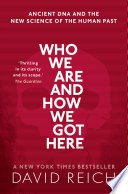
Who We Are and How We Got Here
On the Dwarkesh Podcast, Dwarkesh Patel recommended David Reich's book Who We Are and How We Got Here at the close of an interview, praising its wild account of human history. Throughout the episode, Patel drew on the book to frame questions about diverse human lineages, the FOXP2 gene and language evolution, early human population sizes, and European population changes linked to the bubonic plague. Guest David Reich also situated new research on Neanderthal ancestry relative to the publication of his book.
Discussed“From your book I remember that there are lineages of modern humans that are over 200,000 years separated from other groups, like the San hunter-gatherers from everybody descended from Eurasia.”
Where to get it
-
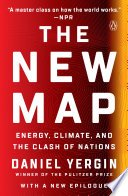
The New Map
Daniel Yergin discussed his book The New Map on the Dwarkesh Podcast in September 2024. He recommended that listeners read its section on the energy transition to understand its geopolitical complexities. Yergin also shared anecdotes from the book, including a meeting with Prime Minister Modi in India, and grouped it with his other works to emphasize their shared narrative focus on human history and contingency.
Discussed“One is in The New Map and you and I have talked about it. It’s the meeting with Prime Minister Modi in India.”
Where to get it
-
Discourses on Livy
Niccolò Machiavelli's Discourses on Livy was discussed on the Dwarkesh Podcast in June 2026 by host Dwarkesh Patel and guest Ada Palmer. The speakers explored Machiavelli's analysis of the Roman Empire's collapse, institutional stability, checks and balances, and the author's motivations for writing the work as a major scholarly project.
Discussed“This goes back to the thing in The Discourses.”
Where to get it
-
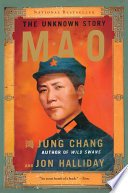
Mao
Jung Chang discussed her biography Mao: The Unknown Story on the Dwarkesh Podcast in November 2023. She and Dwarkesh Patel talked about her father's experiences within the Chinese political system, the historical events covered in the book, and the chapters addressing Liu Shaoqi. Chang also touched on the global impact of her books and the criticisms her Mao biography faced from academics.
Discussed“um Wild Swans obviously but also your biography of Mao titled Mao the unknown story both of which we'll talk about today”
Where to get it
-
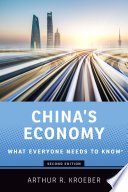
China's Economy
On Dwarkesh Podcast, Dwarkesh Patel recommended Arthur R. Kroeber's book China's Economy: What Everyone Needs to Know, noting that a friend had suggested it and calling it a vital resource for understanding how China functions. Patel cited specific concepts from the text, such as local government financing vehicles, and questioned Kroeber about his underlying thesis concerning the effectiveness of achieving outcomes in China relative to the country's massive scale.
Recommended“a research consultancy focused on China, and the author of China’s Economy: What Everyone Needs to Know. A friend, while I was in China, recommended it to me. And it’s been the most valuable and useful resource you can get today on how China works.”
Where to get it
-
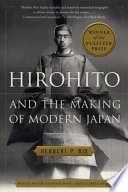
Hirohito and the Making of Modern Japan
On the Dwarkesh Podcast, Dwarkesh Patel and Pradyu Prasad discussed Herbert P. Bix's book Hirohito and the Making of Modern Japan in April 2022. Pradyu recommended the work, praising its extensive research while criticizing the opening chapters for lacking narrative flow. The hosts referenced the book while analyzing Japan's militarization, the American response to the invasion of China, and Hirohito's role in the war.
Discussed“And for the time being today we're discussing uh this book you recommended to me uh Hirohito and the making of modern Japan by Herbert Pix.”
Where to get it
-
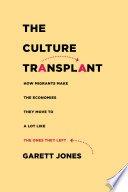
The Culture Transplant
On an episode of Dwarkesh Podcast in January 2023, Garett Jones and host Dwarkesh Patel discussed Jones's book The Culture Transplant. Patel asked about the relationship between immigration and economic freedom, and referenced a chapter on China. Jones explained that the opening of his book touches on welcoming Chinese migrants, and emphasized that ethnic diversity was the least important channel in his overall argument.
Discussed“I'm sure you saw the book that was released in 2020 titled Wretched Refuse? where they showed a slight positive relationship between immigration and free-market laws.”
Where to get it
-
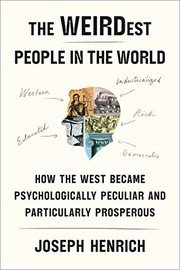
The WEIRDest People in the World
On the Dwarkesh Podcast, Dwarkesh Patel frequently highlighted Joseph Henrich's The WEIRDest People in the World during an interview with the author. Patel introduced the guest by naming the book as one of his favorites, used the shortened title to transition into specific segments, explored the book's overarching thesis on cultural evolution, and referenced its historical claims regarding European states and warfare.
Discussed“Today, I have the pleasure of chatting with Joseph Henrich, who is a professor of human evolutionary biology at Harvard University and an author of two of my favorite books, The Weirdest People in the World and before that, The Secret of Our Success.”
Where to get it
-
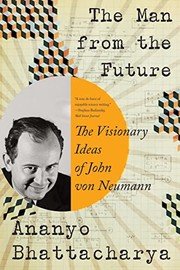
The Man from the Future
On the Dwarkesh Podcast, host Dwarkesh Patel and author Ananyo Bhattacharya discussed The Man from the Future in May 2022. Patel praised the biography of John von Neumann as an enjoyable and engaging read that successfully focused on ideas, while Bhattacharya encouraged readers to learn about von Neumann's life without necessarily drawing direct life lessons from it.
Recommended“most recently he's the author of the man from the future the visionary life of john von neumann and it was a extremely enjoyable read super interesting”
Where to get it
-
Survival of the City
On the Dwarkesh Podcast, host Dwarkesh Patel discussed Edward Glaeser and David Cutler's book Survival of the City during a November 2022 episode with Edward Glaeser. Patel highly recommended both Survival of the City and its predecessor, Triumph of the City, to his readers. He also cited research from Survival of the City regarding how firms like Microsoft altered their hiring practices during the pandemic.
Discussed“It's the actually part of the story of the Hamilton musical in the room where it happened.”
Where to get it
-
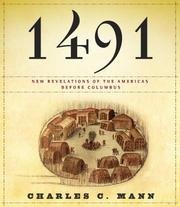
1491
On Dwarkesh Podcast, Charles C. Mann and host Dwarkesh Patel discussed the book 1491. Dwarkesh Patel cited it as one of his favorite books, and Charles C. Mann mentioned it while discussing recent historical findings that were omitted from the original publication.
Discussed“Today I have the pleasure of speaking with Charles Man, who is the author of three of my favorite books, including 1491, New Revelations of America”
Where to get it
-
Plagues upon the Earth
During an April 2025 episode of the Dwarkesh Podcast, host Dwarkesh Patel discussed Plagues upon the Earth by Kyle Harper. Patel used the book to question the author about life before agriculture, praised a specific historical profile regarding eighteenth-century London living conditions, and reflected on historical public health resources while reading through passages of the text.
Discussed“We can get back to your most recent book about human history and plagues. What do you make of the general argument that people have often made that we were living in a sort of Eden before agriculture?”
Where to get it
-
Working in Public
On the Dwarkesh Podcast, Nadia Asparouhova discussed her book Working in Public with Dwarkesh Patel. Nadia explained that the book grew out of her observations on participation and the maintenance of open-source projects, noting that she intended it for software developers and tech workers. Dwarkesh remarked on the strong Straussian message running through the text while discussing her views on open source and democracy.
Discussed“That's basically what spurred the writing of my book, because I was like, “Whatever's happening open source right now…” You start with this idea that democracy is great and we should have tons and tons of people participating.”
Where to get it
-
A Deepness in the Sky
Agustin Lebron recommended Vernor Vinge’s science-fiction novel, A Deepness in the Sky, on Dwarkesh Podcast as a way to think about long-term software projects, after Dwarkesh Patel asked him to name three books he would recommend.
Recommended“probably the best book i have ever read about software development is actually uh science fiction um vern revenge a deepness in the sky i feel like is uh very crucially about like it sort of takes this idea like what if we've been building on the same software stack for six thousand years what does that look like”
Where to get it
-
Dude, Where's My Flying Car?
Tim Jackson's book Dude, Where's My Flying Car? was discussed by Byrne Hobart on the Dwarkesh Podcast in October 2021. Hobart described the book as a detailed, thoughtful, and well-footnoted rant exploring the history and regulatory hurdles surrounding flying cars. He also referenced having read the book a couple of months prior while discussing recent developments, such as United Airlines placing orders for flying vehicles.
Recommended“where's my flying car which is um it's basically this extended um very detailed very thoughtful very well footnoted rant from someone who really wants to have a flying car and he's interested in them”
Where to get it
-
How to Read a Book
In the July 12, 2023 episode of Dwarkesh Podcast titled Andy Matuschak — The reason most learning tools fail, host Dwarkesh Patel brought up How to Read a Book by Mortimer J. Adler and Charles Lincoln Van Doren as a great guide on serious reading to explain why individuals struggle with difficult texts. Guest Andy Matuschak then referenced the book to discuss active reading and the necessity of asking questions.
Recommended“To explain this, I will reference Mortimer Adler and Van Doren's How to Read a Book, which is a great guide on serious reading.”
Where to get it
-
The Founders
On the Dwarkesh Podcast episode "Jimmy Soni - Peter Thiel, Elon Musk, and the Paypal Mafia" (2022-04-16), Dwarkesh Patel mentioned Jimmy Soni's book "The Founders" at the beginning of the episode while introducing the author's work about PayPal and Silicon Valley entrepreneurs. At the end of the episode, Patel returned to the book to highly recommend it to listeners.
Discussed“and most recently he's the author of the founders the story of paypal and the entrepreneurs who shaped silicon valley”
Where to get it
-
The Panorama of the City of New York
On Dwarkesh Podcast, Dwarkesh Patel recommended Kenneth T. Jackson's book, Robert Moses and the Modern City, and brought up Jackson's 2007 book, The Panorama of the City of New York, to discuss how views of Robert Moses and public works had changed over time.
Discussed“So it's interesting to look back on a time when we could actually get a lot of public works built very quickly and very efficiently and see if maybe we got our characterization of the people at the time wrong. And that's where your 2007 book comes in.”
Where to get it
-
10% Less Democracy
On Dwarkesh Podcast, Dwarkesh Patel discussed Garett Jones's book, 10% Less Democracy, while comparing how well different government institutions work regardless of democratic oversight. Patel specifically raised the book's chapter on bondholder democracy to ask how bondholders hold corporations accountable.
Discussed“I thought this was also one of your really interesting books. Even controlling for how much democratic oversight there is of institutions in the government there seems to be a wide discrepancy of how well they work.”
Where to get it
-
A Journey
On the Dwarkesh Podcast in June 2026, Dwarkesh Patel referenced Tony Blair's memoir A Journey during an interview with the former prime minister. Patel asked Blair about hindsight regarding leverage and authority, and referred to details in the book about the preparation and anxiety surrounding Prime Minister's Questions.
Discussed“I was reading your memoir. There were a couple of times where you said that you realized later on that you had more leverage. In retrospect, you were able to do things that you didn't do at the time.”
Where to get it
-
Cell Biology by the Numbers
On the Dwarkesh Podcast on July 12, 2023, Andy Matuschak brought up Cell Biology by the Numbers by Ron Milo and Rob Phillips as an example of learning specific trivia and quantitative facts using memory systems. Matuschak referenced the book again to illustrate how rote memorization can be transformed into solving interesting Fermi problems, such as calculating the volume of a nucleotide.
Discussed“For instance, a thing that I and some people I know have done is, we’ve gone through a book called Cell Biology by the Numbers, which says all of these things like,”
Where to get it
-
Dialogues on Ethical Vegetarianism
On the Dwarkesh Podcast, Dwarkesh Patel brought up Michael Huemer's book "Dialogues on Ethical Vegetarianism" while questioning whether moral progress had occurred in light of the harms caused by factory farming. Patel later referred back to the book to draw a comparison between its arguments regarding individual dietary choices and the risks associated with political change.
Discussed“so let me i've read dialogues and ethical uh vegetarianism which you also wrote and i want to question you on whether on that there has been moral progress”
Where to get it
-
Henry George's Progress and Poverty
Lars Doucet discussed Henry George's Progress and Poverty on the Dwarkesh Podcast in January 2023. He described the core paradox of poverty advancing alongside progress while explaining Georgist arguments against land speculation. Doucet also cited George's analysis of Ireland to illustrate how improvements in land value can be captured through increased rent.
Discussed“and if we can find a way to share the Earth then we can solve the Paradox that is the title of George's book progress and poverty why does poverty Advance even when progress advances”
Where to get it
-
Mein Kampf
On the Dwarkesh Podcast, Sarah C. M. Paine referenced Adolf Hitler's book Mein Kampf during a discussion on dictators. Paine argued that readers erred in dismissing the book as the work of a nutcase, noting that it accurately represented Hitler's ambitions and explicitly outlined what he intended to do.
Discussed“I think the problem with your question is that it’s just not who Hitler was. He wrote in Mein Kampf exactly what he wanted to do and that what you're describing is not what he's about.”
Where to get it
-
Progress and Poverty
Lars Doucet discussed Henry George's Progress and Poverty on the Dwarkesh Podcast in 2023. Doucet cited the book while explaining the central paradox of Georgism—why poverty advances even as overall economic progress advances—and argued that sharing the Earth can resolve this issue. He also referenced George's historical observations about Ireland to illustrate how improvements to land can be captured through increased rent.
Discussed“and if we can find a way to share the Earth then we can solve the Paradox that is the title of George's book progress and poverty why does poverty Advance even when progress advances”
Where to get it
-
Red Star Over China
Red Star Over China by Edgar Snow was discussed by Sarah Paine on the Dwarkesh Podcast in January 2025. Paine described it as a longstanding, continually printed source on Chinese history and the original footnote on Mao. She recounted how Snow conducted interviews with Mao, who reviewed and corrected the drafts, noting that the translator worked back and forth in an unusual editorial process.
Discussed“What Edgar Snow writes, Red Star Over China, you can probably go to Barnes and Noble and pick up a copy there. It's been in print ever since, and it's the original footnote in Chinese history because no one knew anything about Mao.”
Where to get it
-
The Adventures of Sherlock Holmes [12 stories]
On the Dwarkesh Podcast, Dwarkesh Patel brought up Arthur Conan Doyle's The Adventures of Sherlock Holmes during a conversation with Sholto Douglas and Trenton Bricken. Patel used Sherlock Holmes as an example to question how deductive reasoning fits into pattern-matching models of intelligence. He also proposed feeding the entire Sherlock Holmes book into an evaluation context as a test for long-context language models, suggesting a model could successfully identify the culprit through probability distribution.
Discussed“So you read Sherlock Holmes and the guy's incredibly sample efficient. He'll see a few observations and he'll basically figure out who committed the crime because there's a series of deductive steps”
Where to get it
-
The Methodology of Scientific Research Programmes
Imre Lakatos's book, The Methodology of Scientific Research Programmes, was discussed on the Dwarkesh Podcast in an episode titled Michael Nielsen – How science actually progresses in April 2026. Michael Nielsen referenced the work while examining how scientific progress and theories of the ether are evaluated. Host Dwarkesh Patel also discussed the book, highlighting Lakatos's interesting examples of extremely long-lasting, hostile verification loops and historical anomalies in science.
Discussed“Also from Imre Lakatos, The Methodology of Scientific Research Programmes.”
Where to get it
-
The Quest
The Quest by Daniel Yergin was discussed by the author on the Dwarkesh Podcast in September 2024. Yergin described it as the middle book in his energy trilogy and explained that the work was driven by the question of where the modern wind and solar industries originated, tracing solar back to European émigrés.
Discussed“That is one of the things that made The Prize, The New Map, and The Quest distinctive. The Quest, the middle book, was a question. Where the hell did the modern solar and wind industry come from anyway?”
Where to get it
-
The Symbolic Species
On the Dwarkesh Podcast in March 2024, Dwarkesh Patel referenced Terrence W. Deacon's book The Symbolic Species, which had been recommended by guest Trenton Bricken. Patel used the work to discuss the co-evolution of language and the human mind, as well as behavioral analogies for features found in language models.
Discussed“A book that Trenton recommended, The Symbolic Species, has this really interesting argument that language is not just a thing that exists, but it was also something that evolved along with our minds”
Where to get it
-
The Wizard and the Prophet
During an episode of the Dwarkesh Podcast featuring guest Charles C. Mann, host Dwarkesh Patel mentioned The Wizard and the Prophet. Patel brought up the title as part of a discussion highlighting the various books authored by Mann, and he referenced the book again during the episode's closing recap for interested listeners.
Discussed“Before Columbus, 1493, Uncovering the New World Columbus Created, and The Wizard and the Prophet.”
Where to get it
-
Wild Swans
On the Dwarkesh Podcast, author Jung Chang discussed her memoir Wild Swans with host Dwarkesh Patel. Chang described how recording her family's stories led to writing the book, which was first published in 1991 and launched her career. Patel noted the massive sales figures of Wild Swans and inquired about the impact and censorship of her books in China.
Discussed“and then I wrote wild swangs um which was published in 1991 first um and I became a writer”
Where to get it
-
A Brief History of Intelligence
Adam Marblestone brought up A Brief History of Intelligence by Max Bennett on the Dwarkesh Podcast while discussing how learning developed across different kinds of brains. Marblestone praised the work, noting that he and many other artificial intelligence researchers considered it a very good book.
Recommended“I think you've read this great book, A Brief History of Intelligence, right? I think this is a really good book. Lots of AI researchers think this is a really good book it seems.”
Where to get it
-
Angels in America
On the Dwarkesh Podcast episode "Joseph Carlsmith - Utopia, AI, & Infinite Ethics" on August 3, 2022, Joseph Carlsmith recommended Tony Kushner's Angels in America. Carlsmith praised the work as an epic and amazing achievement, while clarifying to listeners that it is a play rather than a traditional book.
Recommended“I I love the Play Angels in America um I think it's just I think it's a epic and amazing um and you know that's not quite a book but um you know you can read it”
Where to get it
-
Aztec Warfare
During the Dwarkesh Podcast episode on September 14, 2022, Charles C. Mann recommended Aztec Warfare by Ross Hassig. Mann praised the publication as an amazing military history book focusing on the Aztecs.
Recommended“There's a wonderful book by Ross Hess called um Aztec warfare in which he it's an amazing um book which is like a military history of the Aztecs.”
Where to get it
-
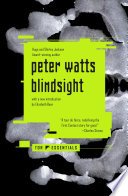
Blindsight
On the Dwarkesh Podcast, Gwern Branwen brought up Peter Watts's novel Blindsight. He praised the book as an unusually valuable work of science fiction, stating that a single volume of it was worth all of the Xanth or Star Wars Expanded Universe novels combined, while contrasting it with other works he considered less insightful.
Recommended“I could have easily cut it down to 20 novels or short stories which actually were good enough and insightful enough to actually change my view. One volume of Blindsight by Peter Watts is worth all hundred Xanth novels, or all 500 Expanded Universe novels of Star Wars.”
Where to get it
-
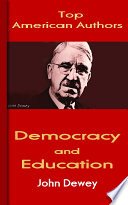
Democracy and Education
During the Dwarkesh Podcast episode Andy Matuschak — The reason most learning tools fail, Andy Matuschak referenced John Dewey's educational philosophy and mentioned his later book Experience and Education. Matuschak discussed the book while evaluating educational reform movements and the ongoing pedagogical debate surrounding student freedom and appropriate adult guidance.
Recommended“One of the heroes of the reform school movement is this philosopher named John Dewey, and he has a lovely book called Experience and Education, sort of written near the end of his time, looking back on all of his efforts to reform schooling in a kind of unschooling-ish direction.”
Where to get it
-
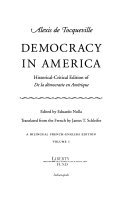
Democracy in America
During an episode of the Dwarkesh Podcast titled Sarah Paine — Why Russia Lost the Cold War, guest Sarah Paine brought up Democracy in America by Alexis de Tocqueville. She mentioned it alongside another of his works about the French monarchy while discussing the historical insight that governments are most vulnerable when they begin to implement reforms.
Recommended“This gentleman, Alexis de Tocqueville, is very famous for writing a book about the last days of the French monarchy before the French Revolution overturned it. He also wrote something about Democracy in America, both excellent books.”
Where to get it
-
Embracing Defeat
On the Dwarkesh Podcast, Pradyu Prasad recommended John W. Dower's book Embracing Defeat to host Dwarkesh Patel. Prasad described it as an essential book for understanding postwar Japan and the nature of the American occupation.
Recommended“There's a great book in this called Embracing Defeat which you should read because it's about the exact thing. It's what Japan after World War II and how the Americans did.”
Where to get it
-
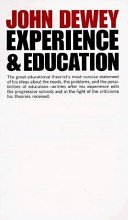
Experience And Education
On the Dwarkesh Podcast, Andy Matuschak recommended John Dewey's Experience and Education while discussing educational reform and the balance of freedom and guidance for children. Matuschak described the text as a lovely book written near the end of Dewey's career, looking back on his efforts to reform schooling in an unschooling-ish direction.
Recommended“One of the heroes of the reform school movement is this philosopher named John Dewey, and he has a lovely book called Experience and Education, sort of written near the end of his time, looking back on all of his efforts to reform schooling in a kind of unschooling-ish direction.”
Where to get it
-
Failure to Disrupt
Grant Sanderson brought up Justin Reich's book Failure to Disrupt on the Grant Sanderson (@3blue1brown) — Past, present, & future of mathematics episode of Dwarkesh Podcast. Sanderson mentioned the book as relevant to the discussion, noting that it covers the history of educational technology.
Recommended“There's a really good book that's actually kind of relevant to some of your early questions called Failure to Disrupt that goes over the history of educational technology.”
Where to get it
-
Housekeeping
During the 2022-08-03 episode of Dwarkesh Podcast titled Joseph Carlsmith - Utopia, AI, & Infinite Ethics, Joseph Carlsmith recommended Housekeeping by Marilynne Robinson. He shared that he had read the book the previous year and praised it, describing the numinous quality that he felt characterized much of her writing.
Recommended“and then uh I don't know uh last last year I read I read this book housekeeping by um by Marilyn Robinson and and uh it had this sort of numinous uh quality that um I think a lot of her writing does”
Where to get it
-
How to Win Friends and Influence People
On an episode of the Dwarkesh Podcast released on April 12, 2022, Bryan Caplan expressed his admiration for Dale Carnegie's "How to Win Friends and Influence People." Caplan cited specific management and positive reinforcement advice from the book, such as giving everyone a good reputation to live up to rather than criticizing them.
Recommended“I'm a big fan of Dale Carnegy's How to Win Friends and Influence People. And a lot of what he says is, you know, for example, he says, "Give everyone a good reputation to live up to. Don't go and tell people you are a terrible late person.”
Where to get it
-
Java For Dummies
Java For Dummies by Barry A. Burd was recommended on the Dwarkesh Podcast by Robert Martin. When giving advice to a young person aspiring to become a programmer, Robert Martin suggested starting out with simple introductory programming books like Java for Dummies.
Recommended“there's a whole bunch of books out there tons and tons and tons of very good books that you can start out with simple books like you know the joy of java or you know java for for dummies in 10 days”
Where to get it
-
Knowledge, Reality, and Value
On the May 28, 2021 episode of Dwarkesh Podcast, Dwarkesh Patel brought up Michael Huemer's book Knowledge, Reality, and Value. Patel introduced it as Huemer's newest work and an introduction to philosophy, highly recommending it for its incredible clarity and ease of reading.
Recommended“he's also written eight books the newest one of which is this introduction to philosophy knowledge reality and value i highly highly recommend it it's incredibly clear and easy to read”
Where to get it
-
Kolyma Stories
Agustin Lebron recommended Kolyma Stories by Varlam Shalamov on the Dwarkesh Podcast in June 2022. Lebron described the collection of stories about the Soviet gulag system as depressing yet profoundly revealing about human nature.
Recommended“and one that's uh kind of off the wall a little bit is uh it's called kalima stories by varalam shalamov and it is a collection of stories about people who who sort of lived in the gulag in siberia during sort of stalinist times um i think it is possibly the most revealing book about human nature that i've”
Where to get it
-
Labor Econ Versus the World
Dwarkesh Patel introduced Labor Econ Versus the World by Bryan Douglas Caplan on an April 2022 episode of the Dwarkesh Podcast. At the very start of the episode featuring Caplan, Patel recommended the book to listeners, describing it as a collection of the author's essays spanning across the years.
Recommended“So, uh, today we're talking about your book, Labor, Econ Versus the World, and it's a collection of your essays throughout the years, and I highly recommend it.”
Where to get it
-
Making Common Sense of Japan
On the Dwarkesh Podcast, Patrick McKenzie recommended Steven R. Reed's book Making Common Sense of Japan. McKenzie brought up the title to support his argument that cultural differences are frequently used as an error term when observers fail to understand underlying incentives.
Recommended“There's a great book, Making Common Sense of Japan. The author makes this persuasive argument at length.”
Where to get it
-
Means of Ascent
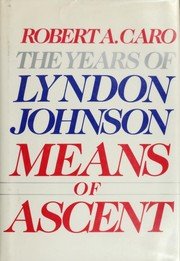
On Dwarkesh Podcast, Dwarkesh Patel praised the book as perhaps his favorite ever while asking Robert A. Caro about the historical Senate election portrayed within its pages.
Recommended“You know, means of ascent, the book about the election with Koch-Stevenson, the 1948 Senate election. Yes. That is my favorite book, perhaps ever. And you paint such a compelling portrait”
Where to get it
-
Mind children
On the Dwarkesh Podcast, Carl Shulman recommended Hans Moravec’s book Mind Children as a source for exploring substantive topics about AI and related issues discussed in the episode.
Recommended“His book Mind Children, some of his early academic papers. Fascinating not necessarily for the methodology I've been talking about but for exploring the substantive topics that we were discussing in the episode.”
Where to get it
-
Palaces for the People
On the Dwarkesh Podcast, Dwarkesh Patel recommended Eric Klinenberg's book 'Palaces for the People'. Patel mentioned the title to ask a guest about the important and varied functions that public libraries have historically played in communities.
Recommended“My friend, Eric Kleinberg has written a great book about, you know, I think they're called it's called Palaces for the People about, you know, the all the different functions that libraries have played.”
Where to get it
-
Promises I Can Keep
On the Dwarkesh Podcast, Bryan Caplan recommended Promises I Can Keep by Kathryn Edin and Maria Kefalas during an episode discussing poverty, discrimination, and mental illness. Caplan highlighted the work as one of his favorite books on poverty, noting that it examines the problems single mothers face and explains that they are often unhappy with the fathers of their children.
Recommended“you like there's uh one of my favorite books on poverty which is promises I can keep talks about the problems of single moms and one of the main things that it talks about is they're not happy with the fathers of their kids”
Where to get it
-
Red-Blooded Risk
Agustin Lebron recommended Aaron Brown’s book on the Dwarkesh Podcast as a great read for anyone interested in thinking broadly about risk-taking and financial risk management.
Recommended“if you're a software engineer and you like science fiction you know read it with the eye towards thinking of it as a softer book as a thing i would say um if you want to think about kind of risk-taking in general uh aaron brown's red-blooded risk is i'm trying to think of books that probably people haven't heard”
Where to get it
-
Robert A. Caro's The Years of Lyndon Johnson Set
On the Dwarkesh Podcast, Dwarkesh Patel named Robert Caro’s multi-volume biography set about Lyndon B. Johnson as his favorite history book and shared a specific lesson he took away from the political biography.
Recommended“What's your favorite history book? There's a wall of them behind you. Oh, obviously the Caro LBJ biographies. The main thing I took away from those books is LBJ had this quote”
Where to get it
-
Termination Shock
During an episode of the Dwarkesh Podcast, Charles C. Mann offered a recommendation for the novel Termination Shock by his friend Neal Stephenson. Mann described the book as a fun novel centered on a wealthy individual taking geoengineering into their own hands.
Recommended“So, let me give a plug here for a fun novel by my friend Neil Stevenson called Termination Shock, which is about some rich person just do just doing it and just doing geoengineering”
Where to get it
-
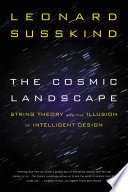
The Cosmic Landscape
Michael Huemer appeared on the Dwarkesh Podcast in May 2021 to discuss anarchy, capitalism, and progress. During the conversation, he recommended Leonard Susskind's book The Cosmic Landscape. Huemer mentioned that the book focused on the multiverse theory, which he found to be an amazing subject, though he momentarily struggled to recall the author's name during the interview.
Recommended“and also i like the cosmic landscape by um i've gotten his name now anyway um you know which uh was about the multiverse theory which i just find amazing”
Where to get it
-
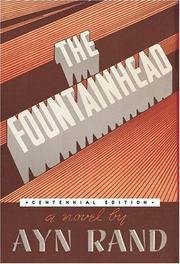
The Fountainhead
Michael Huemer appeared on the Dwarkesh Podcast in an episode released on May 28, 2021, titled Michael Huemer - Anarchy, Capitalism, and Progress. During the conversation, he discussed Ayn Rand's novel The Fountainhead, naming it as a favorite book that left an impression on him. Huemer credited Rand's work with influencing his decision to pursue philosophy.
Recommended“um i liked i liked the fountain head a lot um that that novel um and i guess like you know it had an influence on me and actually iran had an influence on me in um doing philosophy”
Where to get it
-
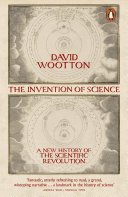
The Invention of Science
Scott Young recommended David Wootton's book The Invention of Science on the Dwarkesh Podcast in the episode titled Scott Young - Ultralearning. He brought up the book during a discussion focused on the history of science and innovation.
Recommended“and you know another book i recommend is david wooten's um i think it's called the invention of science uh i might be it might be the history invention of science i think”
Where to get it
-
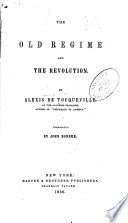
The Old Regime and the Revolution
On the Dwarkesh Podcast in December 2025, Sarah Paine recommended Alexis de Tocqueville's The Old Regime and the Revolution. Paine referenced the book, which examines the final days of the French monarchy before the revolution, to introduce Tocqueville's notable insights regarding political reform and the inherent dangers governments face when they begin to change.
Recommended“This gentleman, Alexis de Tocqueville, is very famous for writing a book about the last days of the French monarchy before the French Revolution overturned it. He also wrote something about Democracy in America, both excellent books.”
Where to get it
-
The Poker Face of Wall Street
On the Dwarkesh Podcast, Agustin Lebron recommended The Poker Face of Wall Street by Aaron Brown in June 2022. Lebron explained that reading Brown's book while he was playing poker as a young man sparked his initial interest in finance and led him to explore Wall Street.
Recommended“in fact all of his books are really good like um the thing that got me interested in finance was reading his book uh the poker face of wall street because i was playing poker at the time and it's kind of like hey maybe wall street maybe that's a thing”
Where to get it
-
The Specter of Skepticism in the Age of Enlightenment
Ada Palmer cited Anton M. Matytsin's book The Specter of Skepticism in the Age of Enlightenment on the Dwarkesh Podcast to provide historical details regarding raids on clandestine bookshops.
Recommended“There's a brilliant analysis in Anton Matytsin's book, The Specter of Skepticism in the Age of Enlightenment.”
Where to get it
-
Time and Chance
On the May 28, 2021 episode of Dwarkesh Podcast, Michael Huemer recommended David Z Albert's book Time and Chance. Huemer praised it as fascinating reading that explores what physics reveals about the nature of the universe.
Recommended“so i like the book time and chance by david albert because it's just like fascinating right just fascinating stuff about um you know what physics teaches us about the nature of the universe and so on”
Where to get it
-
Triumph of the City
On the Dwarkesh Podcast episode featuring Edward Glaeser on November 28, 2022, host Dwarkesh Patel recommended Edward L. Glaeser's book Triumph of the City to listeners at the end of the interview alongside Glaeser's other work, Survival of the City.
Recommended“Your re most recent book is Survival of the City and Before That Triumph of the City. Both of those I highly recommend to readers.”
Where to get it
-
Vital Question
On the October 10, 2025 episode of Dwarkesh Podcast, Dwarkesh Patel recommended Nick Lane's book The Vital Question to the audience. Patel suggested that listeners read the book to better follow the chemical and evolutionary arguments presented during the conversation.
Recommended“For the audience, this conversation has been most coupled with Nick’s book, The Vital Question. I would recommend getting that if you want to better follow the argument here.”
Where to get it
-
“The” History of the Decline and Fall of the Roman Empire
On the Dwarkesh Podcast episode titled 'Ada Palmer – Machiavelli is the most misunderstood thinker of all time,' released on June 16, 2026, guest Ada Palmer cited Edward Gibbon's multivolume work The History of the Decline and Fall of the Roman Empire. Palmer referenced Gibbon's writing from the late 18th century to illustrate historical perspectives on the Roman Empire, specifically noting his claim that the era of the five good emperors was the best time for humanity.
Discussed“So much so that when Gibbon is writing The History of the Decline and Fall of the Roman Empire, in multiple volumes, in the late 18th century he says that there's never been a better time for humanity than during the era of the five good emperors.”
Where to get it
























The next 122 books mentioned on Dwarkesh Podcast, ranked
- 7 Powers by Hamilton Helmer
- A Study of History by Arnold J. Toynbee
- A Swim in a Pond in the Rain by George Saunders
- Abundance by Ezra Klein
- Adaptation and Natural Selection by George Christopher Williams
- Against Method by Paul K. Feyerabend
- All the Devils Are Here by Bethany McLean
- An Economist Gets Lunch by Tyler Cowen
- Antifragile by Nassim Nicholas Taleb
- Apprentice to Genius by Robert Kanigel
- Areopagitica by John Milton
- Bible by Bible
- Breaking History by Jared Kushner
- Bushido, the Soul of Japan by Inazo Nitobe
- By the People by Charles Murray
- Chaos by Steven Henry Strogatz
- Civilizations by Laurent Binet
- Code of the Samurai by Thomas Cleary
- Coming apart by Charles A. Murray
- Common Sense by Thomas Paine
- Crime and Punishment by Fyodor Dostoevsky
- De Rerum Natura by Titus Lucretius Carus
- Death by Regulation by Mary J. Ruwart
- Don't be a Feminist by Bryan Douglas Caplan
- DOOMSDAY MACHINE by ELLSBERG DANIEL
- Dracula by Bram Stoker, Jack Kelly
- Enlightenment Now by Steven Pinker
- Erewhon by Samuel Butler
- Fossil Future by Alex Epstein
- Founding Brothers by Joseph J. Ellis
- Freedom's Forge by Arthur Herman
- Future Imperfect by David D. Friedman
- General Theory Of Employment , Interest And Money by John Maynard Keynes
- Good Work If You Can Get It by Jason Brennan
- Guns, Germs and Steel by Jared Diamond
- Harmonies of the World by Johannes Johannes Kepler
- History of the Decline and Fall of the Roman Empire Complete and Unabridged by Edward Gibbon
- Hitler's Willing Executioners by Daniel Jonah Goldhagen
- Hive Mind by Garett Jones
- How Buildings Learn by Stewart Brand
- How the Mind Works by Steven Pinker
- How to Be a High School Superstar by Cal Newport
- How to Pay for the War by John Maynard Keynes
- Human Accomplishment by Charles Murray
- Hyperion by Dan Simmons
- Ida Tarbell's Second Look at Standard Oil by Ida Minerva Tarbell
- Inadequate Equilibria by Eliezer Yudkowsky
- Inventing the Renaissance by Ada Palmer
- King Lear by William Shakespeare
- Legal Systems Very Different from Ours by Peter Leeson
- Leviathan by Thomas Hobbes
- Leviticus by Jacob Milgrom
- Life 3.0 by Max Tegmark
- Little Stalin Library by Stalin ...
- Natural Selection by George Christopher Williams
- Nickel and Dimed by Barbara Ehrenreich
- Nonlinear Dynamics and Chaos by Steven H. Strogatz
- Now it Can be Told by Leslie R. Groves
- On War by Carl von Clausewitz
- One Billion Americans by Matthew Yglesias
- Out Of Control by Kevin Kelly
- Paradise Lost by John Milton
- Philosophiae naturalis principia mathematica by Sir Isaac Newton
- Princes of the Yen by Richard Werner
- Public Choice Theory and the Illusion of Grand Strategy by Richard Hanania
- Quantum Computing since Democritus by Scott Aaronson
- Rebellion in the backlands (Os sertoes) by Euclides da Cunha
- Rome's Last Citizen by Rob Goodman
- Romeo and Juliet by William Shakespeare
- Seeing Like a State by James C. Scott
- Slavery in the Late Roman World, AD 275–425 by Kyle Harper
- Stranger in a Strange Land by Robert A. Heinlein
- Subtle is the Lord : The Science and the Life of Albert Einstein by Abraham Pais
- The Abolition of Man by C.S. Lewis
- The age of spiritual machines by Ray Kurzweil
- The Anarchy by William Dalrymple
- The Art of Computer Programming by Donald E. Knuth
- The Art of the Idea by John Hunt
- The Brain from Inside Out by György Buzsáki MD, PhD
- The Clockwork Universe by Edward Dolnick
- The Commanding Heights by Daniel Yergin
- The constitution of liberty by Friedrich A. von Hayek
- The Dawn of Everything by David Graeber
- The Discoverers by Daniel Joseph Boorstin
- The Education of a True Believer by Lev Kopelev
- The End of History and the Last Man by Francis Fukuyama
- The Fall of Hyperion by Dan Simmons
- The Gentleman's Magazine by Unknown
- The Goal by Eliyahu M. Goldratt, Jeff Cox
- The Gulag Archipelago by Aleksandr Isaevich Solzhenit︠s︡yn
- The Hagakure by Yamamoto Tsunetomo, D. E. Tarver
- The Horse, the Wheel, and Language by David W. Anthony
- The Iliad by Homer
- The Kill Chain by Christian Brose
- The Looming Tower by Lawrence Wright
- The machine that changed the world by James P. Womack
- The Money Game by Adam Smith
- The moon is a harsh mistress by Robert A. Heinlein
- The Origin of Consciousness in the Breakdown of the Bicameral Mind by Julian Jaynes
- The Political Thought of Mao Tsê-tung ; [selected and Translated By] Stuart R. Schram. Enlarged and Revised Ed by Zedong Mao
- The Reckoning by David Halberstam
- The Road to Serfdom by F. A. Hayek
- The Selfish Gene by Richard Dawkins
- The swerve by Stephen Greenblatt
- The Transfer of Cognitive Skill by Mark K. Singley
- The Unidentified by Rae Mariz
- The Venturesome Economy by Amar Bhidé
- The World Economy by Horst Siebert
- The World Set Free by H. G. Wells
- Theory of Games and Economic Behavior by John von Neumann
- Thinking, Fast and Slow by Daniel Kahneman
- Through the Looking-Glass by Lewis Carroll, Lewis Carroll, Lily Mathew, Lewis Lewis Carroll
- Toyota Production System by Taiichi Ohno
- Uncivil Society by Stephen Kotkin
- Wanting by Luke Burgis
- War and Peace by Leo Tolstoy
- Was Mao Really a Monster? by Gregor Benton
- What is Humanism and Why Does it Matter? by Anthony B. Pinn
- What We Owe the Future by William MacAskill
- When Genius Failed by Roger Lowenstein
- Why Buddhism is True by Robert Wright
- Zero to One by Peter Thiel
Guests who recommended books
- Ada Palmer (21)
- Daniel Yergin (14)
- Kenneth T. Jackson (14)
- Sarah Paine (13)
- Byrne Hobart (12)
- Charles C. Mann (8)
- Gwern Branwen (6)
- Lars Doucet (6)
- Agustin Lebron (6)
- Robert Caro (5)
- Andy Matuschak (5)
- Bryan Caplan (5)
- Alexander Mikaberidze (5)
- Michael Huemer (5)
- Michael Nielsen (4)
- David Reich (4)
- Jung Chang (4)
- Joseph Carlsmith (4)
- Jimmy Soni (4)
- Scott Young (4)
- Sarah C. M. Paine (3)
- Carl Shulman (3)
- Garett Jones (3)
- Pradyu Prasad (3)
- Elon Musk (2)
- Adam Marblestone (2)
- Scott Alexander (2)
- Patrick Collison (2)
- Tyler Cowen (2)
- Eliezer Yudkowsky (2)
- Bethany McLean (2)
- Nadia Asparouhova (2)
- Ananyo Bhattacharya (2)
- Sarah Fitz-Claridge (2)
- Charles Murray (2)
- Si Sheppard (1)
- Adam Brown (1)
- Jacob Kimmel (1)
- Stephen Kotkin (1)
- Arthur Kroeber (1)
Latest mentions
“The Power Broker came out. It was an immensely influential book. And we were concerned about so much power being centralized and given, delegated to one person so they could build.”
“Master of the Senate, you make two points about how Johnson is effective, or at least this is the way I read it. One is that he is very persuasive if you're talking to him.”
“You know, means of ascent, the book about the election with Koch-Stevenson, the 1948 Senate election. Yes. That is my favorite book, perhaps ever. And you paint such a compelling portrait”
“The classic text which got me invested in this whole scenario in the first place is Jared Diamond’s book, Guns, Germs, and Steel.”
“The reigning theory of gravity at the time of Einstein stretches all the way back to Newton in the late 17th century, Newton's laws, in his Principia in 1687.”
“I was actually going through—I think you might have recommended it—Steven Strogatz's textbook on… The chaos one? Nonlinear Dynamics and Chaos? I love that book.”
“I was actually going through—I think you might have recommended it—Steven Strogatz's textbook on… The chaos one? Nonlinear Dynamics and Chaos? I love that book.”
“He writes The Prince.”
“This goes back to the thing in The Discourses.”
“So much so that when Gibbon is writing The History of the Decline and Fall of the Roman Empire, in multiple volumes, in the late 18th century he says that there's never been a better time for humanity than during the era of the five good emperors.”
“So much so that when Gibbon is writing The History of the Decline and Fall of the Roman Empire, in multiple volumes, in the late 18th century he says that there's never been a better time for humanity than during the era of the five good emperors.”
“is Lucretius’ On the Nature of Things, De rerum natura, which is our best capsule of ancient atomism and the atoms and vacuum theory of matter.”
“Machiavelli becomes exciting first in the aftermath of the publication of Hobbes's Leviathan, because Hobbes's Leviathan hits European thought like a truck full of bricks.”
“We all know Thomas Paine's "Common Sense".”
“Julian Jaynes has this famous theory in The Origin of Consciousness in the Breakdown of the Bicameral Mind.”
“This is what was a shocking part of reading this story from the biography of Einstein that you recommended by... what was his first name? Abraham Pais. Abraham Pais. Subtle is the Lord.”
“Also from Imre Lakatos, The Methodology of Scientific Research Programmes.”
“So Principia Mathematica is released in 1687. The Origin of Species is released in 1859.”
“I think it was Knuth in the preface to The Art of Computer Programming who says something like it.”
“In fact, in the book in which he writes down the third law of planetary motion, it's an aside on The Harmonics of the World, which is just a book about how all these different planets have these different harmonies.”
Episodes
Link to this list from your show notes
Host or produce Dwarkesh Podcast? Give your listeners every book mentioned on the show, with the episode it came up in. New episodes are added as they come out.