
Episode · Dwarkesh Podcast · 2021-05-28
Books mentioned on Michael Huemer - Anarchy, Capitalism, and Progress
Michael Huemer is a professor of philosophy at the University of Colorado. He is the author of more than sixty academic articles in epistemology, ethics, metaethics, metaphysics, and political philosophy, as well as eight amazing books.
Dwarkesh Patel recommended Knowledge, Reality, and Value by Michael Huemer, and discussed Dialogues on Ethical Vegetarianism by Michael Huemer and The Better Angels of Our Nature by Steven Pinker. Michael Huemer recommended The Fountainhead by Ayn Rand, Time and Chance by David Z Albert, The Cosmic Landscape by Leonard Susskind, and The Myth of the Rational Voter by Bryan Caplan, and discussed How the Mind Works by Steven Pinker.
Books mentioned, in the order they came up
-
Knowledge, Reality, and Value
Knowledge, Reality, and Value is an introductory philosophy book written by Michael Huemer that explores fundamental questions about existence, truth, and ethics.
Recommended“he's also written eight books the newest one of which is this introduction to philosophy knowledge reality and value i highly highly recommend it it's incredibly clear and easy to read”
Where to get it
-
Dialogues on Ethical Vegetarianism
Discussed“so let me i've read dialogues and ethical uh vegetarianism which you also wrote and i want to question you on whether on that there has been moral progress”
Where to get it
-
The Better Angels of Our Nature
The Better Angels of Our Nature by Steven Pinker is a sweeping historical and data-driven book arguing that violence has steadily declined over the course of human history.
Discussed“now you explain some uh game theoretical reasons why a strong government may in fact increase violence in those cases but uh in uh in uh pinker's the better angels of our nature he lists out some empirical evidence”
Where to get it
-
How the Mind Works
How the Mind Works by Steven Pinker is a comprehensive exploration of evolutionary psychology that argues the human mind is a system of computation designed by natural selection to solve problems faced by our ancestral hunter-gatherers.
Discussed“and i wondered about this for a long time until i read stephen pinker's book how the mind works there's a particular passage that explains this it's basically what happened in primitive tribes”
Where to get it
-
The Fountainhead
The Fountainhead is Ayn Rand's classic novel exploring individualism, artistic integrity, and the uncompromising architect Howard Roark as he fights against collectivism and societal expectations.
Recommended“um i liked i liked the fountain head a lot um that that novel um and i guess like you know it had an influence on me and actually iran had an influence on me in um doing philosophy”
Where to get it
-
Time and Chance
Time and Chance by David Z Albert is a physics and philosophy book that examines what modern science reveals about the direction of time and the fundamental nature of the universe.
Recommended“so i like the book time and chance by david albert because it's just like fascinating right just fascinating stuff about um you know what physics teaches us about the nature of the universe and so on”
Where to get it
-
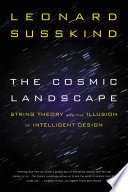
The Cosmic Landscape
Leonard Susskind's exploratory physics book examines the complex concept of the multiverse and the idea that our universe may be just one of many distinct pocket universes with different physical laws.
Recommended“and also i like the cosmic landscape by um i've gotten his name now anyway um you know which uh was about the multiverse theory which i just find amazing”
Where to get it
-
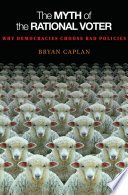
The Myth of the Rational Voter
The Myth of the Rational Voter is an influential critique of democratic political participation and voter behavior by Bryan Caplan.
Recommended“um i liked the myth of the rational voter that was very good um and you know just thinking about why politics works the way that it does”
Where to get it

Other mentions in this episode (2) — ad reads, self-promotion and passing references, never counted
“we had an incredibly wide-ranging conversation about a previous book of his the problem with political authority”
“um so is your goal then with your books not to convince not to just to convince people like oh you're right but then to get some of them to build the so-called machinery of freedom”