

Person
Ada Palmer's book recommendations
Key facts
- Ada Palmer has recommended or discussed 18 books on podcasts, as of June 16, 2026.
- Ada Palmer has talked about books on 2 podcasts, as of June 16, 2026.
- Those books came up in 3 episodes, as of June 16, 2026.
- The 3 books Ada Palmer has mentioned in the most episodes, as of June 16, 2026: The prince, Discourses on Livy and The Specter of Skepticism in the Age of Enlightenment.
- The latest episode with a book mention from Ada Palmer aired on June 16, 2026.
Updated
Across 2 podcasts. Every show Ada Palmer appears on, in one place — not just one.
Ada Palmer’s most recommended books
- The prince by Niccolò Machiavelli
- Discourses on Livy by Niccolò Machiavelli
- The Specter of Skepticism in the Age of Enlightenment by Anton M. Matytsin
- “The” History of the Decline and Fall of the Roman Empire by Edward Gibbon
- Areopagitica by John Milton
- Candide by Francois Voltaire
- Common Sense by Thomas Paine
- De Rerum Natura by Titus Lucretius Carus
- Henry IV, Part II by William Shakespeare
- History of the Decline and Fall of the Roman Empire Complete and Unabridged by Edward Gibbon
Ada Palmer is an American historian and writer. She is an associate professor at the University of Chicago and wrote the science fiction series Terra Ignota. On recent appearances on the Dwarkesh Podcast, Palmer explored various historical figures, eras, and texts. She recommended reading Niccolò Machiavelli's The Prince while keeping in mind the author's profound patriotism and willingness to serve his country. She also cited Anton M. Matytsin's book The Specter of Skepticism in the Age of Enlightenment to provide details about historical raids on clandestine bookshops. Throughout her discussions, Palmer analyzed the political volatility of Italy and the perspective Machiavelli conveyed in the final chapter of The Prince regarding the instability of local polities. She described how Machiavelli wrote The Prince during exile as a private job application and an expression of loyalty to the Florentine regime, and she referenced Machiavelli's other major work, The Discourses, when examining checks and balances and human nature. Finally, Palmer cited Edward Gibbon's multi-volume work The History of the Decline and Fall of the Roman Empire to illustrate historical perspectives on the era of the five good emperors.
Books recommended by Ada Palmer
-
The prince
The Prince by Niccolò Machiavelli is a foundational political treatise that explores how rulers gain, maintain, and wield power.
Discussed“By the time he's writing The Prince, it's dozens, in fact, the majority of these places.”
Where to get it
-
Discourses on Livy
Discourses on Livy by Niccolò Machiavelli is a foundational work of political philosophy that examines the mechanics of republican government, institutional stability, and the historical lessons of the Roman Empire.
Discussed“This goes back to the thing in The Discourses.”
Where to get it
-
The Specter of Skepticism in the Age of Enlightenment
The Specter of Skepticism in the Age of Enlightenment by Anton M.
Recommended“There's a brilliant analysis in Anton Matytsin's book, The Specter of Skepticism in the Age of Enlightenment.”
Where to get it
-
“The” History of the Decline and Fall of the Roman Empire
The History of the Decline and Fall of the Roman Empire by Edward Gibbon is a monumental multi-volume historical work chronicling the trajectory of the Roman world from the height of the empire to its eventual collapse.
Discussed“So much so that when Gibbon is writing The History of the Decline and Fall of the Roman Empire, in multiple volumes, in the late 18th century he says that there's never been a better time for humanity than during the era of the five good emperors.”
Where to get it
-
Areopagitica
Areopagitica by John Milton is a historically significant prose tract defending freedom of speech and opposing government licensing of the press.
Discussed“Milton writes this big treatise about why freedom of the press is important, the Areopagitica.”
Where to get it
-
Candide
Candide by Francois Voltaire is a classic philosophical novella that satirizes blind optimism and societal absurdities through the endless misfortunes of its protagonist.
Discussed“This is very much what Voltaire depicts in Candide, which is full of contrived and improbable reunions and encounters that clearly serve to teach us a moral lesson.”
Where to get it
-
Common Sense
Common Sense by Thomas Paine is a deeply influential 1776 political pamphlet that articulated arguments for American independence from Great Britain and helped ignite the American Revolution.
Discussed“We all know Thomas Paine's "Common Sense".”
Where to get it
-
De Rerum Natura
De Rerum Natura, or On the Nature of Things, is a philosophical poem by Titus Lucretius Carus that serves as a primary historical source for ancient atomism and the atomic theory of matter.
Discussed“is Lucretius’ On the Nature of Things, De rerum natura, which is our best capsule of ancient atomism and the atoms and vacuum theory of matter.”
Where to get it
-
Henry IV, Part II
Discussed“Remember those very telling lines in Henry IV Part II where young Henry V is advised by his father, "Busy minds with foreign wars achieve peace at home by sending our ambitious noblemen to other places to fight wars."”
Where to get it
-
History of the Decline and Fall of the Roman Empire Complete and Unabridged
The History of the Decline and Fall of the Roman Empire Complete and Unabridged is a sweeping historical work by Edward Gibbon chronicling the trajectory of the Roman civilization.
Discussed“So much so that when Gibbon is writing The History of the Decline and Fall of the Roman Empire, in multiple volumes, in the late 18th century he says that there's never been a better time for humanity than during the era of the five good emperors.”
Where to get it
-
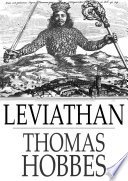
Leviathan
Leviathan by Thomas Hobbes is a foundational 1651 political treatise arguing that human life in a state of nature is solitary, poor, nasty, brutish, and short, and that peace requires absolute submission to a strong central authority.
Discussed“Machiavelli becomes exciting first in the aftermath of the publication of Hobbes's Leviathan, because Hobbes's Leviathan hits European thought like a truck full of bricks.”
Where to get it
-
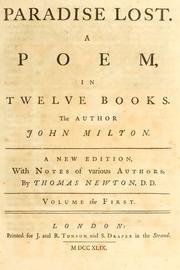
Paradise Lost
John Milton's epic poem Paradise Lost explores the fall of man, temptation, and the battle between good and evil.
Discussed“Paradise Lost is published under the censorious regime.”
Where to get it
-
Rameau's nephew,
Discussed“Diderot has other work that's about sexuality. He has a lot of discussions sexuality in Rameau's Nephew.”
Where to get it
-
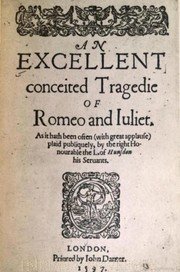
Romeo and Juliet
Romeo and Juliet by William Shakespeare is a timeless tragedy about two young lovers from feuding families whose deaths ultimately reconcile their households.
Discussed“This is where Romeo and Juliet is really helpful for us to understand.”
Where to get it
-
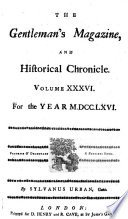
The Gentleman's Magazine
Discussed“That's a copy of The Gentleman's Magazine, another example of technology taking a leap forward in the 18th century.”
Where to get it
-
The Nun. by Diderot. Translated from the French. ... of 2; Volume 1
The Nun by Denis Diderot is an 18th-century epistolary novel that chronicles the harrowing experiences of a young woman forced into a convent against her will.
Discussed“He of course famously went to the Bastille for writing The Nun, which is a pornographic lesbian novel about nuns.”
Where to get it
-
The Poetic Edda
Discussed“And this is one of the big problems with paywalls because all of this is in journals that are behind paywalls or the ridiculous Oxford Annotated Poetic Edda, three volumes, $300 a volume. No wonder nobody has this book.”
Where to get it
-
The swerve
The swerve by Stephen Greenblatt is an acclaimed historical non-fiction work examining how the rediscovery of a long-lost Latin codex by Lucretius helped shape the emergence of the modern world.
Discussed“Many people are familiar with Greenblatt's book, The Swerve, which credits a lot of change to the materialist science that this poem articulates.”
Where to get it


Books by Ada Palmer
-
Too Like the Lightning
-
Seven Surrenders
-

The Will to Battle
-
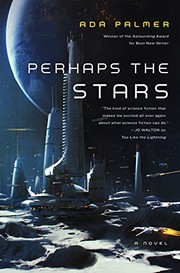
Perhaps the Stars
-

Reading Lucretius in the Renaissance
-
Sundown
-

Trace Elements
-
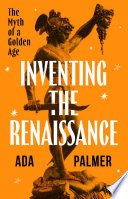
Inventing the Renaissance
Appearances
Other mentions (3: passing, ad reads, own books)
“Or we would say Lucretius's De rerum natura, which I did my dissertation on...”
“There's a much more complex story, which you know is told in my book, which refers to Greenblatt's. If anyone enjoyed The Swerve, you would really enjoy the more detailed zoom-in that Inventing the Renaissance has.”
“Milton of Paradise Lost fame wrote our first big defense of the free press.”