
Book · 1991 · Causes
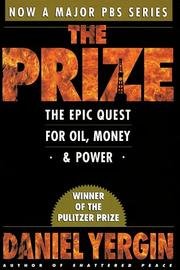
The Prize
The Epic Quest for Oil, Money & Power
- mentions
- 22
- people
- 7
- podcasts
- 4
- episodes
- 7
- critical mentions
- 0
The Prize is a really classic work about the central role energy particularly oil has played in global power and geopolitics for more than a century.
What they say about it
- History of oil and geopolitics“history of the oil market”5
- World War II coverage“big section in the book about World War II”2
The best things said about it
My second book, Daniel Jurgens's the prize. It's a history of the oil market. It's kind of the model for a lot of similar books that came first, but Jurgen's kind of the OG. It's I I love those histories that kind of tell a history of the world. This is almost a history of the 20th century, but through.
The Pulitzer Prize winning history of oil and he has a big section in the book about World War II because in his view oil was a big component of why the war happened the way it did.
One of the lessons to me from The Prize is actually enabling markets to adjust.
Here’s one of the things I really carried away from The Prize. There are hundreds of really interesting characters in the book, but the two most important characters, one is named Supply and one is named Demand.
With The Prize, one of the things is that I read the whole book aloud to myself to test every sentence.
The the sort of most famous book in this genre is Daniel Jurgens's The Prize, which is which is a fine book, but it it shares in this sort of tendency to, you know, kind of, you know.
Where and when it comes up
Mentions per year
How it comes up
Most mentions, by podcast
7 people who brought it up
Why people recommend it
The Prize by Daniel Yergin is a Pulitzer Prize-winning historical account exploring the central role that energy, particularly oil, has played in global power, geopolitics, and international conflict for over a century. Robin Wigglesworth recommended the book on The Ezra Klein Show, describing it as the original model for global histories that map out the course of the twentieth century through the lens of commodities. Jason Bordoff also endorsed the work on the same podcast to illustrate how resource competition has driven grand strategy. Additionally, Dwarkesh Patel and other podcast guests frequently cited Yergin's volume on the Dwarkesh Podcast while examining historical turning points, such as Adolf Hitler's motivations during Operation Barbarossa and Japan's fuel constraints during World War II. Yergin himself appeared on the show to discuss how his background in Soviet-American relations shaped his writing process, noting how one discovery led to another while emphasizing the profound role of individual willpower in shaping industrial history. Across multiple episodes, commentators treated the book as a definitive and monumental guide to understanding modern history through the extraction, control, and weaponization of global energy resources.
Every mention
Jason Bordoff the prize is a really classic work about the central role energy particularly oil has played in global powe… 1
“the prize is a really classic work about the central role energy particularly oil has played in global power and geopolitics for more than a century”
Megan O'Sullivan but let me mention another book or two so one of the books I wanted to mention was Kevin Rudd's book called… 1
“but let me mention another book or two so one of the books I wanted to mention was Kevin Rudd's book called The avoidable War”
Robin Wigglesworth my second book, Daniel Jurgens's the prize. It's a history of the oil market. It's kind of the model for a… 1
“my second book, Daniel Jurgens's the prize. It's a history of the oil market. It's kind of the model for a lot of similar books that came first, but Jurgen's kind of the OG. It's I I love those histories that kind of tell a history of the world. This is almost a history of the 20th century, but through”
Dwarkesh Patel Last year, I interviewed Daniel Yergin, who wrote this big history of oil. He has like 300 pages about Worl… 11
“Last year, I interviewed Daniel Yergin, who wrote this big history of oil. He has like 300 pages about World War II in his book and specifically claims that Barbarossa was motivated by Hitler's desire to get the oil fields.”
“I had Daniel Jorgen who wrote the prize which is the Pulitzer Prize winning history of oil and he has a big section in the book about World War II because in his view oil was a big component of why the war happened the way it did.”
“But one of the things that comes through in the book is the power of willpower.”
“One of the things I learned from The Prize, I didn't appreciate before. Before the car was invented, when Edison invented the light bulb, people were saying Standard Oil would go bankrupt because the light bulb was invented.”
“World War I, in my reading and writing of The Prize, is what really established oil as a strategic commodity. The person who became Britain's Foreign Secretary said that the Allies floated to victory on a sea of oil.”
“When I read in The Prize about what happens after World War II in the Middle East, it's about 200 pages of how initially, the Western companies make these deals with exporting countries.”
“Often when I'm reading your book, what happens is that oil producing countries can negotiate together, obviously after OPEC they're literally a cartel, but then these different Western companies can't.”
“One of the lessons to me from The Prize is actually enabling markets to adjust. Because when governments try to control them and make decisions and allocate—and some states want to do that today—it accentuates shortages and disruptions and price spikes.”
“Here’s one of the things I really carried away from The Prize. There are hundreds of really interesting characters in the book, but the two most important characters, one is named Supply and one is named Demand.”
“The thing I find wild when I'm reading The Prize is just how much economic development is ultimately contingent on the laws of physics. Suppose that fossilization happened in a different way and then oil didn't form. Let's say coal didn't form either.”
“When you were writing The Prize, it's a seven-year process. There's the endurance, but there's also the sense that you have to have faith that at the end of this–”
Daniel Yergin My first book had actually been a narrative history of the origins of the Soviet-American Cold War. So I br… 6
“My first book had actually been a narrative history of the origins of the Soviet-American Cold War. So I brought that perspective to it. As I was writing The Prize, I didn't intend to do all of that. But with the discoveries, one thing led to another.”
“That's where I got my title from. Originally it was going to be called “The Prize of the Venture" because that's what he said. Then I just made it The Prize.”
“When I wrote The Prize, I intended to write one chapter on World War II. I ended up writing five because it was just so amazing. World War II was not an oil war, but there was an oil war within World War II.”
“That sense of contingency, which is such a part of human history, I tried to capture. That is one of the things that made The Prize, The New Map, and The Quest distinctive. The Quest, the middle book, was a question.”
“I started off with really unrealistic expectations on The Prize, but I think the thing that kept me going was just how great the stories are and how important the stories were.”
“With The Prize, one of the things is that I read the whole book aloud to myself to test every sentence. Does every sentence have resilience? Does it sing? For me, that's a source of pleasure to do that.”
Doug Brunt I had a had a course that was dedicated to The Prize, which is The Epic Quest for Oil. 1
“I had a had a course that was dedicated to The Prize, which is The Epic Quest for Oil.”
Mia Wong the the sort of most famous book in this genre is Daniel Jurgens's The Prize, which is which is a fine book… 1
“the the sort of most famous book in this genre is Daniel Jurgens's The Prize, which is which is a fine book, but it it shares in this sort of tendency to, you know, kind of, you know”
Also mentioned in the same episodes
Other mentions (2: passing, ad reads, own books)
“His book, The Prize, won the Pulitzer Prize. It's about the entire history of oil. His most recent book is The New Map: Energy, Climate, and the Clash of Nations.”
“daniel jurgen the great historian who wrote the prize which so many people have recommended after part one that we that we read”