Episode · Dwarkesh Podcast · 2026-06-16
Books mentioned on Ada Palmer – Machiavelli is the most misunderstood thinker of all time
Had Ada Palmer back on – this time to talk about Machiavelli, perhaps the most misunderstood thinker of all time.
Dwarkesh Patel discussed The prince by Niccolò Machiavelli. Ada Palmer discussed Discourses on Livy by Niccolò Machiavelli, History of the Decline and Fall of the Roman Empire Complete and Unabridged by Edward Gibbon, “The” History of the Decline and Fall of the Roman Empire by Edward Gibbon, De Rerum Natura by Titus Lucretius Carus, Leviathan by Thomas Hobbes, and Common Sense by Thomas Paine.
Books mentioned, in the order they came up
-
The prince
The Prince by Niccolò Machiavelli is a classic 16th-century political treatise offering a pragmatic, unflinching guide on how political power is acquired, maintained, and wielded.
Discussed“He writes The Prince.”
Where to get it
-
Discourses on Livy
Discourses on Livy by Niccolò Machiavelli is a foundational work of political philosophy that examines the mechanics of republican government, institutional stability, and the historical lessons of the Roman Empire.
Discussed“This goes back to the thing in The Discourses.”
Where to get it
-
History of the Decline and Fall of the Roman Empire Complete and Unabridged
The History of the Decline and Fall of the Roman Empire Complete and Unabridged is a sweeping historical work by Edward Gibbon chronicling the trajectory of the Roman civilization.
Discussed“So much so that when Gibbon is writing The History of the Decline and Fall of the Roman Empire, in multiple volumes, in the late 18th century he says that there's never been a better time for humanity than during the era of the five good emperors.”
Where to get it
-
“The” History of the Decline and Fall of the Roman Empire
The History of the Decline and Fall of the Roman Empire by Edward Gibbon is a monumental multi-volume historical work chronicling the trajectory of the Roman world from the height of the empire to its eventual collapse.
Discussed“So much so that when Gibbon is writing The History of the Decline and Fall of the Roman Empire, in multiple volumes, in the late 18th century he says that there's never been a better time for humanity than during the era of the five good emperors.”
Where to get it
-
De Rerum Natura
De Rerum Natura, or On the Nature of Things, is a philosophical poem by Titus Lucretius Carus that serves as a primary historical source for ancient atomism and the atomic theory of matter.
Discussed“is Lucretius’ On the Nature of Things, De rerum natura, which is our best capsule of ancient atomism and the atoms and vacuum theory of matter.”
Where to get it
-
Leviathan
Leviathan by Thomas Hobbes is a foundational 1651 political treatise arguing that human life in a state of nature is solitary, poor, nasty, brutish, and short, and that peace requires absolute submission to a strong central authority.
Discussed“Machiavelli becomes exciting first in the aftermath of the publication of Hobbes's Leviathan, because Hobbes's Leviathan hits European thought like a truck full of bricks.”
Where to get it
-
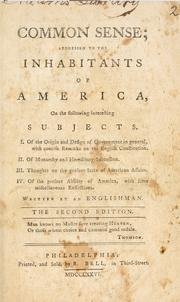
Common Sense
Common Sense by Thomas Paine is a deeply influential 1776 political pamphlet that articulated arguments for American independence from Great Britain and helped ignite the American Revolution.
Discussed“We all know Thomas Paine's "Common Sense".”
Where to get it