
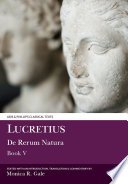
Is Lucretius’ On the Nature of Things, De rerum natura, which is our best capsule of ancient atomism and the atoms and vacuum theory of matter.
 Ada Palmer · Dwarkesh Podcast · Jun 2026
Why people recommend it
De Rerum Natura, or On the Nature of Things, is a philosophical poem by Titus Lucretius Carus that serves as a primary historical source for ancient atomism and the atomic theory of matter. The classical text was highlighted by historian Ada Palmer on the Dwarkesh Podcast, where she used Lucretius's work as a prime example of an ancient text that unexpectedly regained profound relevance centuries after its creation. Palmer noted that the poem remains our best capsule of ancient atomism and the foundational concepts concerning atoms and the vacuum theory of matter. Additionally, the work was implicitly referenced by Francis Ford Coppola on The Daily Stoic when discussing the philosophical inspirations that guided his life and artistic career. Both discussions emphasized the enduring power of ancient philosophical texts to transcend their eras and continue inspiring thinkers, scientists, and creators navigating complex questions about the nature of existence and the physical universe.
Every mention
Ada Palmer is Lucretius’ On the Nature of Things, De rerum natura, which is our best capsule of ancient atomism and th… 1
“is Lucretius’ On the Nature of Things, De rerum natura, which is our best capsule of ancient atomism and the atoms and vacuum theory of matter.”
Francis Ford Coppola Yeah, on the nature of things. 1
“Yeah, on the nature of things.”
Other mentions (2: passing, ad reads, own books)
“Or we would say Lucretius's De rerum natura, which I did my dissertation on...”
“This is the frontier we are in, and that was the topic of my last book, "Light of the Stars." You've got to do the astrobiology of the Anthropocene.”