
Person
Every book Dwarkesh Patel recommended on podcasts
Across 2 podcasts. Every show Dwarkesh Patel appears on, in one place — not just one.
Dwarkesh Patel is a podcaster and writer known for hosting the Dwarkesh Podcast, where he conducts in-depth interviews with scientists, historians, authors, and technologists about artificial intelligence, human history, and scientific progress. Throughout his podcast, Patel frequently recommends guest-authored books and foundational texts to help his audience follow complex historical and scientific arguments. He recommended Nick Lane's The Vital Question so listeners could better understand biochemical evolution and follow the conversation in detail. Patel brought up Joseph Henrich's The Secret of Our Success to explore human cultural evolution and cooperation, and promoted Andrew Roberts's historical work Conflict: The Evolution of Warfare from 1945 to Ukraine. To address why people struggle with difficult texts, Patel recommended Mortimer J. Adler and Charles Van Doren's How to Read a Book as an essential guide for serious reading. He also mentioned Eric Klinenberg's Palaces for the People to discuss the civic functions of public libraries, recommended Edward Glaeser's urban studies books Survival of the City and Triumph of the City, and praised Jimmy Soni's business history book The Founders for chronicling the story of PayPal and Silicon Valley entrepreneurs.
Books recommended by Dwarkesh Patel
-
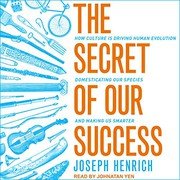
The Secret of Our Success
The Secret of Our Success by Joseph Henrich explores how human cultural learning, cooperation, and cumulative knowledge have driven evolutionary success far beyond raw intelligence alone.
Recommended“Joseph Henrik has this wonderful book about this. It wasn't just it wasn't um just intelligence, it wasn't even mainly intelligence.”
Where to get it
-
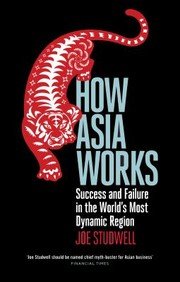
How Asia Works
How Asia Works by Joe Studwell is a comprehensive exploration of the economic development strategies that shaped the dynamic economies of East Asia through agriculture, export-oriented manufacturing, and state intervention.
Discussed“a line from How Asia Works where they're talking about the reparations that Korea got after World War Two from Japan and how they're using that to build up their industrial capacity and there's a line from one of the line managers in the factory who goes,”
Where to get it
-
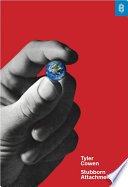
Stubborn Attachments
Stubborn Attachments by Tyler Cowen is a philosophical and economics book that argues sustained long-term economic growth is a moral imperative essential for human flourishing.
Discussed“tyler cotton writes and stubborn attachments that if you really care about the long term the best you can do is just promote economic growth uh do you agree with that”
Where to get it
-
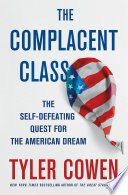
The Complacent Class
The Complacent Class by Tyler Cowen is a cultural and economic critique examining how contemporary society has increasingly rejected dynamism, risk-taking, and mobility in favor of comfort, stagnation, and optionality.
Discussed“one way of reading tyler accounts complacent class is basically just a way of like our preference we've just our preferences for optionality have grown a lot”
Where to get it
-
The Origin of Species
The Origin of Species by Charles Darwin is a foundational 1859 scientific text that introduced the theory of evolution by natural selection, forever altering humanity's understanding of biology and the natural world.
Discussed“So Principia Mathematica is released in 1687. The Origin of Species is released in 1859.”
Where to get it
-
Conflict
Conflict: The Evolution of Warfare from 1945 to Ukraine by David Petraeus and Andrew Roberts is a comprehensive historical and strategic analysis that traces how military combat and geopolitical leadership have transformed from the end of the Second World War into the modern era.
Discussed“I have the pleasure of speaking with Andrew Roberts, who is most recently the author of “Conflict: The Evolution of Warfare from 1945 to Ukraine.””
Where to get it
-
How to Read a Book
How to Read a Book by Mortimer J.
Recommended“To explain this, I will reference Mortimer Adler and Van Doren's How to Read a Book, which is a great guide on serious reading.”
Where to get it
-
Open Borders
Open Borders by Bryan Caplan and Zach Weinersmith is a graphic novel exploring the economics and philosophy of global migration.
Discussed“so step one we have a brilliant economist write a comprehensive book called open borders step three we have Vatican radical immigration liberalization”
Where to get it
-
Palaces for the People
Palaces for the People by Eric Klinenberg is a sociological study that examines how social infrastructure—such as libraries, parks, and community organizations—shapes civic life, combats loneliness, and builds resilient communities.
Recommended“My friend, Eric Kleinberg has written a great book about, you know, I think they're called it's called Palaces for the People about, you know, the all the different functions that libraries have played.”
Where to get it
-
Survival of the City
Survival of the City by Edward L.
Discussed“It's the actually part of the story of the Hamilton musical in the room where it happened.”
Where to get it
-
The Founders
The Founders by Jimmy Soni is a narrative history chronicling the creation of PayPal and the ambitious entrepreneurs who helped shape modern Silicon Valley.
Discussed“and most recently he's the author of the founders the story of paypal and the entrepreneurs who shaped silicon valley”
Where to get it
-
Triumph of the City
Triumph of the City by Edward L.
Recommended“Your re most recent book is Survival of the City and Before That Triumph of the City. Both of those I highly recommend to readers.”
Where to get it
-
Vital Question
Vital Question by Nick Lane is a landmark biochemistry book exploring the deepest origins of life and how biological energy evolved.
Recommended“For the audience, this conversation has been most coupled with Nick’s book, The Vital Question. I would recommend getting that if you want to better follow the argument here.”
Where to get it
-
1491
1491 by Charles C.
Discussed“Today I have the pleasure of speaking with Charles Man, who is the author of three of my favorite books, including 1491, New Revelations of America”
Where to get it
-
1493
1493 by Charles C.
Discussed“Before Columbus, 1493, Uncovering the New World Columbus Created, and The Wizard and the Prophet.”
Where to get it
-
Against Method
Against Method by Paul K.
Discussed“his student firearm and i think uh actually wrote a book against method um which is which is sort of yet another kind of philosopher of science arguing against that idea”
Where to get it
-
Against the Grain
Against the Grain by James C.
Discussed“It sounds it reminds me of um James Scott's thing in against the grain where he pointed out there were if you look at the history of agriculture there's many examples where people just like choose to run away and live as foragers in the forest”
Where to get it
-
Breaking History
Breaking History by Jared Kushner is a White House memoir written by the former senior advisor to President Donald Trump, offering an insider account of high-stakes political events, policy decisions, and international negotiations during his time in office.
Discussed“And if you read Jared Kushner's book, Memoir about the White House, there are very, very similar tales there.”
Where to get it
-
Chaos
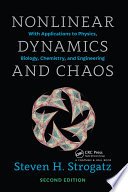
Discussed“I was actually going through—I think you might have recommended it—Steven Strogatz's textbook on… The chaos one? Nonlinear Dynamics and Chaos? I love that book.”
Where to get it
-
Coming apart
Coming Apart by Charles A.
Discussed“So there's you know there's Charles Murray's story in coming apart which is that actually the culture isn't emphasizing these values or at least like the elites in the culture are not emphasizing these values that they live by.”
Where to get it
-
Discourses on Livy
Discourses on Livy is Niccolò Machiavelli's major historical and political treatise examining the mechanics of republics and the history of Rome.
Discussed“In Discourses on Livy, Machiavelli talks about how one of the reasons the Roman Empire's fall was instigated is that these generals were months away on the frontier”
Where to get it
-
Don't be a Feminist
Discussed“Uh, so let's talk about your book, Don't Be a Feminist.”
Where to get it
-
Enlightenment Now
Enlightenment Now by Steven Pinker is a data-driven defense of reason, science, humanism, and progress that argues humanity is living in an era of unprecedented health, prosperity, and safety.
Discussed“i thought it was an enlightenment now but yeah okay so yeah also yeah i also read enlightenment now i i don't remember you know could be it could be better or not”
Where to get it
-
Fossil Future
Fossil Future by Alex Epstein argues that fossil fuels are essential for human flourishing and that eliminating them prematurely would cause widespread societal collapse and death.
Discussed“I think you made this argument when you were responding to Alex Epstein on fossil future, where you said uncertainties also extend out into the domain where there’s a bad outcome or much bigger outcome than you’re anticipating.”
Where to get it
-
General Theory Of Employment , Interest And Money
John Maynard Keynes's influential 1936 economic treatise reshaped macroeconomic policy and continues to provoke critical debate among modern economists and scholars.
Discussed“So, chapter twelve, General Theory of Interest, Employment, and Money.”
Where to get it
-
Harmonies of the World
Discussed“In fact, in the book in which he writes down the third law of planetary motion, it's an aside on The Harmonics of the World, which is just a book about how all these different planets have these different harmonies.”
Where to get it
-
Inadequate Equilibria
Inadequate Equilibria by Eliezer Yudkowsky is an online book exploring game theory, societal traps, and the reasons why civilizations often remain stuck in suboptimal states.
Discussed“elias rudowsky wrote a book called inadequate equilibria as i'm sure you know”
Where to get it
-
Inventing the Renaissance
Inventing the Renaissance by Ada Palmer is a historical exploration of how early modern scholars, poets, and printers consciously constructed the myth of the Renaissance as a distinct rebirth of classical learning separate from the medieval era.
Discussed“Today we're discussing your book, Inventing the Renaissance.”
Where to get it
-
King Lear
William Shakespeare's King Lear is a timeless tragedy exploring themes of aging, madness, familial betrayal, and the painful acquisition of wisdom.
Discussed“So these are kind of aspirational, like, “Oh, I wish I could read King Lear. I want to be the kind of person who reads King Lear.””
Where to get it
-
Little Stalin Library
Discussed“You recommended a book to me, Stalin's Library, which talks about the different books that Stalin read and the fact that he was kind of a smart, well-read guy.”
Where to get it
-
Nonlinear Dynamics and Chaos
Discussed“I was actually going through—I think you might have recommended it—Steven Strogatz's textbook on… The chaos one? Nonlinear Dynamics and Chaos? I love that book.”
Where to get it
-
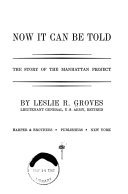
Now it Can be Told
Discussed“Manhattan Project is much in the news with the Oppenheimer movie. If you look at the very last bit of General Grove's book on Manhattan Project, he talks about what are the most fundamental principles about why it succeeded?”
Where to get it
-
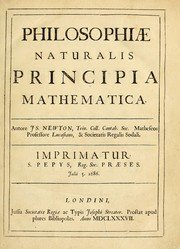
Philosophiae naturalis principia mathematica
Philosophiae Naturalis Principia Mathematica by Sir Isaac Newton is a foundational scientific text published in 1687 that establishes the laws of motion and universal gravitation, fundamentally shaping classical mechanics and modern physics.
Discussed“Principia Mathematica was published in 1687. So The Origin of Species comes out two centuries after Principia. Conceptually, it seems like Darwin's theory is simpler.”
Where to get it
-
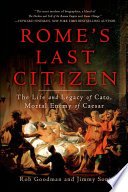
Rome's Last Citizen
Rome's Last Citizen by Rob Goodman and Jimmy Soni is a biography of Cato the Younger, examining the life and political philosophy of Julius Caesar's fiercest opponent and the ultimate defender of the Roman Republic.
Discussed“today i'm interviewing jimmy sony he's the author of rome's last citizen a biography of cato”
Where to get it
-
Seeing Like a State
Seeing Like a State by James C.
Discussed“Beijing's urban design looks like something straight out of James Scott's Seeing Like a State.”
Where to get it
-
Subtle is the Lord : The Science and the Life of Albert Einstein
Discussed“This is what was a shocking part of reading this story from the biography of Einstein that you recommended by... what was his first name? Abraham Pais. Abraham Pais. Subtle is the Lord.”
Where to get it
-
Talent
Talent by Tyler Cowen and Daniel Gross is a nonfiction guide designed to help leaders identify, evaluate, and recruit exceptional individuals.
Discussed“Is there something you've learned about talent spotting through writing the book that um you wish wasn't so that you find it disturbing or you find it disappointing in some way?”
Where to get it
-
The Anarchy
William Dalrymple's gripping historical study documents the relentless and dramatic rise of the East India Company, detailing the corporate colonization of South Asia and the profound historical consequences that followed.
Discussed“The Anarchy by William Del Rimple.”
Where to get it
-
The beginning of infinity
The Beginning of Infinity by David Deutsch is a wide-ranging exploration of science, human progress, and the philosophical underpinnings of the Enlightenment, arguing that human problems are solvable and that knowledge creation is infinite.
Discussed“So in the fabric of reality um you discuss the possibility that virtual reality generators could plug in directly into our nervous system and give us sense data that way.”
Where to get it
-
The Case against Education
The Case against Education by Bryan Caplan is a provocative economic book arguing that the modern education system is largely a waste of time and money because college degrees function primarily as social signaling mechanisms rather than tools for imparting useful skills.
Discussed“Now, the way I read your book about talent, it seems like also a critique of Brian's book, The Case Case Against Education.”
Where to get it
-
The Clockwork Universe
Discussed“There's this book, The Clockwork Universe by Edward Dolnick, which covers a lot of this era of history we're talking about. He has this interesting observation in there. The Origin of Species was published in 1859.”
Where to get it
-
The End of History and the Last Man
The End of History and the Last Man by Francis Fukuyama is a prominent political science and philosophy book arguing that the worldwide spread of liberal democracies may signal the endpoint of humanity's sociocultural evolution.
Discussed“One thing you've written about that I find really interesting is — we're both fans of Fukuyama's book The End of History and the last quarter of that book completely contradicts the first three quarters of the book where he's just saying that these men at the end of history are pathetic last men who have no desire for recognition.”
Where to get it
-
The Fabric of Reality
The Fabric of Reality by David Deutsch is a seminal work of popular science and philosophy that explores four foundational strands of thought: quantum physics, epistemology, computation, and evolution.
Discussed“So in the fabric of reality um you discuss the possibility that virtual reality generators could plug in directly into our nervous system and give us sense data that way.”
Where to get it
-
The Kill Chain
The Kill Chain by Christian Brose is a critical examination of modern military strategy, technological vulnerabilities, and the urgent need for Western defense systems to adapt to twenty-first-century warfare.
Discussed“There's a book by a guy who now works at Anduril called the Kill Chain. The truth is that a lot of classified Pentagon stuff has said this.”
Where to get it
-
The Methodology of Scientific Research Programmes
Discussed“Lakatos has all kinds of interesting examples in the book about these hostile verification loops that are extremely long-lasting.”
Where to get it
-
The Myth of the Rational Voter
The Myth of the Rational Voter by Bryan Caplan is an influential economic and political science text that examines voter behavior and the phenomenon of political irrationality.
Discussed“So like in the myth of the rational voter, education is so wonderful. Like it it makes you more free market.”
Where to get it
-
The Origin of Consciousness in the Breakdown of the Bicameral Mind
The Origin of Consciousness in the Breakdown of the Bicameral Mind by Julian Jaynes is a classic 1976 work that posits a provocative hypothesis about the historical development of human consciousness and psychological self-awareness.
Discussed“Julian Jaynes has this famous theory in The Origin of Consciousness in the Breakdown of the Bicameral Mind.”
Where to get it
-
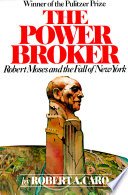
The Power Broker
The Power Broker by Robert A.
Discussed“In the last episode, we go deep into the other biography by Robert Caro, The Power Broker, and talk about why it might be inaccurate in certain respects.”
Where to get it
-
The prince
The Prince by Niccolò Machiavelli is a classic Renaissance treatise that outlines the pragmatic realities, strategies, and moral compromises involved in the acquisition and preservation of political power.
Discussed“He writes The Prince.”
Where to get it
-
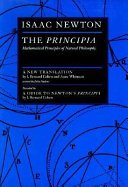
The Principia
The Principia by Isaac Newton, along with I.
Discussed“So Principia Mathematica is released in 1687. The Origin of Species is released in 1859.”
Where to get it
-
The Reckoning
David Halberstam's acclaimed historical work explores the deep economic and industrial anxieties experienced by the United States during the twentieth century, focusing particularly on the intense competition between American manufacturers and the surging rise of Japanese car exports during the nineteen-seventies and nineteen-eighties.
Discussed“There's this book called the reckoning about the US and how it dealt with the rise of Japanese exports in the 70s and 80s.”
Where to get it
-
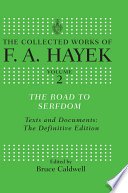
The Road to Serfdom
F.
Discussed“So before we get into his actual views, I think his career is a tremendous white pill in the sense that he writes The Road to Serfdom in 1944 when Nazi Germany and Soviet Union are both prominent players.”
Where to get it
-
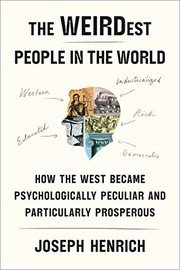
The WEIRDest People in the World
The WEIRDest People in the World by Joseph Patrick Henrich, Joseph Henrich, and Korey Jackson is an exploration of how psychology, anthropology, and culture intersect to shape distinct societal structures.
Discussed“Today, I have the pleasure of chatting with Joseph Henrich, who is a professor of human evolutionary biology at Harvard University and an author of two of my favorite books, The Weirdest People in the World and before that, The Secret of Our Success.”
Where to get it
-
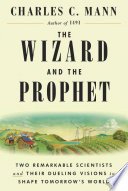
The Wizard and the Prophet
The Wizard and the Prophet by Charles C.
Discussed“Before Columbus, 1493, Uncovering the New World Columbus Created, and The Wizard and the Prophet.”
Where to get it
-
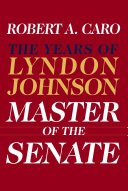
The years of Lyndon Johnson (Volumes 1-3)
The years of Lyndon Johnson (Volumes 1-3) by Robert A.
Discussed“This reminds me of this wonderful biography of LBJ that Robert Caro wrote. In volume three, which is about him taking over the Senate...”
Where to get it
-
What is Humanism and Why Does it Matter?
Discussed“The book we’re talking about is Goat, who is the greatest economist of all time, and why does it matter?”
Where to get it
-
Why Buddhism is True
Why Buddhism is True by Robert Wright is an exploration of evolutionary psychology and ancient Buddhist philosophy that examines how the human mind creates suffering and how mindfulness can alter our perception of reality.
Discussed“robin wright actually wrote a book where he claimed exactly this um your back makes world peace”
Where to get it
-
Zero to One
Zero to One by Peter A.
Discussed“but i think it seems like there's at least three ways in which um you know the lessons from zero to one contradict the history of paypal”
Where to get it




Books Dwarkesh Patel wrote
Appearances
Other mentions (6: passing, ad reads, own books)
“The first one, Stalin: Paradoxes of Power.”
“The second one, Stalin: Waiting for Hitler.”
“keep the as I guess Ben Horowitz says keep the main thing the main thing all right”
“It has a bunch of links - if you want to learn more about margin calls, read this. And he goes, and if you want to learn more about the psychology of utilitarian bets, read this, and it's just a link to the Amazon page of Crime and Punishment.”
“It's just the most schizophrenic and galaxy brain takes about how Machiavelli's discourses relate to Big Tech or how Soros’ theory of serial reflexivity explains hiring in finance and tech.”
“Today, it is my great pleasure to once again speak to Tyler Cowen now about his new book, Talent: How to Find Energizers, Creatives, and Winners Across the World.”