
Person
Every book David Reich recommended on podcasts
David Reich appeared on the Dwarkesh Podcast to discuss ancient human populations, genetics, and historical migrations. Reich recommended Kyle Harper's The Fate of Rome, highlighting it as an extraordinary history of major and lesser-known plagues during the Roman period. He used Harper's research to discuss how recurrent disease outbreaks, including the Plague of Justinian, contributed significantly to the fall of the Roman Empire and subsequent population shifts across Europe. Additionally, Reich referenced his own book, Who We Are and How We Got Here, while situating it chronologically alongside recent genetic research papers that clarified the precise ancestral proportions of non-Africans with Neanderthal DNA. Through these historical and scientific references, Reich connected ancient epidemiological shocks and modern genomic discoveries.
Books recommended by David Reich
-
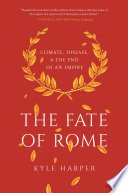
The Fate of Rome
The Fate of Rome by Kyle Harper is a historical study that examines how climate change and three major disease outbreaks impacted the Roman Empire.
Recommended“There's an amazing book by Kyle Harper. It's called The Fate of Rome. He's a Roman historian. It's a history of three major plagues in the Roman period, two of which are really not even very well known.”
Where to get it
-
How We Got Here
Who We Are and How We Got Here by David Reich is a groundbreaking exploration of ancient human DNA, migration patterns, and population genetics that upends traditional ideas taught in grade school.
Discussed“I don't know if this happened before or after my book. You probably don't know about this. There was a super interesting series of papers. They made many things clear but one of them was that actually the proportion of non-Africans ancestors who are Neanderthals is not 2%.”
Where to get it
-
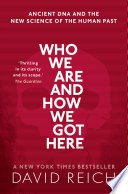
Who We Are and How We Got Here
Who We Are and How We Got Here by David Reich is a groundbreaking exploration of ancient human DNA, migration patterns, and population genetics that upends traditional ideas taught in grade school.
Discussed“I don't know if this happened before or after my book. You probably don't know about this. There was a super interesting series of papers. They made many things clear but one of them was that actually the proportion of non-Africans ancestors who are Neanderthals is not 2%.”
Where to get it
Books David Reich wrote
Appearances
| Episode | Podcast | Date | Books |
|---|---|---|---|
| David Reich — How one small tribe conquered the world 70,000 years ago | Dwarkesh Podcast | 2024-08-29 | 4 |
Other mentions (11: passing, ad reads, own books)
“I wrote this book, Who We Are and How We Got Here: Ancient DNA and the New Science of the Human Past. It's a bit of a misleading title or a kind of a bait-and-switch title.”
“In my book, I have a section where I describe our initial findings and the conversations we had with archaeologists about them. Ancient DNA has been very disruptive to conventional understanding of the past.”
“In my book, I have a section where I describe our initial findings and the conversations we had with archaeologists about them. Ancient DNA has been very disruptive to conventional understanding of the past.”
“What's happened in the last few years is there's been something of a reconciliation after the book. Archaeology is trying to reconcile itself with the DNA data.”
“What's happened in the last few years is there's been something of a reconciliation after the book. Archaeology is trying to reconcile itself with the DNA data.”
“One thing that's really interesting that has actually emerged in the last few years—and was not really strong at the time that I wrote my book—was an understanding of the relationship between the Yamnaya and groups like the Corded Ware and the Beakers.”
“One thing that's really interesting that has actually emerged in the last few years—and was not really strong at the time that I wrote my book—was an understanding of the relationship between the Yamnaya and groups like the Corded Ware and the Beakers.”
“This comes across in my book. It's very tempting to be interested in your own history and think it's important. It's obviously not important compared to other people's history.”
“This comes across in my book. It's very tempting to be interested in your own history and think it's important. It's obviously not important compared to other people's history.”
“There's a section in the introduction of my book which was sort of my impression of what it was like. I had a conversation with my PhD supervisor about what it would be like if one somehow could open a cave or a room that was echoing still with languages that don't exist anymore.”
“There's a section in the introduction of my book which was sort of my impression of what it was like. I had a conversation with my PhD supervisor about what it would be like if one somehow could open a cave or a room that was echoing still with languages that don't exist anymore.”