

Person
Stephen Dubner books: every book Stephen Dubner wrote and recommended
Across 5 podcasts. Every show Stephen Dubner appears on, in one place — not just one.
Stephen Dubner’s book club picks
Stephen Dubner has picked 4 books for the book club on Freakonomics Radio. The latest is Vienna by Richard Cockett, first picked in May 2024. Every pick, newest first:

Books by Stephen Dubner
-

Freakonomics
-
Superfreakonomics
-
Think Like a Freak
-

Confessions of a Hero-Worshiper
-
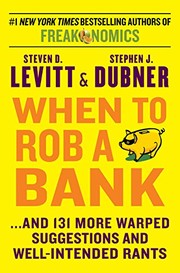
When to Rob a Bank
-

The Boy with Two Belly Buttons
-

Turbulent Souls
-

Choosing My Religion
Stephen Dubner’s most recommended books
- Grit by Angela Duckworth
- Nudge by Richard H. Thaler, Cass R. Sunstein
- Thinking, Fast and Slow by Daniel Kahneman
- MOBY-DICK; or, THE WHALE by Herman Melville
- The Wealth of Nations by Adam Smith
- Inside of a Dog by Alexandra Horowitz
- Influence by Robert B. Cialdini
- The Biggest Bluff by Maria Konnikova
- Doughnut Economics by Kate Raworth
- The Theory of Moral Sentiments by Adam Smith
Stephen Joseph Dubner is an American author, journalist, and podcast and radio host. He is co-author of the popular Freakonomics book series: Freakonomics, SuperFreakonomics, Think Like a Freak and When to Rob a Bank. He is the host of Freakonomics Radio. Throughout his podcast, Dubner has introduced, discussed, and recommended various notable books and memoirs. During an episode featuring Gary Gulman, Dubner introduced the guest's memoir Misfit, Growing Up Awkward in the 80s during the opening segment. He also mentioned Soccernomics by Simon Kuper and Stefan Szymanski as the basis for a podcast recommendation, and thanked James Gleick for his biography of Richard Feynman titled Genius. Toward the end of other episodes, Dubner recommended Charles Piller's Doctored: Fraud, Arrogance, and Tragedy in the Quest to Cure Alzheimer's and praised Daniel Ammann's biography of Mark Rich titled The King of Oil. Additionally, he mentioned Daniel Kahneman's book Thinking, Fast and Slow while discussing emotional decision making, and plugged Dan Wang's book Breakneck, which explores China's quest to engineer the future, during the closing remarks of his show.
Books recommended by Stephen Dubner
-
Grit
Grit by Angela Duckworth is a psychology-based exploration of the roles that passion and perseverance play in achieving long-term success, independent of innate talent.
Discussed“The other big thing I learned, this was something big I learned from a psychologist from Angela Duckworth who wrote the book Grit and I did a podcast with Angela for a few years.”
Where to get it
-
Freakonomics
Freakonomics by Steven D.
Discussed“Plainly free economics means many things to different people.”
Where to get it
-
Nudge
Nudge by Richard H.
Discussed“And you co-wrote a book years ago, a beloved book really, called Nudge. Correct. For anyone who's had the ill fortune to have not read Nudge, how would you describe it?”
Where to get it
-
Thinking, Fast and Slow
Thinking, Fast and Slow by Daniel Kahneman explores the dual systems of the human mind that drive how people think, make choices, and commit cognitive errors.
Discussed“One reason why emotional arousal is so effective is that it overwhelms our slow, deliberate, analytical cognitive processing that we sometimes call type two or system two. And it causes us to process things through system one, which is quick, intuitive, where we often rely on these heuristic shortcuts.”
Where to get it
-
MOBY-DICK; or, THE WHALE
Herman Melville's Moby-Dick; or, The Whale explores the obsessive, destructive quest of Captain Ahab to hunt down the white whale that maimed him, weaving a sprawling narrative that blends high-seas adventure, philosophical inquiry, and encyclopedic maritime lore.
Discussed“Have you read Moby Dick? No. I'm not a reader.”
Where to get it
-
The Wealth of Nations
The Wealth of Nations by Adam Smith is a foundational text in classical economics that explores the nature and causes of national wealth through the division of labor, productivity, and free markets.
Discussed“At the end of March, the composer David Lang debuted a modern piece of music set to a 250-year-old book, Adam Smith's The Wealth of Nations.”
Where to get it
-
Inside of a Dog
Inside of a Dog: What Dogs See, Smell, and Know by Alexandra Horowitz is an illuminating cognitive science book that explores the sensory world and mental processes of domestic dogs, written by the head of the dog cognition lab at Barnard College.
Recommended“Alexandra Horowitz who runs a dog cognition Lab at Barnard college is the author of a wonderful book called inside of a dog I've gotten inside of the dog and have glimpsed the dog's point of view you can do the same if you have a dog in the room with you”
Where to get it
-
Influence
Influence by Robert B.
Discussed“but in this case cialdini did ship in the form of a book he wrote about this research it was called influence the psychology of persuasion it was published in 1984.”
Where to get it
-
The Biggest Bluff
The Biggest Bluff by Maria Konnikova is a captivating memoir detailing the author's immersive journey from complete novice to professional poker player while exploring the intersections of human psychology, attention, and control.
Discussed“it's not exaggerated for the book that is Maria kekova her new book is called the biggest Bluff how I learned to pay attention master myself and Win It Chronicles her journey from poker novice to Poker professional”
Where to get it
-
Doughnut Economics
Doughnut Economics by Kate Raworth is a conceptual framework for human prosperity that balances the needs of people with the boundaries of the planet.
Discussed“and then there are people like I think of Kate rayworth who's I believe a British Economist who wrote a book called donut economics”
Where to get it
-
The Theory of Moral Sentiments
The Theory of Moral Sentiments by Adam Smith is a seminal 1759 work of moral philosophy that examines the psychological foundations of human judgment, empathy, and social order.
Discussed“the theory of moral sentiments was his big moral philosophy book here's what he wrote how selfish soever man may be supposed there are evidently some principles in his nature which interest him in the fortune of others and render their happiness necessary to him though he derives nothing from it except the pleasure of seeing it”
Where to get it
-
Adam Smith’s America
Adam Smith’s America by Glory M.
Discussed“When we published a Freakonomics Radio series on Adam Smith a few years ago, we interviewed Glory Liu, a political scientist at Georgetown and author of a book called Adam Smith's America: How a Scottish philosopher became an icon of American capitalism.”
Where to get it
-
Bowling Alone
Bowling Alone by Robert D.
Discussed“and I think Robert Putnam the sociologist who well before the pandemic worried about this as a trend in the United States most famous book bowling alone”
Where to get it
-
Amusing Ourselves to Death
Amusing Ourselves to Death by Neil Postman is a seminal media ecology critique arguing that television and modern visual media degrade public discourse by reducing serious thought to mere entertainment.
Discussed“If you want to be depressed about our ability to succumb to that, I think of a book from maybe 30 years ago by Neil Postman called Amusing Ourselves to Death, which wasn't about binge watching because it didn't exist”
Where to get it
-
Triumph of the City
Triumph of the City by Edward L.
Discussed“Glazer is the author of a book called Triumph of the city how our greatest invention makes us richer smarter Greener healthier and happier”
Where to get it
-
Why Nations Fail
Why Nations Fail: The Origins of Power, Prosperity, and Poverty by Daron Acemoglu and James A.
Discussed“When I first heard that you won the prize and I read your work about the importance of what you call culture in economic progress, I immediately compared it in my mind to the work of Deron Osamoglu and Jim Robinson who argue that institutions are the main driver of progress.”
Where to get it
-
The Truth About Immigration
The Truth About Immigration by Zeke Hernandez is a business and economics book that explores global migration patterns, challenges common political assumptions, and breaks down complex immigration issues using data and statistics.
Discussed“he came to our attention because of a book he has got coming out soon called the truth about immigration the book includes a quiz and we thought it might be interesting to have some freec economics radio”
Where to get it
-
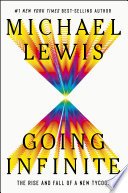
Going Infinite
Going Infinite by Michael Lewis is a non-fiction book that explores the meteoric rise and subsequent collapse of cryptocurrency tycoon Sam Bankman-Fried and his company, FTX.
Discussed“his books include liars poker Moneyball The Big Short Flash Boys and now going infinite the rise and fall of a new Tycoon”
Where to get it
-
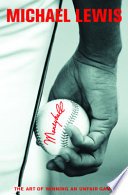
Moneyball
Moneyball by Michael Lewis is a groundbreaking non-fiction book that explores how the Oakland Athletics baseball team leveraged advanced statistical analytics to compete against wealthier franchises with larger payrolls.
Discussed“books like Moneyball which was about the way the Oakland A's managed to function on a a shoestring budget in Major League Baseball”
Where to get it
-
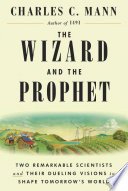
The Wizard and the Prophet
The Wizard and the Prophet by Charles C.
Discussed“that fight and those two World Views are the subject of Charles Mann's latest book which he wound up calling the wizard and and the profit”
Where to get it

The other 296 books Stephen Dubner recommended or discussed, ranked
- Man's Search for Meaning by Viktor E. Frankl
- A tree grows in Brooklyn by Betty Smith
- Competitive Strategy by Michael E. Porter
- On Competition by Michael E. Porter
- The Case against Education by Bryan Caplan
- The Population Bomb by Paul R. Ehrlich
- The Secret of Our Success by Joseph Henrich
- The WEIRDest People in the World by Joseph Patrick Henrich
- Compassionomics by Anthony Mazzarelli
- The Licensing Racket by Rebecca Haw Allensworth
- Age of Revolutions by Fareed Zakaria
- Smoke gets in your eyes by Caitlin Doughty
- The undoing project by Michael Lewis
- Breakneck by Dan Wang
- Salt, Fat, Acid, Heat by Samin Nosrat
- Every Valley by Charles King
- Hit Refresh by Satya Nadella
- Power and Progress by Daron Acemoglu, Simon Johnson
- The Peter Principle by Lawrence Peter
- Soccernomics by Simon Kuper
- by Unknown
- Genius by James Gleick
- What’s the Matter with Delaware? by Hal Weitzman
- Charlotte's Web by E. B. White
- Pests by Bethany Brookshire
- The Checklist Manifesto by Atul Gawande
- A Different Way to Win by Jim Rooney
- Being a Dog by Alexandra Horowitz
- Misfit by Gary Gulman
- Parent Nation by Dana Suskind
- The Politics Industry by Katherine M. Gehl, Michael E. Porter, Stephen R. Thorne
- City of Champions by Stefan Szymanski
- Complicit by Max H. Bazerman
- Craft Weed by Ryan Stoa
- Diary of a Wimpy Kid by Jeff Kinney
- Genius & Anxiety by Norman Lebrecht
- How to Read the Bible by James L. Kugel
- How to Win Friends and Influence People by Dale Carnegie
- Inheritance by Dani Shapiro
- Palaces for the People by Eric Klinenberg
- Principles by Ray Dalio
- Right Kind of Wrong by Amy Edmondson
- The Art of Gathering by Priya Parker
- The Food Lab by J. Kenji López-Alt
- The House of God by Samuel Shem
- The Index Card by Helaine Olen
- The Narrow Corridor by Daron Acemoglu, James A. Robinson
- The war on normal people by Andrew Yang
- Risky Business by Liran Einav, Amy Finkelstein, Ray Fisman
- Plunder by Brendan Ballou
- Late Admissions by Glenn C. Loury
- A Visit from the Goon Squad by Jennifer Egan
- Nasty, Brutish, and Short by Scott Hershovitz
- China's Gilded Age by Yuen Yuen Ang
- Six Faces of Globalization by Anthea Roberts, Nicolas Lamp
- Fear: Trump in the White House by Bob Woodward
- Lights Out by Thomas Gryta
- Regime Change by Patrick J. Deneen
- The World for Sale by Javier Blas
- New York, New York, New York by Thomas Dyja
- The Map That Changed the World by Simon Winchester
- Transformation by Larry Thomas
- Doctored by Charles Piller
- The Work of Art by Adam Moss
- Vienna by Richard Cockett
- A Brief History of Motion by Tom Standage
- A Bright Future by Joshua S. Goldstein
- A Culture of Growth by Joel Mokyr
- Abundance by Peter H. Diamandis, Steven Kotler
- Angela's Ashes by Frank McCourt
- In the Heart of the Sea by Nathaniel Philbrick
- Love Your Enemies by Arthur C. Brooks
- Midnight in Moscow by John J. Sullivan
- Ours Was the Shining Future by David Leonhardt
- Scarcity by Sendhil Mullainathan
- Self-help by Samuel Smiles
- Summary of Nudge: Improving Decisions about Health, Wealth, and Happiness by Richard Thaler, Cass Sunstein, better me
- Surely You're Joking, Mr. Feynman! by Richard P. Feynman
- The Bonfire of the Vanities by Tom Wolfe
- The Demagogue's Playbook by Eric A. Posner
- The Future of Truth by Werner Herzog
- The Money Book for the Young, Fabulous & Broke by Suze Orman
- THE PETER PRINCIPLE WHY THINGS ALWAYS GO WRONG by Dr. Laurence J. Peter, Raymond Hull
- The Seven Habits of Highly Effective People by Stephen R. Covey
- The Signal and the Noise by Nate Silver
- The World of Yesterday by Stefan Zweig
- Turf Wars by DeMaurice Smith
- Two and Twenty by Sachin Khajuria
- A sense of where you are by John McPhee
- Dopamine Nation by Anna Lembke, MD
- Eat Like a Fish by Bren Smith
- Evil Geniuses by Kurt Andersen
- Fantasyland by Kurt Andersen
- Golden Years by James Chappel
- In This Economy? by Kyla Scanlon
- Letters to a Young Athlete by Chris Bosh
- Midlife by Kieran Setiya
- Old Age May be the Happiest Part of Life by James Coffee Harris
- The King of Oil by Daniel Ammann
- The King's Midwife by Nina Rattner Gelbart
- The Little House by Virginia Lee Burton
- The Longevity Imperative by Andrew J Scott
- The Second Life of Tiger Woods by Michael Bamberger
- The Third Coast by Thomas L. Dyja
- Who Gets What - and Why by Alvin E. Roth
- 50 Great Myths of Popular Psychology by Scott O. Lilienfeld
- A Beginner's Guide to the End by BJ Miller
- A Brief History of Artificial Intelligence by Michael Wooldridge
- A History of the World in Six Glasses by Tom Standage
- A Treatise of Human Nature by David Hume
- Addiction by Design by Natasha Dow Schüll
- Adventures of Huckleberry Finn by Mark Twain
- Africa’s Struggle for Its Art by Bénédicte Savoy
- Alice Neel: The Art of Not Sitting Pretty by Phoebe Hoban, Alice Neel
- Alice's Adventures in Wonderland by Lewis Carroll
- Allergic by Theresa MacPhail
- An Essay on Criticism by Alexander Pope
- An Inquiry Into the Nature and Causes of the Wealth of Nations by Adam Smith
- Arid Empire by Natalie Koch
- Barbarians at the Gate by Bryan Burrough, John Helyar
- Beginners by Tom Vanderbilt
- Being Mortal by Atul Gawande
- Better by Atul Gawande
- Beyond Broadway by Professor Stacy Wolf
- Blind Spots by Marty Makary
- Blink by Malcolm Gladwell
- Bright-sided by Barbara Ehrenreich
- Build a Brand Like Trader Joe's by Mark Gardiner
- Chicken Soup for the Soul by Jack Canfield, Mark Victor Hansen, Amy Newmark
- Choke by Sian Beilock
- Common Ground by Justin Trudeau
- Complaining, Teasing, and Other Annoying Behaviors by Robin M. Kowalski
- Complications by Atul Gawande
- Connected by Nicholas A. Christakis
- Connected the surprising prower of our social network and how they shape our lives by Nicholas A. Christakis and James H. Fowler
- Conscious Leadership by John Mackey, Steve Mcintosh, Carter Phipps
- Consumer Studies by Ontario. Ministry of Education.
- Critique of Pure Reason by Immanuel Kant
- Data for Science and Technology; Proceedings of the Seventh International CODATA Conference; Kyoto, Japan, 8-11 October 1980 by PS Glaeser (ed)
- Democracy in America by Alexis de Tocqueville
- Diligis Attached: the New Science of Adult Attachment and How It Can Help You Find--And Keep--Love by Amir Levine Rachel Heller
- Don't Choke by Gary Player
- Doping by April Henning
- Ecclesiastes by Philip Graham Ryken
- Economic Empowerment Of Women In The Islamic World: Theory And Practice by Toseef Azid, Jennifer L Ward-batts
- Economics by Daron Acemoglu, David Laibson, John List
- Egalitarian Envy by Gonzalo Fernandez de la Mora
- Every Man for Himself and God Against All by Werner Herzog
- Fire Shut Up in My Bones by Charles M. Blow
- Freedom's Laboratory by Audra J. Wolfe
- Gang Leader for a Day by Sudhir Venkatesh
- Genius and Anxiety by Norman Lebrecht
- Global Shell Games by Michael G. Findley
- GRIT The Power of PASSION and PERSEVERANCE by Angela Duckworth
- Guinness Book of World Records by Unknown
- Handel in London by Jane Glover
- Harry Potter and the Philosopher's Stone by J. K. Rowling
- Harry Potter and the Sorcerer's Stone by J.K. Rowling
- Heart of a Stranger by Angela Buchdahl
- Heat Wave by Eric Klinenberg
- Holy Sh*t by Melissa Mohr
- Hot Seat by Jeff Immelt
- How China Escaped the Poverty Trap by Yuen Yuen Ang
- How Music Works by David Byrne
- How Not to Be Wrong by Jordan Ellenberg
- How to Be an Antiracist by Ibram X. Kendi
- How We Die by Sherwin Nuland
- Inside Of A Dog - What Dogs See, Smell, And Know - Book Club Edition by Alexandra Horowitz
- Irrational Exuberance by Robert J. Shiller
- Is Marriage for White People? by Ralph Richard Banks
- Just Giving by Rob Reich
- Leadership in Turbulent Times by Doris Kearns Goodwin
- Let Me Die Before I Wake by Derek Humphry
- Leviathan by Eric Jay Dolin
- Leviathan by Thomas Hobbes
- Liar's Poker by Michael Lewis
- Life on Mars by Tracy K. Smith
- Little Match Girl Passion by David Lang
- Lot Six by David Adjmi
- Making a Spectacle by Jessica Glasscock
- Managing the Skies by Clinton V. Oster
- Manhattan Beach by Jennifer Egan
- Markets, Minds, and Money by Miguel Urquiola
- Mastermind by Maria Konnikova
- Messiah by George Frideric Handel
- Mindset by Carol S. Dweck
- Misbehaving by Richard H. Thaler
- Money Mischief and Fiscal Folly by Bryan P. Cutsinger
- Nickel and Dimed by Barbara Ehrenreich
- No Judgment by Lauren Oyler
- No More Throw-away People by Edgar S. Cahn
- No Rules Rules: Netflix and the culture of reinvention by Hastings, Reed, Meyer, Erin
- Parasite by Seanan McGuire
- Passages by Gail Sheehy
- Perfectly Reasonable Deviations from the Beaten Track by Richard P. Feynman
- Personal Finance For Dummies® by Eric Tyson
- Phil by Alan Shipnuck
- Pitch Perfect by Bill McGowan
- Positively False by Floyd Landis
- Predictably Irrational by Dan Ariely
- Protecting Antiquities by Michael Kremer
- Putting Meat on the American Table by Roger Horowitz
- Radical Candor by Kim Malone Scott
- Random Acts of Medicine by Anupam B. Jena, Christopher Worsham
- Rats by Robert Sullivan
- Rebel Talent by Francesca Gino
- Reinventing American Health Care by Ezekiel J. Emanuel
- Relentless by Luis A. Miranda Jr.
- Rich Dad, Poor Dad by Robert T. Kiyosaki, Sharon L. Lechter
- Roofs Or Ceilings? by Milton Friedman
- Safe Enough Spaces by Michael S. Roth
- Sapiens by Yuval Noah Harari
- Selfish Reasons to Have More Kids by Bryan Caplan
- Shop class as soulcraft by Matthew B. Crawford
- Silent Spring by Rachel Carson
- Songs of the Humpback Whale by Jodi Picoult
- Streets of Gold by Ran Abramitzky
- Subprime Attention Crisis by Tim Hwang
- Superforecasting by Philip E. Tetlock
- Superfreakonomics by Steven D. Levitt, Stephen J. Dubner
- Supermarket USA by Shane Hamilton
- Superstition by Stuart Vyse
- Tainted Glory in Handel's Messiah by Michael Marissen
- The 7 Habits of Highly Effective People by Stephen R. Covey
- The adventures of Tom Sawyer by Mark Twain
- The American way of death by Jessica Mitford
- The Anxious Generation by Jonathan Haidt
- The Backgammon Chronicles by Robert Wachtel
- The Bell Curve by Richard J. Herrnstein, Charles Murray
- The Big Book of Tell Me why by Arkady Leokum
- The big short by Michael Lewis
- The Brutish Museums by Dan Hicks
- The Candy House by Jennifer Egan
- The Chrysanthemum and the Sword by Ruth Benedict
- The Color of Law by Richard Rothstein
- The Coming Wave by Mustafa Suleyman
- The confidence game by Maria Konnikova
- The Conquest of Happiness by Bertrand Russell
- The conservative heart by Brooks, Arthur C.
- The Curse of Bigness by Tim Wu
- The Devil You Know by Charles M. Blow
- The devil's candy by Julie Salamon
- The Economic Effects of Private Equity Buyouts by Steven J. Davis
- The End of History and the Last Man by Francis Fukuyama
- The Executive Unbound by Eric A. Posner
- The Good Earth by Pearl S. Buck
- The grasshopper : games, life, and Utopia by Bernard Herbert Suits
- The Hidden Persuaders by Vance Packard
- The Infidel and the Professor by Dennis C. Rasmussen
- The Interpretation of Dreams by Sigmund Freud
- The Jungle by Upton Sinclair
- The Market for "lemons" by George A. Akerlof
- The Merchant of Venice by William Shakespeare
- The Millionaire Next Door by Thomas J. Stanley, William D. Danko
- The Moral Foundations of Public Funding for the Arts by Michael Rushton
- The New Jim Crow by Michelle Alexander
- The No Asshole Rule by Robert I. Sutton
- The Original Bambi by Felix Salten
- The Ostrich Paradox by Robert Meyer
- The Oxford Dictionary of American Legal Quotations by Fred R. Shapiro
- The Power of Bad by John Tierney, Roy F. Baumeister
- The Power of Passion and Perseverance by Angela Duckworth
- The Premonition by Michael Lewis
- The Prisoner Of Sex by Norman Mailer
- The Protestant ethic and the "spirit" of capitalism and other writings by Max Weber
- The Rise and Fall of American Growth by Robert J. Gordon
- The Sabbath by Abraham Joshua Heschel
- The Second Machine Age by Erik Brynjolfsson
- The Secret Diary of Adrian Mole, Aged 13 3/4 by Sue Townsend
- The Song of Songs by Origen
- The Sports Gene by David Epstein
- The Violence Project by Jillian Peterson
- The Visual Display of Quantitative Information by Edward R. Tufte
- The Waste Makers by Vance Packard
- The Wiley Blackwell Encyclopedia of Consumption and Consumer Studies by Daniel Thomas Cook
- Theater Kid by Jeffrey Seller
- Think Like a Freak by Steven D. Levitt, Stephen J. Dubner
- This Time Is Different by Carmen M. Reinhart
- Time Dollars by Edgar S. Cahn
- Together by Vivek Murthy
- Trust by Francis Fukuyama
- Tuesdays with Morrie by Mitch Albom
- Two Paths to Prosperity by Avner Greif
- Um. . . by Michael Erard
- Unfinished business by Anne-Marie Slaughter
- Water, Race, and Disease by Werner Troesken
- Wealth Supremacy by Marjorie Kelly
- What Do YOU Care what Other People Think? by Richard Phillips Feynman
- What Is Intelligence? by Blaise Aguera y Arcas
- Who Really Cares by Arthur C. Brooks
- Why Liberalism Failed by Patrick J. Deneen
- Winners Take All by Anand Giridharadas
- Women & Money by Suze Orman
- Work by James Suzman
- Working by Studs Terkel
- Your erroneous zones by Wayne W. Dyer
Appearances
Other mentions (259: passing, ad reads, own books), the 30 most recent
“Michael Pollan wrote that book, "How to Change Your Mind." Right, it was very influential.”
“Also, it has come to my attention that many of you who listen to Freconomics Radio have never read Freconomics, which is fine, even awesome. But in case you are curious, we recently published a 20th anniversary edition of Freconomics with a new forward, and you can get it wherever you get your books.”
“In 2015, Warren Zanes published Petty, the biography.”
“Eight years later, he published Deliver Me From Nowhere, the making of Bruce Springsteen's Nebraska.”
“And then there's, you know, there's been films and Barton Fink.”
“In 2011 he published a popular book called Thinking Fast and Slow.”
“Fared Zakari's most recent book is called Age of Revolutions: Progress and Backlash from 1600 to the present.”
“Alice in Wonderland, Harry Potter, The Wizard of Oz.”
“Alice in Wonderland, Harry Potter, The Wizard of Oz.”
“Alice in Wonderland, Harry Potter, The Wizard of Oz.”
“We tagged along for the world premiere of a new David Lang piece that's drawn from Adam Smith's The Wealth of Nations.”
“His latest book The one before that is called Everyman for Himself and God Against All, a memoir.”
“He wrote the best-selling book Outlive, the science and art of longevity, and he makes the Peter Attia Drive podcast.”
“He's also written a few books, including Blind Spots, When Medicine Gets It Wrong, and What It Means for Our Health.”
“For what it's worth, we wrote about the dictator game at length in super freconomics and a related game called ultimatum.”
“The dean of nearby St. Patrick's Cathedral was Jonathan Swift, the extremely well- reggarded author of Guliver's Travels and A Modest Proposal.”
“The dean of nearby St. Patrick's Cathedral was Jonathan Swift, the extremely well- reggarded author of Guliver's Travels and A Modest Proposal.”
“I'm recording this on November 11th, 2025, which is the very day that the 20th anniversary edition of our book Freconomics [music] is being published.”
“Okay, so here's today's bonus episode starting with the new forward from the 20th anniversary edition of Freconomics.”
“It began when I wrote a piece about him for the New York Times magazine, and it flourished when we paired up to write [music] for economics.”
“And then I published my first book in 1998 called Turbulent Souls: A Catholic Son's Return to His Jewish Family.”
“By the way, we will soon be celebrating the 20th anniversary of our book Freconomics and the 15th anniversary of Freconomics Radio, which means I will be doing a few live events.”
“He describes the turbulence well in a memoir called Lot 6.”
“The case had been brought by Ken Cala, a producer and engineer who worked on Fleetwood Mac's record Rumors and who wrote a memoir called Making Rumors.”
“He also co-wrote a book called Love, Money, and Parenting: How Economics Explains the Way Wea, and he has three children, if you're wondering.”
“In 1980, he made a public TV series called Free to Choose and published a book of the same name.”
“Oscar Wild, Virginia Wolf, you see here Sylvia Pankhurst, Carl Marx, who pretty much spent every day for 30 years sat here writing Des Capel.”
“Including you to some degree, if I remember correctly, like in your textbook that you wrote with Steve Levit, you didn't want to give a whole lot of credence to the behavioral revolution. We have a chapter in there and I think it's a good chapter. It goes through, here's what's strong about it.”
“Throughout this series, we've been speaking with Amy Edmonson, a scholar of failure at the Harvard Business School.”
“Seller is also about to publish a memoir called Theater Kid.”