
Book · 2014 · carpal tunnel syndrome
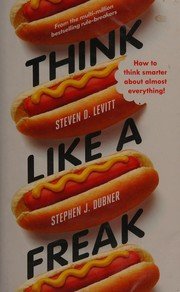
Think Like a Freak
Secrets of the Rogue Economist
- mentions
- 17
- people
- 7
- podcasts
- 3
- episodes
- 12
- critical mentions
- 0
The most important idea in your new book was the underlying principle that to think like a freak, you must in fact think.
 Stephen Dubner · Freakonomics Radio · Jun 2014
What they say about it
- Hosts book club episodes“Think Like a Freak book club”4
- Discusses third book publication“third book together”2
- Addresses admitting ignorance“admit what they don't know”2
The best things said about it
In the book that Stephen Dubner and I wrote called Think Like a Freak, we talk about the business context. One of the things we say is nobody ever in a business context says, 'I don't know.'.
Steve Levitt People I (Mostly) Admire · Aug 2023 From your penultimate book, Think Like a Freak, you talk a lot about being childlike.
In our new book, we make the argument that people should be much more willing to admit what they don't know, especially in settings, whether it is business or academia or politics.
Stephen Dubner Freakonomics Radio · May 2014 And I think we even write in the book that a lot of times when you have this urge to try to persuade people of things, that the best thing to do is just to take a deep breath and say, why do I need to persuade them?
It's one of the things we talk a lot about in our new book is the power of storytelling.
 Steven Levitt Freakonomics Radio · Apr 2014
We've just published our third book together, Think Like a Freak.
Stephen Dubner Freakonomics Radio · Apr 2015 Where and when it comes up
Mentions per year
How it comes up
Most mentions, by podcast
7 people who brought it up
Why people recommend it
Think Like a Freak by Steven D. Levitt and Stephen J. Dubner is a popular behavioral economics book that teaches readers how to reframe everyday problems by adopting unconventional, childlike thinking patterns. On Freakonomics Radio and No Stupid Questions, the authors and their guests frequently discussed the core principles outlined in the text. Stephen Dubner and Steve Levitt explored various facets of the book across multiple episodes, highlighting how it addresses real-world business contexts and exposes the universal difficulty people face when trying to admit ignorance and simply utter the words that they do not know something. During a dedicated book club installment on Freakonomics Radio, Dubner emphasized that the foundational takeaway of the entire work is that to genuinely think like a freak, an individual must actually engage in rigorous, unconstrained thought. Guests and co-hosts alike, including Faith Salie and David Duchovny, frequently connected the book's broader themes back to the authors' signature style of asking startling, counterintuitive questions that challenge standard assumptions. Whether discussing the immense value of embracing a childlike perspective or examining how to properly screen job applicants and escape autopiloted mental habits, the podcast contributors continually returned to the book's practical lessons for solving stubborn, complex problems.
Every mention
Stephen Dubner You know, it reminds me a little bit of the argument that we made in the first Freakonomics book about name… 10
“You know, it reminds me a little bit of the argument that we made in the first Freakonomics book about names. So there's a lot of literature, including some done by Steve Levitt and Roland Fryer, about how influential a person's first name is on their life.”
“We've just published our third book together, Think Like a Freak. Hey, Levitt, what's your favorite chapter in Think Like a Freak? So I'm going to give you a childish answer to that question, which is that my second favorite chapter in the book is to think like a child.”
“So thanks for coming out, thanks for listening, and thanks for sending in your questions for this first installment of our Think Like a Freak book club.”
“you asserted the most important idea in your new book was the underlying principle that to think like a freak, you must in fact think.”
“Welcome back to this first installment of the Think Like a Freak book club. Today, we are taking your questions about chapters one through three.”
“On the next Freakonomics Radio, the first installment of our Think Like a Freak book club will answer your questions about the first three chapters. Questions like, how can I get my brain off autopilot?”
“We've just published our third book together, Think Like a Freak. Hey, Levitt, what's your favorite chapter in Think Like a Freak?”
“Our new book is out, Think Like a Freak, and we want to talk about it with you. So, we are forming the Think Like a Freak Book Club.”
“Steve Levitt and I have just published a new book called Think Like a Freak. One chapter is called The Three Hardest Words in the English Language.”
“So in our new book, we make the argument that people should be much more willing to admit what they don't know, especially in settings, whether it is business or academia or politics”
Steven D. Levitt And I think we even write in the book that a lot of times when you have this urge to try to persuade people… 2
“On the health front, as we write in Think Like a Freak, there's so much confusion in the world about what's healthy and what is not healthy.”
“And I think we even write in the book that a lot of times when you have this urge to try to persuade people of things, that the best thing to do is just to take a deep breath and say, why do I need to persuade them?”
David Duchovny He's made that brand his life after co-writing Freakonomics back in 2005, which I read back in 2005, and it… 1
“He's made that brand his life after co-writing Freakonomics back in 2005, which I read back in 2005, and it blew me away. I couldn't believe the kinds of questions that he was asking that made sense.”
 Debbie Millman Think Like a Freak in 2014, and When to Rob a Bank in 2015. 1
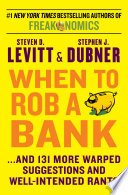
“Think Like a Freak in 2014, and When to Rob a Bank in 2015.”
Faith Salie And then from your penultimate book, Think Like a Freak, you talk a lot about being childlike. 1
“And then from your penultimate book, Think Like a Freak, you talk a lot about being childlike.”
Steve Levitt It's interesting because in the book that Stephen Dubner and I wrote called Think Like a Freak, we talk abo… 1
“It's interesting because in the book that Stephen Dubner and I wrote called Think Like a Freak, we talk about the business context. One of the things we say is nobody ever in a business context says, 'I don't know.'”
Steven Levitt And that to me, ultimately, I mean, it's one of the things we talk a lot about in our new book is the power… 1
“And that to me, ultimately, I mean, it's one of the things we talk a lot about in our new book is the power of storytelling. And, you know, both for good and for evil.”
Also mentioned in the same episodes

Other mentions (38: passing, ad reads, own books)
“I was going to say I always say sometimes, I don't want to make a declarative that all things, but my immediate reaction went back to the book Freakonomics.”
“I think they were at a swimming pool and everybody's jumping around having fun, and she's sitting by the pool reading Freakonomics!”
“She writes, 'He inspired me to read all the Freakonomics books, and he was the reason I wanted to major in economics.'”
“She says, 'I have gotten him Freakonomics books for the last three years. Poor fellow, and vice versa.'”
“Oh my god, well, you know, I'd be happy to be the face of the Freakonomics podcast and the Freakonomics book empire. So keep me on speed dial!”
“I've been a big fan for a long time; I actually dusted off my old copy of Freakonomics last night.”
“it's interesting because in the book that Stephen Dubner and I wrote called Think Like a Freak we talk about the business context one of the things we say is nobody ever in a business context says I don't know”
“I knew that this would be very electric to some individuals, abortion and crime revisited, an update of our 2019 episode and of the theory we wrote about in our first Freakonomics book way back in 2005. That's next week on the show.”
“In the first Freakonomics book, published in 2005, Steve Levitt and I wrote about one such consequence of the original Roe v.”
“If you've ever read Freakonomics, the namesake book of this show, you may recall this controversial link between legalized abortion and the fall of crime.”
“In the first Freakonomics book that Steve Levitt and I wrote, there was one chapter called "What Makes a Perfect Parent."”
“A few years after that first Freakonomics book, when I started this podcast, we did an episode called The Economist's Guide to Parenting.”
“It reminds me of something that Steve Levitt and I wrote about in one of our Freakonomics books Think Like a Freak”
“It reminds me of something that Steve Levitt and I wrote about in one of our Freakonomics books, Think Like a Freak, and it was about this charitable organization called Smile Train. Are you familiar with Smile Train?”
“But a lot of Republicans have come to believe the death penalty does not deter crime, which happens to be an argument we offered evidence for in Freakonomics.”
“you did write a self-help book Think Like a Freak yeah the third Freakonomics book we wrote was our attempt at a self-help book called Think Like a Freak”
“what if we could write a kind of guidebook to how we do our thinking and our data collection and our analysis and our storytelling and so yeah if we did sort of write a self-help book”
“the conclusion that levit and I came to in this book that we were writing and Think Like a Freak which was really trying to help people understand how to problem solve what we had advocated was if you're really concerned about problem solving then you should put away your moral compass”
“On Monday, August 4th, I will be doing a live Twitter chat with iBooks at 4 p.m. Eastern time, 1 p.m. Pacific time. I will answer your questions about our new book, Think Like a Freak, about Freakonomics Radio, any question you want to throw at me.”
“On Monday, August 4th, I will be doing a live Twitter chat with iBooks at 4 p.m. Eastern time, 1 p.m. Pacific time. I will answer your questions about our new book, Think Like a Freak, about Freakonomics Radio, anything you want to throw at me.”
“In our book, Think Like a Freak, we give this practice a different name. We call it teaching your garden to weed itself.”
“Steve Levitt and I just got back from our book tour for Think Like a Freak.”
“Okay, Leavitt, we will send Glenn a t-shirt and a signed copy of Think Like a Freak.”
“In our new book, Think Like a Freak, we make the argument that perhaps we are not thinking clearly about failure. Maybe failure can be your friend.”
“And it inspired us to write a chapter about quitting in our new book, Think Like a Freak.”
“We have a new book out next week called Think Like a Freak. You can read an excerpt in this weekend's Wall Street Journal. And then on Sunday at midnight, also known as Monday, the book goes on sale.”
“She opened it up. And? And she found a bunch of books. And they were called Think Like a Freak. And she immediately put it onto Instagram.”
“In 2005, we wrote Freakonomics. In 2009, Super Freakonomics. We started this podcast in 2010. And now we're about to publish our third book, Think Like a Freak.”
“So is Think Like a Freak more David or more Sistine Chapel ceiling, you think? There is a lot of anatomy in it. I'll say that. Probably David.”
“Think Like a Freak comes out on May 12th. And, Levitt, talk to me about your frame of mind of those days, let's say the 10 or 14 days that begin from May 12th, and how excited you are about being on book tour and talking endlessly about this thing.”
“Hey podcast listeners, as you may have heard, our new book, Think Like a Freak, is out on May 12th. On May 4th, the CBS show Sunday Morning is scheduled to run a segment on us and the book.”
“Hey, podcast listeners, our new book, Think Like a Freak, is out on May 12th. You can visit Freakonomics.com to learn more or pre-order a copy or 100 copies if you need them.”
“Hey, podcast listeners, don't forget our new book, Think Like a Freak, will be published on May 12th. So if you think you need to set aside a little time on that day for some light reading”
“Our new book, Think Like a Freak, will be published on May 12th as a hardcover, e-book, audiobook, large print edition, you name it.”
“Remember, our new book, Think Like a Freak, is out on May 12th. If you pre-order it in any format from any bookstore, you can get the first chapter now.”
“The title of the book? Think Like a Freak. Okay. You got that right. That's something.”
“You will also be hearing a lot of new podcasts based on our very favorite stories from Think Like a Freak.”
“As we mentioned at the top of the show, Levitt and I are putting out a new book called Think Like a Freak on May 13th. And so why don't we do one of our Frequently Asked Questions episodes about it?”