Podcast
Shane Parrish's book list: the books mentioned on The Knowledge Project
The most mentioned books on The Knowledge Project are A Few Lessons from Sherlock Holmes (1 episode), Failure (1 episode) and Foundation (1 episode), and the most recommended book is A Few Lessons from Sherlock Holmes (1 episode). We have logged 28 books across 8 episodes from 8 people on The Knowledge Project, through November 10, 2026.
Key facts
- 28 books have been mentioned on The Knowledge Project, as of November 10, 2026.
- 8 episodes of The Knowledge Project mention at least one book, as of November 10, 2026.
- 8 people brought up a book on the show, as of November 10, 2026.
- The 3 books mentioned in the most episodes of The Knowledge Project, as of November 10, 2026: A Few Lessons from Sherlock Holmes, Failure and Foundation.
- The latest episode of The Knowledge Project with a book mention aired on November 10, 2026.
Updated
Books from the latest episodes

Questions about books mentioned on The Knowledge Project
What books were mentioned most on The Knowledge Project?
The most mentioned books on The Knowledge Project are A Few Lessons from Sherlock Holmes by Peter Bevelin (1 episode), Failure by Stuart Firestein (1 episode), Foundation by Isaac Asimov (1 episode), Ignorance: How It Drives Science by Stuart Firestein (1 episode) and Lights out by Ted Koppel and Ted Koppel (1 episode), out of 28 books across 8 episodes, as of November 10, 2026.
What is the most recommended book on The Knowledge Project?
A Few Lessons from Sherlock Holmes by Peter Bevelin is the most recommended book on The Knowledge Project, recommended in 1 episode, as of November 10, 2026.
What books were mentioned on The Knowledge Project this year?
In 2026, 16 books came up on The Knowledge Project, led by Foundation by Isaac Asimov (1 episode), Lights out by Ted Koppel and Ted Koppel (1 episode), Meditations by Aurelius Marcus (1 episode), Poor Charlie’s Almanack by Charles T. Munger (1 episode) and The 7 Habits of Highly Effective People by Stephen R. Covey (1 episode), as of November 10, 2026.
Who recommends the most books on The Knowledge Project?
Tobi Lütke has recommended the most books on The Knowledge Project, with 6 books recommended across 1 episode, as of November 10, 2026.
Most mentioned on The Knowledge Project
-
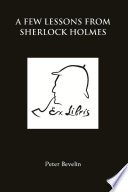
A Few Lessons from Sherlock Holmes
On the August 4, 2020, episode of The Knowledge Project titled #89 Maria Konnikova: Less Certainty, More Inquiry, host Shane Parrish recommended the book A Few Lessons from Sherlock Holmes by Peter Bevelin. Parrish mentioned the publication during the conversation and stated that he thought the book about Sherlock Holmes was really good.
Recommended“Peter Bevelin wrote a book on Sherlock Holmes, too, a few lessons from Sherlock Holmes, which I thought was really good as well.”
Where to get it
-
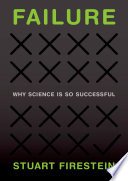
Failure
On The Knowledge Project, Annie Duke discussed Failure by Stuart Firestein. While exploring the themes of science and error, she noted that the author previously wrote an amazing book titled Ignorance before following it up with Failure.
Recommended“And he wrote, he actually wrote an amazing book called Ignorance, and actually another book titled Failure.”
Where to get it
-
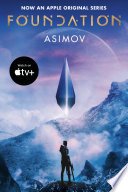
Foundation
On The Knowledge Project episode titled Tobi Lütke: The Skills AI Makes More Valuable released on September 15, 2026, guest Tobi Lütke brought up Isaac Asimov's Foundation series. While discussing science fiction, Lütke praised the Foundation books as exceptionally good fiction and then asked Shane about another science-fiction work, the Three-Body Problem.
Recommended“but um his longer book is good fiction and foundation series is so good you read the three body parlance too right i guess that's sort of tripping into older book now too but like um that's a recent sci-fi which is incredibly good”
Where to get it
-
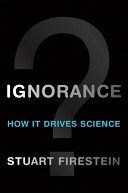
Ignorance: How It Drives Science
On The Knowledge Project episode #37 Annie Duke: Getting Better by Being Wrong, released on July 25, 2018, Annie Duke brought up the book Ignorance: How It Drives Science by Stuart Firestein. During a broader conversation focused on embracing ignorance in scientific pursuits, Duke praised Firestein's work and noted that he also wrote another book titled Failure.
Recommended“And he wrote, he actually wrote an amazing book called Ignorance, and actually another book titled Failure.”
Where to get it
-
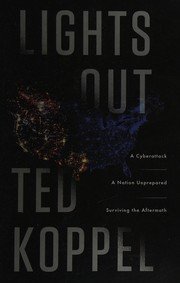
Lights out
On The Knowledge Project, Shane Parrish shared Charlie Munger's recommendation that the book Lights Out by Ted Koppel ought to be required reading in every business school in the country for how it chronicles the decline of General Electric.
Recommended“I think that book lights out, which chronicles the decline of GE ought to be required reading in every business school in the country. It won't be because they don't want to offend anybody, but it should be. If there's anybody here who's not red lights out, you should buy it and read it.”
Where to get it
-
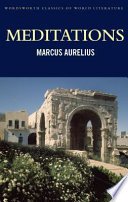
Meditations
On The Knowledge Project episode "Tobi Lütke: The Skills AI Makes More Valuable," Tobi Lütke discussed Meditations by Marcus Aurelius. He shared that the book had been a lifelong interest and mentioned that he kept a copy of it in most rooms where he spent his time.
Recommended“i mean obviously i am a meditations fan i know stoicism is falling out of favor a little bit right now but like it's been um a lifelong thing for me and um i have a copy of uh meditations in most rooms i spend time in”
Where to get it
-
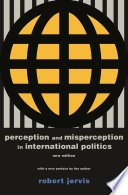
Perception and Misperception in International Politics
On The Knowledge Project, Philip Tetlock appeared as a guest on the episode #6 Philip Tetlock: How to See the Future. He cited Robert Jervis's book Perception and Misperception in International Politics as the work that had the most profound impact on his academic career, recalling that it was published in 1976 when he had just started graduate school.
Recommended“He wrote a wonderful book in 1976 that I was in graduate school. I just started in graduate school in 1976. And it's called Perception and Misperception in International Politics.”
Where to get it
-
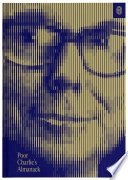
Poor Charlie’s Almanack
On The Knowledge Project episode Tobi Lütke: The Skills AI Makes More Valuable on September 15, 2026, Tobi Lütke recommended Poor Charlie’s Almanack by Charles T. Munger. Lütke identified it as a book he returned to often and praised it as a quick read, though the exact title was garbled in the transcript.
Recommended“books i come back to is like i often talk about pakistan's law which i love um it's such a quick read”
Where to get it
-
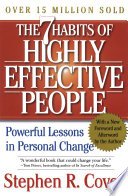
The 7 Habits of Highly Effective People
On the November 10, 2026, episode of The Knowledge Project, guest Jon McNeill recommended Stephen R. Covey's The 7 Habits of Highly Effective People as a book that profoundly impacted his life. McNeill explained that Covey's teachings on structuring the day and managing time heavily influenced his personal productivity and problem-solving methods.
Recommended“Second book is if you want to live a life worth living, Steve Covey's old book, The Seven Habits of Highly Effective People really impacted me.”
Where to get it
-
The Goal
On The Knowledge Project episode "How Elon Musk Solves Problems | Jon McNeill" on November 10, 2026, Jon McNeill recommended "The Goal" by Eliyahu M. Goldratt and Jeff Cox. McNeill described the author as an MIT professor and stated that the book completely changed his life by teaching operations principles and how to lead operations effectively.
Recommended“are a book called The Goal, which is by Ellie Goldrat, he was an MIT professor. If you want it to learn about operations principles, like leading operations, that book totally changed my life.”
Where to get it
-
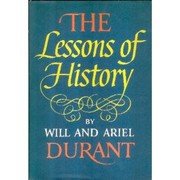
The Lessons of History
On The Knowledge Project, Tobi Lütke praised Will and Ariel Durant's The Lessons of History, describing it as exceptionally dense and of high token quality relative to its brief length. Lütke brought up the book again while discussing how it served as an end-of-life distillation of the authors' lifetime of work.
Recommended“i almost always will mention the lessons of history which is i just think the densest like the highest token quality book in existence like given for the length james burnham's books are fantastic”
Where to get it
-
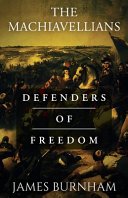
The Machiavellians
On The Knowledge Project, Tobi Lütke mentioned James Burnham's book The Machiavellians during a conversation with host Shane. When asked about Burnham's bibliography, Lütke named The Machiavellians immediately after referencing The Managerial Revolution and praised the former book as unbelievably good.
Recommended“what did he write he wrote um the managerial revolution first and then a book called the machiavellians which is unbelievably good i mean obviously i am a meditations fan”
Where to get it
-
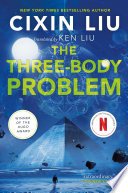
The Three-Body Problem
On The Knowledge Project, Tobi Lütke brought up Cixin Liu's novel "The Three-Body Problem" during a discussion about skills made valuable by artificial intelligence. Lütke asked his co-host if he had read the book and recommended it as an exceptionally good recent work of science fiction.
Recommended“you read the three body parlance too right i guess that's sort of tripping into older book now too but like um that's a recent sci-fi which is incredibly good”
Where to get it
-
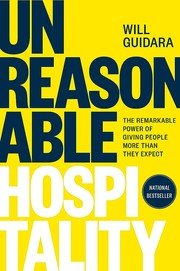
Unreasonable Hospitality
On The Knowledge Project episode How Elon Musk Solves Problems, Jon McNeill recommended Unreasonable Hospitality by Will Guidara. McNeill explained that the book's lessons about treating people with dignity applied broadly across businesses and nearly every aspect of life.
Recommended“And then the third book that I've read over the past couple of years is unreasonable hospitality by Will Gadera. I think it applies to every business, almost applies every life, every aspect of life.”
Where to get it
-
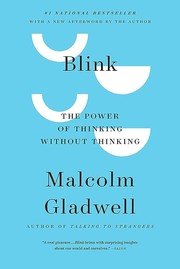
Blink
Malcolm Gladwell's book Blink was mentioned by Philip Tetlock on the December 8, 2015 episode of The Knowledge Project. Tetlock brought up the book to debate the merits of intuition against analytical thinking, noting a contrasting psychological rejoinder book titled Think.
Discussed“Malcolm Gladwell wrote a book called Blink. And some psychologists wrote a rejoinder book, much less widely read, called Think.”
Where to get it
-
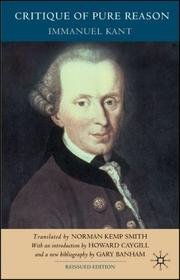
Critique of Pure Reason
Critique of Pure Reason by Immanuel Kant was mentioned on The Knowledge Project during an episode featuring guest Maria Konnikova. Konnikova discussed encountering a specific section of Kant's philosophical work and explained how excited she was to find that she could apply its principles directly to decision-making and playing poker.
Discussed“Yes, he did, he did, he did, and I was so excited when I found that section of critique of pure reason, and was able to apply it to poker.”
Where to get it
-
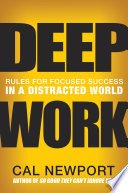
Deep Work
On The Knowledge Project, Steven Kotler discussed Cal Newport's book Deep Work with host Shane Parrish. Kotler argued that the concept of deep work was simply another term for flow, suggesting that Newport's coined term essentially described the same psychological state despite requiring a process of struggle.
Discussed“I'm like, deep work is another word for flow, brother. Like I'm sorry. You've coined a new term when he says, well, no, you're, you're going to need a lot of struggle”
Where to get it
-
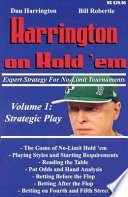
Harrington on Hold 'em
On The Knowledge Project, Maria Konnikova discussed reading Dan Harrington's Harrington on Hold 'em during the August 4, 2020 episode titled '#89 Maria Konnikova: Less Certainty, More Inquiry'. She mentioned that she read the first two volumes of the work, noting that those were the two relevant volumes for her poker learning process.
Discussed“So I read I read Harrington on Hold'em, the first two volumes, which are the two relevant volumes.”
Where to get it
-
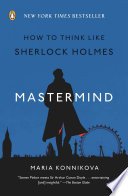
Mastermind
On The Knowledge Project, Shane Parrish brought up Maria Konnikova's book Mastermind. Parrish mentioned the book to provide context, noting that it served as his first real exposure to Konnikova's work.
Discussed“Mastermind, just for context, was my first real exposure to your work.”
Where to get it
-
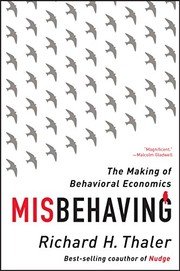
Misbehaving
On The Knowledge Project in July 2018, guest Annie Duke mentioned Richard H. Thaler's Misbehaving. Duke brought up the book early in the text where Thaler discusses theories of learning and feedback.
Discussed“Here's this thing, you know, actually a place I just saw it was in Richard Thaler's misbehaving and he's got it right there pretty early in the book, like this sentence about, you know, how you learn.”
Where to get it
-
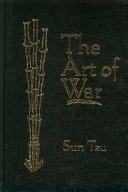
The Art of War
During an episode of The Knowledge Project titled How to Get People to Say Yes with Ryan Serhant, released on October 13, 2026, Ryan Serhant brought up The Art of War by Sun Tzu. He referenced the text to illustrate how surprising opponents can cause them to double down their focus on you.
Discussed“And when you surprise them, like in the art of war, they don't know what to do. And it makes them double down their focus on you.”
Where to get it
-
The Body Keeps the Score
On The Knowledge Project episode "The Science of Doing Your Best Work" (2026-10-27), Steven Kotler brought up "The Body Keeps the Score" by Bessel van der Kolk. Kotler referred to the book while explaining that his own article served as a direct rebuttal against the author's position, which Kotler criticized as totally wrong and very problematic.
Critiqued“And it is a direct rebuttal against Vanderbilt, who I think is totally wrong. And I think that book is very problematic.”
Where to get it
-
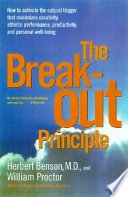
The Breakout Principle
On The Knowledge Project episode "The Science of Doing Your Best Work" (2026-10-27), Steven Kotler discussed "The Breakout Principle" by Herbert Benson and William Proctor. Kotler cited the book while detailing the four-stage neural chemistry of the flow cycle and Benson's research into healing.
Discussed“He actually mapped the original neural chemistry, the flow cycle flows a four stage cycle. It's not a light switch experience. And he mapped it. And he looked at healing.”
Where to get it
-
The Managerial Revolution
James Burnham's book The Managerial Revolution came up on The Knowledge Project on September 15, 2026. When host Shane asked about Burnham's bibliography, Tobi Lütke identified it as Burnham's first book, alongside another work titled The Machiavellians.
Discussed“what did he write he wrote um the managerial revolution first and then a book called the machiavellians which is unbelievably good i mean obviously i am a meditations fan”
Where to get it
-
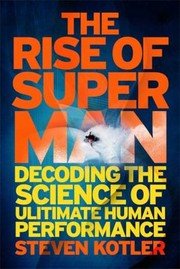
The Rise of Superman
On The Knowledge Project episode "The Science of Doing Your Best Work" (2026-10-27), Steven Kotler mentioned his own book, "The Rise of Superman". Kotler used the publication as an example to illustrate the return on investment for readers, noting that a book averaging seventy thousand words typically takes six to seven hours to read.
Discussed“That's not bad ROI, but if you read a book, they take Rises Superman. My books on, on average, about 70, 72,000 words to take most people at six to seven hours reading them.”
Where to get it
-
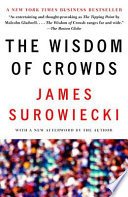
The Wisdom of Crowds
On episode 6 of The Knowledge Project, Philip Tetlock brought up James Surowiecki's book The Wisdom of Crowds while discussing the concept of group averaging and crowdsourcing accuracy. Tetlock asked the listener if they were familiar with Surowiecki's work, using it to frame a conversation on collective intelligence and predictive accuracy.
Discussed“I don't know if your listeners are familiar with the James Serwicky Wisdom of the Crowd book.”
Where to get it
-
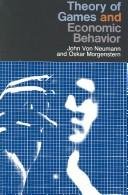
Theory of Games and Economic Behavior
On The Knowledge Project, guest Maria Konnikova discussed Theory of Games and Economic Behavior by John von Neumann and Oskar Morgenstern. Konnikova mentioned that she picked up the foundational text of game theory while conducting research and gathering material for her own writing.
Discussed“So I picked up Theory of Games, which is the foundational text of game theory.”
Where to get it
-
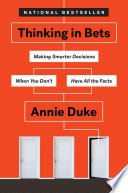
Thinking in Bets
On The Knowledge Project, Shane Parrish introduced his interview with Annie Duke by mentioning her new book, Thinking in Bets. He noted that the book is about how people can make smarter decisions when they do not have all the facts.
Discussed“Her book, Thinking in Bats, is about how we can make smarter decisions when we don't have all the facts.”
Where to get it
Guests who recommended books
- Tobi Lütke (8)
- Jon McNeill (4)
- Steven Kotler (4)
- Maria Konnikova (3)
- Annie Duke (3)
- Philip Tetlock (3)
- Ryan Serhant (1)
Latest mentions
“are a book called The Goal, which is by Ellie Goldrat, he was an MIT professor. If you want it to learn about operations principles, like leading operations, that book totally changed my life.”
“Second book is if you want to live a life worth living, Steve Covey's old book, The Seven Habits of Highly Effective People really impacted me.”
“And then the third book that I've read over the past couple of years is unreasonable hospitality by Will Gadera. I think it applies to every business, almost applies every life, every aspect of life.”
“And it is a direct rebuttal against Vanderbilt, who I think is totally wrong. And I think that book is very problematic.”
“I'm like, deep work is another word for flow, brother. Like I'm sorry. You've coined a new term when he says, well, no, you're, you're going to need a lot of struggle”
“That's not bad ROI, but if you read a book, they take Rises Superman. My books on, on average, about 70, 72,000 words to take most people at six to seven hours reading them.”
“He actually mapped the original neural chemistry, the flow cycle flows a four stage cycle. It's not a light switch experience. And he mapped it. And he looked at healing.”
“And when you surprise them, like in the art of war, they don't know what to do. And it makes them double down their focus on you.”
“I think that book lights out, which chronicles the decline of GE ought to be required reading in every business school in the country. It won't be because they don't want to offend anybody, but it should be. If there's anybody here who's not red lights out, you should buy it and read it.”
“books i come back to is like i often talk about pakistan's law which i love um it's such a quick read”
“i almost always will mention the lessons of history which is i just think the densest like the highest token quality book in existence like given for the length james burnham's books are fantastic”
“what did he write he wrote um the managerial revolution first and then a book called the machiavellians which is unbelievably good i mean obviously i am a meditations fan”
“what did he write he wrote um the managerial revolution first and then a book called the machiavellians which is unbelievably good i mean obviously i am a meditations fan”
“i mean obviously i am a meditations fan i know stoicism is falling out of favor a little bit right now but like it's been um a lifelong thing for me and um i have a copy of uh meditations in most rooms i spend time in”
“but um his longer book is good fiction and foundation series is so good you read the three body parlance too right i guess that's sort of tripping into older book now too but like um that's a recent sci-fi which is incredibly good”
“you read the three body parlance too right i guess that's sort of tripping into older book now too but like um that's a recent sci-fi which is incredibly good”
“So I picked up Theory of Games, which is the foundational text of game theory.”
“So I read I read Harrington on Hold'em, the first two volumes, which are the two relevant volumes.”
“Yes, he did, he did, he did, and I was so excited when I found that section of critique of pure reason, and was able to apply it to poker.”
“Mastermind, just for context, was my first real exposure to your work.”
Episodes
| Episode | Date | Books |
|---|---|---|
| How Elon Musk Solves Problems | Jon McNeill | 2026-11-10 | 4 |
| The Science of Doing Your Best Work | 2026-10-27 | 4 |
| How to Get People to Say Yes | Ryan Serhant | 2026-10-13 | 1 |
| Charlie Munger's Interview with Todd Combs | 2026-10-06 | 1 |
| Tobi Lütke: The Skills AI Makes More Valuable | 2026-09-15 | 8 |
| #89 Maria Konnikova: Less Certainty, More Inquiry | 2020-08-04 | 5 |
| #37 Annie Duke: Getting Better by Being Wrong | 2018-07-25 | 4 |
| #6 Philip Tetlock: How to See the Future | 2015-12-08 | 3 |
Link to this list from your show notes
Host or produce The Knowledge Project? Give your listeners every book mentioned on the show, with the episode it came up in. New episodes are added as they come out.