
Person
Ezra Klein books: every book Ezra Klein wrote and recommended
Across 9 podcasts. Every show Ezra Klein appears on, in one place — not just one.
Books by Ezra Klein
Ezra Klein’s most recommended books
- Hillbilly Elegy by J D Vance
- Amusing Ourselves to Death by Neil Postman
- The Rise and Fall of the Neoliberal Order by Gary Gerstle
- White Teeth by Zadie Smith
- The Anxious Generation by Jonathan Haidt
- The Sabbath by Abraham Joshua Heschel
- Of Boys and Men by Richard Reeves
- The Revolt of the Public and the Crisis of Authority in the New Millennium by Martin Gurri
- Gilead by Marilynne Robinson
- Daring Young Men by Richard Reeves
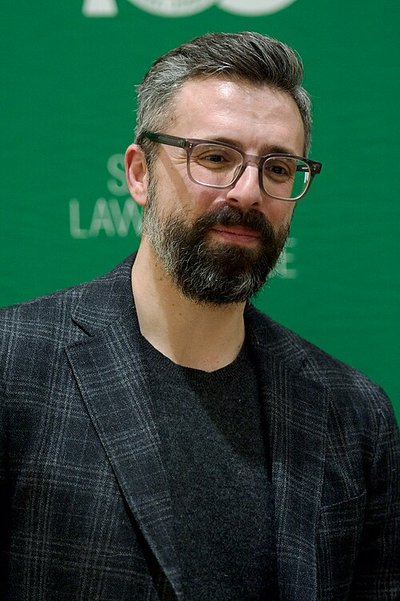
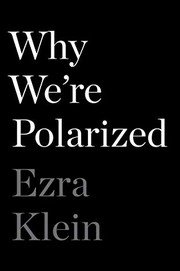
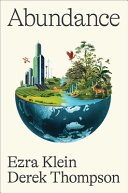
Ezra Klein is an American liberal political commentator and journalist. He has been a New York Times columnist since 2021 and is the host of The Ezra Klein Show podcast. He is a co-founder of Vox and was formerly the website's editor-at-large. He has held editorial positions at The Washington Post and The American Prospect and was a regular contributor to Bloomberg News and MSNBC. Klein has written two books, both published by Simon & Schuster: Why We're Polarized in January 2020, and Abundance, cowritten with Derek Thompson, in March 2025. On various podcasts, Klein recommended Neil Postman's Amusing Ourselves to Death during a discussion on media theory, and highly recommended Helena Rosenblatt's The Lost History of Liberalism. He mentioned Brink Lindsey's The Permanent Problem while discussing leisure time, praised Patti Smith's Just Kids for capturing historical moments, and brought up Suzanne Mettler and Trevor E. Brown's Rural Versus Urban to introduce a topic on politics. Klein also discussed Charles Mann's book tracking the divide in environmentalism and recommended Zeke Faux's Number Go Up during a conversation on crypto speculation.
Books recommended by Ezra Klein
-
Hillbilly Elegy
Hillbilly Elegy by J.D.
Discussed“and it is directly at odds with the lion version of JD Vance who wrote Hillbilly.”
Where to get it
-
Amusing Ourselves to Death
Amusing Ourselves to Death by Neil Postman is a seminal media ecology critique arguing that television and modern visual media degrade public discourse by reducing serious thought to mere entertainment.
Recommended“There's a great uh it's not a controversy, it's it's a Neil Postman argument that he makes in Amusing Ourselves to Death, which is always one of my books I recommend to people.”
Where to get it
-
Abundance
Abundance by Ezra Klein and Derek Thompson is a widely debated book that outlines a policy manifesto for progressives, arguing that the political left should embrace economic growth and the actual construction of physical infrastructure.
Discussed“And I think that the book that Derek Thompson I wrote released us here abundance which it was one of these things.”
Where to get it
-
The Rise and Fall of the Neoliberal Order
The Rise and Fall of the Neoliberal Order by Gary Gerstle explores the emergence, dominance, and ultimate crisis of neoliberalism as a dominant political and economic paradigm.
Discussed“what does that tell us in his book the rise and fall of the neoliberal order the historian Gary gell introduced me to this concept of political orders these structures of political consensus that stretch over decades”
Where to get it
-
White Teeth
White Teeth by Zadie Smith is a vibrant, multi-generational debut novel that explores identity, culture, and history through the lives of various families in London.
Discussed“it reminded me as a book more than anything else as I read it of white teeth by Zade Smith”
Where to get it
-
The Anxious Generation
The Anxious Generation by Jonathan Haidt is a prominent non-fiction book examining the severe mental health crises and loneliness epidemic among youth caused by smartphones and social media.
Discussed“I've known John height for many many years he's been on this show I've read the anxious generation”
Where to get it
-
The Sabbath
The Sabbath by Abraham Joshua Heschel is a profound theological exploration of time, sacred rest, and the spiritual dimensions of Judaism.
Recommended“When I was in college uh a rabbi I knew he gave me Abraham Joshua hessel's book the Sabbath”
Where to get it
-
Of Boys and Men
Of Boys and Men by Richard Reeves is an insightful sociological examination of the modern challenges, educational struggles, and structural disadvantages currently facing boys and men.
Discussed“last year I interviewed Richard Reeves about his book of boys and men about what has happened to men in America why they've fallen so far behind and what we should think about it what we can do about it”
Where to get it
-
The Revolt of the Public and the Crisis of Authority in the New Millennium
Martin Gurri's The Revolt of the Public and the Crisis of Authority in the New Millennium examines how digital technology and the democratization of information have fueled public distrust in traditional institutions and political elites.
Discussed“I was talking about this ABS I was talking about this with Martin G that he has a sort of Revolt of the public there I was like no this is a Revolt of Elites”
Where to get it
-
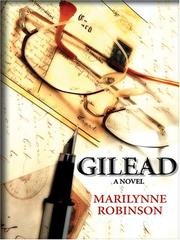
Gilead
Marilynne Robinson's Pulitzer Prize-winning epistolary novel, Gilead, is a profound meditation on faith, family history, and grace, told through the extended letter of an aging Congregationalist minister to his young son.
Recommended“there's a really beautiful quote in the book Gilead about this uh by Marilyn Robinson which is I think my favorite book and it it's all the book is this letter of an older man to his young son and he says you see how it is Godlike to love the being of someone”
Where to get it
-
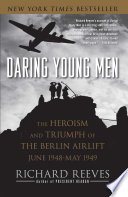
Daring Young Men
Daring Young Men by Richard Reeves is a sociology and parenting book that examines the structural challenges, employment struggles, and educational disparities facing modern boys and men.
Discussed“and this is a point you make in the book which I think is a little counterintuitive because there's a way of coding this conversation as an almost backlashing conversation”
Where to get it
-
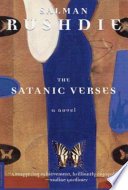
The Satanic Verses
The Satanic Verses by Salman Rushdie is a controversial postmodern novel that explores themes of migration, identity, and religious faith, famously resulting in a fatwa calling for the author's death upon its publication.
Discussed“he just sat in my Consciousness as the author of this Eerie sounding novel called The Satanic Verses a novel so somehow dangerous he had to go into hiding”
Where to get it
-
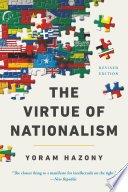
The Virtue of Nationalism
The Virtue of Nationalism by Yoram Hazony is a political theory book that defends the nation-state and examines the historical and philosophical roots of nationalism against global governance and empires.
Discussed“In 2018, Yor Mazonei, an Israeli political theorist, released a book that became a sensation on the right. It was called the virtue of nationalism and it sought to build a right that could withstand the challenge that liberals like Obama had posed.”
Where to get it
-
Chip War
Chip War by Chris Miller is a comprehensive exploration of the global semiconductor supply chain and the geopolitical forces shaping the technology industry.
Recommended“I mean if people read chip Wars which is I think the best book on this the semiconductor supply chain is just extraordinarily complicated and and fragile”
Where to get it
-
Confidence Man
Confidence Man by Maggie Haberman is a biography of Donald Trump that examines his career as a real estate developer in New York and his subsequent political trajectory.
Recommended“And so, you know, if you read, say, Maggie Haberman's great biography of Donald Trump, Confidence Man, which focuses a lot on his time as a real estate magnate in New York, you see like Donald Trump doesn't build a ton of stuff in other states.”
Where to get it
-
God, Human, Animal, Machine
God, Human, Animal, Machine by Meghan O'Gieblyn is an insightful exploration of technology, artificial intelligence, and the enduring influence of Christian theology on modern digital culture.
Recommended“and I've recommended it before but Megan ogubin's great book God human animal machine right is sort of all about a lot of the Christian mythology operating in a suburbs away here”
Where to get it
-
Recoding America
Recoding America by Jennifer Pahlka is a critical examination of why public sector technology and government delivery so often fail to meet expectations.
Recommended“Jennifer paa is the the founder of code for America and the author of one of the very best books on why government doesn't deliver recoding America”
Where to get it
-
Letters to My Palestinian Neighbor
Letters to My Palestinian Neighbor by Yossi Klein Halevi is a personal and intellectual exploration of the Israeli-Palestinian conflict presented through a series of letters addressed to an anonymous neighbor.
Recommended“Yosi K Hali you have many great books but one that I read in anticipation of this and that I would really recommend to people in this moment is letters to my Palestinian neighbor which is excellent”
Where to get it
-
The Rise and Decline of Nations
The Rise and Decline of Nations by Mancur Olson is a famous public interest economics book that explores how institutional bargaining structures and rigidities develop in stable societies over time.
Recommended“We talk a lot about a book, I dunno if you've run into this one, but it's by Mancur Olson, who's sort of a Founder of Public Interest Economics, and it's called The Rise in Decline of Nations, this is like a very famous book, libertarians love this book, and I love this book.”
Where to get it
-
The Sabbath World
The Sabbath World by Judith Shulevitz is a reflective exploration of the history, meaning, and modern practice of the Sabbath, examining how designated days of rest shape human psychology, culture, and spiritual life.
Discussed“in her beautiful book the Sabbath World Judith schvitz looks very squarely at that question”
Where to get it




The other 216 books Ezra Klein recommended or discussed, ranked
- To Shape a New World - Essays on the Political Philosophy of Martin Luther King, Jr by Tommie Shelby
- Asymmetric Politics by Matt Grossmann
- Believe by Ross Douthat
- Full Surrogacy Now by Sophie Lewis
- Fully Automated Luxury Communism by Aaron Bastani
- How Democracies Die by Steven Levitsky, Daniel Ziblatt
- In Defense of Politics by Bernard Crick
- Inventing the Renaissance by Ada Palmer
- Knife by Salman Rushdie
- Presidents, Populism, and the Crisis of Democracy by William G. Howell
- Primary Politics by Elaine Kamarck
- Silent Spring by Rachel Carson
- The Affluent Society by John Kenneth Galbraith
- The Hollow Parties by Daniel Schlozman
- The Origins of Totalitarianism by Hannah Arendt
- The Shadow by Hans Christian Andersen
- What Art Does by Bette Adriaanse
- Just Kids by Patti Smith
- Age of Revolutions by Fareed Zakaria
- Bread of Angels by Patti Smith
- Bright dead things by Ada Limón
- Four Thousand Weeks by Oliver Burkeman
- Tomorrow Is Yesterday by Hussein Agha
- The Sirens' Call by Chris Hayes
- The Hurting Kind by Ada Limón
- The Lost History of Liberalism by Helena Rosenblatt
- A First-Rate Madness by Nassir Ghaemi
- Comfortable with Uncertainty by Pema Chödrön
- Feel Free by Zadie Smith
- Generations by Jean M. Twenge
- Lifted to the Shoulders of a Mountain by Pat Turner Mitchell
- Maintenance of Everything by Stewart Brand
- My Promised Land by Ari Shavit
- Nobody's Girl by Virginia Roberts Giuffre
- Rebooting AI by Gary Marcus
- The Creative Act by Rick Rubin
- The Disengaged Teen by Jenny Anderson, Rebecca Winthrop
- The End of History and the Last Man by Francis Fukuyama
- The Fraud by Zadie Smith
- The High Sierra by Kim Stanley Robinson
- A Place of Greater Safety by Hilary Mantel
- A World after Liberalism by Matthew Rose
- Adam Bede by George Eliot
- Against Excess by Mark A. Kleiman
- American Carnage by Tim Alberta
- American Kleptocracy by Casey Michel
- Career and Family by Claudia Dale Goldin
- Death by Joan Tollifson
- Finding Freedom by Walter T. McDonald, Ruby West Jackson
- Flash Boys by Michael Lewis
- Fully Alive by Elizabeth Oldfield
- Hessel by Hessel Family
- Homelessness Is a Housing Problem by Gregg Colburn
- How Terrorism Ends by Audrey Kurth Cronin
- Jesus and the Prophets by Charles S. Macfarland
- Making a Way by Marilyn Robinson
- Middlemarch by George Eliot
- Moneyland by Oliver Bullough
- Nine Gates by Jane Hirshfield
- Number Go Up by Zeke Faux
- Offshore by Brooke Harrington
- On Beauty by Zadie Smith
- Our Man by George Packer
- Partisans by Nicole Hemmer
- Party of the People by Patrick Ruffini
- Race and Reunion by David W. Blight
- Regime Change by Patrick J. Deneen
- Reign of Terror by Spencer Ackerman
- Rural Versus Urban by Suzanne Mettler
- Simplicity parenting by Kim John Payne
- String Theory by David Foster Wallace
- Swing Time by Zadie Smith
- Ten Windows by Jane Hirshfield
- The Amen Effect by Sharon Brous
- The Bonfire of the Vanities by Tom Wolfe
- The City That Became Safe by Franklin E. Zimring
- The Company She Keeps by Mary McCarthy
- The inheritance trilogy by N. K. Jemisin
- The Kingdom, the Power, and the Glory by Tim Alberta
- The Knowledge Machine by Michael Strevens
- The Known Citizen by Sarah E. Igo
- The Making of the President 1960 by Theodore H. White
- The Pain Management Workbook by Rachel Zoffness
- The Permanent Problem by Brink Lindsey
- The Princess Bride by William Goldman
- The Reactionary Spirit by Zack Beauchamp
- The Rust Programming Language (Covers Rust 2018) by Steve Klabnik, Carol Nichols
- The Unaccountability Machine by Dan Davies
- Thinking About Crime by James Q. Wilson
- Underground Asia by Tim Harper
- Walk, Ride, Paddle by Tim Kaine
- Wounded Knee by Heather Cox Richardson
- Abraham Lincoln and His Mailbag by Edward Duffield Neill
- Another Kind of Freedom by Pema Chodron
- Attention Span by Gloria Mark
- Being Jewish After the Destruction of Gaza by Peter Beinart
- Bowling Alone by Robert D. Putnam
- Buddha, Socrates, and Us by Stephen Batchelor
- Children of Memory by Adrian Tchaikovsky
- Children of Ruin by Adrian Tchaikovsky
- Children of Time by Adrian Tchaikovsky
- Citizenville by Gavin Newsom
- Co-Intelligence by Ethan Mollick
- Coming apart by Charles A. Murray
- Crashed by J. Adam Tooze
- Crime and Punishment by Fyodor Dostoevsky
- Cultural Backlash and the Rise of Populism by Pippa Norris
- David Copperfield by Charles Dickens
- Democracy in America by Alexis de Tocqueville
- Dominion by Tom Holland
- Dreams From Our Founding Fathers by Ron DeSantis
- Drug Use for Grown-Ups by Carl L. Hart
- East of Eden by John Steinbeck
- East West Street by Philippe Sands
- Evicted by Matthew Desmond
- Four Arguments for the Elimination of Television by Jerry Mander
- From Counterculture to Cyberculture by Fred Turner
- Grand New Party by Ross Douthat
- Housekeeping by Marilynne Robinson
- How Buildings Learn by Stewart Brand
- How to Be Animal by Melanie Challenger
- How to Change Your Mind by Michael Pollan
- How to Do Nothing by Jenny Odell
- Hyperpolitics by Anton Jäger
- Joseph Anton by Salman Rushdie
- Lean In by Sheryl Sandberg
- Leaves of Grass by Walt Whitman
- Liberalism by Edmund Fawcett
- Liberalism and Its Discontents by Francis Fukuyama
- Lions & scavengers by Ben Shapiro
- Managing Risk by Jonathan Armstrong, Mark Rhys-Jones, Daniel Dresner
- Medicare for All by Abdul El-Sayed
- Meditations for Mortals by Oliver Burkeman
- Men by Richard G. BRIBIESCAS
- Moby Dick by Herman Melville
- MOBY-DICK; or, THE WHALE by Herman Melville
- Nation of Victims by Vivek Ramaswamy
- Not the End of the World by Hannah Ritchie
- Open by Andre Agassi
- Political Liberalism by John Rawls
- Poverty, by America by Matthew Desmond
- Power and Progress by Daron Acemoglu, Simon Johnson
- Powering the Armed Forces by Gary Roughead, Jeremy Carl, Manuel Hernandez
- Price and Rent Effects of Energy Efficiency in Residential Properties by Nurul Hana Adi Maimun
- Prospecting for Mineralization in Steeply Dipping Beds Covered by Glacial Till, Talus, and Weathered Zones, by F. W. Lee, H. L. Scharon, and C. H. Sandberg by F. W. Lee, H. L. Scharon, C. H. Sandberg, Etats-Unis. Mines (Bureau)
- Public Citizens by Paul Sabin
- Public opinion by Walter Lippmann
- Reader, Come Home by Maryanne Wolf
- Reading Genesis by Marilynne Robinson
- Red Scare by Clay Risen
- Romney by McKay Coppins
- San Fransicko by Michael Shellenberger
- Sea of Tranquility by Emily St. John Mandel
- Seeing Like a State by James C. Scott
- Smart on Crime by Kamala Harris
- Taxation: the People's Business by Andrew William Mellon
- The Age of Extraction by Tim Wu
- The AI Mirror by Shannon Vallor
- The Beauty Myth by Naomi Wolf
- The Book of Job by Richard Green Moulton
- The Broken Earth Trilogy: The Fifth Season, The Obelisk Gate, The Stone Sky by N. K. Jemisin
- The City We Became by N. K. Jemisin
- The Courage to Be Free by Ron DeSantis
- The crisis of democracy by William E. Rappard
- The Dangerous Case of Donald Trump by Bandy X. Lee
- The Darkened Light of Faith by Melvin L. Rogers
- The Deluge by Adam Tooze
- The education of Henry Adams by Henry Adams
- The Emerging Democratic Majority by John B. Judis
- The Emotional Lives of Teenagers by Lisa Damour, Ph.D.
- The Federalist papers by Alexander Hamilton, James Madison, John Jay, James Madison, John Jay
- The Feminine Mystique by Betty Friedan
- The Glass Bead Game by Hermann Hesse
- The hungry brain by Stephan J. Guyenet
- The Inheritance of Loss by Kiran Desai
- The Last Men by Charles Cornish-Dale
- The Lincoln Miracle by Edward Achorn
- the Making of Another Major Motion Picture Masterpiece by Tom Hanks
- The Message by Ta-Nehisi Coates
- The Much Too Promised Land by Aaron David Miller
- The Only Language They Understand by Nathan Thrall
- The Origins of Elected Strongmen by Erica Frantz, Senior Fellow and Director of the Transatlantic Security Program Andrea Kendall-Taylor, Joe Wright
- The Overstory by Richard Powers
- The Philosophical Baby by Alison Gopnik
- The Reasoning Voter by Samuel L. Popkin
- The Right to Sex by Amia Srinivasan
- The Righteous Mind by Jonathan Haidt
- The Savage Detectives by Roberto Bolaño
- The Screwtape Letters by C. S. Lewis
- The Secret of Our Success by Joseph Henrich
- The Shallows by Nicholas Carr
- The Structure of Scientific Revolutions by Thomas S. Kuhn
- The Toddler in Chief by Daniel W. Drezner
- The Truths We Hold by Kamala Harris
- The Unprotected Class by Jeremy Carl
- The WEIRDest People in the World by Joseph Patrick Henrich
- The Weirdness of the World by Eric Schwitzgebel
- The World We Make by N. K. Jemisin
- The Years of Rice and Salt by Kim Stanley Robinson
- Trick Mirror by Jia Tolentino, Juan Trejo
- Trust by Pete Buttigieg
- UFOs : Generals, Pilots, and Government Officials Go on the Record by Leslie Kean
- Uncommon Type by Tom Hanks
- Under a White Sky by Elizabeth Kolbert
- Under Pressure by Lisa K. Damour
- Underground Empire by Henry Farrell
- Vigil by George Saunders
- War and Peace by Leo Tolstoy
- What is this? by Martine Batchelor
- What Were We Thinking by Carlos Lozada
- When the Clock Broke by John Ganz
- Where good ideas come from by Steven Johnson
- Where Have All the Democrats Gone? by Ruy Teixeira
- Where Is My Flying Car? by J. Storrs Hall
- Why We're Polarized by Ezra Klein
- Zen and the Art of Motorcycle Maintenance by Robert M. Pirsig
Questions about Ezra Klein’s book recommendations
What book does Ezra Klein recommend most?
Hillbilly Elegy by J D Vance. Ezra Klein discussed it in 7 episodes.
How many books has Ezra Klein recommended on podcasts?
We have found 236 books Ezra Klein recommended or discussed, across 159 episodes of 9 podcasts. Ad reads and passing mentions are not counted.
What books are on Ezra Klein's reading list?
The books Ezra Klein has recommended most on podcasts are Hillbilly Elegy by J D Vance, Amusing Ourselves to Death by Neil Postman, The Rise and Fall of the Neoliberal Order by Gary Gerstle, White Teeth by Zadie Smith and The Anxious Generation by Jonathan Haidt. The full book list below has all 236.
What books has Ezra Klein written?
Why We're Polarized (2020) and Abundance (2025).
What did Ezra Klein recommend on The Ezra Klein Show?
Hillbilly Elegy, Amusing Ourselves to Death and Abundance, among 225 books in all.
What is the latest book Ezra Klein recommended?
Medicare for All, discussed on The Ezra Klein Show (2026-09-25).
People who recommend the same books
Appearances
Other mentions (146: passing, ad reads, own books), the 30 most recent
“And he's the author of the 2019 book, The Trans-Pacific Experiment: How China and California Collaborate and Compete for Our Future.”
“But his new book is a memoir in the realm of the last man.”
“He's co-host of their podcast, A Story of Money, and author of the forthcoming book, A Fabulous Debt: The Epic Story of How Bonds Built the Modern World.”
“She's the author of the new book, The Time Tax, [music] which is all about this.”
“I think that's his copy of Grand New Party back there.”
“I have for many many many years and in fact it's part of my first book Why We're Polarized not just believed but talked a lot about how the immigration issue gets sanitized as about economics.”
“So, uh I wrote Abundance uh last year with Derek Thompson or published it. And one thing I've heard been asked by a lot of people like, "What is the Abundance take on a data center?"”
“Maggie Haberman is a White House correspondent [music] at The New York Times, a Pulitzer Prize winner, and the co-author, alongside Jonathan Swan, of Regime Change.”
“and this is straight out of my first book, Why We're Polarized, over time we've developed highly ideologically unified parties that now compete across the branches.”
“He's published that in a book on Xiinping. He's also the author of the avoidable war.”
“He's published that in a book on Xiinping. He's also the author of the avoidable war.”
“And he's the author of America's Cultural Revolution: Everything.”
“I do think that one of the things that happened over the past decade or so and this is you know something I talk about in my first book why we're polarized is there's a huge upsurge in telling people that the right way to understand life America is all through the lens of identity groups.”
“Helen Lewis is a staff writer of the Atlantic and the author of Difficult Women: A History of Feminism in 11 Fights and the Genius Myth.”
“Helen Lewis is a staff writer of the Atlantic and the author of Difficult Women: A History of Feminism in 11 Fights and the Genius Myth.”
“He's also the author of, among other books, Every Nation for Itself, What Happens When No One Leads the World.”
“He's the author of the 2020 book breaking the two-party doom loop, the case for multi-party democracy in America.”
“Like you really did have, I think, a I mean, this is the whole story I tell in my book, Why We're Polarized.”
“It's by the Buddhist teacher Pema Chödrön who's also written really really really well-known beloved books like When Things Fall Apart and welcoming the unwelcomed.”
“It's by the Buddhist teacher Pema Chödrön who's also written really really really well-known beloved books like When Things Fall Apart and welcoming the unwelcomed.”
“Helena Rosenblatt is a professor at the CUNY Graduate Center. She's the author of Liberal Values, Benjamin Constant and the Politics of Religion, as well as the aforementioned The Lost History of Liberalism, which I highly recommend.”
“It has been a little over a year since Derek Thompson and I published Abundance.”
“So, our books came out a little more than a year ago.”
“A lot of the examples in the book are from California, where I'm from, where I was when we wrote much of the book.”
“So so something that I wrote about in our housing chapter was the anger in the 60s and the 70s that America was just getting uglier.”
“a time machine materializes right next to us over here takes us back to December 2023 allowing us just enough time to add a chapter 7 to the book called abundance and corporate power.”
“Yeah, Mark, I take your point that a lot of the things we focus on in the book or frankly that you focus on in your book corporate concentration isn't the reason the transmission lines aren't getting built...”
“I think one of the vibes projects in abundance is to try to create a political vibe that is simultaneously progressive in the sense that it cares about social goals and equality and distribution and a bunch of things that you know progressives typically care about and prochemnology.”
“I'm glad you made the distinction because I if someone said your book has no vision, I would say, well, it does begin with a, you know, four-page vignette of what the future in 2050 would look like if we got abundance right.”
“My wife, Annie Lowrey, wrote a book on universal basic income called "Give People Money."”