Book · 1973 · History
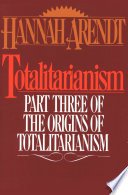
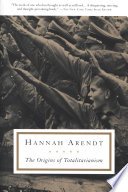
The Origins of Totalitarianism
- mentions
- 12
- people
- 9
- podcasts
- 8
- episodes
- 12
- critical mentions
- 0
And the last book is a classic it's not a modern study but I think we now need to go back to read Haren Anna arant and we need to read the origins of totalitarianism.
What they say about it
- Need to read it now2
- Famous 1951 book“famous 1951 book”2
The best things said about it
Agency can be taken from you if you really lose a sense of community, a sense of neighbor, a sense of caring about the society in which you live.
 Sherry Turkle The Ezra Klein Show · Oct 2026
Hannah Arendt in her famous 1951 book The Origins of Totalitarianism she tried to explain how it was that right-wing totalitarianism in Germany and left-wing version in Russia rose.
It's a very famous quote from Hannah Arendt's The Origins of Totalitarianism which when I read it out on the show I got a bunch of emails from political scientists be like we've disproven that.
 Ezra Klein The Ezra Klein Show · Feb 2026
Hannah Arendt in a book called The Origins of Totalitarianism after written in the 1950s she just points out that you know it's pretty much the same playbook.
She obsessively revised and annotated the manuscript and for the remainder of her life she honed her core philosophical ideas against Augustine's whetstone contemplating the troublesome disconnect between philosophy and politics particularly moral philosophy and politics as evidenced by the rise of totalitarian regimes which of course she later explored in her just just shockingly relevant book the origins of.
Arendt published The Origins of Totalitarianism in 1951. In the book, she uses documents captured from the Nazis to extrapolate to the USSR and create an ideal type totalitarian regime.
Where and when it comes up
Mentions per year
How it comes up
9 people who brought it up
Why people recommend it
The Origins of Totalitarianism by Hannah Arendt is a foundational political science text that examines the historical roots, psychosocial conditions, and structural mechanisms that allowed Nazism and Stalinism to rise in the twentieth century. On The Ezra Klein Show, Sherry Turkle recommended the book by highlighting how a loss of community and civic engagement strips individuals of their agency, while Pippa Norris similarly urged audiences to revisit the classic study to better understand the resurgence of far-right movements across the globe. The book also frequently served as a crucial reference point for historical and political commentary across various podcasts. Rod Dreher cited Arendt's work on Breaking Points and Interesting Times to explain how social atomization creates the psychological breeding grounds for authoritarian regimes. Ezra Klein discussed the book's famous passages concerning loneliness and authoritarianism, noting the strong reactions he received from political scientists. Additionally, Jeffrey Wasserstrom pointed out on the Lex Fridman Podcast that Arendt's analysis of totalitarianism remains surprisingly un-censored in modern China because it does not directly target the contemporary regime, while Michael Shellenberger referenced the volume on The Tucker Carlson Show to analyze associative ties and state control. Commentators continually return to Arendt's insights to diagnose the vulnerabilities of modern democracies and the persistent dangers of mass isolation.
Every mention
Pippa Norris and the last book is the classic it's not a modern study but I think we now need to go back to read her and… 1
“and the last book is the classic it's not a modern study but I think we now need to go back to read her and Anna arant and we need to read the origins of totalitarianism”
Sherry Turkle And the second is, uh, Hannah Arendt, uh, the origins of totalitarianism because she says look, agency can… 1
“And the second is, uh, Hannah Arendt, uh, the origins of totalitarianism because she says look, agency can be taken from you if you really lose a sense of community, a sense of neighbor, a sense of caring about the, the society in which you live, which I think is a real, I think she's having a moment because I”
Ezra Klein It's a very famous quote from Hana Ren's the origins of totalitarianism which when I read it out on the sho… 2
“It's a very famous quote from Hana Ren's the origins of totalitarianism which when I read it out on the show I got a bunch of emails from political scientists be like we've disproven that”
“I've been thinking about something Hana rent wrote in the origins of totalitarianism another one of these books that when you begin quoting it you know things are not going great”
Jeffrey Wasserstrom You can read all sorts of things in China about totalitarian, you can read Hannah Arendt's book on totalita… 1
“You can read all sorts of things in China about totalitarian, you can read Hannah Arendt's book on totalitarianism, which would be the kind of thing you just, you know, you're not supposed to be able to read that in a somewhat totalitarian state or a dictatorial state, or anything.”
Maria Popova she obsessively revised and annotated the manuscript and for the remainder of her life she honed her core p… 1
“she obsessively revised and annotated the manuscript and for the remainder of her life she honed her core philosophical ideas against Augustine's whetstone contemplating the troublesome disconnect between philosophy and politics particularly moral philosophy and politics as evidenced by the rise of totalitarian regimes which of course she later explored in her just just shockingly relevant book the origins of”
 Michael Shellenberger one is the on totalitarianism book and the other one is ikan and Jerusalem 1
“one is the on totalitarianism book and the other one is ikan and Jerusalem”
Robert Evans An important creator of the idea of totalitarianism was Hana Arent. Arent published the origins of totalita… 1
“An important creator of the idea of totalitarianism was Hana Arent. Arent published the origins of totalitarianism in 1951. In the book, she uses documents captured from the Nazis to extrapolate to the USSR and create an ideal type totalitarian regime.”
Rod Dreher Well, what I mean by that, and this also goes back to Hannah Arendt in her famous 1951 book, the origins of… 1
“Well, what I mean by that, and this also goes back to Hannah Arendt in her famous 1951 book, the origins of totalitarianism.”
Sheldon Solomon hannah arendt in a book called the origin of totalitarianism after written in the 1950s she just points out… 1
“hannah arendt in a book called the origin of totalitarianism after written in the 1950s she just points out that um you know it's pretty much the same playbook”
Mentioned on the show without a named speaker2
“Well, what I mean by that and this also goes back to Hannah Arendt in her famous 1951 book The Origins of Totalitarianism she tried to explain how it was that right-wing totalitarianism in Germany and left-wing version in Russia rose”
“and the last book is a classic it's not a modern study but I think we now need to go back to read Haren Anna arant and we need to read the origins of totalitarianism”