Podcast
Lex Fridman Podcast book recommendations
Conversations about science, technology, history, philosophy and the nature of intelligence, consciousness, love, and power. Lex is an AI researcher at MIT and beyond.
Latest mentions
-

The War in the West - A New History
-
Hitler's Table Talk
-

Munich
-
KL
-
Man's Search For Ultimate Meaning
-
El Metaverso: Y Cómo Lo Revolucionará Todo / The Metaverse: And How It Will Revolutionize Everything (Spanish Edition)
-
The Origins of Totalitarianism
-
Totalitarianism
-

1984
-

Brave New World
-

The Handmaid's Tale
-
Brave New World Revisited
-
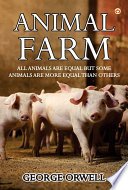
Animal Farm
-

We
-
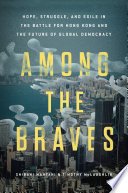
Among the Braves
-
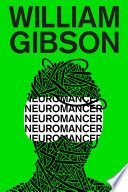
Neuromancer
-

Let Only Red Flowers Bloom
-
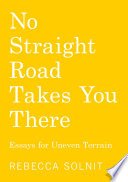
No Straight Road Takes You There
-
On Democracies and Death Cults
-

War on the West
Most recommended on Lex Fridman Podcast
-

The Denial of Death
On the Lex Fridman Podcast, host Lex Fridman and guests such as David Wolpe, Brian Greene, and John Vervaeke repeatedly examined The Denial of Death by Ernest Becker. Speakers highlighted Becker's central theory that the subconscious fear of mortality serves as a fundamental driving force behind human achievements, culture, and anxiety. Guest David Wolpe recalled reading the book in high school upon his father's recommendation, while Fridman discussed Becker's philosophical impact across multiple interviews.
Discussed“Ernest Becker talked about this in his book 'Denial of Death', stating that the fear of death is an important motivator in our lives.”
Where to get it
-
The Rise and Fall of the Third Reich
Host Lex Fridman frequently referenced "The Rise and Fall of the Third Reich" by William L. Shirer across multiple episodes of the Lex Fridman Podcast. In discussions with guests such as Douglas Murray, Ben Shapiro, and Richard Haier, Fridman praised Shirer's firsthand, objective reporting as a journalist who lived through the era. Fridman shared that he re-read the book and listened to its audiobook to explore World War II history and understand complex historical events. Guest Grimes also noted that host Dan Carlin inspired her passion for history, leading her to read dense texts such as Shirer's comprehensive account of Hitler's regime.
Discussed“As an example, I admire William Shirer, the author of many books on Hitler, including "The Rise and Fall of the Third Reich." He was there and lived through it and covered it objectively to the degree that one could.”
Where to get it
-

The Hitch Hiker's Guide to the Galaxy
The Hitch Hiker's Guide to the Galaxy by Douglas Adams came up repeatedly on the Lex Fridman Podcast. In conversations with guests like Walter Isaacson, Jimmy Wales, Anna Frebel, Betül Kaçar, Nick Lane, Elon Musk, Jaron Lanier, and Konstantin Batygin, host Lex Fridman and his guests cited the book's themes. Isaacson theorized that Musk read the book too often, while Musk noted its philosophy that the universe is an answer requiring the right questions. Fridman frequently read quotes from Adams' work to reflect on Earth's insignificance and humanity's ancestors.
Discussed“One of my theories on Elon, a minor theory, is that he may have read 'Hitchhiker's Guide to the Galaxy' a few times too often. And as you know, there's a scene that says there's a theory about the universe that if anyone ever discovers the secret meanings of the universe, it will be replaced by an even more complex”
Where to get it
-

Mein Kampf
Adolf Hitler's Mein Kampf was discussed across several episodes of the Lex Fridman Podcast. Douglas Murray referenced copies of the book found in Gazan households. Vejas Liulevicius emphasized the text as a crucial outline of Hitler's hateful ideology, while Tucker Carlson contrasted it with political philosophies like Das Kapital. Harvey Silverglate described it as one of the most important books of the twentieth century, arguing that educated individuals should read it to understand the roots of hatred and the historical causes behind millions of deaths.
Discussed“...the numbers of copies of "Mein Kampf" in Arabic in an average Gazan household, "The Protocols of the Learned Elders of Zion."”
Where to get it
-
1984
On an episode of the Lex Fridman Podcast, Jeffrey Wasserstrom and Lex Fridman discussed 1984 by George Orwell. Wasserstrom noted that the novel had been legally available in Chinese bookstores since the mid-1980s and described how different readers interpreted its themes over time, while Fridman reflected on rereading Orwell's work in the context of modern state control and memory manipulation.
Discussed“You can buy '1984' in a Chinese bookstore, you've been able to since 1985. You can buy again, it's not about China, and actually for some people within China in the mid 1980s, where they focused on the part of 1984, that's like the two minutes of hate...”
Where to get it
-
Animal Farm
Host Lex Fridman and several guests brought up Animal Farm by George Orwell across multiple episodes of the Lex Fridman Podcast. Fridman stated that the title is one of his favorite books, using its imagery to criticize public mass hysteria and comparing vocal online detractors to the sheep chanting slogans in the novel. Guests including Michael Malice, David Pakman, Jeremi Suri, and Brian Keating also referenced the classic allegory, discussing the exploitation of the horse Boxer and the donkey Benjamin's reflections on desire and envy.
Discussed“And then there's 'Animal Farm in 1984' is a second book.”
Where to get it
-
The Ascent of Money
Niall Ferguson's The Ascent of Money was repeatedly recommended by the host of the Lex Fridman Podcast across several episodes in 2020. While interviewing guests such as David Eagleman, Peter Singer, David Patterson, Steven Pressfield, Ilya Sutskever, Dmitry Korkin, and David Silver, the host consistently recommended the book as an excellent historical overview of money, often bringing it up in the context of discussing cryptocurrency.
Discussed“i recommend ascent of money as a great book on this history”
Where to get it
-
Brave New World
Aldous Huxley's Brave New World came up during several episodes of the Lex Fridman Podcast, notably in a 2025 discussion with Jeffrey Wasserstrom and earlier talks with guests like Elon Musk and Roman Yampolskiy. Contributors referenced the novel when analyzing dystopian governance models, discussing modern parallels to the society depicted in the book, and mentioning concepts such as the drug soma.
Discussed“Yeah, you've actually spoken about and described China as more akin to the dystopian world, a brave new world, the 1984, which is really interesting to think about, I think about that a lot of recently reread, over the past couple of years we read 'Brave New World' a couple of times, and also '1984'.”
Where to get it
-
The Fountainhead
Ayn Rand's novel "The Fountainhead" was referenced multiple times across several episodes of the Lex Fridman Podcast. Jennifer Burns discussed fan mail mentioning readers getting divorces after reading it, while Sean Kelly and Yaron Brook recalled reading it during their youth. Guests and the host also mentioned the book when exploring Objectivism, rational self-interest, and literary analogies, with Michael Malice recommending it alongside "Atlas Shrugged."
Discussed“People would say things like, "I read 'The Fountainhead,' and now I'm getting a divorce," you know?”
Where to get it
-
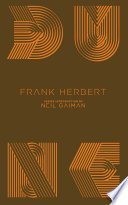
Dune
On the Lex Fridman Podcast, host Lex Fridman and guests like Thomas Tull and Ryan Hall referenced Frank Herbert's Dune. Fridman quoted passages from the novel about overcoming fear during podcast closings, while guests shared their admiration for the world-building and its status as a premier science fiction work.
Discussed“Now, let me leave you with some words from Frank Herbert in 'Dune': 'I must not fear. Fear is the mind-killer. Fear is the little death that brings total obliteration.”
Where to get it
-
Man's Search For Ultimate Meaning
Across multiple episodes of the Lex Fridman Podcast featuring guests such as James Holland, Barry Barish, Michael Malice, Yeonmi Park, Robert Breedlove, and Andrew Huberman, speakers frequently referenced Viktor Frankl's Man's Search for Ultimate Meaning. The participants discussed the book in relation to the Holocaust and totalitarianism, highlighting its profound philosophical insights into how human beings can confront extreme evil, endure suffering, and find ultimate meaning and joy in difficult circumstances.
Recommended“One is uh man's search for meaning about Victor Franco sort of this philosophical thing about how a human being can confront that and find meaning and what it mean what what does the human condition look like in the context of such uh evil.”
Where to get it
-
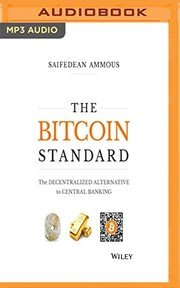
The Bitcoin Standard
Across various episodes of the Lex Fridman Podcast between 2021 and 2022, Lex Fridman and his guests frequently discussed Saifedean Ammous's book 'The Bitcoin Standard'. Fridman and guests such as Saifedean Ammous, Michael Saylor, and Nic Carter referenced the book's economic arguments regarding hard money, historical inflation rates, and Austrian economics, often recommending it as a foundational text for understanding Bitcoin.
Discussed“He's an Austrian economist, an anarchist, and the author of "The Bitcoin Standard" and the new book, "The Fiat Standard."”
Where to get it
-
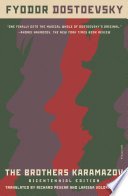
The Brothers Karamazov
On the Lex Fridman Podcast, host Lex Fridman and various guests explored "The Brothers Karamazov" by Fyodor Dostoevsky across multiple episodes. Bishop Robert Barron analyzed Ivan's arguments against faith, while Fridman reflected on Dostoevsky's exploration of optimism, intelligence, existentialism, and guilt alongside guests like Sean Kelly, Karl Deisseroth, and Ronald Sullivan.
Discussed“I think in the brothers Karamazov, uh, Yvonne's argument when he's trying to wreck the faith of Alyosha, and it's um, these examples drawn.”
Speaker #304 – Bishop Robert Barron: Christianity and the Catholic Church 2022-07-20 Listen at 58:15Where to get it
-

Архипелаг ГУЛАГ
Aleksandr Solzhenitsyn's The Gulag Archipelago was referenced across multiple episodes of the Lex Fridman Podcast by host Lex Fridman and guests such as Jordan Jonas, Kevin Spacey, and Duncan Trussell between 2022 and 2024. The speakers discussed the book's profound lessons on survival and history, highlighted Solzhenitsyn's famous observation that the line between good and evil runs through every human heart, and reflected on passages detailing human suffering and torture.
Discussed“I didn't aim for it; I hoped it was a tangential benefit, but aimed at something else. That was the lessons I got from "The Gulag Archipelago."”
Where to get it
-
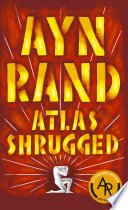
Atlas Shrugged
Across several episodes of the Lex Fridman Podcast, guests and the host discussed Ayn Rand's Atlas Shrugged. Several guests reflected on reading the novel during their high school and college years, describing it as part of an edgy, libertarian phase, while host Lex Fridman also explored its place alongside The Fountainhead in a mythic and philosophical register.
Discussed“But can we stay in the mythic register with "The Fountainhead" and "Atlas Shrugged?"”
Where to get it
-
Moby Dick
On the Lex Fridman Podcast, Herman Melville's "Moby Dick" was mentioned across various episodes by guests such as Neri Oxman, Neal Stephenson, Barry Barish, and Sheldon Solomon, as well as host Lex Fridman. Guests discussed how the novel inspired architectural and design work, how it impacted their literary pursuits, and how its themes relate to resource limits.
Discussed“I remember when we did the Mandela Pavilion, we read 'Moby Dick,' the whiteness of the whale, the albino, the different, the other. And that got us to work on melanin.”
Where to get it
-

The Art of War
Sun Tzu's classic work The Art of War was frequently cited across multiple episodes of the Lex Fridman Podcast. Host Lex Fridman used notable quotes from the book to close several episodes, while guests such as Aravind Srinivas and Ryan Hall referenced its strategic philosophies in discussions about competitive markets, conflict, and martial arts.
Discussed“The pivotal point to recognize is that there’s this quote from 'The Art of War': 'Make the weakness of your enemy a strength.' The core weakness of Google is that any ad unit less profitable than a link or one that discourages link clicks isn’t in their interests to pursue aggressively; they prefer to focus on something higher-margin.”
Where to get it
-
The Selfish Gene
Guests on the Lex Fridman Podcast frequently referenced Richard Dawkins and his seminal book, The Selfish Gene. In episode 333, Andrej Karpathy shared how the book deeply impacted his understanding of altruism and genetic selection at the level of genes. Garry Nolan referenced the selfish gene hypothesis during a discussion on DNA and the origins of life in episode 262. Other guests, including Sheldon Solomon and Saagar Enjeti, brought up Dawkins's work in discussions on evolutionary thinking and cultural clarity. Host Lex Fridman also introduced Dawkins himself by his notable bibliography, which includes The Selfish Gene, during episode 87.
Discussed“I was very impacted by 'The Selfish Gene.' I thought that was a really good book that helped me understand altruism as an example and where it comes from, and just realizing that, you know, the selection is in the level of genes was a huge insight for me at the time, and it sort of like cleared up a”
Where to get it
-
The Wealth of Nations
Adam Smith's The Wealth of Nations was discussed across multiple episodes of the Lex Fridman Podcast. In episode 457, Jennifer Burns quoted the title and noted classical economics' focus on political economy. In episode 441, Cenk Uygur referenced the book to argue that free markets still involve government intervention. Steve Keen discussed the work in episode 303, while Travis Oliphant mentioned encountering it in episode 224. Finally, host Lex Fridman quoted Smith and mentioned the book at the conclusion of his interview with Paul Krugman.
Discussed“Classical economics does not really use math, is very close to political economy. It's concerned with, as Smith puts it, "The wealth of nations."”
Where to get it
-

... Trotzdem Ja zum Leben sagen
Viktor E. Frankl's Man's Search for Meaning was referenced across multiple episodes of the Lex Fridman Podcast. Lex Fridman touched upon the human search for meaning when conversing with Joscha Bach, and Duncan Trussell brought up the book while discussing life's purpose with the host. David Wolpe named it as one of the most influential books in his life, and Elon Musk mentioned it while reflecting on how humans seek meaning and the importance of broad reading.
Discussed“This external source of coherence and inspiration of how to take the leap into the unknown that we humans do. Man search for meaning. LLMs search for meaning.”
Where to get it
-
A new kind of science
On the Lex Fridman Podcast, host Lex Fridman and guest Stephen Wolfram discussed A New Kind of Science across multiple episodes between 2020 and 2023. Fridman credited the book with inspiring his childhood interest in artificial intelligence and complex systems, while Wolfram referenced examples from his work on cellular automata to explain computation and parallels in physics.
Discussed“This idea captured my attention, so I focused on the picture in the book, trying to understand it better.”
Where to get it
-

Artificial Intelligence: A Modern Approach, Global Edition
The textbook 'Artificial Intelligence: A Modern Approach, Global Edition' by Stuart Russell and Peter Norvig was featured across several episodes of the Lex Fridman Podcast. In episode #81, Anca Dragan discussed how finding a PDF copy in high school inspired her career in AI. In episode #75, Marcus Hutter recommended the book as the definitive AI Bible. The book was also discussed in episodes featuring co-author Peter Norvig and Stuart Russell himself as foundational works that inspired a generation of researchers.
Discussed“when I was in 12th grade I got my hands on a PDF copy in Romania of Russell Norvig a I modern approach”
Where to get it
-
Bible
The Bible was referenced on the Lex Fridman Podcast across multiple episodes. Javier Milei cited the book of Exodus to discuss historical suffering and Malthusian ideas, Kanye West discussed perceived contradictions within the text that require a pastor to unpack, and other guests referenced related scholarly and scientific texts during interviews.
Discussed“This idea failed with Malthus at the beginning of the 19th century, and it was a murderous idea applied by the Egyptians against the Jews, famously recorded in the book of Exodus.”
Where to get it
-
Dear Reader
Dear Reader by Michael Malice was discussed across several episodes of the Lex Fridman Podcast. Host Lex Fridman introduced Malice as the author of the unauthorized autobiography of Kim Jong-il, and guests like Yeonmi Park discussed the book on North Korea. Malice himself appeared on the show to explain his motivations for writing about North Korea and detailing why he authored the work.
Discussed“so you know one of the reasons i you know talk about north korea so much why i wrote dear reader is because it's very easy and this is human nature”
Where to get it
-
Sapiens
On the Lex Fridman Podcast, host Lex Fridman and various guests discussed Yuval Noah Harari's book Sapiens. Fridman introduced Harari as the author of the acclaimed work, while guests like Saagar Enjeti and Greg Brockman referenced the book's ideas regarding collective human development, shared beliefs, and the ways human brains connect and coordinate.
Discussed“The following is a conversation with Yuval Noah Harari, a historian, philosopher, and author of several highly acclaimed, highly influential books, including 'Sapiens', 'Homo Deus', and '21 Lessons for the 21st Century'.”
Where to get it
-
Snow Crash
On the Lex Fridman Podcast, guests and the host frequently referenced Neal Stephenson's book Snow Crash. Neuralink co-founder DJ Seo shared that it was one of the first books he read while learning English, Lex Fridman noted its significance in originating the term metaverse, and George Hotz recommended it to listeners.
Discussed“Some of the first books I picked up included 'Ender’s Game,' the entire saga by Orson Scott Card, 'Neuromancer' by William Gibson, and 'Snow Crash' by Neal Stephenson.”
Where to get it
-
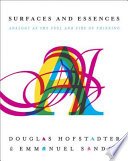
Surfaces and Essences
On the Lex Fridman Podcast, various guests reflected on Douglas Hofstadter and Emmanuel Sander's writings, mistakenly referencing them alongside Hofstadter's other famous work Gödel, Escher, Bach. Guests such as Eugenia Kuyda, Leslie Kaelbling, and Guido van Rossum cited the author's explorations of complexity, consciousness, and simple components as formative influences on their early interests in artificial intelligence.
Discussed“my choice is um so the one book that really influenced me a lot when i was building starting out this company maybe 10 years ago uh was gb go to leicester block and um i like everything about it”
Where to get it
-
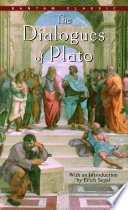
The Dialogues of Plato
On the Lex Fridman Podcast, guests and the host discussed Plato's 'The Dialogues of Plato', noting how works like 'The Republic', 'Protagoras', and 'Gorgias' profoundly impacted their early intellectual development by illustrating the mechanics of meaningful dialogue.
Discussed“plato says in the republic it's a kind of myth but you know he he says people will understand their their condition”
Where to get it
-
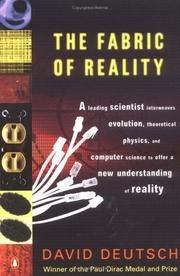
The Fabric of Reality
David Deutsch's work, including The Fabric of Reality and The Beginning of Infinity, was discussed across multiple episodes of the Lex Fridman Podcast by guests such as Lee Cronin, Neal Stephenson, Richard Craib, and Natalya Bailey. The speakers highlighted Deutsch's optimistic views, his philosophy on the power of explanations, and how his ideas introduced them to formal concepts in physics.
Discussed“I think it’s referenced in David Deutsch’s "The Fabric of Reality," where essentially, you know, the farmer feeds the chicken daily, and the chicken grows fat and happy.”
Where to get it
-

The Myth of Sisyphus and Other Essays
Across multiple episodes of the Lex Fridman Podcast, host Lex Fridman and guests such as Robert F. Kennedy Jr., Boris Sofman, and Sean Kelly discussed Albert Camus's The Myth of Sisyphus and Other Essays. Robert F. Kennedy Jr. quoted the text regarding absolute freedom as an act of rebellion, while Boris Sofman compared its existential questions to the struggles of a fictional robot.
Discussed“Camus said in 'The Myth of Sisyphus' that 'the only way to deal with an unfree world is to become so absolutely free that your very existence is an act of rebellion.'”
Where to get it
-
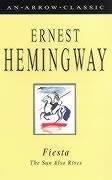
The Sun Also Rises
The Sun Also Rises by Ernest Hemingway was referenced on several episodes of the Lex Fridman Podcast between 2020 and 2023. Notably, guest Bert Kreischer shared a memory on the June 5, 2023 episode about working at Barnes and Noble and discussing Hemingway's titles, while other episodes featured the host and guests discussing other Hemingway works like The Old Man in the Sea and The Snows of Kilimanjaro.
Discussed“And so he wrote very simply, and it wasn't until after I read a bunch of Ernest Hemingway, I was working at Barnes and Noble, and this person said, 'Don't you love his titles?' And I was like, 'Yeah, 'Sun Also Rises'.”
Where to get it
-
Consider the Lobster
On the Lex Fridman Podcast, host Lex Fridman mentioned David Foster Wallace and his short story Consider the Lobster while discussing veganism and animal suffering with RZA. In other episodes, guests like Sean Kelly and Cal Newport discussed Wallace's unfinished novel The Pale King, talking about the author's moving letters, the themes of boredom and meaninglessness, and how the writing process drove him to distraction.
Discussed“especially there's a there's a guy named david foster wallace he wrote a short story called consider the lobster”
Where to get it
-
Deep Work
Cal Newport and his book 'Deep Work' were referenced on the Lex Fridman Podcast by the host and guests discussing productivity, focus, and intense problem-solving. Lex Fridman described the book as a major guide for his approach to life and work, noting that most people rarely engage in the deep, concentrated thinking required in fields like math and engineering. Guest Wojciech Zaremba also touched upon Newport's ideas regarding deep work during a conversation about artificial intelligence and robotics.
Discussed“but it i mean cal newport talks about this as ideas of deep work it's you know most of us don't work much at all in terms of like like deeply think about particular problems whether it's math engineering all that kind of stuff you want to go to that place often and that's real hard work”
Where to get it
-
Encountering the Holy Spirit in Every Book of the Bible
On the Lex Fridman Podcast, guests and the host discussed the Bible across various episodes. Lex mentioned feeling embarrassed about never having read the Bible directly while consuming secondary literature, Yaron Brook noted a survey ranking it as the most influential book for CEOs, and Rosalind Picard suggested that educated people should read it.
Discussed“but i'm embarrassed to say that first of all i've never read the bible which is embarrassing to say it's like i read a bunch of stuff about the bible not the bible itself and the same not equating them”
Where to get it
-
Free Will
On the Lex Fridman Podcast, host Lex Fridman and guest Daniel Schmachtenberger referenced Sam Harris's book Free Will. Fridman included the title in introductions listing Harris's seminal works on human nature, while Schmachtenberger brought up the book to discuss the subsequent written debate and critique between Harris and Daniel Dennett.
Discussed“As the host of the "Making Sense Podcast," creator of the Waking Up App, and the author of many seminal books on human nature and the human mind, including "The End of Faith," "The Moral Landscape," "Lying," "Free Will," and "Waking Up," he has had a significant impact.”
Where to get it
-
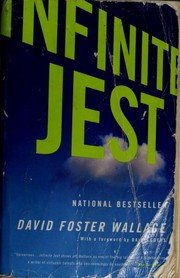
Infinite jest
On the Lex Fridman Podcast, 'Infinite Jest' by David Foster Wallace was discussed in several episodes. In episode 387, George Hotz noted that the book introduces a tape that, once watched, compels viewers to watch it repeatedly. In episode 132, Lex Fridman asked for recommendations and suggested the book as a least controversial choice. In episode 50, Michael Kearns stated that it was his favorite novel and observed that much of it takes place near MIT.
Discussed“So, 'Infinite Jest,' it's introduced in the first 50 pages is about a tape that once you watch it once, you only ever wanna watch that tape.”
Where to get it
-
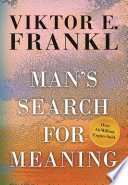
Man's Search for Meaning
On the Lex Fridman Podcast, Lex Fridman and his guests discussed Viktor E. Frankl's 'Man's Search for Meaning' on multiple occasions, focusing on Frankl's experiences in concentration camps during World War II and how finding a positive purpose helps individuals survive extreme suffering.
Discussed“you brought up frankel and i'm like yeah frankel's dope answers for meaning uh maslow's great and and i talked to you about how i started to think like man do the ability for human beings to to to live and or potentially flourish in the worst environments you can think of is pretty incredible in and of itself and”
Where to get it
-
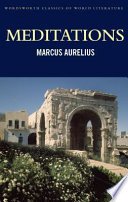
Meditations
Marcus Aurelius's 'Meditations' was referenced on the Lex Fridman Podcast by host Lex Fridman and guests such as Ryan Hall. Fridman concluded an episode by quoting Aurelius and mentioned writing down a passage about loving the people brought together by fate, while Hall alluded to the philosophical concept of focusing on what is within human control.
Discussed“and now let me leave you with some words from marcus aurelius the art of living is more like wrestling than dancing”
Where to get it
-
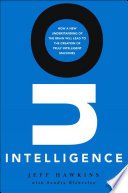
On Intelligence
Jeff Hawkins' book On Intelligence, co-authored with Sandra Blakeslee, was discussed across multiple episodes of the Lex Fridman Podcast. The host introduced Hawkins by referencing the seminal book, François Chollet credited the work with having a major impact on his thinking about the mind as a teenager, and Hawkins discussed his research and efforts to reverse-engineer the neocortex.
Discussed“he previously wrote the seminal book on the subject titled on intelligence and recently a new book called a thousand brains which presents a new theory of intelligence that richard dawkins for example has been raving about calling the book quote brilliant and exhilarating”
Where to get it
-
Pale Blue Dot
Pale Blue Dot by Carl Sagan was featured across multiple episodes of the Lex Fridman Podcast. Host Lex Fridman referenced the book and its famous imagery of Earth during conversations with guests like David Kipping and Ann Druyan, highlighting Carl Sagan's reflections on the universe and humanity's place within it.
Discussed“To support this podcast, please check out our sponsors in the description, and now let me leave you with some words from Carl Sagan: 'Perhaps the aliens are here but are hiding because of some galactic ethic of non-interference with emerging civilizations.'”
Where to get it
-
Principles
On the Lex Fridman Podcast, Ray Dalio's book Principles came up across multiple episodes. In November 2021, Kevin Systrom mentioned Dalio and Bridgewater, noting their strict adherence to principles. Earlier in March 2021, Anthony Pompliano brought up the book in the context of the hero's journey. Additionally, in a December 2019 episode featuring Dalio himself, host Lex Fridman introduced him by stating that his universally applicable ideas are brilliantly summarized in Principles.
Discussed“you know uh ray at bridgewater is always fascinating because you know people it's been called like a cult on the outside or cultish and but what's fascinating is like they just don't give on their principles”
Where to get it
-
Solaris
On the Lex Fridman Podcast, Stanisław Lem's novel 'Solaris' was brought up in several episodes to discuss alien life, consciousness, and the limits of communication. In episode #348, host Lex Fridman quoted a line from the book reflecting on the challenges of understanding an incomprehensible ocean. Earlier, in episode #269, guest Lee Cronin used the novel to illustrate a speculative scenario where intelligence might emerge before life itself. Additionally, in episode #101, Joscha Bach referenced the thinking planet concept from Lem's work while discussing artificial consciousness.
Discussed“Now, let me leave you with some words from Stanislav Lem's Solaris: 'How do you expect to communicate with the ocean when we can't even understand one another?'”
Where to get it
-
Superintelligence
Lex Fridman discussed Nick Bostrom's book 'Superintelligence' across multiple episodes of the Lex Fridman Podcast. In episode #312, Lex Fridman recommended it to Duncan Trussell as an incredible work exploring how superintelligence might emerge. In episode #144, Michael Littman mentioned reading the book to understand general perspectives on artificial intelligence. Earlier, in episode #83 featuring Nick Bostrom as a guest, the host introduced the author and highlighted 'Superintelligence' as a key text containing his work on the risks of advanced AI systems.
Discussed“But you know, if you read Nick Bostrom—I’m sure you have—Nick Bostrom, you know, Superintelligence—it’s that incredible book on the ways this thing is going to happen.”
Where to get it
-
The light that failed
Across multiple episodes of the Lex Fridman Podcast, host Lex Fridman referenced the poem If by Rudyard Kipling. In conversations with guests including Bhaskar Sunkara, David Wolpe, and Mark Zuckerberg, Fridman recited lines from the poem to highlight themes of resilience, integrity, and the importance of valuing all human beings.
Discussed“As I often do, please allow me to read a few lines from the poem 'If' by Rudyard Kipling: 'If you can keep your head when all about you are losing theirs and blaming it on you, if you can trust yourself when all men doubt you but make allowance for their doubting too, if you can wait and not”
Where to get it
-
The Better Angels of Our Nature
Steven Pinker's 'The Better Angels of Our Nature' was referenced multiple times on the Lex Fridman Podcast to discuss the decline of global violence and conflict. In episode #142, the host spoke with Manolis Kellis about how the act of civilization has dramatically reduced violence. In an episode featuring Kai-Fu Lee, the host highlighted Pinker's book regarding the decrease in global conflict. Additionally, Pieter Abbeel mentioned the work in episode #18, citing it as evidence that violence has consistently decreased over time.
Discussed“so you again i want to go back to pinker yeah and the better angels of our nature the whole concept that civilization and the act of civilizing has dramatically reduced violence dramatically”
Where to get it
-
The Emperor's New Mind
On the Lex Fridman Podcast, Roger Penrose's book "The Emperor's New Mind" was referenced across three episodes. In episode #85, host Lex Fridman directly quoted from the book while interviewing Penrose about the physics of consciousness. Later, in episode #88 with Eric Weinstein and episode #240 with Neal Stephenson, the guests discussed Penrose's related work "The Road to Reality," describing it as an incredibly deep text and an owner's manual for understanding fundamental physics equations.
Discussed“gravitation you know is one of those or another one is um the road to reality by roger penrose which is just incredibly deep it starts with like two plus two equals four”
Where to get it
-
The Fellowship of the Ring (The Lord of the Rings, Book 1)
On the Lex Fridman Podcast, J. R. R. Tolkien's The Fellowship of the Ring was discussed across several episodes. In episode #183, Po-Shen Loh cited the Lord of the Rings as an inspiration for campaigns. In episode #142, a speaker used the work to discuss the dehumanization of enemies in fiction. In episode #99, Karl Friston mentioned The Hobbit while reflecting on the narratives of his youth.
Discussed“i was generally inspired by stories true or fictional of campaigns or you know like for example like the lord of the rings that's the content”
Where to get it
-
The Worm at the Core
On the Lex Fridman Podcast across multiple episodes, the hosts and guests discussed The Worm at the Core by Sheldon Solomon, Jeff Greenberg, and Tom Pyszczynski. References were made to Sheldon Solomon as a co-author of the book, its exploration of terror management theory, and Ernest Becker's ideas regarding how human beings construct illusions of immortality to escape death.
Discussed“uh his whole idea is that ernest becker i think i i find this idea really compelling is uh that everything human beings have created like our whole motivation in life is to uh create like escape death is to try to uh construct an illusion of um that we're somehow immortal It's like everything around us this room your”
Where to get it
-
We the Living
On the Lex Fridman Podcast, Ayn Rand's novel We the Living was discussed in several episodes. In episode 457, Lex Fridman noted to guest Jennifer Burns that it was one of her favorite books by Rand. In episode 174, Tyler Cowen mentioned the book in the context of Rand's Russian background and her choice not to discuss Russia after writing it. In episode 138, Yaron Brook described it as Rand's first novel and the most autobiographical of all her works.
Discussed“You mentioned "We the Living" is one of the books that you like of hers the most.”
Where to get it
-
2001
The book 2001 by Arthur C. Clarke came up on the Lex Fridman Podcast across multiple episodes. In a 2022 interview with Ariel Ekblaw, the guest referenced HAL from 2001: A Space Odyssey while discussing intelligent space habitats and how sensing technology prevents habitats from developing minds of their own. Additionally, in a 2020 episode featuring Ayanna Howard, the host brought up the film adaptation in the context of discussions surrounding artificial intelligence and robotics.
Discussed“The future of space habitats is one of intelligent structures—maybe not all the way to HAL from the 2001: A Space Odyssey reference that scares people about a habitat having a mind of its own—but certainly, we're building systems now where the habitat has sensing technology that allows it to communicate its basic functions.”
Where to get it
Host picks
- On Democracies and Death Cults
- 1948
- 1984
- Abundance
- Atlas Shrugged
- Brave New World
- Confidence Man
- El Metaverso: Y Cómo Lo Revolucionará Todo / The Metaverse: And How It Will Revolutionize Everything (Spanish Edition)
- Essays in positive economics
- KL
- Man's Search For Ultimate Meaning
- The Alchemist
- The Handmaid's Tale
- The War in the West - A New History
- War on the West
- We the Living
Guest picks
- 1948
- 1984
- Among the Braves
- Animal Farm
- Brave New World
- Brave New World Revisited
- Capitalism and freedom
- Confidence Man
- Culture of Hope
- Defeat Into Victory
- From Counterculture to Cyberculture
- Hitler's Table Talk
- KL
- Let Only Red Flowers Bloom
- Life and Fate
- Mein Kampf
- Munich
- Neuromancer
- No Straight Road Takes You There
- Protocols of the Learned Elders of Zion
Guests who recommended books
- Jeffrey Wasserstrom (17)
- Douglas Murray (10)
- Marc Andreessen (6)
- Ezra Klein (4)
- Jennifer Burns (4)
- James Holland (3)
- Derek Thompson (2)
- Dave Smith (1)
Latest mentions
“In volume one of the war in the west, your book series on World War II, you write, "The Second World War witnessed the deaths of more than 60 million people from over 60 different countries.”
“you know by 1928 you know the the he's not going to get a deal for Mine Camp part two you know he he's he's he's impoverished the party's impoverished you know numbers are down there they're a kind of you know a best and and a relevance we should say he wrote minecom at this time when he was”
“from a historian's point of view or even a novelist point of view in the case of Robert Harris writing his book about these negotiations which I don't know if you've read it but it's really it's terrifically good”
“There's a book you've recommended, KL. Yes, it's just called KL. It's about the the whole concentration camp system. Um cuz K is concentration um in German. Laga is a is a camp. Um it's an exhaustive book and I'm I'm full of admiration for him for for writing it just because cheap as it must have been.”
“and uh Victor Franco man search for meaning I read that I reread that book uh quite often”
“He wrote a really great book that I recommend people check out.”
“You can read all sorts of things in China about totalitarian, you can read Hannah Arendt's book on totalitarianism, which would be the kind of thing you just, you know, you're not supposed to be able to read that in a somewhat totalitarian state or a dictatorial state, or anything.”
“and actually hannah arendt in the 1950s said the same thing in her book about totalitarianism when she said that you know that economics has reached the point where most money is made not by actually making stuff”
“and then suddenly we're living in like 1984 which you know sounds extreme but that book was very prescient and I'm not worried about you know these systems”
“well there was a book about that brave new world you know make everybody happy”
“there's a clarity to Margaret Atwood's "The Handmaid's Tale," similarly the construction of the elements.”
“And then the third volume is Huxley's 'Brave New World' and 'Brave New World Revisited.' And it was published in complex characters.”
“UK is very interested in dystopian novels Animal Farm”
“And it's a box set where you have Zamyatin's 'We', that inspired both Orwell and Huxley to some extent. That's one book.”
“I should give credit for that insight, Shibani Mahtani, who's co-wrote a very good book on Hong Kong, 'Among the Braves,' she was talking about that...”
“So the other line besides best of worst internet, I always like is William Gibson who wrote one of the other important dystopian novels of the present, 'Neuromancer.'”
“One is called 'The Xi Jinping Effect,' which was just a bunch of scholars, an academic volume sort of looking at take this topic, and that topic, how much is Xi Jinping as a person really affected it? And they come up with all kinds of answers. But there's a book I really like, Emily Feng of NPR has a”
“So Rebecca Solnit, he's got a new book, 'No Straight Road Takes You There: Essays for Uneven Terrain.' And she's talking about taking a longer view of some struggles...”
“I think we'll talk about that, something in your new book, "Death Cults."”
“The following is a conversation with Douglas Murray, author of The Madness of Crowds: Gender, Race, and Identity, and his most recent book, The War on the West: How to Prevail in the Age of Unreason.”