
Why people recommend it
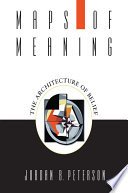
Maps of Meaning by Jordan B. Peterson is a deep and academic exploration of mythology, history, social structures, and the psychological origins of human motivations and evil. Robert Breedlove recommended the book on the Lex Fridman Podcast as part of a trilogy aimed at challenging a materialist worldview, describing it as a thorough dive into how myth is developed and reflected in social structures. Tom Bilyeu also discussed the book on On Purpose with Jay Shetty, stating that it is even more impactful than 12 Rules for Life, though he noted it is quite dense. Additionally, Oliver Anthony mentioned on both The Joe Rogan Experience and the Lex Fridman Podcast that he listened to the audiobook version to understand societal structures, the origins of human malevolence, and how psychological differences manifest in political thinking. Adam on Timcast IRL referred to Peterson's underlying YouTube lectures, which form the basis of the book, as very enlightening. Finally, Jordan Peterson himself remarked on The Jordan B. Peterson Podcast that Maps of Meaning was exceptionally dense and academic compared to his subsequent, more popular and descriptive books.
Who recommended it
- Robert Breedlove Recommended
- Oliver Anthony Discussed
- Jordan B. Peterson Discussed
- Jordan Peterson Discussed
- Tom Bilyeu Recommended
- Jonathan Pageau Discussed
Robert Breedlove — 3 mentions
“we did a a book club on his book maps of meaning and he engaged with us about it so hoping to deliver the orange pill to Mr Peterson”
“it's first recommend Jordan Peterson's book maps of meaning it's a deep dive into mythology and how it's developed over the course of history and how it's reflected both in our social structures”
“I'd first recommend Jordan Peterson's book maps of meaning”
Oliver Anthony — 2 mentions
“I've went back and listened to the to the maps maps of meaning on Audible and it's one of Jordan's earlier works, you know, and he's talking about society and how it's structured and basically talks about like the motivations and the origins of why people always resort to evil”
“Like just in our structure and the way we, you know, again, it goes back to that Jordan Peterson lecture about, I think in Maps of Meaning where he talks about people who think more conservatively or more liberally about things like it's been applied to politics, but it's based more in psychology than anything.”
Jordan B. Peterson — 2 mentions
“I think that might be true because maps of meaning was very dense and academic and then the following two books were quite popular and more descriptive and and helpful rather than conceptual.”
“I found an analogy between you your use of diagrams in this book and my use of diagrams in my first book maps of meaning it while I was working out the ideas in that book which are analogous in many ways to the ideas that you're presenting”
Jordan Peterson — 2 mentions
“In my class, 'Maps of Meaning,' I used to have students do this as a project, and one of the projects was to find something in your neighborhood or family that isn’t right and see if you can set it right—just write down what happens.”
“i mean one book is about order and the other is about chaos and my first book is about both”
Tom Bilyeu — 2 mentions
“his book maps of meaning is actually even more impactful but it's dense”
“His book maps of meaning is actually even more impactful”
Jonathan Pageau — 1 mention
“and I think that you know one of the things that happened in the 20th century and you did it with maps of meaning is that if you when you do comparative storytelling”
Mentioned on the show without a named speaker — 10
“And my first book, "Maps of Meaning," actually started as about a 40-page poem. Wow.”
“When I wrote Maps of Meaning, I did that; I used the Jungian works in that regard, but I also used what I knew about neuropsychology and neuropsychopharmacology, with the presumption being that if all these pointers pointed to the same thing, it was probably there.”
“When I wrote my first book, 'Maps of Meaning,' I included a chapter entitled 'The Divinity of Interest,' which focused on calling. This is also implicit in your principles.”
“And when I taught this course at Harvard and then at the University of Toronto, and it's online, called Maps of Meaning, I think what it's about is the inevitable religious substrate of culture itself. I have a reason for saying inevitably religious.”
“You can debate whether what they found was spurious, but in my book Maps of Meaning, I attempted to take their findings, construct a nomological network of cross-cultural mythological analysis, and compare it against the measurement techniques of behavioral psychology and neuroscience.”
“I was literally just reading through all the beginnings of the chapters of 'Maps of Meaning' yesterday, especially the chapter on 'The Hostile Brothers.' The chapter discusses two transpersonal archetypes we can embody at the individual level.”
“First of all, when I wrote my book 'Maps of Meaning,' I analyzed the structure of redemptive stories. Your life is a redemptive story if you're fortunate because you have a lot of trouble in your life and yet you plow through and take care of that trouble.”
“Epstein has pointed out in his new book, 'Fossil Future', something I’d also investigated in my 'Maps of Meaning' book: this underlying religious narrative is basically a Gaia narrative.”
“Now, you asked about identity, and I used the example of a child's game, but I could go through identity more generally. I particularly focus on this in Maps of Meaning. For example, let's say I'm sitting and typing.”
“I was introduced to him last year through one of nature's friends and I the maps a meeting basically and yeah it's if you don't know it it's it's very enlightening check it out it's the maps of meeting on YouTube and it's it's basically one of his theories or one of his classes and you could just go watch”
Also mentioned in the same episodes
- We Who Wrestle with God
- 12 Rules for Life
- The Origins and History of Consciousness
- Beyond Order
- Dopamine Nation
- Gold Wars
Other mentions (28: passing, ad reads, own books)
“Now, when I wrote Maps of Meaning, I started to figure something out. I made a hypothesis in that book that I've been working on differentiating for still I'm doing that now on stage, still trying to work it through.”
“I would like to think that the work that I've done particularly in my book Maps of Meaning in We Who Wrestle with God, I'm working on that as well in a new book called The Foundation of the World, which is an analysis of the gospel stories, is a continuation of that integration tradition.”
“I think that might be true because maps of meaning was very dense and academic and then the following two books were quite popular and more descriptive...”
“and but it's less demanding than maps of meaning”
“and I did this in my maps of meaning book and I wanted to make sure that the propositions that I put forward”
“It seems to me, too, that I did this in my Maps of Meaning book, and I wanted to make sure that the propositions I put forward could be validated pharmacologically, neurologically, psychologically, and from the perspective of cybernetics and narrative—five dimensions of triangulation.”
“and I did a eight hour summary of my book maps of meaning and so we have all sorts of other people who are you know from Cambridge and Oxford and Stanford and MIT and and then people from outside the academy too who are brilliant”
“and I did a eight hour summary of my book maps of meaning”
“before i wrote these books called an abc of childhood tragedy”
“and when I was writing maps of meaning which was my first book I had a very difficult time shutting off my mind”
“When I was writing 'Maps of Meaning,' my first book, I had a very difficult time shutting off my mind.”
“the following is a conversation with jordan peterson an influential psychologist lecturer podcast host and author of maps of meaning 12 rules for life and beyond order”
“The following is a conversation with Jordan Peterson, an influential psychologist, lecturer, podcast host, and author of 'Maps of Meaning,' '12 Rules for Life,' and beyond.”
“when i wrote maps of meaning my first book i structured it in some ways similarly because the first large chapter is this chapter on neuropsychology and hemispheric function”
“like when i wrote my first book maps of meaning i believe i wrote every sentence in that book 50 times 50 variants of every sentence”
“when i wrote my first book which was maps of meaning pretty much all i was doing was trying to figure something out”
“jordan was working on his maps of meaning and we were publishing our work”
“and that's a consequence of having spent when I wrote my first book which was maps of meaning I wrote every day for three hours for 15 years”
“and that's a consequence of having spent when I wrote my first book which was maps of meaning I wrote every day for three hours for 15 years”
“it wasn't long after that that I wrote the first essay that eventually turned into this maps of meaning book”
“I thought when I wrote wrote maps of meaning I remember telling one of my my peers I said I think everyone will think the way that I think in this book in 50 years”
“well I think establishing this link between responsibility and meaning is a good thing and I've outlined that a fair bit in the first book I wrote which was maps of meaning”
“and I've outlined that a fair bit in the first book I wrote which was maps of meaning”
“because when I'm talking to my audience isn't the same thing happens and happened in my book maps of meaning and in 12 rules for life I'm laying out the worst case scenario”
“like when i wrote maps of meaning which was my first book i suspect i rewrote every sentence at least 15 times”
“when I wrote my first book maps of meaning it was about ideological conflict and it was about whether or not there was any alternative to ideological conflict”
“that's right that's exactly what happens I detailed out that process in my book maps of meaning exactly that”
“well I wrote a book in 19 I published a book in 1999 called maps of meaning and the course lectures about that are on my video channel”