Why people recommend it
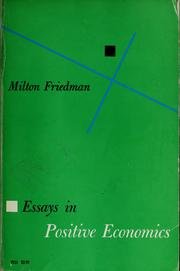
Milton Friedman's foundational collection of methodological papers examines how economic theory should be evaluated through empirical observation rather than unrealistic assumptions. On the Lex Fridman Podcast, host Lex Fridman welcomed Jennifer Burns to discuss the broader economic contributions of Milton Friedman, though he momentarily conflated the discussion by referencing A Monetary History of the United States, the landmark work that helped Friedman secure the Nobel Prize. Meanwhile, on People I (Mostly) Admire, host Steve Levitt cited Friedman's Essays in Positive Economics to discuss the philosophy of empirical science. Levitt noted that, according to Friedman's methodological writings, economists must rely heavily on evidence drawn from naturally occurring real-world experiments. Additionally, on The Rubin Report, Thomas Sowell discussed reading the joint autobiography of Milton Friedman and his wife, recalling personal anecdotes about riding the subway in Manhattan. Together, these podcast references illustrate the lasting influence of Friedman's academic output, highlighting both his rigorous approach to economic methodology and the broader historical context of his monumental career as a free-market champion.
Who recommended it
- Lex Fridman Discussed
Lex Fridman — 1 mention
“There's a lot of things to say here. So first, the book we're talking about is the "A Monetary History of the United States," in part for which Milton Friedman won the Nobel Prize.”
Mentioned on the show without a named speaker — 2
“When you look at Friedman's work on say the 53 positive economics book, he says economists must rely on evidence gleaned from the experiments that happen to occur.”
“I was reading of Milton Friedman's he and his wife had a joint autobiography and she's looking at one point she looking back on in the days when she would ride the IND subway in Manhattan”