
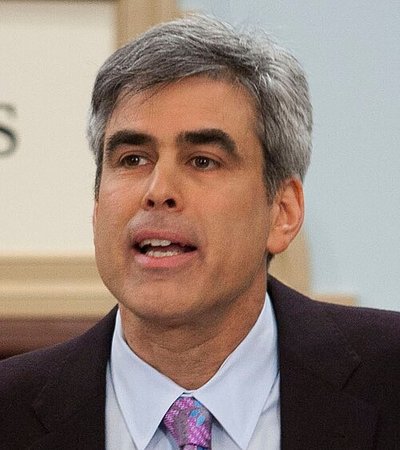
Person
Jonathan Haidt's books and book recommendations
Across 16 podcasts. Every show Jonathan Haidt appears on, in one place — not just one.
Jonathan David Haidt is an American social psychologist and author who serves as a professor of business and society and the Thomas Cooley Chair of Ethical Leadership at the New York University Stern School of Business, with his main areas of study focusing on the psychology of morality and moral emotions. During an appearance on The Ezra Klein Show, Haidt discussed and recommended several books aimed at personal growth and emotional resilience, highlighting three specific titles that he assigns to students. He recommended William B. Irvine's The Stoic Challenge to make stoicism accessible and teach people how to handle setbacks gracefully. He also recommended Cal Newport's Deep Work to emphasize the importance of reclaiming attention and focus, alongside Dale Carnegie's How to Win Friends and Influence People, praising Carnegie as a timeless social psychologist. Furthermore, Haidt discussed David T. Courtwright's The Age of Addiction to illustrate the history of human cravings alongside market economies, and he recommended Johann Hari's Stolen Focus while analyzing human attention spans and modern screen habits.
Books by Jonathan Haidt
-
The Happiness Hypothesis
-
The Righteous Mind
-

The Anxious Generation
-
The Coddling of the American Mind
-

Flourishing
-

To Be Honest
Books recommended by Jonathan Haidt
-
The Coddling of the American Mind
The Coddling of the American Mind by Greg Lukianoff and Jonathan Haidt examines how modern safetyism and social media culture are impacting the psychological resilience of younger generations.
Discussed“And so we wrote an Atlantic article called the coddling of the American mind. We turned that into a book in 2017. We went much deeper.”
Where to get it
-
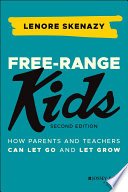
Free-Range Kids
Free-Range Kids by Lenore Skenazy is a provocative parenting guide that advocates for granting children greater autonomy, independent exploration, and unstructured free play to foster resilience and maturity.
Recommended“I'm a big fan of Lenore Skenazy, the woman who wrote 'Free-Range Kids.' She and I co-founded an organization called Let Grow; parents, please go to letgrow.org for all kinds of ideas on how to help your kid have more independence, which makes them more mature and less fragile.”
Where to get it
-
The Anxious Generation
The Anxious Generation by Jonathan Haidt is a prominent book examining the profound psychological impacts of smartphones and social media on youth mental health and the rising crisis of loneliness.
Discussed“Uh and uh you know, I think what I'm arguing in the book, in The Anxious Generation, um is that now we know. We didn't know in 2012 when we were letting our kids have it, but now we know.”
Where to get it
-
The Righteous Mind
The Righteous Mind by Jonathan Haidt is an insightful exploration of moral psychology that investigates why good people are divided by politics and religion.
Discussed“That figures in my first book the happiness hypothesis and again in my book the righteous mind in trying to understand moral emotions.”
Where to get it
-
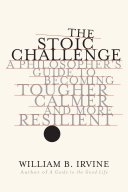
The Stoic Challenge
The Stoic Challenge is a book by William B.
Recommended“here are the three books the first is the stoic challenge by William Irvine it really makes stoicism just so accessible you learn to like when you get setbacks the students learn to say like oh I just missed the subway”
Where to get it
-
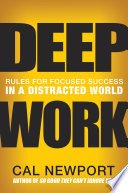
Deep Work
Deep Work by Cal Newport is a guide to cultivating undistracted focus and achieving peak productivity in an increasingly noisy world.
Recommended“uh the second book is by Cal Newport it's called Deep work and this is why I'm so passionate about attention without your attention you can't do anything”
Where to get it
-
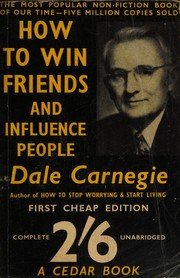
How to Win Friends and Influence People
How to Win Friends and Influence People by Dale Carnegie is a classic self-help guide focused on interpersonal communication, empathy, and building lasting relationships.
Recommended“and then the third book is Dale Carnegie How to Win Friends and Influence People it is timeless he he's writing in the 30s and he is such a great social psychologist”
Where to get it
-
Stolen Focus
Stolen Focus by Johann Hari is a compelling exploration of how modern technology, social media, and contemporary distractions systematically degrade human attention spans.
Recommended“Johan Harry has this wonderful book stolen focus and I believe he's right when he says if we adults clear it out”
Where to get it
-
American girls
American girls by Nancy Jo Sales is a gripping and unsettling investigation into modern girlhood and how digital technology and social media have reshaped the developmental landscape for young people.
Discussed“Also, there's a book called American Girls. It's horrifying. I forget the author, but she goes through how boys use nude pics of their female classmates as currency.”
Where to get it
-
Daring Young Men
Daring Young Men by Richard Reeves is a sociology and parenting book that examines the structural challenges, employment struggles, and educational disparities facing modern boys and men.
Discussed“That is as Richard Reeves has shown, he wrote the book of Boys and Men.”
Where to get it
-
Of Boys and Men
Of Boys and Men by Richard Reeves is an insightful sociological examination of the modern challenges, educational struggles, and structural disadvantages currently facing boys and men.
Discussed“That is as Richard Reeves has shown, he wrote the book of Boys and Men.”
Where to get it
-
The Happiness Hypothesis
The Happiness Hypothesis by Jonathan Haidt is a popular psychology book that explores ancient wisdom through the lens of modern scientific research.
Discussed“so my first book was called the happiness hypothesis finding modern truth and ancient wisdom”
Where to get it
-
Keeping Together in Time
Keeping Together in Time by William H.
Recommended“there's a wonderful book called keeping together in time by William mcneel uh he was either he signed up or he was drafted into World War II train training at a camp in Texas”
Where to get it
-
The Age of Addiction
The Age of Addiction by David T.
Recommended“one is an incredible book called the age of addiction by David cordr and he Chronicles how you know people have always like wanted you know sugar”
Where to get it
-
The Rise of Victimhood Culture
The Rise of Victimhood Culture by Bradley Campbell and Jason Manning is an academic yet accessible sociological study that examines the shifting moral frameworks governing modern grievances, conflicts, and social interactions in Western societies.
Recommended“there's a great book on victimhood culture by Manning and Campbell are the authors”
Where to get it
-
Adventures of Huckleberry Finn
Adventures of Huckleberry Finn by Mark Twain is a classic American novel depicting a young boy's journey down the Mississippi River with an escaped slave, confronting society and morality.
Discussed“and emotional reasoning is one of the things that led to the the trigger warnings and all these feelings of fragility and being unsafe in a class where we have to read Huckleberry Finn or something”
Where to get it
-
Coming apart
Coming Apart by Charles A.
Discussed“He's just written a book about social class this is the most important thing to understand how America is coming apart by social class his book is called coming apart”
Where to get it
-
Dancing in the Streets
Discussed“A wonderful book, Dancing in the Streets: A History of Collective Joy by Barbara Ehrenreich.”
Where to get it
-
Dopamine Nation
Dopamine Nation: Finding Balance in the Age of Indulgence by Anna Lembke, MD is an insightful examination of how modern society's constant pursuit of high-reward stimuli impacts the brain's dopamine pathways and leads to compulsive behaviors.
Discussed“And this is Anna LMK's wonderful book, Dopamine Nation, was television, but you could have a habit, but it wasn't it didn't cause addiction in the same way.”
Where to get it
-
Friends
Friends by Robin Dunbar is a non-fiction book investigating the evolutionary mechanics of human relationships and social networks.
Discussed“I've got I I need to bring this up so in in a robin dunbar's book friends which came out maybe 18 months ago he's got this phenomenal study”
Where to get it
-
iGen
iGen by Jean M.
Discussed“so when this data started coming out around so gene twang's book igen 2017 a lot of people say oh she you know she doesn't know what she's talking about”
Where to get it
-
Meditations
Meditations by Marcus Aurelius is a timeless collection of personal reflections and Stoic philosophy written by the Roman emperor.
Discussed“like when you read meditations you're like this it's not good for a person to be in this position”
Where to get it
-
Metaphors We Live By
Metaphors We Live By by George Lakoff and Mark Johnson is an influential academic text that investigates how everyday human thought and language are fundamentally shaped by conceptual metaphors.
Discussed“And as the linguist George Lakoff said long ago in a brilliant book called Metaphors We Live By, we think about argument using the metaphor of war.”
Where to get it
-
On Liberty
On Liberty by John Stuart Mill is a classic 1959 political essay that serves as one of history's most robust defenses of individual freedom, free expression, and intellectual liberty.
Discussed“so this is John Stuart Mill wrote one of the most important books in the Western tradition on Liberty Chapter two of on Liberty is the best set of arguments ever made for free speech”
Where to get it
-
Suicide
Suicide by Émile Durkheim is a foundational sociological study originally published in 1897 that examines how societal structures, integration, and a state of normlessness influence self-destructive behavior.
Discussed“and as Emil durkheim showed than 100 years ago in his book on suicide when you have anomy or normlessness people don't feel free”
Where to get it
-
The Bell Curve
The Bell Curve by Richard J.
Discussed“So Charles Murray wrote a book in 1994 I think it was called the bell curve a very controversial book in which he looks at race differences”
Where to get it
-
The Black Swan
The Black Swan by Nassim Nicholas Taleb is a provocative non-fiction book exploring the massive impact of rare, highly improbable events and human society's systemic blindness to uncertainty.
Discussed“a word coined by Nassim Taleb the guy who wrote the Black Swan because there are certain systems and he was I think he was motivated by the collapse of the banking system”
Where to get it
-
The Canceling of the American Mind
The Canceling of the American Mind by Greg Lukianoff and Rikki Schlott examines how contemporary call-out culture undermines trust, threatens public discourse, and offers practical solutions to restore open communication.
Discussed“that's what Greg lukanov and Ricky schlot their new book The cancelling of the American mind is about”
Where to get it
-
The Moral Landscape
The Moral Landscape by Sam Harris argues that science can and should be an authority on human values, determining what is morally good by looking at the well-being of conscious creatures.
Discussed“Sam wrote his book, The Moral Landscape, saying morality is a fact.”
Where to get it
-
The Turner Diaries
The Turner Diaries by William Luther Pierce is an infamous 1978 white supremacist novel that depicts a violent revolution against the United States government and helped popularize extremist conspiracy theories.
Discussed“you know the conspiracy theories you know the turner diaries is this book written in 1978 it it introduced the the replacement theory to a lot of people”
Where to get it
-
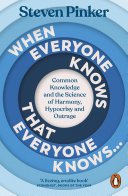
When Everyone Knows That Everyone Knows...
When Everyone Knows That Everyone Knows...
Discussed“Steven Pinker has a book out last year called When Everyone Knows That Everyone Knows. It's about the immediate change in a social system when private knowledge”
Where to get it




Appearances
Other mentions (76: passing, ad reads, own books)
“So that's why that's why my group says, we say very clearly in the book, no social media till 16.”
“Um so that's why that's why my group says we say very clearly in the book, no social media till 16.”
“Because I wrote a whole book called The Anxious Generation, focusing on teen mental health. That was the mystery that popped up in the mid-2000s.”
“So in my first book, The Happiness Hypothesis, um there's I there's a metaphor in there. It's It's about 10 ancient ideas and I use a lot of metaphors to explain ancient ideas”
“Gen Z is very bad at risk taking. Now let me make clear, none of this is a criticism of them. Building on what Greg and I argued in the Codling of the American Mind, we overprotected the hell out of them.”
“So actually, so I guess the quickest answer to your question is what I do in the Anxious Generations, I propose four norms that we can coordinate.”
“When my book came out, When The Anxious Generation came out in March of 2024, especially college-educated women, mothers in professional circles, they all read it or their book clubs talked about it.”
“And that happened because some others read The Anxious Generation in English before it came out in Portuguese, and they got moving on it.”
“there's this weird graph that I have in the book which shows the number of hours both men and women spend in parenting”
“but your first book Is All About moral framework MH connect these for me”
“what you're bringing up is one of the divisions that I talked about in The Righteous Mind between left and right”
“we had a conversation mostly on chapter eight of the anxious generation on the spirituality chapter”
“and he came to talk to me because I'm a a social psychologist and he he liked my book the happiness hypothesis where I talked about CBT and said John here's what I think is going on”
“and the the graphs that we have in the book in chapter seven of our book are stunning”
“and so I get deeply involved in in what's going wrong with our democracy and that's that's the Righteous Mind”
“what's going wrong with our universities that's the codling the American mind and my project at herox Academy”
“so I really want to emphasize puberty as that's puberty is one of the key ideas in my book so in the anxious generation I really focused on well the subtitle is how the great rewiring of childhood is is causing an epidemic of mental illness”
“but when I was doing the research for the codling the American mind I found according to FBI statistics there's only about 100 to 150 true kidnappings a year”
“I think what I'm arguing in the book, 'The Anxious Generation', is that now we know; we didn't know in 2012 when we were letting our kids, but now we know we've overprotected our kids in the real world, and we've under-rot them online, and we have to reverse both of those mistakes.”
“So first let me say parents should go to anxiousgeneration.com. It's a beautiful new website that that is amazing company built for me and we have all kind and then click on take action. We have all kinds of suggestions for parents for teachers.”
“right so in the book in Chapter 2 and three I I spent a lot of time going into what childhood is”
“the book is focused on the great rewiring which is 2010 to 2015”
“a couple of my favorite graphs in the book favorite in that they're you know kind of horrible but uh they're dramatic”
“in digging into the data on addiction what I what I found what you what what I report in the book um is that video games are not particularly harmful for boys in general and on average whereas social media is harmful to girls in general and on average not all but a lot you know”
“so what I do in the anxious generation is I lay out what childhood is what adolescence is um and how we subverted it”
“my first book was called the happiness hypothesis finding modern truth and ancient wisdom”
“and that's something that I took from the happiness hypothesis that around the world you you see many cultures talk about a vertical dimension of life”
“that's what I do in the book”
“and at the same time I was working on this book The Calling the American mind and so like half my mind was like you know the world's going to blow up we're going to have war with North Korea and you know Donald Trump is going to be unstable and and my wife is going to Korea with my”
“At the same time, I was writing The Coddling of the American Mind, which was all about what was happening to Gen Z and young people.”
“the fourth norm is um far more Independence free play and responsibility in the real world because this is the other half of the story in the you know in the anxious generation a lot of it is about the the great rewiring of childhood into the phone based childhood”
“but what we lost is the play based childhood what we lost is a childhood in which you go out and you experience challenges and setbacks without supervision”
“what I decided to do in writing this book and writing the anxious generation was I'm not even going to talk about the phones and social media until I've taken readers through what is childhood”
“but Greg and I did write about this in the coddling of the American mind that um there is a long-term transition over Generations as when life is hard and families are big”
“um you know even listeners who might have read the cing the American mind or might know about the importance of play there's really interesting research”
“but part of the message of the book is that social media and the things kids are doing on screens are not really like TV”
“my book The coddling of the American mind had just come out and back then people were beginning to sense”
“um so as part of the book uh I'm trying to launch a movement called free the aness generation”
“so you know my argument in the book is that we had a complete rewiring of childhood between 2010 and 2015”
“I I don't even have much on it in the book um watching”
“what I'm trying to do with the book is to show them here are four Norms that are pretty easy to do”
“and I hope I hope my book The anxious generation will sort of promote a a pause”
“that's what Greg lukanov and Ricky schlot their new book The cancelling of the American mind is about”
“so I think we hit a low Point um in the fall in such a way that I'm actually optimistic that things are going to change because I've been concerned about these issues in universities the culture issues since 2014 2015 when Greg lukanov and I wrote Our First Atlantic article titled the coddling the American mind”
“and some of the content from my book The Righteous Mind and it's it's now it evolved”
“it's now it's 6 30 minute modules that teach you about moral psychology why are we divided what do liberals believe what do conservatives believe why do conversations go wrong”
“What we did is we took some insights from moral psychology and some of the content from my book, The Righteous Mind.”
“that's my goal in writing the book and writing the anxious generation and uh I have this amazing collabor”
“It also just helped me — what it did was here at the same time I was reading the Bhagavad Gita and in the Bhagavad Gita, there is a specific scene, I talk about this in The Righteous Mind or The Happiness Hypothesis.”
“It also just helped me — what it did was here at the same time I was reading the Bhagavad Gita and in the Bhagavad Gita, there is a specific scene, I talk about this in The Righteous Mind or The Happiness Hypothesis.”
“Because the other piece we want to bring in here is that in grad school I read Émile Durkheim, the French sociologist and that so, and really comes out in The Righteous Mind like Rick Shweder and Émile Durkheim and Charles Darwin.”
“All of the stuff that started on campus in 2015, Greg and I wrote about it in The Coddling of the American Mind.”
“and i got a contract to write the righteous mind”
“and so anyway greg's ideas about how we were teaching students to think in distorted ways that led us to write the coding the american mind which wasn't primarily about social media either it was about you know this sort of a rise of of depression anxiety”
“so what i've done and this has worked with gene twenge uh who wrote the book igen is um because i was challenged”
“center-left atheist jew um they when they read the righteous mind they find it useful and they see that i don't have the usual academic contempt for religion”
“so the story that i tell in the righteous mind um is that we is that humans are products of multi-level selection”
“and the argument that i make in the righteous mind is that humans show signs of some group level selection”
“and in the righteous mind i i i was so pleased that i could integrate two of my my heroes in the social sciences which are durkheim and darwin”
“well so so the you know the book that the book that I just put out in September with Greg Luciana off the coddling of the American mind”
“and then just in New York University in 2011 when my last but previus book the righteous mind came out”
“so you know the subtitle of our book it's called the coddling the American mind how good intentions and bad ideas are setting up a generation for failure”
“so so in chapter 3 of the coddling Greg and I look at identity politics”
“I mean the you know my first book the happiness hypothesis was about ten ancient ideas”
“so in chapter 2 of the happiness hypothesis so the book is based on ten ancient ideas”
“so that chapter two of the happiness hypothesis shows the three main ways of changing your filter”
“I find it really helpful to think of the mind as being divided in two parts”
“we cover some of the research in chapters 8 & 9 of the coddling the American mind”
“So my second book the righteous mind the subtitle is why good people are divided by politics and religion”
“so my second book the righteous mind the subtitle is why good people are divided by politics and religion”
“And you know my book the righteous mind and the happiness hypothesis were both based in part on the insight that when we're making decisions we do consult how we feel”
“And you know my book the righteous mind and the happiness hypothesis were both based in part on the insight that when we're making decisions we do consult how we feel”
“and you know my book the righteous mind and the happiness hypothesis we're both based in part on the insight that when we're making decisions we do consult how we feel”
“It's as though people on campus read my book and then decided to do exactly the opposite of ancient wisdom exactly the opposite, so the three things I just told you well that's the I got the book right here so so the happiness hypothesis finding modern truth in ancient wisdom chapter 7 is the uses of adversity”
“That's great on truth number three chapter four of the happiness is the faults of others”
“So the coddling of America matters the title we didn't make it up it was made up by a really brilliant editor at the Atlantic Don Peck”