
Podcast
Ryan Peterman's book list: the books mentioned on The Peterman Pod
The most mentioned books on The Peterman Pod are Designing Data-Intensive Applications (2 episodes), Leadership and Self-Deception (2 episodes) and The Five Dysfunctions of a Team (2 episodes), and the most recommended book is Designing Data-Intensive Applications (2 episodes). We have logged 67 books across 35 episodes from 38 people on The Peterman Pod, through November 9, 2026.
Key facts
- 67 books have been mentioned on The Peterman Pod, as of November 9, 2026.
- 35 episodes of The Peterman Pod mention at least one book, as of November 9, 2026.
- 38 people brought up a book on the show, as of November 9, 2026.
- The 3 books mentioned in the most episodes of The Peterman Pod, as of November 9, 2026: Designing Data-Intensive Applications, Leadership and Self-Deception and The Five Dysfunctions of a Team.
- The latest episode of The Peterman Pod with a book mention aired on November 9, 2026.
Updated
Books from the latest episodes
Questions about books mentioned on The Peterman Pod
What books were mentioned most on The Peterman Pod?
The most mentioned books on The Peterman Pod are Designing Data-Intensive Applications by Martin Kleppmann (2 episodes), Leadership and Self-Deception by The Arbinger Institute (2 episodes), The Five Dysfunctions of a Team by Patrick Lencioni (2 episodes), Computer architecture : a quantitative approach by John L. Hennessy and David A. Patterson (2 episodes) and Accelerate by Nicole Forsgren, PhD and others (1 episode), out of 67 books across 35 episodes, as of November 9, 2026.
What is the most recommended book on The Peterman Pod?
Designing Data-Intensive Applications by Martin Kleppmann is the most recommended book on The Peterman Pod, recommended in 2 episodes, as of November 9, 2026.
What books were mentioned on The Peterman Pod this year?
In 2026, 54 books came up on The Peterman Pod, led by Designing Data-Intensive Applications by Martin Kleppmann (2 episodes), Leadership and Self-Deception by The Arbinger Institute (2 episodes), Computer architecture : a quantitative approach by John L. Hennessy and David A. Patterson (2 episodes), Adventures of Huckleberry Finn by Mark Twain (1 episode) and Algorithms + Data Structures by Niklaus Wirth (1 episode), as of November 9, 2026.
Who recommends the most books on The Peterman Pod?
David J Malan has recommended the most books on The Peterman Pod, with 5 books recommended across 1 episode, as of November 9, 2026.
Most mentioned on The Peterman Pod
-
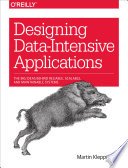
Designing Data-Intensive Applications
On The Peterman Pod, Ryan Peterman asked Neetcode for a top technical book recommendation for software engineers. Neetcode recommended Designing Data-Intensive Applications by Martin Kleppmann, explaining how its focus on building blocks helped him understand computer systems, while Marc Brooker similarly recommended the book for engineers building distributed systems.
Recommended“yeah i guess i really liked um ddia designing data intensive applications i i just spoke with somebody a month ago and they were telling me that they they did read through it but for them like most of it didn't really stick”
Where to get it
-
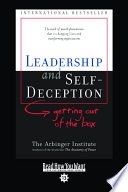
Leadership and Self-Deception
On The Peterman Pod, Ethan Evans recommended Leadership and Self-Deception by The Arbinger Institute when asked about power dynamics and interpersonal topics. Evans explained that the book influenced his advice on seeing colleagues as people rather than obstacles and avoiding treating others as objects.
Recommended“So, my all-time favorite book on this has uh is called Leadership and Self-Deception by the Arbinger Institute. It's a book that explains uh how we sometimes treat other people as objects without meaning to.”
Where to get it
-
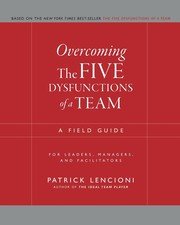
The Five Dysfunctions of a Team
The Five Dysfunctions of a Team by Patrick Lencioni was recommended on The Peterman Pod in 2025 and 2026 by guests Brendan Burns and Rong Yan. Both speakers endorsed the book as an effective practical resource for understanding team operations and building foundational trust in new workplace environments.
Recommended“And then there's this What's this book? It's called I think Five Dysfunctions of Teams, I think. That's a really good book, too, for uh from a like a how teams operate perspective.”
Where to get it
-
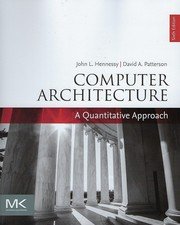
Computer architecture : a quantitative approach
Computer Architecture: A Quantitative Approach by John L. Hennessy and David A. Patterson was discussed on The Peterman Pod. Marc Brooker praised the textbook for its broad coverage of engineering topics. David Patterson later discussed co-authoring the text with John Hennessy, noting that the first three editions did not address power as an issue.
Discussed“In fact uh we did a John and I eventually did a textbook and I was just checking and that came out in 1990 and we didn't even talk about power as an issue for the first three editions.”
Where to get it
-
Accelerate
During an episode of The Peterman Pod titled Ex-Stripe CTO on What Grew His Career, Hiring Without Leetcode, Coding as a Lead released on August 29, 2025, David Singleton recommended the book Accelerate by Nicole Forsgren, Jez Humble, and Gene Kim. He brought up the text while discussing how investments in testing and gradual deployment processes can help engineering teams move both quickly and safely.
Recommended“There's a good book called Accelerate by Nicole Forsrren, which touches on a lot of this. Not not quite all of it, but a lot of it. So, I recommend that book.”
Where to get it
-
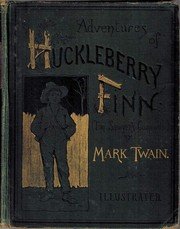
Adventures of Huckleberry Finn
On The Peterman Pod, Scott Aaronson recommended Mark Twain's "Adventures of Huckleberry Finn" during an episode discussing artificial intelligence and mathematics. Aaronson named the novel as his favorite, praising its deep exploration of morality, including Huck's internal conflict and decision to help Jim escape slavery.
Recommended“What I still, you know, regard as like, you know, the, the, the, the, the best novel or my, my, my real favorite is, is, is, is, is Huckleberry Finn, right? Which I think is just probing, you know, the nature of morality more deeply than, than almost maybe anything else I've read.”
Where to get it
-
Algorithms + Data Structures
During an episode of The Peterman Pod titled Creator of TypeScript: 10x Faster Typescript, Why AI Won't Replace SWEs on August 17, 2026, Anders Hejlsberg recommended Algorithms + Data Structures by Niklaus Wirth when host Ryan Peterman asked for an influential technical book. Hejlsberg described it as the definitive text that shaped his early programming career due to its light mathematical focus.
Recommended“I usually recommend the same but the the one book that was like the it book for me when I was younger and it's called algorithms plus data structures equals programs by Nicholas V uh the inventor of Pascal and then later modular and Oberon and whatever and it's a it's a book that is light on math and symbolism”
Where to get it
-
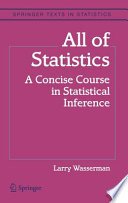
All of Statistics
On The Peterman Pod, John Myles White brought up Larry Wasserman while discussing the importance of rigor and honesty in statistics writing. He praised Wasserman's books, including All of Statistics, as the embodiment of hyper-intense honesty and recommended them.
Recommended“One of the four people I love, love, love, love more than anybody is Larry Wasserman. I've never met the guy. Uh so I don't know what he's like as a human, but like his books are like to me the embodiment of like hyper intense honesty.”
Where to get it
-
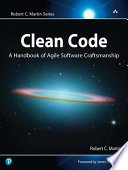
Clean Code
On The Peterman Pod, Ryan Peterman and Casey Muratori discussed Robert C. Martin's Clean Code. Casey critiqued the book for failing to adequately address performance trade-offs, clarifying that his criticism targeted the specific programming practices recommended in the text.
Critiqued“So the reason I put that in quotes is I was talking about a very specific thing which is like literally like the book clean code like the thing where there's like here are the things that we would recommend that you do”
Where to get it
-
Code
On The Peterman Pod, Stephen Toub recommended Code by Charles Petzold after host Ryan Peterman asked for a book that had deeply influenced him. Toub praised the book's ability to explain complicated computer science concepts from basic principles and noted that he had reread it multiple times.
Recommended“There's a book by Charles Petzold called code. It's probably from a 2003, maybe, I don't know, something in that timeframe, but I love it. And it is one of the things that I really value is being able to explain complicated concepts”
Where to get it
-
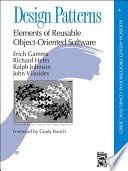
Design Patterns
Erich Gamma, Richard Helm, Ralph Johnson, and John Vlissides’s book Design Patterns was recommended on The Peterman Pod by Brendan Burns in March 2026. Burns identified the work, commonly known as the Gang of Four book, as the software engineering text that most significantly impacted his career early on.
Recommended“Well, I mean, I would say like early on the book that that impacted my career the most was a book uh was the gang of four book. Was it software engineering designs and patterns or whatever? Like it's a software engineering book. I I see it. It's design patterns, elements of reusable object-oriented software.”
Where to get it
-
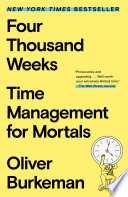
Four Thousand Weeks
On The Peterman Pod, Philip Su recommended Oliver Burkeman's book Four Thousand Weeks when Ryan Peterman asked for a life-perspective recommendation. Su began explaining the premise of the book, which deals with the limited number of weeks in an average human life. Su later reiterated his recommendation after advising listeners to reflect carefully on what they plan to achieve after reaching major life goals.
Recommended“Yes, I love the book 4,000 Weeks. I'm not sure if you've read it. I haven't. What's it about? Oh, highly recommended by Oliver. Oh, man. I'm gonna pull out the last name. But 4,000 weeks.”
Where to get it
-
Functional Programming In Lean
On an episode of The Peterman Pod titled Creator of Lean: Handwritten Math Will Change Dramatically released on August 10, 2026, Leonardo de Moura mentioned Functional Programming In Lean by David Thrane Christiansen. When host Ryan Peterman requested technical book recommendations, de Moura listed the texts available on the Lean website that introduce theorem proving and the mechanics of proof for educational purposes.
Recommended“we have uh several books there that's introduce lean functional programming lean theorem proving lean mathematics in lean the mechanics of proof is great for for educational purposes”
Where to get it
-
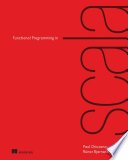
Functional Programming in Scala
On The Peterman Pod on December 15, 2025, Boris Cherny recommended Functional Programming in Scala by Paul Chiusano and Runar Bjarnason. Cherny stated that it was the single technical book that had the greatest impact on him as an engineer, noting that its approach fundamentally shaped how he thought about coding problems.
Recommended“this is still like the one technical book I would recommend to everyone that has had the greatest impact on me as an engineer is this book called functional programming in Scola and you're probably never going to use schol today, but the way it teaches you to think about coding problems is just such a change”
Where to get it
-
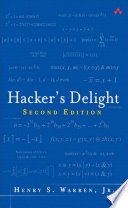
Hacker's Delight
On The Peterman Pod, David J Malan recommended Hacker's Delight by Henry S. Warren to students unofficially. He described it as a wonderful hardcover book featuring neat bit trickery and low-level hacks for those wanting to pursue more advanced topics in C.
Recommended“More arcanely there's a book that we still recommend to students unofficially or if they really want to go pursue something more arcane in C called the Hacker's Delight which is this wonderful hard cover book that just has really neat neat bit trickery and low level hacks”
Where to get it
-
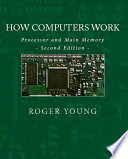
How Computers Work
On The Peterman Pod, David J. Malan recalled How Computers Work by Roger Young as one of his favorite technology books. Malan described the book as brilliantly colorful, picturesque, and easy to understand, noting that it was used in a course he first taught in 1999.
Recommended“That said over the years and to this day some of my favorite tech books even though they're increasingly outdated are this brilliantly colorful picturesque easy to understand and accessible book called how computers work which we used in that course I first taught in 1999”
Where to get it
-
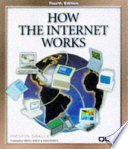
How the Internet Works
On The Peterman Pod, David J Malan brought up How the Internet Works by Preston Gralla alongside How Computers Work. He praised both as brilliantly colorful, picturesque, easy to understand, and accessible tech books from the same series, noting that they used them in the course he first taught in 1999.
Recommended“That said over the years and to this day some of my favorite tech books even though they're increasingly outdated are this brilliantly colorful picturesque easy to understand and accessible book called how computers work which we used in that course I first taught in 1999 and how the internet works”
Where to get it
-
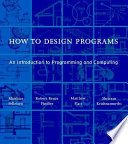
How to Design Programs
On The Peterman Pod, Xavier Leroy offered a second, more controversial book recommendation, How to Design Programs by Matthias Felleisen. Leroy described it as having a fairly ambitious title and coming from the Scheme community, serving as an opinionated guide to functional programming and program design.
Recommended“The second one is a little more controversial, I guess. So, in the How to Design Program, which is a fairly ambitious title as well. And this comes from the Scheme community, okay, Abelson and Findler, Flatt, and Krishnamurthi.”
Where to get it
-
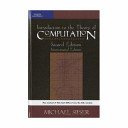
Introduction to the Theory of Computation
On The Peterman Pod, Ryan Williams recommended Introduction to the Theory of Computation by Michael Sipser during an episode discussing complexity theory. Williams described the work as a fairly concise and very well-written textbook on the subject.
Recommended“Yeah, um and then of course uh Sipser's uh Introduction to the Theory of Computation is like um a fairly concise and very well-written uh textbook.”
Where to get it
-
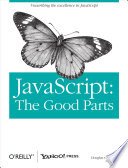
JavaScript: The Good Parts
During an episode of The Peterman Pod titled Creator of Lua: Scripting, Programming Languages, Predictions on August 3, 2026, Roberto Ierusalimschy discussed JavaScript: The Good Parts by Douglas Crockford. When asked about language design books by host Ryan Peterman, Ierusalimschy cited it as an interesting example of a design-focused programming text.
Recommended“I like reading books that describe the design of of the languages. I I think the best books are those written by the author of a language about the design of that language.”
Where to get it
-
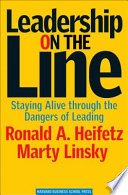
Leadership on the Line
On The Peterman Pod, Brendan Burns recommended Leadership on the Line by Ronald Abadian Heifetz and Martin Linsky. He noted that he really liked the book as he grew into a leadership role within a large organization.
Recommended“There's a much more recent book called uh Leadership on the Line that as I've become sort of a large org leader, that's uh I really like that book.”
Where to get it
-
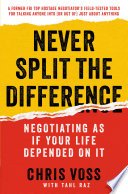
Never Split the Difference
On The Peterman Pod, guest Ethan Evans recommended Never Split the Difference by Chris Voss and Tahl Raz during a discussion on workplace power dynamics. Evans suggested the book as a tool for understanding human motivation and mastering negotiation psychology, specifically noting how to use mirroring techniques to handle difficult conversations and frame expectations with management.
Recommended“I would recommend people read the book uh Never Split the Difference by Chris Voss on negotiation because it's all about the psychology of how to get other people into your framing.”
Where to get it
-
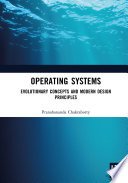
Operating Systems
On an episode of The Peterman Pod released on March 9, 2026, Michael Bolin joined the show and brought up an unnamed, roughly thousand-page Addison-Wesley book on operating systems. Bolin explained that he read the lengthy text to learn the necessary material while working on a virtual file system project.
Recommended“one was this uh this book on operating systems um it's like a thousand pages or something like this. Uh it's the Addison Wesley book. I'm trying the author, but it was funny because I was when I was working on the virtual file system.”
Where to get it
-
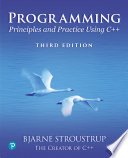
Programming
On The Peterman Pod, Bjarne Stroustrup recommended his book Programming, specifically referencing the second edition titled Programming: Principles and Practice Using C++. Stroustrup described the work as a large textbook that he wrote while teaching undergraduates.
Recommended“there's a book I wrote when I was teaching undergrads this this is accidental I didn't mean it to be there but anyway this is a second edition of uh programming principles and practice using C++ this is a big fat book”
Where to get it
-
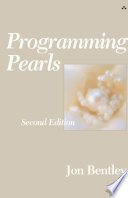
Programming Pearls
On The Peterman Pod, Ryan Peterman asked Xavier Leroy for a top book recommendation for software engineers. Leroy recommended Programming Pearls by Jon Bentley as an illustration of how very talented programmers think and work, noting that he had read it when he was a PhD student.
Recommended“Well this this is an old one, the Programming Pearls by Jon I think I read it when I was a PhD student, but I think it's it's nice as showing how very talented programmers work, how they think about their programs.”
Where to get it
-
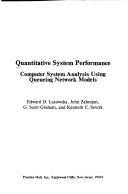
Quantitative System Performance, Computer System Analysis Using Queuing Network Models
On The Peterman Pod, Marc Brooker briefly mentioned a quantitative systems design book while discussing technical reading, before correcting himself to recommend Hennessy and Patterson's computer architecture book instead.
Recommended“Um there's a new edition of quantitative systems design book, which I also think is is is great. Sorry, Hennessy and Patterson's computer architecture book.”
Where to get it
-
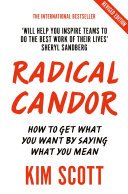
Radical Candor
On The Peterman Pod in January 2026, Laurent Charignon recommended Radical Candor by Kim Malone Scott. He explained that the book was instrumental in helping him build trust, motivate and coach team members, and effectively handle difficult conversations in his management role.
Recommended“And in order to be effective at it, to build trust, and to be able to um effectively motivate and coach I found that Radical Candor was the book that really gave me that.”
Where to get it
-
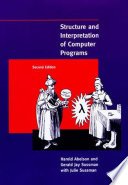
Structure and Interpretation of Computer Programs, second edition
On an episode of The Peterman Pod titled Creator of Scala: Comparing Languages And How AI Will Impact Them published on August 31, 2026, Martin Odersky recommended Structure and Interpretation of Computer Programs, second edition by Harold Abelson and Gerald Jay Sussman. He noted that he gained a great deal from the text, which served as the introductory computer science reading at MIT during the 1980s.
Recommended“I got a lot out of uh structure and interpretation of computer programs that was a book from the '9s. It was the intro text at MIT at the time uh or 80s even I think”
Where to get it
-
Surely You're Joking, Mr. Feynman!
On The Peterman Pod on November 9, 2026, Venki Ramakrishnan brought up Richard P. Feynman's book Surely You're Joking, Mr. Feynman! while responding to Ryan Peterman's question about the works that influenced him. Ramakrishnan noted that he greatly enjoyed Feynman's biographies within the field of physics.
Recommended“In, uh, physics, I, I really enjoyed Feynman's biographies. Surely you're joking, Mr. Feynman.”
Where to get it
-
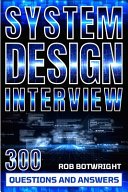
System Design Interview
On The Peterman Pod on November 21, 2025, Brian Attwell recommended Rob Botwright's System Design Interview. Attwell specifically advised frontend engineers to read the book to build a broader understanding of system design principles and prepare for technical interviews.
Recommended“Um if you are like a front engineer, I'd recommend you read how to pass the system design interview.”
Where to get it
-
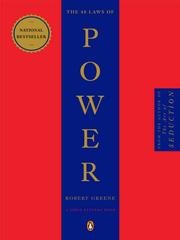
The 48 Laws of Power
On The Peterman Pod, Ethan Evans brought up The 48 Laws of Power by Robert Greene and Joost Elffers as his third recommendation. He warned listeners that despite his hesitation to recommend a book focused on the dark side, it served as a very thorough catalog of manipulative tricks and the ways people think defensively.
Recommended“Um, the third book, even though I hate to recommend it for all your interest in dark side, is that 48 laws of power, it's a very thorough catalog of the dark ways people think and manipulative tricks.”
Where to get it
-
The Complete Idiot's Guide to Cooking—for Guys
On The Peterman Pod, David J Malan mentioned The Complete Idiot's Guide to Cooking—for Guys by Tod Dimmick. He noted that the course may have recommended it in the past, and while he criticized its wording, he acknowledged that it was designed for a broad, accessible audience.
Recommended“I think for some time we might have recommended one of the complete idiots guides or something like that, which doesn't have the best somatics, but the reality is they are by design written for a very broad, accessible audience”
Where to get it
-
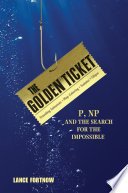
The Golden Ticket
On The Peterman Pod, Ryan Williams recommended The Golden Ticket by Lance Fortnow as a gentle introduction to complexity theory. Williams highlighted the book's thought experiments, including imagining what the world would look like if P equaled NP.
Recommended“If you're looking for something a little more gentle of an introduction, um I would say like you could read the early chapters of Lance Fortnow's uh The Golden Ticket. Like trying to imagine what a world would be like if P equaled NP.”
Where to get it
-
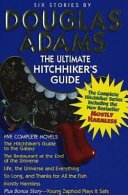
The Hitchhiker's Guide to the Galaxy
The Hitchhiker's Guide to the Galaxy by Douglas Adams was discussed on The Peterman Pod. David J. Malan named it as his favorite book and endorsed both reading the book and playing the historical terminal-based video game adaptation.
Recommended“My favorite book is Hitchhiker's Guide to the Galaxy and I think everyone should read that or play the terminal based video game that existed when I was growing up of it.”
Where to get it
-
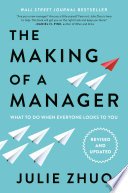
The Making of a Manager
Evan King brought up The Making of a Manager by Julie Zhuo on The Peterman Pod in January 2025. He mentioned reading the book when he became a tech lead to figure out how to lead a team properly, and spoke positively about the book.
Recommended“I read the making of a manager when I became when I became the tech lead of graphic violence. I read that book thinking like I really got to learn how to kind of lead right and it was a great book”
Where to get it
-
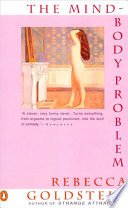
The Mind-Body Problem
On The Peterman Pod episode Scott Aaronson: The Mathocalypse, Will Intelligence Matter Anymore? on October 12, 2026, Scott Aaronson recommended The Mind-Body Problem by Rebecca Goldstein. Aaronson explained that the novel had a profound impact on him while he was a postdoc in Princeton, describing it as a story about a woman who marries a mathematician.
Recommended“A novel that had a really big impact on me was, uh, was called The Mind-Body Problem by Rebecca Goldstein. Um, it's, it's just a, it's a novel about, uh, like, a, a, a woman who marries a mathematician.”
Where to get it
-
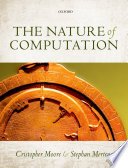
The Nature of Computation
On The Peterman Pod, Ryan Williams recommended The Nature of Computation by Cristopher Moore and Stephan Mertens as a somewhat more technical resource for learning about complexity theory. Williams noted that while it functions as a textbook, it remains accessible for those looking to deepen their understanding beyond basic concepts.
Recommended“On a more technical level, you know, if you're looking um for something slightly more technical, you could look at The Nature of Computation by um Mertens and Moore, I think. So, this is this is still uh not, you know, very technical, but um but a lot but it is a textbook, right?”
Where to get it
-
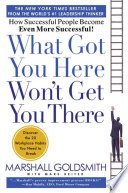
What Got You Here Won't Get You There
Marshall Goldsmith and Mark Reiter's book What Got You Here Won't Get You There was recommended on The Peterman Pod by Ethan Evans during an episode in March 2026. Evans suggested the work as a classic guide for corporate professionals, explaining that it visually and practically demonstrates how the skills required to reach one level of a career are different from the skills needed to advance to the next level.
Recommended“And uh there's a classic book on this. It's by a guy named Marshall Goldsmith. It's What Got You Here Won't Get You There. It literally shows a ladder with a gap in it. Like what got you this far isn't going to get you up there. Um that's kind of the classic book, but if you need specific advice”
Where to get it
-
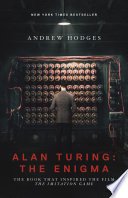
Alan Turing: The Enigma
On The Peterman Pod, Scott Aaronson recalled reading biographies of scientists as a child and named Andrew Hodges's Alan Turing: The Enigma as a book that deeply affected him alongside a biography of Ramanujan.
Discussed“I was also very, very affected as a kid by reading biographies of scientists, uh, especially, uh, Alan Turing, the Enigma by Andrew Hodges. Uh, uh, uh, the man who knew infinity, which is a biography of, of, uh, Ramanujan.”
Where to get it
-
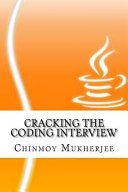
Cracking the Coding Interview
On an episode of The Peterman Pod titled Airbnb Staff Eng on How To Not Get Stuck at Senior and Untold Rules of Calibrati broadcast on January 19, 2026, Laurent Charignon mentioned the book Cracking the Coding Interview by Chinmoy Mukherjee. He named the book while comparing the unusual interview questions of his early career with the more technical software engineering interviews conducted today.
Discussed“There was like a book called Cracking the Coding Interview where they tell you about all those problems that are like weird, and that you have to like estimate, and that's how you apply.”
Where to get it
-
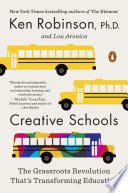
Creative Schools
On an episode of The Peterman Pod released on October 24, 2025, Ilya Grigorik brought up Ken Robinson when asked which author had impacted his career. Grigorik specifically named Creative Schools as part of Robinson's series of books that influenced his thinking about education and finding one's element.
Discussed“The first thing that comes to mind and this is uh this not a book but an author uh Sir Ken Robinson. uh he has a series of books um on like finding your element, creative schools and the rest.”
Where to get it
-
Finding Your Element
Sir Ken Robinson and Lou Aronica’s work, including Finding Your Element, was discussed on The Peterman Pod by Ilya Grigorik in October 2025. When asked about books that impacted his career, Grigorik highlighted Robinson's series of works on creativity and education as having a major influence on his thinking.
Discussed“The first thing that comes to mind and this is uh this not a book but an author uh Sir Ken Robinson. uh he has a series of books um on like finding your element, creative schools and the rest.”
Where to get it
-
Good Strategy, Bad Strategy
Good Strategy, Bad Strategy by Richard P. Rumelt was referenced on The Peterman Pod by Bobby Holley. Holley mentioned that reading a review of the book had deeply influenced his perspective on the flaws commonly found in corporate strategy documents.
Discussed“book that I just read a book review of called good good strategy bad strategy and I just read three pages and that has just stuck with me as a description of like what is wrong of many strategy what is wrong with many strategy documents”
Where to get it
-
How Would You Move Mount Fuji?
David Fowler brought up How Would You Move Mount Fuji? by William Poundstone on The Peterman Pod in September 2025 while discussing the puzzle-style questions used in Microsoft interviews. He noted that the book explores classic tech interview puzzles created by Microsoft that people either loved or hated.
Discussed“There's a book called um how would you move Mount Fuji? And it's this classic book um doing tech interviews like Microsoft created these like le code style um puzzles that everyone loved to hate.”
Where to get it
-
Instructor's Manual t/a Structure and Interpretation of Computer Programs, second edition
On The Peterman Pod, Xavier Leroy mentioned the famous MIT course and book Structure and Interpretation of Computer Programs while discussing the Scheme community. He contrasted it with How to Design Programs, characterizing the latter as a more modern twist on similar ideas.
Discussed“And so, so there was the the MIT Course Structure and Interpretation of Computer Programs, which was quite famous, and this is kind of a more modern twist on on on similar ideas.”
Where to get it
-
John Hennessy
On The Peterman Pod, David Patterson mentioned a career-advice book written by John Hennessy based on his presidency. Patterson cited the book's central lesson that individuals are remembered for only five or six major accomplishments in their lives.
Discussed“Uh I would do some other little things there. And John Hennessy, he he wrote a book too, a kind of a a career advice book based on his presidency. And one of the things he said in there, you know, you're only going to be remembered for the five or six things you've done in your life, not for”
Where to get it
-
LATEX
On the February 23, 2026 episode of The Peterman Pod, Leslie Lamport discussed his work on LATEX. Lamport explained that the typesetting system grew out of the specific macros and formatting needs he encountered when he first started writing a book.
Discussed“Um, I was wanted I was in the process of starting to write a book and uh it was clear that tech was the basic uh type setting system that one had to use. But you know I felt that I would need macros uh to make tech do what I wanted it to do.”
Where to get it
-
Little boxes of bewilderment
On The Peterman Pod on December 8, 2025, Marius Schulz recalled asking his grandmother for a CSS book for Christmas as a child. Schulz shared an anecdote about receiving the short text instead, which he affectionately referred to as Little Boxes and finished reading on Christmas Eve.
Discussed“I just anecdotally I remember fondly asking for a uh CSS book for Christmas. My grandma had absolutely no idea what in the world CSS is. Uh but she gave me that little book and um I finished reading that on Christmas Eve before I even went to sleep.”
Where to get it
-
Moneyball
On The Peterman Pod, Ethan Evans brought up Michael Lewis's book Moneyball during an episode released on September 28, 2026. Speaking with host Ryan Peterman in the episode titled Amazon VP: Questions On Corporate Politics But They Get Increasingly Darker, Evans used a baseball analogy drawn from the book to advise Peterman on taking career risks. Specifically, he compared swinging for a safe trip to first base versus swinging hard for a home run to illustrate how to pursue high-impact opportunities.
Discussed“So I'm going to use a baseball analogy from the book Moneyball. You can either bat for like on base percentage and I want to swing to get a safe trip to first base and that's actually easier than trying to hit a home run, but if what you want is the home run, you got to swing hard and”
Where to get it
-
Notes on Structured Programming
Edsger W. Dijkstra's manuscript Notes on Structured Programming was discussed on The Peterman Pod by guest Casey Muratori. Muratori brought up the typewritten monograph while recounting historical details in computer science and explaining the personal context behind Dijkstra's foundational work on structured programming.
Discussed“Say uh he wrote a a thing called notes on structured programming. It was a manuscript or monograph. I don't I don't remember what they called, you know, got like a typewritten like it looks like exactly like a typewriter written thing, right?”
Where to get it
-
Pilgrim at Tinker Creek
Pilgrim at Tinker Creek by Annie Dillard was mentioned on The Peterman Pod by Philip Su. Su cited the book as an example of exceptional language and writing craftsmanship while discussing the importance of reading well to improve one's own writing.
Discussed“And so I think first of all is you got to read well, right? And so the types of sentences that someone like David Foster Wallace DFW can put out, the types of sentences um that he can put out are amazing. If you read Alice Monroe short stories, right? The language is beautiful. Pilgrim at Tinker Creek, like there”
Where to get it
-
Refactoring
Casey Muratori discussed Refactoring by Martin Fowler, Kent Beck, John Brant, William Opdyke, and Don Roberts on The Peterman Pod. He referred to the work as a popular book that, in his view, downplayed performance concerns in software engineering.
Critiqued“can just include a thing that's basically like hey um you know there's performance issues but most of the time it's not a problem or something like that which is you know or if you look at uh refactoring the book refactoring very popular”
Where to get it
-
So Good They Can't Ignore You
On The Peterman Pod in March 2026, Ethan Evans discussed Cal Newport's book So Good They Can't Ignore You. Evans noted the irony of a book focused on becoming too skilled to ignore being written by someone possessing significant interpersonal and teaching abilities, using it to highlight that career success requires social skills alongside technical competence.
Discussed“There's a famous book you I'm sure you know it uh by Cal Newport called So Good They Can't Ignore You. And what I find ironic about this is it's all this stuff about how to be such a good worker you can't be ignored. Except this is a guy who has the social skills to both teach at Princeton”
Where to get it
-
Structure and Interpretation of Computer Programs
On The Peterman Pod, Xavier Leroy mentioned the famous MIT course and book Structure and Interpretation of Computer Programs, authored by Harold Abelson, Gerald Jay Sussman, Martin Henz, Tobias Wrigstad, and Julie Sussman. Leroy referenced it while explaining the historical context of the Scheme community and the ideas behind How to Design Programs.
Discussed“And so, so there was the the MIT Course Structure and Interpretation of Computer Programs, which was quite famous, and this is kind of a more modern twist on on on similar ideas.”
Where to get it
-
Structured Programming
Casey Muratori discussed the book Structured Programming by Ole-Johan Dahl, Edsger W. Dijkstra, and Charles Antony Richard Hoare on an episode of The Peterman Pod in September 2026. He referenced the book while discussing Donald Knuth's historical open letters, highlighting Knuth's tremendous respect for the authors alongside points where he found their arguments unconvincing.
Discussed“And yeah and Canuth did something similar. It wasn't really a flame because he had a at least when reading it comes through as a tremendous amount of respect for the authors of the book structured programming which is uh Dystra and doll.”
Where to get it
-
The 7 Habits of Highly Effective People
On The Peterman Pod in July 2026, David Patterson referenced Stephen R. Covey's The 7 Habits of Highly Effective People. He pointed to Covey's framework dividing tasks by urgency and importance as a useful career tool for prioritizing non-urgent, important work amidst technological demands.
Discussed“I think uh on the career side is one of the uh pieces of advice is uh by a he wrote this book the habits of very effective people I think and he has a little quadrant and he divides it of urgent and not urgent and important and unimportant and kind of there's so many things in our technology”
Where to get it
-
The Annotated C++ Reference Manual
On The Peterman Pod, Bjarne Stroustrup discussed rewriting the language documentation that became The Annotated C++ Reference Manual, co-authored with Margaret A. Ellis. Stroustrup explained that the manual provided the definitive definition of the C++ language, including a rationale for every feature and details on how it could be implemented.
Discussed“Actually, I rewrote the documentation that became the the ARM, the annotated C++ standards uh manual that uh gave the definition the manual of the language and for every feature some rationale and some way it could be implemented or was implemented”
Where to get it
-
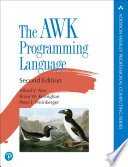
The AWK Programming Language
The AWK Programming Language by Alfred V. Aho, Brian W. Kernighan, and Peter J. Weinberger was discussed on The Peterman Pod on October 26, 2026. Brian Kernighan mentioned working on the second edition of the book as the reason for recent software changes.
Discussed“I think both of those were triggered probably by working on a second edition of the AOC book. And that was done just a couple of years ago. And at this day and age, it would be really embarrassing if you couldn't handle Unicode.”
Where to get it
-
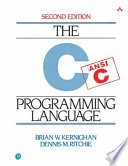
The C Programming Language
Brian W. Kernighan and Dennis M. Ritchie's book The C Programming Language was discussed on The Peterman Pod. Host Ryan Peterman brought up the famous co-authored book while interviewing Kernighan, asking him to reflect on the origins of the C language at Bell Labs and why it became so influential.
Discussed“One of the most famous books that you co-authored was the one on the C programming language. And since C kind of came from Bell Labs and you were so close to it, why was C so influential, in your opinion, like now looking back?”
Where to get it
-
The C++ Programming Language
On The Peterman Pod, Bjarne Stroustrup mentioned The C++ Programming Language in May 2026. He cited the book's first edition while explaining that he did not originally classify C++ as object-oriented, and quoted its opening line that the language was designed to make life more pleasant for the serious programmer.
Discussed“If you look at the C++ programming language, the first edition, um the closest I come is to say uh some some some people call these techniques object- based.”
Where to get it
-
The Double Helix
James D. Watson's book The Double Helix was discussed on The Peterman Pod by guest Venki Ramakrishnan. Ramakrishnan stated that the controversial book heavily influenced him by showing him for the first time that biology was more than just a rote collection of facts, though he also acknowledged the controversy surrounding Watson's portrayal of Rosalind Franklin.
Discussed“I was very influenced by a book that's highly controversial, which is Jim Watson's, uh, The Double Helix, uh, because for the first time, it made me realize that biology was not a rote collection of facts.”
Where to get it
-
The Great Gatsby
On The Peterman Pod in May 2025, Philip Su discussed reading F. Scott Fitzgerald's classic The Great Gatsby. He mentioned that after disliking assigned literature in high school, he began rereading classics like Gatsby in his spare time after starting work at Microsoft, which helped him come to value good writing and communication.
Discussed“Over time I think I lucked out in that when I started work at Microsoft um in some of the spare time I had, I just started rereading some of the classics, you know, and these are things that in high school when assigned I I really hated them, right?”
Where to get it
-
The Innovator's Dilemma
The Innovator's Dilemma by Clayton Christensen was brought up on The Peterman Pod by Bobby Holley. Holley mentioned the book while listing influential ideas and works that had a profound impact on his thinking about empowering teams and technology.
Discussed“other I think ideas that have had a profound impact on me from books book turn the ship around which I also haven't read which is about empowering teams on the subject we just discussed um innovator's dilemma Clayton Christensen”
Where to get it
-
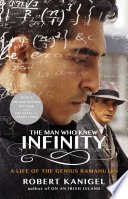
The Man Who Knew Infinity
Robert Kanigel's biography The Man Who Knew Infinity was discussed on The Peterman Pod by guest Scott Aaronson. Aaronson mentioned the book, which details the life of mathematician Srinivasa Ramanujan, while explaining how reading biographies of scientists inspired him to enter their professional world.
Discussed“The man who knew infinity, which is a biography of, of, uh, Ramanujan. Um, and then, uh, I read, uh, uh, biographies of Feynman and of course his, his, his autobiographies. Um, and because I felt like this is the world that I am trying to enter, right?”
Where to get it
-
Thinking, Fast and Slow
On The Peterman Pod, Judea Pearl mentioned Daniel Kahneman's Thinking, Fast and Slow in July 2026. Pearl referenced the book's title while explaining how the game of chess illustrates the interplay between fast and slow modes of thinking.
Discussed“So here interplay between fast thinking and long thinking to use Gimon and Gimon um title thinking fast and slow thinking fast and thinking slow right now here it's a beautiful arena to see how not only you have two mode of thinking”
Where to get it
-
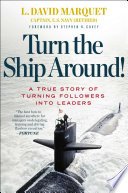
Turn the Ship Around!
L. David Marquet’s book Turn the Ship Around! was discussed on The Peterman Pod by Bobby Holley in October 2025. Holley cited the book as a major influence on his thinking regarding team empowerment, though he noted during the episode that he had not yet read it.
Discussed“other I think ideas that have had a profound impact on me from books book turn the ship around which I also haven't read which is about empowering teams on the subject we just discussed”
Where to get it
-
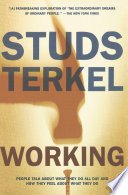
Working
On The Peterman Pod, David Patterson brought up Studs Terkel's Working in July 2026. Patterson recalled reading the book while finishing his PhD and noted that its interviews about people's careers helped shape his perspective on meaningful work.
Discussed“Um but I think it's the you know I when I was finishing my PhD I read this book by studs Turkl called working where he interviewed all these people in their careers and they look back and what they liked and what they didn't like what what they felt about their careers”
Where to get it


Guests who recommended books
- Ethan Evans (9)
- Casey Muratori (5)
- David J Malan (5)
- Scott Aaronson (4)
- Philip Su (4)
- Xavier Leroy (4)
- David Patterson (4)
- Bjarne Stroustrup (4)
- Ryan Williams (3)
- Marc Brooker (3)
- Brendan Burns (3)
- Bobby Holley (3)
- Venki Ramakrishnan (2)
- Laurent Charignon (2)
- Ilya Grigorik (2)
- Stephen Toub (1)
- Brian Kernighan (1)
- Navdeep Singh (1)
- Martin Odersky (1)
- Anders Hejlsberg (1)
- Leonardo de Moura (1)
- Roberto Ierusalimschy (1)
- Judea Pearl (1)
- John Myles White (1)
- Michael Bolin (1)
- Leslie Lamport (1)
- Rong Yan (1)
- Boris Cherny (1)
- Marius Schulz (1)
- Brian Attwell (1)
- David Fowler (1)
- David Singleton (1)
- Evan King (1)
Latest mentions
“In, uh, physics, I, I really enjoyed Feynman's biographies. Surely you're joking, Mr. Feynman.”
“I was very influenced by a book that's highly controversial, which is Jim Watson's, uh, The Double Helix, uh, because for the first time, it made me realize that biology was not a rote collection of facts.”
“There's a book by Charles Petzold called code. It's probably from a 2003, maybe, I don't know, something in that timeframe, but I love it. And it is one of the things that I really value is being able to explain complicated concepts”
“One of the most famous books that you co-authored was the one on the C programming language. And since C kind of came from Bell Labs and you were so close to it, why was C so influential, in your opinion, like now looking back?”
“I think both of those were triggered probably by working on a second edition of the AOC book. And that was done just a couple of years ago. And at this day and age, it would be really embarrassing if you couldn't handle Unicode.”
“A novel that had a really big impact on me was, uh, was called The Mind-Body Problem by Rebecca Goldstein. Um, it's, it's just a, it's a novel about, uh, like, a, a, a woman who marries a mathematician.”
“I was also very, very affected as a kid by reading biographies of scientists, uh, especially, uh, Alan Turing, the Enigma by Andrew Hodges. Uh, uh, uh, the man who knew infinity, which is a biography of, of, uh, Ramanujan.”
“The man who knew infinity, which is a biography of, of, uh, Ramanujan. Um, and then, uh, I read, uh, uh, biographies of Feynman and of course his, his, his autobiographies. Um, and because I felt like this is the world that I am trying to enter, right?”
“What I still, you know, regard as like, you know, the, the, the, the, the best novel or my, my, my real favorite is, is, is, is, is Huckleberry Finn, right? Which I think is just probing, you know, the nature of morality more deeply than, than almost maybe anything else I've read.”
“yeah i guess i really liked um ddia designing data intensive applications i i just spoke with somebody a month ago and they were telling me that they they did read through it but for them like most of it didn't really stick”
“I would recommend people read the book uh Never Split the Difference by Chris Voss on negotiation because it's all about the psychology of how to get other people into your framing.”
“So, my all-time favorite book on this has uh is called Leadership and Self-Deception by the Arbinger Institute. It's a book that explains uh how we sometimes treat other people as objects without meaning to.”
“Um, the third book, even though I hate to recommend it for all your interest in dark side, is that 48 laws of power, it's a very thorough catalog of the dark ways people think and manipulative tricks.”
“So I'm going to use a baseball analogy from the book Moneyball. You can either bat for like on base percentage and I want to swing to get a safe trip to first base and that's actually easier than trying to hit a home run, but if what you want is the home run, you got to swing hard and”
“Yes, I love the book 4,000 Weeks. I'm not sure if you've read it. I haven't. What's it about? Oh, highly recommended by Oliver. Oh, man. I'm gonna pull out the last name. But 4,000 weeks.”
“Say uh he wrote a a thing called notes on structured programming. It was a manuscript or monograph. I don't I don't remember what they called, you know, got like a typewritten like it looks like exactly like a typewriter written thing, right?”
“And yeah and Canuth did something similar. It wasn't really a flame because he had a at least when reading it comes through as a tremendous amount of respect for the authors of the book structured programming which is uh Dystra and doll.”
“So the reason I put that in quotes is I was talking about a very specific thing which is like literally like the book clean code like the thing where there's like here are the things that we would recommend that you do”
“can just include a thing that's basically like hey um you know there's performance issues but most of the time it's not a problem or something like that which is you know or if you look at uh refactoring the book refactoring very popular”
“I got a lot out of uh structure and interpretation of computer programs that was a book from the '9s. It was the intro text at MIT at the time uh or 80s even I think”
Episodes
Link to this list from your show notes
Host or produce The Peterman Pod? Give your listeners every book mentioned on the show, with the episode it came up in. New episodes are added as they come out.