
Podcast
The Jordan B. Peterson Podcast book recommendations
Join intellectual phenomenon Dr. Jordan Peterson for enlightening discourse that will change the way you think. This podcast breaks down the dichotomy of life through interviews and lectures that explain how individuals and culture are shaped by values, music, religion, and beyond. It will give you a new perspective and a modern understanding of your creativity, competence, and personality.
Latest mentions
-

War and Peace
-
A Confession
-
The Kingdom of God Is Within You
-
How to Read the Bible
-
Dante's Inferno
-
Inferno
-
The God Delusion
-
Notes from Underground
-
The Devils
-
The Lion King
-
Crime and Punishment by Fyodor Dostoevsky
-
Crime and Punishment by Fyodor Dostoevsky (Illustrated)
-
One Day in the Life of Ivan Denisovich
-

1984
-
Brave New World
-
The Gulag Archipelago
-
The Brothers Karamazov
-
12 Rules for Life
-

There's no such thing as a dragon
-
An Instinct for Dragons
Most recommended on The Jordan B. Peterson Podcast
-
Bible
The Bible was discussed across multiple episodes of The Jordan B. Peterson Podcast by host Jordan Peterson and various guests. Pierre Poilievre reflected on biblical texts as inexhaustible sources of wisdom, while Laila Mickelwait shared how reading a Psalm during a personal struggle brought her inspiration. Other guests, including Naftali Bennett and John Rich, referenced the Bible to discuss themes of action over feelings in Judaism and the inherent flaws of humanity, and Mosab Hassan Yousef described how the New Testament profoundly impacted his life.
Discussed“My experience with biblical texts is that they provide inexhaustible sources of wisdom. If I find something in them that acts as an obstacle, it's because there's something within me that has yet to be transformed.”
-
Maps of Meaning
Jordan B. Peterson's book "Maps of Meaning" was referenced across multiple episodes of The Jordan B. Peterson Podcast. Peterson discussed the dense, academic nature of the work, its origins as a forty-page poem, and his methodology in validating psychological and mythological concepts across disciplines including neuropsychology, cybernetics, and narrative structure.
Discussed“I think that might be true because maps of meaning was very dense and academic and then the following two books were quite popular and more descriptive and and helpful rather than conceptual.”
-
12 Rules for Life
On The Jordan B. Peterson Podcast, Jordan B. Peterson's 12 Rules for Life was discussed in several episodes, including an appearance by Mohammad Hijab, who recommended the book despite having minor criticisms. Callers and guests, such as David French and Dr. Mehmet Oz, referenced the book to discuss intentional living, overcoming personal tragedy, and focusing on basic self-improvement like making one's bed, while Peterson noted how writing the book reflected broader societal failures.
Discussed“and 12 rules for life. You described how you and your family managed with Michaela's health struggles and that was very helpful for me and my wife”
-
We Who Wrestle with God
Jordan B. Peterson's We Who Wrestle with God was discussed on The Jordan B. Peterson Podcast by Peterson himself alongside guests Dr. Mehmet Oz and Richard Dawkins. Peterson shared insights into writing the book, which focuses on foundational narratives and the encoding of radical reciprocity. Dr. Oz praised an early draft as Peterson's most important work, while Dawkins and other guests referenced its detailed analysis.
Recommended“Well, this is a good time to give you this book that I think as you know, and you were very kindly you shared a draft with me early on. Probably it was January, February, very early and I remember going through it and I'll tell you right now in a nonpatronizing way, uh, this may be your most important”
-
1984
On The Jordan B. Peterson Podcast, George Orwell's '1984' was referenced by Jordan Peterson, Marc Andreessen, and guests to examine themes of totalitarianism, government surveillance, and central control. Peterson recalled reading the book in his youth, while other discussions used Orwell's concepts—such as telescreens and the manipulation of historical facts—to analyze modern sociopolitical trends and artificial intelligence.
Discussed“and then I read 1984 by George Orwell and Brave New World.”
-
Irreversible Damage
Discussed“I had a period of illness and when I came back to start my podcast up again in earnest, I interviewed Abigail Shrier and she wrote Irreversible Damage.”
-
The Lord of the Rings
J.R.R. Tolkien's The Lord of the Rings was frequently referenced on The Jordan B. Peterson Podcast between 2022 and 2025. Host Jordan B. Peterson, along with guests like Russell Brand and Peter Kreeft, cited the epic fantasy to illustrate various archetypal and psychological concepts. Peterson discussed the ring of power as a unifying force when voluntary self-sacrifice is absent, compared the all-seeing eye of Sauron to modern centralized technological control, and referenced the hobbits' return home as a symbol of transformation.
Discussed“How do you return home like the Hobbit does at the end of the well the Hobbit and at the end of the Lord of the Rings, right?”
-
The Brothers Karamazov
Fyodor Dostoevsky's The Brothers Karamazov was discussed across various episodes of The Jordan B. Peterson Podcast by Jordan Peterson and Vivek Ramaswamy. They examined its deep philosophical themes, the dynamic between Ivan and Alyosha, and the triumph of goodness over pure rationality.
Recommended“For me, Dostoevsky, the Russian novelist, sort of top of that list. His books, The Brothers Karamazov and Crime and Punishment and Notes from Underground, The Devils, are unbelievably compelling works of fiction and they're deep.”
-
Crime and Punishment by Fyodor Dostoevsky
Fyodor Dostoevsky's Crime and Punishment was discussed across multiple episodes of The Jordan B. Peterson Podcast. Jordan Peterson frequently recommended the work as the world's greatest thriller and included it in a list of compelling Russian novels that fundamentally shaped his worldview. He also referenced the character Raskolnikov to illustrate themes of rationalization, criminal mistakes, and literary archetypes.
Recommended“I've recommended to people frequently that if they're interested in fiction, they might consider reading Dossi. And I would say read Crime and Punishment because it's like the world's greatest thriller. It's an amazing book.”
-
Crime and Punishment by Fyodor Dostoevsky (Illustrated)
On The Jordan B. Peterson Podcast, Jordan Peterson repeatedly recommended and referenced Fyodor Dostoevsky's novel Crime and Punishment. Peterson recommended the book as an amazing thriller and part of a body of work that fundamentally transformed his worldview. He also referenced the character Raskolnikov to illustrate how criminals make mistakes by thinking they are too smart, and to discuss the temptation to rationalize wrongful actions, noting that asking whether characters literally existed misses the point of such masterpieces.
Recommended“I've recommended to people frequently that if they're interested in fiction, they might consider reading Dossi. And I would say read Crime and Punishment because it's like the world's greatest thriller. It's an amazing book.”
-
The Population Bomb
On The Jordan B. Peterson Podcast, Jordan Peterson, Konstantin Kisin, Alex Epstein, and Marian Tupy all discussed Paul R. Ehrlich's The Population Bomb. The speakers used the 1968 book to illustrate Malthusian overpopulation fears, 1960s doomsday predictions, Ehrlich's famous bet with Julian Simon, and his population control organizations.
Discussed“So Paul Erick who wrote the population bomb and his du kicking around made a very famous bet with an economist Julian Simon”
-
The Selfish Gene
Richard Dawkins's book The Selfish Gene was discussed on The Jordan B. Peterson Podcast by host Jordan B. Peterson, guest Matt Ridley, and others. Participants examined evolutionary theory, the metaphysical implications of the text, and Chapter 11's introduction of the concept of memes, with Ridley also recounting how reading the book at university deeply impacted him.
Discussed“so I was thinking about this in relationship to Dawkins theory of The Selfish Gene”
-
The Wealth of Nations
The Wealth of Nations by Adam Smith was discussed on The Jordan B. Peterson Podcast. Dr. Jordan Peterson and guests such as Newt Gingrich and Gale Pooley referenced Smith's economic theories, the concept of the invisible hand, and how his ideas connected to moral sentiments and the social context of capitalism. Gingrich specifically cited Smith's observation on business interest groups conspiring against consumers.
Discussed“It was the monks of Salaka in the 1200s who first came up with this concept and even Adam Smith himself, I think, would be very comfortable in this exchange that you and I are having about the lack of primacy of the free market as it relates to human goods.”
-
Atlas Shrugged
On The Jordan B. Peterson Podcast, guest Peter Thiel referenced Ayn Rand's book Atlas Shrugged in the episode titled Why We Stopped Progressing to discuss individualist ideas versus mimetic theory. Host Dr. Jordan B. Peterson also mentioned reading Atlas Shrugged and The Fountainhead across episodes such as Discussing Communism in All its Glory and The Heritage Foundation: Responsibility and Meaning. Peterson reflected on rereading the novel approximately every fifteen years and noted how it previously shifted his understanding of free market principles and right-wing shibboleths.
Discussed“where in um you know Atlas shrugged the the bad people are all the people who imitate they're the secondhanders”
-
Notes from Underground
On The Jordan B. Peterson Podcast, Jordan Peterson recommended Fyodor Dostoevsky's Notes from Underground as a deeply compelling and transformative work of fiction. Peterson and guest Peter Kreeft also brought up the book to discuss Dostoevsky's prophetic insights regarding utopian schemes, human nature, and critiques of socialist utopianism.
Discussed“So, Dostoyevsky wrote a very famous book called Notes from Underground, and in Dostoyevsky was an absolute prophet.”
-
Study Guide
Books and study guides were occasionally mentioned on The Jordan B. Peterson Podcast during discussions with various guests. Host Jordan B. Peterson and guests such as Eric Kaufmann and Ayaan Hirsi Ali referenced literary works ranging from Tolstoy's Confessions to Kaufmann's own research-backed publications to explore themes of existential dread, survey data, and political demographics.
Critiqued“and he now writes books called The Road to Freedom and pretends to be the savior of the West or the killer, the undertaker of neoliberalism or something like that.”
-
Brave New World
On The Jordan B. Peterson Podcast, Jordan Peterson and the host referenced Aldous Huxley's Brave New World. Peterson mentioned reading the book around age 13 while exploring totalitarianism. The host later cited the novel to discuss societal views on sexual consent and contemporary socio-political agendas blending 1984 and Brave New World.
Discussed“and then I read 1984 by George Orwell and Brave New World.”
-
Fossil Future
On The Jordan B. Peterson Podcast, Jordan B. Peterson mentioned Alex Epstein's Fossil Future during his conversations with the author. He referenced it alongside the writer's previous work, The Moral Case for Fossil Fuels, while discussing climate and energy debates.
Discussed“so I had the Good Fortune to speak again today with Alex Epstein who I spoke with two years ago almost to the day um Alex is the author of two influential books one the first one the moral case for fossil fuels and the second one fossil future”
-
How to Read the Bible
On The Jordan B. Peterson Podcast, the Bible and related commentary came up during discussions on foundational Western literature and societal values. Jordan Peterson argued that understanding literary works like Shakespearean drama requires familiarity with biblical texts, while Mikhaila Peterson and Tammy Peterson explored audience questions and cultural shifts away from traditional religious values.
Discussed“How can someone who intends to live by logic also hold true to the supernatural elements and beliefs in the Bible without feeling as though you're betraying logic?”
-
Im Westen nichts Neues
On The Jordan B. Peterson Podcast, host Jordan B. Peterson discussed classic themes of fate and suffering across multiple episodes, referencing texts such as the Book of Job in relation to narrative structures and human purpose rather than Erich Maria Remarque's novel.
Discussed“There's a tremendous emphasis in classic religious tradition; you see this particularly in the Book of Job—that you're to be grateful for your fate, no matter what it is—because being grateful for your fate, no matter what it is, is actually the best way of approaching your fate.”
-
Laptop from Hell
Miranda Devine's book 'Laptop from Hell' was discussed on 'The Jordan B. Peterson Podcast' by host Jordan B. Peterson and the author herself. Peterson referenced the book to support his psychological analyses of Joe and Hunter Biden, expressing concern over Hunter's foreign travel behavior and the complex network of shell companies and financial transactions detailed in the text. Devine joined Peterson to elaborate on these findings, pointing to evidence regarding business dealings and family finances found on the laptop.
Discussed“now I read the Biden laptop book Miranda Devine's book laptop from hell”
-
Systemantics
On The Jordan B. Peterson Podcast, host Jordan Peterson recommended John Gall's cult classic book Systemantics in multiple episodes, including discussions with Michael Shellenberger and Dr. Simone Gold. Peterson highlighted the book's aphorisms on how complex bureaucratic systems operate, specifically noting the axiom that the name of a system does not necessarily reflect what the system actually does.
Recommended“and I was reading a book at that time by a man named John Gaul it's a great book it's a cult classic called systematics trying to make sense of this it's great title system Antics very smart and one of his maxims his axioms was the name of the system is not what the system does”
-
The Dialogues of Plato
On The Jordan B. Peterson Podcast, the host and guests referenced The Dialogues of Plato. Contributors such as Larry P. Arnn and Hamza Yusuf discussed Plato's use of dialogue in works like the Seventh Letter, Phaedrus, and Timaeus to capture the teachings of Socrates and explore philosophical principles like the triad.
Discussed“Uh in Plato it shows up in the very first sentence of Plato's Fedrris.”
-
The Gulag Archipelago
On The Jordan B. Peterson Podcast, host Jordan Peterson frequently referenced Aleksandr Solzhenitsyn's The Gulag Archipelago during discussions on totalitarianism and human psychology. Peterson noted that he read the work while deeply studying accounts of brutality in Soviet and Nazi regimes. He also cited Solzhenitsyn's book to explain how personal responsibility functions within authoritarian systems and how French intellectuals reacted when the realities of Soviet communism were exposed.
Discussed“This was while I was reading Soljenitson's book on the Gulleg archipelago and various accounts of totalitarian brutality in Nazi Germany and and so forth and some psychoanalytic work and and that's where the story part emerges.”
-
The Origins and History of Consciousness
Erich Neumann's The Origins and History of Consciousness was brought up on multiple episodes of The Jordan B. Peterson Podcast. Jordan Peterson praised the work as a masterpiece and a profound treatment of the hero myth, noting its depth compared to Joseph Carroll's treatments. Peterson highlighted Neumann as a student of Carl Jung who offered acute insights into mythology, symbolism, and the history of consciousness.
Recommended“she studied the work of a man named Eric noyman noyman wrote a book called the history Origins and history of Consciousness which is a work of genius”
-
The pilgrim's progress
On The Jordan B. Peterson Podcast, Dr. Jordan Peterson and Jeff Sandefer engaged in a discussion about the hero's journey within the framework of designing a school on March 2, 2023. During this segment, Sandefer referenced The Pilgrim's Progress to illustrate a hero going out to look for the grail and fight monsters, only to realize at the end that the journey was about something else entirely.
Discussed“How do you tie in what you were writing about in 'The War on the West' with what you've seen unfold since October 7th in relation to what you're going to discuss?”
-
The Sacred and the Profane
On The Jordan B. Peterson Podcast, Jordan Peterson and Russell Brand discussed Mircea Eliade's The Sacred and the Profane. Peterson mentioned emailing Richard Dawkins about the work, while Brand noted that he read the book upon Peterson's recommendation to explore religious motifs, homogeneous space, and Eliade's influence on Joseph Campbell.
Discussed“elsewhere in that you talked about something that I picked up while reading that book you gave me told me to read profane in the sa”
-
The Skeptical Environmentalist
The Skeptical Environmentalist by Bjørn Lomborg was discussed on The Jordan B. Peterson Podcast. Jordan B. Peterson and guests highlighted Lomborg's rank-ordered approach to cost-benefit solutions in environmentalism and discussed the backlash the book faced for arguing that society should prioritize multiple global issues rather than focusing exclusively on climate change.
Discussed“One of the reasons I like Bjorn Lomborg's work on the environmental front, for example, is he's rank-ordered solutions according to cost-benefit.”
-
War on the West
Jordan B. Peterson and Jacob Howland discussed Douglas Murray's book on The Jordan B. Peterson Podcast. Peterson brought up the work to examine perspectives on art and history and to connect its warnings to events following October 7th, while Howland quoted a passage from the text.
Discussed“So I'm talking today to Douglas Murray who just wrote this book on democracies and death cults, Israel and the future of civilization.”
-
A Billion Wicked Thoughts
On The Jordan B. Peterson Podcast, host Jordan Peterson referenced the book A Billion Wicked Thoughts by Ogi Ogas and Sai Gaddam during an episode in September 2024. Peterson discussed the work, authored by former Google engineers, to illustrate patterns in online pornography use and female romantic fantasies.
Recommended“there's a great book by the Google Engineers called a billion Wicked thoughts do you know that book no I don't oh that's that's I think the best book I've ever read investigating the use of the sex difference for example in the use of pornography it's a very smart book”
-
A Brief History of Time
On The Jordan B. Peterson Podcast, Stephen Hawking's A Brief History of Time was discussed when Jordan Peterson mentioned having read the book. During an interview with Dr. Brian Greene, Peterson brought up the work to ask related questions about entropy, the Big Bang, and the arrow of time, while also noting that nearly forty years had passed since its publication.
Discussed“you know I read um A Brief History of Time a long time ago um so I have I want to ask a couple of questions about that”
-
Animal Farm
On The Jordan B. Peterson Podcast, George Orwell's book was discussed in July 2023 and July 2022. Dr. Jordan B. Peterson spoke about the historical difficulties Orwell faced in publishing the work due to its controversial themes surrounding left-wing authoritarianism. Rex Murphy also referenced the novel when comparing political actions to dystopian societies.
Discussed“It's precisely the reason why when he wrote Animal Farm, he couldn't get it published for so long, because people were horrified by the possibility that left-wing people could be authoritarian.”
-
Case Against the Sexual Revolution
On The Jordan B. Peterson Podcast, Mary Harrington recommended Louise Perry's book The Case Against the Sexual Revolution, discussing how it details the unforeseen negative impacts and enduring differences in mating strategies. Host Jordan B. Peterson also interviewed Perry, who noted that the book explores widespread disillusionment with sex and the long-term consequences of hedonistic urges.
Recommended“and our mutual friend Lise Perry wrot recently wrote a very persuasive book detailing all of the ways it hasn't really worked out like that and all of the ways which as you've just outlined the sexual Revolution was considerably more to the benefit of um was it are are selected”
-
Civilization and Its Discontents
Sigmund Freud's Civilization and Its Discontents was discussed on The Jordan B. Peterson Podcast by guests Jacob Howland and Dr. Robin Carhart-Harris. The speakers referenced Freud's insights to explore psychological concepts, including modern humanity's technological enhancements described as a 'prosthetic god' and the psychoanalytic view of depression as repressed anger.
Discussed“I mean Freud has this phrase in civilization and it's discontent about how modern man is a prosthetic god right like we we equip ourselves with all these tools and things like this”
-
Discours de la méthode
René Descartes's work 'Discours de la méthode' was mentioned on The Jordan B. Peterson Podcast in the 2023-04-27 episode titled 'Beauty is the Point | Joe Hage | EP 352'. Joe Hage reflected on how reading Descartes's meditations and discourse during his teenage years profoundly influenced and impacted him.
Discussed“At the age of thirteen, he spoke to me a lot and really impacted me and persuaded me to read Descartes’ Meditations and Discourse, which are very significant for me.”
-
Faust
On The Jordan B. Peterson Podcast, host Jordan Peterson referenced Faust by Johann Wolfgang von Goethe in November 2023 to illustrate the antinatalist view of life through the character Mephistopheles. Guest Peter Kreeft also brought up the work in September 2022 while discussing absolute evil and referencing Karl Marx's admiration for the text.
Discussed“If you look at the conditions of life, especially when things are not going well for you, you could easily proclaim, like the antinatalists do, that life is so bloody miserable in its essence that it would be better if it didn't exist at all. That's Mephistopheles, by the way, in Goethe's Faust.”
-
Hamlet
William Shakespeare's play 'Hamlet' was referenced on The Jordan B. Peterson Podcast in broader discussions concerning classic literature and academic trends. Dr. Jordan Peterson and guest Ayaan Hirsi Ali criticized the declining emphasis on classic texts in educational curricula in favor of contemporary works. In another episode, 'Hamlet' was cited in the context of literary criticism and the challenges posed by conflicting postmodernist interpretations.
Discussed“In general, the ditching of the classics where we said, 'Oh well, look at the list of books that students are to read—Maya Angelou, Shakespeare.'”
-
Harry Potter and the Philosopher's Stone
On The Jordan B. Peterson Podcast, J.K. Rowling's Harry Potter and the Philosopher's Stone came up when Warren Smith and Jordan Peterson discussed archetypes and a past classroom video on the subject. Peter Kreeft also brought up the series to examine themes of self-sacrifice and Christian morality despite the author's background.
Discussed“I Ed 2017 a video of a professor lowquality video in this classroom that looked like mine you standing from the classroom talking about archetypes of Harry Potter it was you”
-
Heart of Darkness
On The Jordan B. Peterson Podcast, host Jordan Peterson and his guests referenced Joseph Conrad's Heart of Darkness while exploring themes in hero mythology and discussing the curriculum of a literature course that covered foundational novels.
Discussed“Like there there's also an in insistence in in hero mythology that you go to the Heart of Darkness”
-
How to Spend $75 Billion to Make the World a Better Place
Bjørn Lomborg's book How to Spend $75 Billion to Make the World a Better Place was discussed on The Jordan B. Peterson Podcast by host Jordan B. Peterson and a guest. The podcast hosts praised the publication as an accessible and intelligent strategy for resource allocation and global problem-solving.
Discussed“Bjorn wrote a book a while back called 'How to Spend $75 Billion to Make the World a Better Place,' which is an intelligent approach to... I wouldn't say the polycrisis because that isn't how he frames it!”
-
Inferno
On The Jordan B. Peterson Podcast, Jordan Peterson referenced Dante Alighieri's Inferno to illustrate how classical literature shaped modern cultural imagery of hell. He used the levels of the underworld as a metaphor for the spectrums of human misery and to compare the process of resolving deep marital conflicts to descending to the bottom of hell.
Discussed“Dante, who wrote Dante's Inferno, is one of the figures of the classic age, the Renaissance, let's say, classic European age, who who really formulated much of the modern vision of hell.”
-
Infidel
On The Jordan B. Peterson Podcast, host Jordan B. Peterson discussed Ayaan Hirsi Ali's memoir Infidel across episodes in June and July 2024. Peterson recalled reading the book years prior and expressed deep admiration for Ali's remarkable journey from Somalia to the Netherlands, using her story to draw parallels regarding resilience and public reception.
Discussed“I read Ayaan Hirsi Ali's book Infidel oh, it must be 15 years ago and I thought, oh my God, this woman, she's just unbelievable.”
-
Johann Gutenberg and his Bible
On episodes of The Jordan B. Peterson Podcast, including an interview with Masih Alinejad and an episode featuring Dr. Steven Koonin, host Jordan Peterson discussed the Gutenberg Bible printed on the press of Johann Gutenberg. Peterson highlighted the historical artifact to illustrate the transformative, widespread effects of printing technology and literacy.
Discussed“Here we have a Gutenberg Bible printed on the press of Johann Gutenberg.”
-
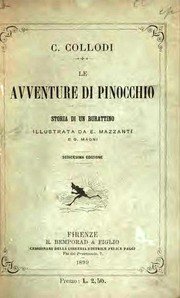
Le avventure di Pinocchio
On The Jordan B. Peterson Podcast, Carlo Collodi's book Le avventure di Pinocchio was discussed in episodes such as The Psychology of Pinocchio. Dr. Jordan B. Peterson walked listeners through the narrative and underlying psychological meaning of the Pinocchio story, examining how the character starts out as a marionette.
Discussed“That's really what happens to Pinocchio because we're going to watch part of the Pinocchio story. He starts out as a marionette.”
-
Man's Search for Meaning
Viktor Frankl's Man's Search for Meaning came up on The Jordan B. Peterson Podcast. Tony Robbins strongly recommended the book, describing it as a profound personal influence regarding the ability to find meaning through severe difficulty, while Mohammad Hijab referenced the work while discussing human purpose and suffering.
Recommended“I'm actually making the film and it was one of the books that influenced me the most because the ability to find meaning even in the most difficult time and Victor Frankle to me is just a God sent to this planet most people read this book it's crazy you haven't read it ”
-
Moby Dick
Herman Melville's 'Moby Dick' was discussed on The Jordan B. Peterson Podcast across two episodes featuring Dr. John Vervaeke. In episode #482, Vervaeke mentioned teaching 'Moby Dick' as part of a course on significant literary works. In episode #414, Dr. Jordan Peterson discussed Melville's narrative in relation to compelling moments of humanity and drew thematic parallels to the Bible.
Discussed“You know, I did a course on Moby Dick, Heart of Darkness, Notes from Underground, Death in Venice, and The Plague—all one course. Oh yeah, that's fun.”
-
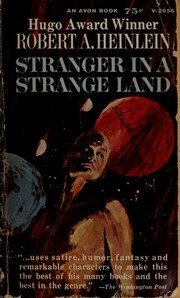
Stranger in a Strange Land
On The Jordan B. Peterson Podcast in July and September 2024, host Jordan B. Peterson referenced Robert A. Heinlein's science fiction novel Stranger in a Strange Land. Peterson discussed the book to illustrate the concepts of myth re-entering engineering spheres and the archetype of a sky-faring savior.
Discussed“heand does the same thing with Stranger in a Strange Land right because and it's so interesting because musk named his AI grock after Valentine Smith”
-
Symbolism, the Sacred and the Arts
On The Jordan B. Peterson Podcast, Russell Brand mentioned reading Mircea Eliade's Symbolism, the Sacred and the Arts after Jordan Peterson recommended it. Peterson also brought up the author's work when asking Richard Dawkins about religious motifs.
Discussed“elsewhere in that you talked about something that I picked up while reading that book you gave me told me to read profane in the sa oh you read that oh great”
-
The Anxious Generation
On The Jordan B. Peterson Podcast, Jordan Peterson introduced Jonathan Haidt and his book The Anxious Generation as the central focus of their discussion. The hosts and guests examined the book's core themes, particularly the detrimental impact of technology and smartphones on children's mental health and childhood development.
Discussed“He's the author of a number of books, The Coddling of the American Mind, The Righteous Mind, The Happiness Hypothesis, and most recently, The Anxious Generation, which is the focus of our discussion today.”
-
The Art of War
On The Jordan B. Peterson Podcast, the host Dr. Jordan B. Peterson discussed Sun Tzu's book 'The Art of War' across multiple episodes. In an episode from June 2024, Dr. Peterson and guest John Spencer talked about urban warfare, where Dr. Peterson cited Sun Tzu regarding the unwisdom of attacking a besieged city. In an earlier episode from January 2023, guest Dr. Del Paulhus also referenced Sun Tzu and his influential book, highlighting the importance of building alliances.
Discussed“Even Sun Tzu stated that attacking a besieged city is unwise, and there is a vast history of warfare, showcasing the complexities of urban combat.”












Host picks
- The Lord of the Rings
- Crime and Punishment by Fyodor Dostoevsky
- Crime and Punishment by Fyodor Dostoevsky (Illustrated)
- The Brothers Karamazov
- 1984
- Fossil Future
- Notes from Underground
- The Gulag Archipelago
- The Origins and History of Consciousness
- The Selfish Gene
- War on the West
- 12 Rules for Life
- A Billion Wicked Thoughts
- Inferno
- Irreversible Damage
- Laptop from Hell
- Maps of Meaning
- Stranger in a Strange Land
- Systemantics
- The Devils
Guest picks
- 12 Rules for Life
- Bible
- Civilization and Its Discontents
- Harry Potter and the Philosopher's Stone
- Heart of Darkness
- Man's Search for Meaning
- The Dialogues of Plato
- The Lord of the Rings
- The Population Bomb
- The Wealth of Nations
- We Who Wrestle with God
- 1984
- A Conflict of Visions
- A Thousand Plateaus
- Abuse of language, abuse of power
- And there was light
- Atlas Shrugged
- Between the World and Me
- Beyond Order
- Black Comedy
Guests who recommended books
- Jacob Howland (11)
- Peter Kreeft (10)
- John Vervaeke (9)
- Alex Story (7)
- Hamza Yusuf (7)
- Russell Brand (6)
- Zeena Schreck (5)
- Mary Harrington (5)
- Alex Epstein (5)
- Jonathan Haidt (4)
- Piers Morgan (4)
- Newt Gingrich (4)
- Michael Saylor (3)
- Dr. Mehmet Oz (3)
- Marc Andreessen (3)
- Lee Jussim (3)
- Laila Mickelwait (3)
- Jonathan Pageau (3)
- Dr. Jared Ross (3)
- Sam Harris (3)
- Robin Carhart-Harris (3)
- Matt Ridley (3)
- Christopher Kaczor (3)
- David French (2)
- Gad Saad (2)
- Douglas Murray (2)
- James Lindsay (2)
- Charlie Kirk (2)
- Joel Salatin (2)
- Winston Marshall (2)
- Baland Jalal (2)
- Brian Keating (2)
- Andrew Doyle (2)
- Warren Smith (2)
- Spencer Klavan (2)
- Naftali Bennett (2)
- Jamie Wheal (2)
- Tammy Peterson (2)
- John Rich (2)
- Carol Swain (2)
Latest mentions
“This is from Toltoy's Leo Toltoy who was a great Russian author. He wrote Warren Peace and Anacredina. Um, many people believe that Warren Peace is the greatest novel ever written.”
“Now, Toltoy wrote a book called Confessions um or Confession. I don't remember if it's singular or plural. And uh it's relatively short book. It's very much worth reading.”
“And he wrote some very great books uh that were religiously oriented, specifically one had a fairly major impact on me called the kingdom of God is within us.”
“How can someone who intends to live by logic also hold true to the supernatural elements and beliefs in the Bible without feeling as though you're betraying logic?”
“Dante, who wrote Dante's Inferno, is one of the figures of the classic age, the Renaissance, let's say, classic European age, who really formulated much of the modern vision of hell.”
“Dante, who wrote Dante's Inferno, is one of the figures of the classic age, the Renaissance, let's say, classic European age, who who really formulated much of the modern vision of hell.”
“I was reading The God Delusion by Richard Dawkins today.”
“So, Dostoyevsky wrote a very famous book called Notes from Underground, and in Dostoyevsky was an absolute prophet.”
“He did that in a book called The Devils or The Possessed, and in many of his other books as well, not least in Notes from Underground.”
“You remember in the Lion King, most of you have seen that when Scar emerges to rule, the landscape parches and all the provision disappears.”
“I've recommended to people frequently that if they're interested in fiction, they might consider reading Dossi. And I would say read Crime and Punishment because it's like the world's greatest thriller. It's an amazing book.”
“I've recommended to people frequently that if they're interested in fiction, they might consider reading Dossi. And I would say read Crime and Punishment because it's like the world's greatest thriller. It's an amazing book.”
“I read first book by Alexander Soljenitz and I read when I was about 13. It was one day in the life of Ivan Denisvich and it was the first book that had come out of the Soviet Union really during a a period of thaw in the early 1960s that revealed what had happened under Stella and then I”
“and then I read 1984 by George Orwell and Brave New World.”
“and then I read 1984 by George Orwell and Brave New World.”
“This was while I was reading Soljenitson's book on the Gulleg archipelago and various accounts of totalitarian brutality in Nazi Germany and and so forth and some psychoanalytic work and and that's where the story part emerges.”
“For me, Dostoevsky, the Russian novelist, sort of top of that list. His books, The Brothers Karamazov and Crime and Punishment and Notes from Underground, The Devils, are unbelievably compelling works of fiction and they're deep.”
“and 12 rules for life. You described how you and your family managed with Michaela's health struggles and that was very helpful for me and my wife”
“I'm going to continue that today with a more recent book, a much more recent book called There's No Such Thing as a Dragon, The Story and Pictures by Jack Kent.”
“Um there's a book that I found very useful in my analysis of such things called an instinct for dragons by a man named David E. Jones.”