
Person
Steve Levitt books: every book Steve Levitt wrote and recommended
Across 2 podcasts. Every show Steve Levitt appears on, in one place — not just one.
Books by Steve Levitt

Steve Levitt’s most recommended books
- Thinking, Fast and Slow by Daniel Kahneman
- Between Two Kingdoms by Suleika Jaouad
- Sapiens by Yuval Noah Harari
- Enlightenment Now by Steven Pinker
- Life Undercover by Amaryllis Fox
- The Fault in Our Stars by John Green
- Scarcity by Sendhil Mullainathan
- Eve by Cat Bohannon
- The Soul of an Octopus by Sy Montgomery
- The Wealth of Nations by Adam Smith
Steven D. Levitt is an American economist, professor emeritus at the University of Chicago, and co-author with Stephen J. Dubner of Freakonomics and its sequels, SuperFreakonomics and Think Like a Freak. He won the 2003 John Bates Clark Medal for his work on crime, and Time named him one of its "100 People Who Shape Our World" in 2006. He hosts People I (Mostly) Admire, part of the Freakonomics Radio network.
On People I (Mostly) Admire he often recommends his guests' books and others that bear on the episode's subject. He pointed listeners interested in the future of universities to Michael M. Crow's The Fifth Wave, and suggested Suleika Jaouad's Between Two Kingdoms. He highlighted Brian Cox's Black Holes, Irving Finkel's The Ark Before Noah and Bill McGowan's Speak, Memorably. He recommended David Yeager's 10 to 25 for changing how adults talk with young people, and called Robin Wall Kimmerer's Braiding Sweetgrass one of the most popular books of the past decade. This page collects every book he recommended or discussed, with his own words and the episode.
Books recommended by Steve Levitt
-
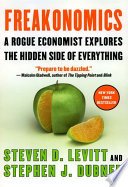
Freakonomics
Freakonomics by Steven D.
Critiqued“A lot of the content from the Hartley podcast was used in a rather snarky article that the magazine published titled, 'Why Freakonomics Failed to Transform Economics.'”
Where to get it
-
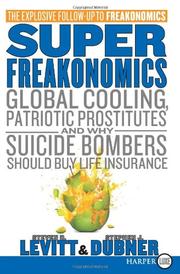
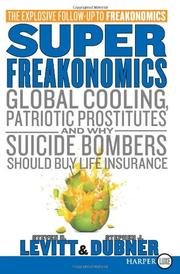
Superfreakonomics
Superfreakonomics by Steven D.
Discussed“I was in New York City shortly after the release of super Freakonomics the follow-up to Freakonomics and that book was proving to be quite controversial because of a chapter we had written on climate change”
Where to get it
-
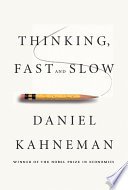
Thinking, Fast and Slow
Thinking, Fast and Slow by Daniel Kahneman explores the dual systems of the human mind that drive how people think, make choices, and commit cognitive errors.
Discussed“It's what Danny Conorman calls system one versus system two thinking. Can you explain to someone why those two modes of thinking matter? Reading Danny Conaman's book, Thinking Fast and Slow, really was just a life-changing experience for me and so many other people”
Where to get it
-
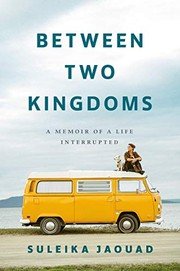
Between Two Kingdoms
Between Two Kingdoms by Suleika Jaouad is a poignant memoir documenting the author's harrowing battle with leukemia, her protracted recovery, and the subsequent cross-country road trip she undertook to figure out how to rejoin the land of the living.
Discussed“I'm not generally an emotional or an empathetic person, but I cried over and over reading your book between two kingdoms.”
Where to get it
-
Sapiens
Sapiens: A Brief History of Humankind by Yuval Noah Harari is a sweeping exploration of how Homo sapiens evolved, dominated the planet, and constructed complex imaginary orders like religion, money, and nations.
Discussed“And so what was interesting as I read his amazing book Sapiens, there is not a character in the entire book.”
Where to get it
-
Enlightenment Now
Enlightenment Now by Steven Pinker is a data-driven defense of reason, science, humanism, and progress that argues humanity is living in an era of unprecedented health, prosperity, and safety.
Discussed“Five years ago, we talked a lot about his book entitled Enlightenment Now: The Case for Reason, Science, Humanism, and Progress.”
Where to get it
-
Life Undercover
Life Undercover: Coming of Age in the CIA by Amaryllis Fox is a memoir detailing the author's nearly a decade-long career as a clandestine CIA operative.
Discussed“So I absolutely loved your book.”
Where to get it
-
The Fault in Our Stars
The Fault in Our Stars by John Green is an acclaimed young adult novel that follows two teenagers coping with terminal cancer diagnoses who fall in love while navigating the painful realities of mortality.
Discussed“Have you read The Fault in Our Stars? It's John Green's book about two young people, I think, with cancer who are dying, who fall in love. It's one of my favorite books. I love John Green. I had him on the show. He was amazing.”
Where to get it
-
Scarcity
Scarcity by Sendhil Mullainathan and Eldar Shafir is a psychological exploration of how having too little of things like money or time shapes human thinking, decision-making, and behavior.
Discussed“But in this week's episode, I pick up in the middle of our conversation with me telling Sendil about my first reaction to hearing that he had written a book entitled Scarcity.”
Where to get it
-
Eve
Eve by Cat Bohannon is a popular science book exploring how the female body drove 200 million years of human evolution.
Discussed“I did not expect to like this book I'm generally just not that interested in things that happened 200 million years ago or even 10,000 years ago I tend to be much more excited by modern events but in chapter after chapter K bannan offers such a fresh and surprising perspective that I couldn't put the book down”
Where to get it
-
The Soul of an Octopus
The Soul of an Octopus by Sy Montgomery is a fascinating exploration into the inner lives, intelligence, and consciousness of one of the natural world's most mysterious creatures.
Discussed“are you familiar with the nature writer sa Montgomery y among many other books she wrote one called the soul of the octopus”
Where to get it
-
The Wealth of Nations
The Wealth of Nations by Adam Smith is a foundational text in classical economics that explores the nature and causes of national wealth through the division of labor, productivity, and free markets.
Discussed“I'd forgotten that Dubner had done this three-part series on Adam Smith, and to win the Adam Smith Award, Dubner crafted an absolutely brilliant speech in which he talked about Adam Smith's life and details; it was really masterful.”
Where to get it
-
A Brief History of Time
Stephen Hawking's landmark popular science book has served as an iconic introduction to cosmology and black holes for millions of readers worldwide.
Discussed“I think like many people my first real introduction to black holes was Stephen Hawkings book a brief history of time and I think that book must have come out in the 1980s and it sold millions and millions of copies probably one of the bestselling science books of all time.”
Where to get it
-
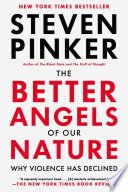
The Better Angels of Our Nature
The Better Angels of Our Nature by Steven Pinker is a comprehensive historical study arguing that violence has steadily declined throughout human history.
Discussed“I think a great example comes from another one of your books called the better angels of our nature which argues that violence has greatly decreased over time and that doesn't strike me as being a very funny topic”
Where to get it
-
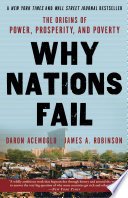
Why Nations Fail
Why Nations Fail: The Origins of Power, Prosperity, and Poverty by Daron Acemoglu and James A.
Discussed“so back in 2012 you and James Robinson published a book called why Nations fail the origins of power prosperity and poverty”
Where to get it
-
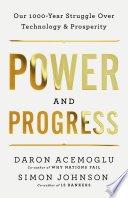
Power and Progress
Power and Progress by Daron Acemoglu and Simon Johnson is an economics book that explores the historical relationship between technology, prosperity, and the distribution of economic gains over the past millennium.
Discussed“I want to talk about your most recent book it's co-authored with Simon Johnson and it's called power and progress came out in May of 2023”
Where to get it
-
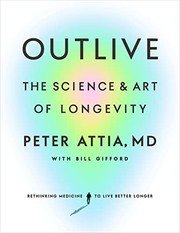
Outlive
Outlive by Peter Attia and Bill Gifford is a comprehensive guide to longevity and health optimization, focusing on proactive medical strategies to extend both lifespan and healthspan.
Recommended“It has taken him seven years to collect and organize his insights into his first book. It's called 'Outlive: The Science and Art of Longevity.'”
Where to get it
-
How to Say Goodbye
How to Say Goodbye by Wendy MacNaughton is a poignant collection of illustrations and prose that gently explores grief, mortality, and the emotional realities of saying farewell.
Discussed“so I'm breaking out of my fear of artist mode to talk to you today because you have created something that's incredibly beautiful and that touched me so deeply it's a book of illustrations of pros and it's called how to say goodbye”
Where to get it
-
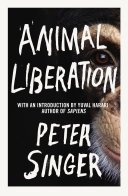
Animal Liberation
Animal Liberation by Peter Singer is a foundational philosophy text that galvanized the modern animal rights movement by arguing against the moral permissibility of animal exploitation.
Discussed“I personally know at least a dozen people who became vegetarian after they read his book animal Liberation and the effective altruism movement is in large part the consequence of his early writings on the topic”
Where to get it
-
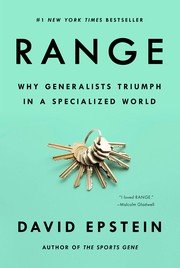
Range
Range by David J.
Discussed“I had David Epstein on the show a couple years back he's written some great books like range and the sports Gene”
Where to get it


The other 170 books Steve Levitt recommended or discussed, ranked
- Drug Use for Grown-Ups by Carl L. Hart
- Career and Family by Claudia Dale Goldin
- Breath by James Nestor
- Sum by David Eagleman
- The evolution of cooperation by Robert M. Axelrod
- The Selfish Gene by Richard Dawkins
- Livewired by David Eagleman
- Creative Acts for Curious People by Sarah Stein Greenberg
- The God Delusion by Richard Dawkins
- The Premonition by Michael Lewis
- The undoing project by Michael Lewis
- Deep by James Nestor
- Nudge by Richard H. Thaler, Cass R. Sunstein
- Braiding Sweetgrass by Robin Wall Kimmerer
- Noise by Daniel Kahneman
- The Power of Habit by Charles Duhigg
- Grit by Angela Duckworth
- The Book of Hope by Jane Goodall, Douglas Abrams
- The Sports Gene by David Epstein
- Guns, Germs and Steel by Jared Diamond
- High Price by Carl Hart
- Once upon a Prime by Sarah Hart
- The Creative Act by Rick Rubin
- Liar's Poker by Michael Lewis
- Subtract by Leidy Klotz
- Waking Up by Sam Harris
- Plant Hunter by Cassandra Leah Quave
- The Perfection Trap by Thomas Curran
- The Anthropocene Reviewed by John Green
- Speak, Memorably by Bill McGowan
- The Signal and the Noise by Nate Silver
- Blue Machine by Helen Czerski
- Storm in a Teacup by Helen Czerski
- Tough Broad by Caroline Paul
- Be Useful by Arnold Schwarzenegger
- Woke Racism by John McWhorter
- Supercommunicators by Charles Duhigg
- Your inner fish by Neil Shubin
- Split the Pie by Barry Nalebuff
- Every Man for Himself and God Against All by Werner Herzog
- Jump by Larry Miller, Laila Lacy
- Rubicon by Tom Holland
- Rumbles by Elsa Richardson
- Smarter Faster Better by Charles Duhigg
- The Data Detective by Tim Harford
- Triumph of the City by Edward L. Glaeser
- Worlds I See by Fei-Fei Li
- Economic Gangsters by Raymond Fisman, Edward Miguel
- Finding the Mother Tree by Suzanne Simard
- The undercover economist by Tim Harford
- 10 to 25 by David Yeager
- A Beginner's Guide to the End by BJ Miller
- Behave by Robert M. Sapolsky
- Black Holes by Brian Cox
- Everything Is Tuberculosis by John Green
- Lost cat by Caroline Paul
- Outlive the Science and Art of Longevity by Peter Attia
- Power in Numbers by Talithia Williams
- Remember it! by Nelson Dellis
- TED Talks by Chris Anderson
- The Index Card by Helaine Olen
- Unforgiving Places by Jens Ludwig
- You Are What You Watch by Walter Hickey
- Collapse by Jared M. Diamond
- Contact by Carl Sagan
- Dream hoarders by Richard V. Reeves
- Expecting better by Emily Oster
- Extraterrestrial by Avi Loeb
- Fair Doses by Seth Berkley
- Fighting fire by Caroline Paul
- Forward by Andrew Yang
- Human Nature by Kate Marvel
- Looking for Alaska by John Green
- Nine Nasty Words : English in the Gutter by John McWhorter
- Quit by Annie Duke
- Rebel in the ranks by Brad S. Gregory, Brad S. Gregory
- Road to Freedom by Joseph E. Stiglitz
- Survival of the City by Edward L. Glaeser, David Cutler
- The Abundant University by Michael D. Smith
- The Catcher in the Rye by J. D. Salinger
- The Evolution of Beauty by Richard O. Prum
- The Joy of X by Steven Henry Strogatz
- The Nation City by Rahm Emanuel
- Brave New Words by Salman Khan
- Directory of Officers, Faculty, Students, Departments by University of Pennsylvania
- Imaginable by Jane McGonigal
- Life 3.0 by Max Tegmark
- Misbehaving by Richard H. Thaler
- My Own Country by Abraham Verghese
- Never Split the Difference by Chris Voss, Tahl Raz
- Our Mathematical Universe by Max Tegmark
- The Age of Diagnosis by Suzanne O'Sullivan
- The Animal Activist's Handbook by Matt Ball
- The Ark Before Noah by Irving Finkel
- The Covenant of Water (Oprah's Book Club) by Abraham Verghese
- The Fifth Wave by Michael M. Crow
- The strategy of conflict by Thomas C. Schelling
- What Is It Like to Be an Addict? by Owen Flanagan
- WTF?! by Peter T. Leeson
- Africa's turn? by Edward Miguel
- Alice's Adventures in Wonderland by Lewis Carroll
- An Absolutely Remarkable Thing by Hank Green
- An Inconvenient Truth by Al Gore
- Big Bets by Rajiv Shah
- Capital in the Twenty-First Century by Thomas Piketty
- Crepúsculo Del Mundo / the Twilight World by Werner Herzog
- Cribsheet by Emily Oster
- Daring Young Men by Richard Reeves
- Dead aid by Dambisa Moyo
- Dominion by Tom Holland
- Excellent Advice for Living by Kevin Kelly
- Freedomnomics by John R. Lott
- Gathering Moss by Robin Wall Kimmerer
- Globalization and its discontents by Joseph E. Stiglitz
- GRIT The Power of PASSION and PERSEVERANCE by Angela Duckworth
- Homicide by David Simon
- How Boards Work by Dambisa Moyo
- How schools work by Arne Duncan
- Infectious Generosity by Chris Anderson
- Infinite Powers by Steven H. Strogatz
- Insomnia by Stephen King
- Interstellar by Avi Loeb
- Is Earth Exceptional? by Dr. Mario Livio
- It's All in Your Head by Suzanne O'Sullivan
- John Stuart Mill by Richard Reeves
- Jude the Obscure by Thomas Hardy
- King Henry V by William Shakespeare
- Le capital au XXIe siècle by Thomas Piketty
- Measure what matters by John Doerr
- Messy by Tim Harford
- Moneyball by Michael Lewis
- Moonwalking with Einstein by Joshua Foer
- More guns, less crime by John R. Lott
- Nationalism and Literature by Sarah M. Corse
- Not Quite what I was Planning: Six-word Memoirs by Writers Famous and Obscure by Rachel (ed.) Fershleiser
- Of Boys and Men by Richard Reeves
- Outliers by Malcolm Gladwell
- Performance All the Way Down by Richard O. Prum
- Remembrance of Things Past by Marcel Proust
- Speed and Scale by John Doerr
- Starry Messenger by Neil deGrasse Tyson
- The Autobiography of Benjamin Franklin by Benjamin Franklin
- The Bodhisattva's Brain by Owen Flanagan
- The Body Keeps the Score by Bessel van der Kolk
- The Difference by Scott E. Page
- The Discoverie of Witchcraft by Reginald Scott
- The Emperor's New Mind by Roger Penrose
- The End of Faith by Sam Harris
- The Expression of the Emotions in Man and Animals by Charles Darwin
- The Genetic Book of the Dead by Richard Dawkins
- The gutsy girl by Caroline Paul
- The Math(s) Fix by Conrad Wolfram
- The Night Before Christmas by Clement Clarke Moore
- The Power of Passion and Perseverance by Angela Duckworth
- The Power of Your Subconscious Mind by Joseph Murphy
- The Serviceberry by Robin Wall Kimmerer
- The Sleeping Beauties by Suzanne O'Sullivan
- The Theory of Moral Sentiments by Adam Smith
- The Tipping Point by Malcolm Gladwell
- The Variations of Animals and Plants Under Domestication, Volume 1 by Charles Darwin
- The Voltage Effect by John A. List
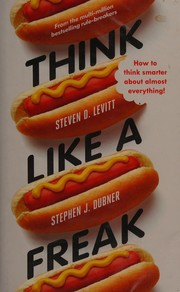
- Think Like a Freak by Steven D. Levitt, Stephen J. Dubner
- Through the Looking Glass and What Alice Found There. by by Lewis Carroll
- Through the Looking-Glass by Lewis Carroll, Lewis Carroll, Lily Mathew, Lewis Lewis Carroll
- Turtles All the Way Down by John Green
- Twilight World by Werner Herzog
- What to Expect when You're Expecting by Heidi Eisenberg Murkoff, Sharon Mazel
- When Everyone Knows That Everyone Knows... by Steven Pinker
- Who Are We Now? by Blaise Agüera y Arcas
- Women of Strength by Betty Jane Cooper Johnson, Suzan Huney
Appearances
Other mentions (154: passing, ad reads, own books), the 30 most recent
“Amaryllis Fox spent nearly a decade working as a CIA operative, recounting her experiences in the best-selling book, Life Undercover, Coming of Age in the CIA.”
“It's called Life Undercover: Coming of Age in the CIA.”
“We've been talking about the potential benefits of repurposing existing drugs for new diseases. That's not a new idea. Chris Snder. A famous case is aspirin.”
“And honestly, they were almost all young adult fiction because mostly I just read the books that my kids were reading like Harry Potter and the Twilight series.”
“And honestly, they were almost all young adult fiction because mostly I just read the books that my kids were reading like Harry Potter and the Twilight series.”
“I hadn't read anything that was about science or about psychology since I was in grad school, maybe. It's been great for me to just spend time reading what smart people are thinking and then having to pull that all together with the discipline of deadlines. The other thing that's been great for me about Puma is I have almost”
“Her amazing memoir, Between Two Kingdoms, tells the story of her battle with cancer, as well as the challenges after years of being in and out of the hospital.”
“first in a blog and then in a series of New York Times columns entitled Life Interrupted and eventually in a best-selling book called Between Two Kingdoms and also of course there's the Academy Award nominated documentary American Symphony.”
“Since she wrote her memoir, Between Two Kingdoms, Sleek has had both a recurrence of cancer and another successful bone marrow transplant.”
“Sleeka has had two new books come out in this past year. The first is The Book of Alchemy and the second, The Alchemy...”
“Sleeka has had two new books come out in this past year. The first is The Book of Alchemy and the second, The Alchemy [Journal]”
“I'm just reflecting on the most prominent attempt to cancel me which happened after Steven Dubin and I published super freconomics and we had a discussion of geoengineering.”
“Steven Pinker's latest book is called When Everyone Knows That Everyone Knows: Common Knowledge and the Mysteries of Money, Power, and Everyday Life.”
“Seth Berkley's book, Fair Doses, An Insider's Story of the Pandemic and the Global Fight for Vaccine Equity, will be published on October 28th.”
“He's documented his research in his book 10 to 25, the science of motivating young people.”
“Robin's newest book is called The Service Berry: Abundance and Reciprocity in the Natural World.”
“Green built his reputation writing blockbuster young adult novels like The Fault in Our Stars and creating extremely popular YouTube channels, including Crash Course.”
“And to make it worth your while to pass along that information, I'm offering $5,000 and a signed copy of Freconomics as a finders fee for each teacher we hire who found out about the job because of the podcast.”
“that's a what does that mean oh okay so this is uh Rich Sutton who just won the um touring award reinforcement learning was his subject and he wrote books about it”
“Hank's first book of speculative fiction is entitled an absolutely remarkable thing”
“and his second book is called a beautifully foolish Endeavor”
“Alice in Wonderland is based on cards there's the queen of hearts and those things”
“Elsa is a medical historian at the University of Strath Glide whose most recent book is entitled rumbles a curious history of the gut”
“It really reminds me of — have you ever read Charles Darwin's "Expression of Emotions in Man and Animals"?”
“Go back to the Federalist Papers, and you'll see the argument that these constituencies around the country are going to have so-called competing local jealousies.”
“So you're a theoretical mathematician who, because of your applied work, has gotten to see the real world in action, and at least for me, when I wrote Freakonomics and got a taste of the real world, I was really poisoned to academics after that because I found the real world to be much more fun.”
“I find your arguments about boys and men very compelling, but nonetheless, I am really surprised that your book found an audience.”
“My guest today, Daron Acemoglu, is a professor of economics at MIT and co-author of a number of influential books written for a popular audience, including 'Why Nations Fail' and 'Power and Progress.' He is also, without a doubt, one of the greatest economists I have ever met.”
“My guest today, Daron Acemoglu, is a professor of economics at MIT and co-author of a number of influential books written for a popular audience, including 'Why Nations Fail' and 'Power and Progress.' He is also, without a doubt, one of the greatest economists I have ever met.”
“but the main reason I wanted to talk to her today is that she has produced a stunningly touching book called How to Say Goodbye”