Person
Every book Alex O’Connor recommended on podcasts
Alex O’Connor appears on podcasts like Modern Wisdom, where he engages in deep discussions centered around philosophy, ethics, existentialism, religion, and the psychological weight of intellectual pursuits. Throughout his appearances, O’Connor frequently references and recommends classic philosophical texts that have shaped his worldview. He enthusiastically recommends Aristotle's The Nicomachean Ethics as the most useful book of philosophy for anyone to read after more than two thousand years. In addition, he discusses Peter Singer's Animal Liberation as the primary text that inspired his thoughts on veganism and morality. O’Connor also explores Albert Camus's The Plague and The Rebel to examine absurdist philosophy, Plato's Republic and Laws to trace the evolution of ancient political thought and theories of the mind, and Thomas Hobbes's Leviathan to provide historical context for authoritarian political tracts. Furthermore, he references Fyodor Dostoevsky's Notes from Underground and its encounters with censorship, demonstrating a broad and nuanced engagement with intellectual history.
Books recommended by Alex O’Connor
-
Nicomachean Ethics
Aristotle's Nicomachean Ethics is a foundational work of ancient Greek moral philosophy examining virtue, character, and the path to human flourishing.
Recommended“I mean, especially really with regards to something like Aristotle's ethics, you know, the Aristotle's book, The Nikameakian Ethics, is I would say, you know, even after over 2,000 years, the most useful book of philosophy for anyone to read.”
Where to get it
-
Animal Liberation
Animal Liberation by Peter Singer is a foundational 1975 text of the animal rights movement that presents a rigorous ethical case against speciesism and factory farming.
Discussed“and the main thing that got me thinking about it was Peter singers Burke Animal Liberation Peter singer is probably the most important philosopher in my life”
Where to get it
-
Eating Animals
Eating Animals by Jonathan Safran Foer is a philosophical and investigative examination of modern meat production and the ethical implications of human diet.
Discussed“there's a book called eating animals should we stop I can't remember who it's by but he made this point he was like in the introduction or something he says I bet you assume what my conclusion is here”
Where to get it
-
Laws
Discussed“Even even someone like Plato who we quite often think of as having a a very strong stable consistent set of made out of marble well as he if you if you you know is one of his earlier works which is both a kind of political treatise but also a theory of the human mind is called the republic”
Where to get it
-
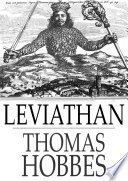
Leviathan
Leviathan by Thomas Hobbes is a foundational 17th-century political treatise exploring the social contract and the necessity of absolute state power to avoid a chaotic state of nature.
Discussed“Why does Thomas Hobbes write the Leviathan? Because he had to flee him being a royalist during the English Civil War. he has to flee to to France because of the English civil war and he writes this tract about how we should all submit to a to authoritarian dictator essentially”
Where to get it
-
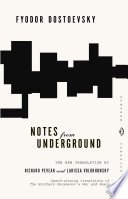
Notes from Underground
Notes from Underground by Fyodor Dostoevsky is a foundational existential novella featuring a bitter, isolated narrator who launches a scathing critique of rational egoism, utopian engineering, and human nature.
Discussed“Dosstofki, his notes from the underground, one of the most famous of his books because it's it's so short and easy to read, originally contained a chapter which essentially argued for the necessity of Christianity as Joski saw it, but it was censored and and taken out and so you end up with this sort of quite fully nihilistic tract.”
Where to get it
-
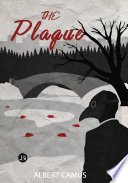
THE PLAGUE
THE PLAGUE by Albert Camus is an existentialist novel chronicling a devastating epidemic in an Algerian city and exploring human solidarity, suffering, and the absurdity of existence.
Discussed“Oh, it's the difficult first album of of the outsider and and it's it's and it is, you know, I I've I like the mythosis partly because it's so counterintuitive, but some of his later works, things like The Plague, The Plague is an amazing novel. It sort of is it it became like a bestseller for obvious reasons.”
Where to get it
-
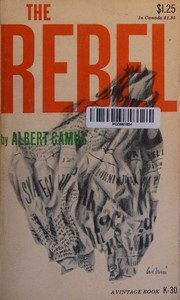
The Rebel
Albert Camus explores rebellion, historical revolt, and the limits of human action in his profound philosophical work The Rebel.
Discussed“and then anonym writes the rebel which is one of his one of his later um works which is again discussing you know what can an absurdist coherently value without simply falling back onto a kind of leap of faith or something”
Where to get it
-
The Republic
The Republic by Plato is a foundational philosophical and political treatise that explores the nature of justice, the ideal society, the human mind, and political structures.
Discussed“Even even someone like Plato who we quite often think of as having a a very strong stable consistent set of made out of marble well as he if you if you you know is one of his earlier works which is both a kind of political treatise but also a theory of the human mind is called the republic”
Where to get it
Appearances
| Episode | Podcast | Date | Books |
|---|---|---|---|
| Is Being Smart Worth the Depression? - Alex O’Connor & Joe Folley - #1012 | Modern Wisdom | 2025-10-27 | 7 |
| Veganism, Atheism and Morality - Cosmic Skeptic - #103 | Modern Wisdom | 2019-09-16 | 2 |
Other mentions (1: passing, ad reads, own books)
“And we just, you know, the myth of Sisphus is is one of the first things that Camu writes along with the the stranger.”