Episode · Modern Wisdom · 2025-10-27
Books mentioned on Is Being Smart Worth the Depression? - Alex O’Connor & Joe Folley - #1012
Alex O’Connor is a YouTuber, writer and a podcaster. Joe Folley is a philosopher, writer, and host of the Unsolicited Advice YouTube channel.
Books mentioned, in the order they came up
-
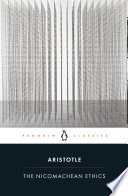
Nicomachean Ethics
Aristotle's Nicomachean Ethics is a foundational work of ancient Greek moral philosophy examining virtue, character, and the path to human flourishing.
Recommended“I mean, especially really with regards to something like Aristotle's ethics, you know, the Aristotle's book, The Nikameakian Ethics, is I would say, you know, even after over 2,000 years, the most useful book of philosophy for anyone to read.”
Where to get it
-
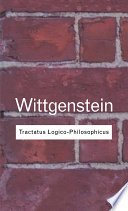
Tractatus Logico-Philosophicus
Tractatus Logico-Philosophicus by Ludwig Wittgenstein is a dense and revolutionary philosophical text exploring the intricate relationship between language, thought, and the boundaries of what can be meaningfully expressed.
Discussed“If you open Vickenstein's Tractus, the first line of the introduction is something like, "I don't think this book will be useful except to anybody who's already like in agreement with the things that it says."”
Where to get it
-
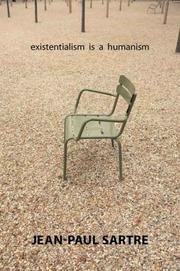
Existentialism Is a Humanism
Discussed“Whereas if you just randomly pick one of the great philosophers, like if you just pick up Sartra, as I did the other day, I told you this, and read existential is existentialism is a humanism, and think this is complete nonsense.”
Where to get it
-
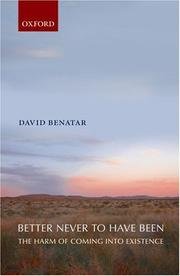
Better Never to Have Been
Discussed“David Benitar is the sort of superstar of antiism. Um he wrote a book called Better Never to Have Been, which sounds like one of these sort of you know, I'm about to write about how terrible how terrible life is.”
Where to get it
-
The Myth of Sisyphus
The Myth of Sisyphus by Albert Camus is a philosophical essay that explores the concept of the absurd and the search for meaning in a seemingly meaningless universe.
Critiqued“And it captures a lot of people's attention because even people who aren't feeling suicidal are like, "Whoa, yeah, that's interesting." You know, and they they just want to read about it in a in a relatively straightforward way. I unfortunately think it's pretty overhyped, the myth of Seisphus.”
Where to get it
-
THE PLAGUE
THE PLAGUE by Albert Camus is an existentialist novel chronicling a devastating epidemic in an Algerian city and exploring human solidarity, suffering, and the absurdity of existence.
Discussed“Oh, it's the difficult first album of of the outsider and and it's it's and it is, you know, I I've I like the mythosis partly because it's so counterintuitive, but some of his later works, things like The Plague, The Plague is an amazing novel. It sort of is it it became like a bestseller for obvious reasons.”
Where to get it
-
The Rebel
Albert Camus explores rebellion, historical revolt, and the limits of human action in his profound philosophical work The Rebel.
Discussed“and then anonym writes the rebel which is one of his one of his later um works which is again discussing you know what can an absurdist coherently value without simply falling back onto a kind of leap of faith or something”
Where to get it
-
An Inquiry concerning human understanding;
Discussed“And he later sort of revises his thoughts into the much shorter inquiry concerning human understanding.”
Where to get it
-
Laws
Discussed“Even even someone like Plato who we quite often think of as having a a very strong stable consistent set of made out of marble well as he if you if you you know is one of his earlier works which is both a kind of political treatise but also a theory of the human mind is called the republic”
Where to get it
-
The Republic
The Republic by Plato is a foundational philosophical and political treatise that explores the nature of justice, the ideal society, the human mind, and political structures.
Discussed“Even even someone like Plato who we quite often think of as having a a very strong stable consistent set of made out of marble well as he if you if you you know is one of his earlier works which is both a kind of political treatise but also a theory of the human mind is called the republic”
Where to get it
-
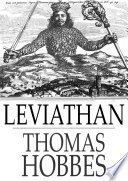
Leviathan
Leviathan by Thomas Hobbes is a foundational 17th-century political treatise exploring the social contract and the necessity of absolute state power to avoid a chaotic state of nature.
Discussed“Why does Thomas Hobbes write the Leviathan? Because he had to flee him being a royalist during the English Civil War. he has to flee to to France because of the English civil war and he writes this tract about how we should all submit to a to authoritarian dictator essentially”
Where to get it
-
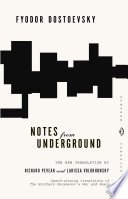
Notes from Underground
Notes from Underground by Fyodor Dostoevsky is a foundational existential novella featuring a bitter, isolated narrator who launches a scathing critique of rational egoism, utopian engineering, and human nature.
Discussed“Dosstofki, his notes from the underground, one of the most famous of his books because it's it's so short and easy to read, originally contained a chapter which essentially argued for the necessity of Christianity as Joski saw it, but it was censored and and taken out and so you end up with this sort of quite fully nihilistic tract.”
Where to get it
-
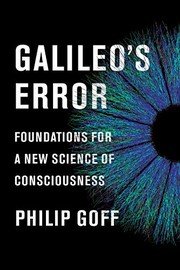
Galileo's Error
Galileo's Error by Philip Goff is a philosophy of mind book that tackles the hard problem of consciousness, arguing that standard physicalist science is fundamentally unequipped to explain subjective experience and proposing panpsychism as a viable alternative.
Discussed“Here is the interesting thing. Galileo's era one so that was it.”
Where to get it
Other mentions in this episode (1) — ad reads, self-promotion and passing references, never counted
“And we just, you know, the myth of Sisphus is is one of the first things that Camu writes along with the the stranger.”