Person
Every book Rod Dreher recommended on podcasts
Rod Dreher appeared on the Interesting Times podcast to discuss preparing for what he termed "Weimar America" and the shifting cultural landscape of the West. During the episode, Dreher recommended and referenced several foundational historical, architectural, and literary works. He recommended Tom Holland's book "Dominion" to explain the deep historical roots of Western secular values and how Christianity shaped modern moral frameworks. To discuss the principles of architecture, human connection, and community environments, Dreher mentioned Christopher Alexander's "A Pattern Language." Furthermore, he cited Aldous Huxley's dystopian novel "Brave New World" to illustrate the concept of therapeutic totalitarianism, and brought up Michel Houellebecq's novel "Submission" to examine European secularism and immigration. Dreher also referenced Hannah Arendt's classic 1951 study "The Origins of Totalitarianism" to analyze the sociopolitical factors leading to authoritarian regimes. Through these recommendations and citations, Dreher used literature and historical analysis to diagnose contemporary cultural anxieties and political shifts.
Books recommended by Rod Dreher
-
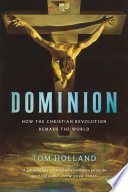
Dominion
Tom Holland's Dominion is a comprehensive historical exploration tracing how Christianity shaped Western secular values, individual dignity, and notions of equality.
Recommended“Well, I would direct them to Tom Holland’s great book from a few years ago, “Dominion.””
Where to get it
-
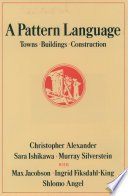
A Pattern Language
A Pattern Language by Christopher Alexander, Sara Ishikawa, and Murray Silverstein is a foundational architectural and urban design text that maps universal patterns across human spaces to help people build and feel connected to their environments.
Discussed“He wrote a book called A pattern language, talking about how his study of what architecture thrives, what aspects of it make people feel good and feel connected to the whole.”
Where to get it
-

Brave New World
Brave New World by Aldous Huxley is a dystopian novel that imagines a futuristic society engineered through biological conditioning, technological control, and the elimination of traditional human emotions.
Discussed“Chapter 17 of Huxley’s Brave New World.”
Where to get it
-
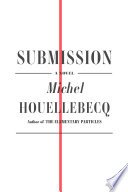
Submission
Discussed“Now, this is the message that Michel houellebecq famously articulated in his book submission.”
Where to get it
-
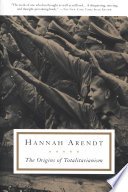
The Origins of Totalitarianism
The Origins of Totalitarianism by Hannah Arendt is a foundational political science study exploring the historical convergence of anti-Semitism, imperialism, and mass society that gave rise to twentieth-century totalitarian regimes.
Discussed“Well, what I mean by that, and this also goes back to Hannah Arendt in her famous 1951 book, the origins of totalitarianism.”
Where to get it
Books Rod Dreher wrote
Appearances
| Episode | Podcast | Date | Books |
|---|---|---|---|
| Rod Dreher on Preparing for 'Weimar America' | Interesting Times with Ross Douthat | Interesting Times | 2026-07-09 | 5 |
Other mentions (1: passing, ad reads, own books)
“And I think that Christian re-enchantment, which is the point of my last book, Living in wonder, I think that’s something we have to do, because we’re not going to re-christianize the world by moralism, or certainly not by politics.”