
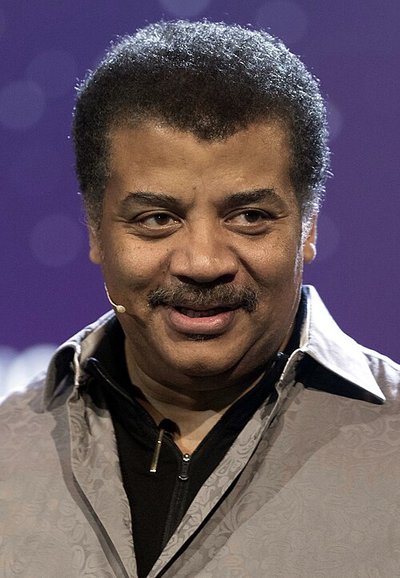
Person
Neil deGrasse Tyson books: every book Neil deGrasse Tyson wrote and recommended
Across 6 podcasts. Every show Neil deGrasse Tyson appears on, in one place — not just one.
Books by Neil deGrasse Tyson
-
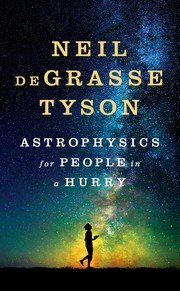
Astrophysics for People in a Hurry
-
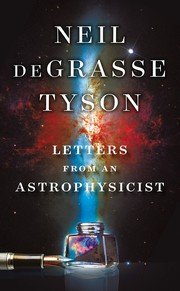
Letters from an Astrophysicist
-
Death By Black Hole
-
Origins
-
Starry Messenger
-
The Pluto Files
-
Space Chronicles
-
Accessory to War
-
Merlin's Tour of the Universe
-
Startalk
-
Cosmic Queries
-
Universe Down to Earth
-
The Sky Is Not The Limit
-
A Brief Welcome to the Universe
-
Lost in Space
-
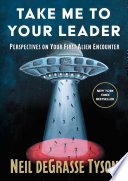
Take Me to Your Leader
-
To Infinity and Beyond
-
Astrophysics for Young People in a Hurry
-
Welcome to the Universe
-
Just Visiting This Planet
-
Delusions of Space Enthusiasts
Neil deGrasse Tyson’s most recommended books
- Mr. Tompkins in Wonderland by George Gamow
- The elegant universe by Brian Greene
- Contact by Carl Sagan
- Black hole blues by Janna Levin
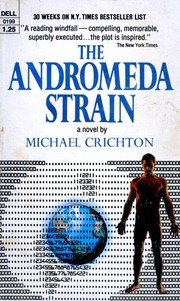
- The Andromeda Strain by Michael Crichton
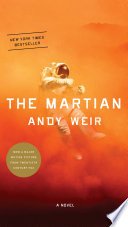
- The Martian by Andy Weir
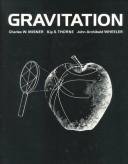
- Gravitation by Charles W. Misner
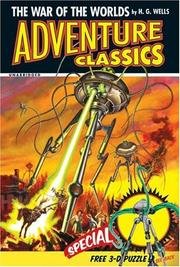
- The War of the Worlds by H. G. Wells
- Time Travel in Einstein's Universe by J. Richard Gott
- Pale Blue Dot by Carl Sagan
Neil deGrasse Tyson is an American astrophysicist, author, and science communicator. Tyson studied at Harvard University, the University of Texas at Austin, and Columbia University. From 1991 to 1994, he was a postdoctoral research associate at Princeton University. In 1994, he joined the Hayden Planetarium as a staff scientist and the Princeton faculty as a visiting research scientist and lecturer. In 1996, he became director of the planetarium and oversaw its $210 million reconstruction project, which was completed in 2000. Since 1996, he has been the director of the Hayden Planetarium at the Rose Center for Earth and Space in New York City. The center is part of the American Museum of Natural History, where Tyson founded the Department of Astrophysics in 1997 and has been a research associate in the department since 2003. On StarTalk Radio, Tyson recommended several science and humor titles. He mentioned a book by a colleague, Robert Ehrlich, to explain the consequences of Earth losing its moon, and praised co-host Negin Farsad's How to Make White People Laugh. He also discussed Max Tegmark's Our Mathematical Universe to explore the mathematical nature of reality, Janna Levin's Black Hole Blues and Other Songs from Outer Space while talking about black hole experts, George Gamow's Mr. Tompkins in Wonderland to inspire a science fiction writer, and J. Richard Gott's Time Travel in Einstein's Universe when addressing theoretical time travel.
Books recommended by Neil deGrasse Tyson
-
Mr. Tompkins in Wonderland
Mr.
Discussed“So maybe you were familiar with George Gammo's Mr. Tommpkins and Wonderland. I don't know if you I'm a little older than you, so I don't know if this was around in your day, but George Gammo Mr. Wonderland was a place where the laws of physics were different simply by the physical constants being different.”
Where to get it
-
The elegant universe
The Elegant Universe by Brian Greene is a bestselling exploration of string theory, quantum mechanics, and the quest for the ultimate physical theory of reality.
Discussed“In class the other day, I was reading The Elegant Universe. That's Brian Green, right? Brian Green. Yes. Bestselling book.”
Where to get it
-
Contact
Contact by Carl Sagan is a classic science fiction novel that chronicles humanity's first detected radio signal from an extraterrestrial civilization and the subsequent efforts to build a machine to meet them.
Discussed“And now the prime number thing, Carl Sagan had prime numbers in the original contact novel. Where they were embedded in the signals.”
Where to get it
-
Black hole blues
Black hole blues by Janna Levin is a compelling chronicle detailing the decades-long development of the massive scientific machines designed to detect gravitational waves.
Recommended“She's totally into this with the black hole blues. The black hole blues. She got a whole book. That's her book.”
Where to get it
-
The Andromeda Strain
The Andromeda Strain by Michael Crichton is a sci-fi thriller about a deadly extraterrestrial microorganism brought back to Earth by a space probe and the frantic efforts of scientists to contain it.
Discussed“I read the book rare for me to read a book before I see the movie but I did that for The Andromeda Strain of Michael Crichton before he was famous with Jurassic Park and and whatever his doctor show was on TV uh The Andromeda Strain was a sample return from space”
Where to get it
-
The Martian
The Martian by Andy Weir is a science fiction novel that follows an astronaut stranded on Mars who must use his ingenuity, scientific knowledge, and problem-solving skills to survive.
Discussed“From The Martian, a best-selling book. Which became a best A very popular movie. A hit. A hit movie. A hit movie. A hit movie with all kinds of marquee actors in it.”
Where to get it
-
Gravitation
Gravitation by Charles W.
Discussed“but my first exposure to you was you were one of the three authors of this book called gravitation and we used to joke of course it was the only book where you learned about it just by carrying it around”
Where to get it
-
The War of the Worlds
The War of the Worlds by H.
Discussed“That was a 19th century book written by the great HG. I'm not blaming you. No, no, I'm saying”
Where to get it
-
Time Travel in Einstein's Universe
Time Travel in Einstein's Universe by J.
Recommended“In fact, he wrote a book, Time Travel in Einstein's Universe.”
Where to get it
-
Pale Blue Dot
Pale Blue Dot: A Vision of the Human Future in Space by Carl Sagan offers a profound philosophical reflection on humanity's place in the universe, inspired by the famous photograph of Earth taken from the edge of the solar system.
Discussed“So in that vein there's a there's a paragraph I want to read from Carl Sean's Pale Blue Dot.”
Where to get it
-
Biggest Ideas in the Universe
Biggest Ideas in the Universe by Sean M.
Discussed“holding a book a book that I uh you know that I um picked up off of the coffee table the biggest ideas in the universe”
Where to get it
-
Catching stardust
Catching Stardust: Comets, Asteroids, and the Birth of the Solar System by Natalie Starkey examines the study of particles and dust brought back to Earth from space, detailing the origins and composition of the solar system.
Discussed“and uh a book a few years before that back in 2018 catching Stardust yeah comets asteroids and the births of the solar system that's why we have you on now”
Where to get it
-
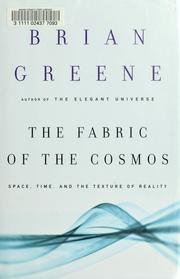
The fabric of the cosmos
The Fabric of the Cosmos by Brian Greene and Javier García Sanz is a popular-level exploration of space, time, and the fundamental nature of reality.
Discussed“we had my friend and colleague Brian Green theoretical physicist professor of physics and math at Columbia University author of The Very best-selling the elegant Universe followed by the fabric of the cosmos followed by the hidden reality my boys into all kinds of freaky Cosmic stuff and we got him back for more by popular demand”
Where to get it
-
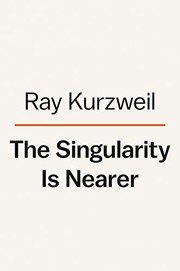
Singularity Is Nearer
Singularity Is Nearer by Ray Kurzweil is a forward-looking technological treatise that explores the imminent approach of the technological singularity, arguing that exponential advancements in artificial intelligence, biotechnology, and computing will radically transform human existence.
Discussed“Um what's our boy's name? Um the Nobel Prize winner. No, no, no. Ray Ray Crosswell. Yeah. Twice. Yeah, we have Ray Crosswell on here cuz he has his second book, The Singularity is Nearer.”
Where to get it
-
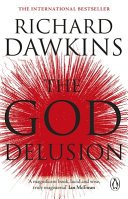
The God Delusion
The God Delusion by Richard Dawkins is a prominent polemical work that argues against the existence of a creator deity and critiques the societal impacts of religion.
Discussed“Richard Dawkins is among them. Uh he wrote a book called The God Delusion. That's fighting words if there ever was one.”
Where to get it
-
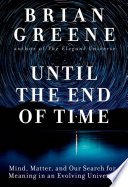
Until the End of Time
Until the End of Time by Brian Greene is a sweeping exploration of mind, matter, and humanity's search for meaning in an evolving universe through the lens of theoretical physics.
Discussed“so you're author of several books until the end of time was that your more recent one that's my most recent and that came out how long ago 20 right at the pandemic what a moment to have a book called until the end of time”
Where to get it
-
Black Hole Blues and Other Songs from Outer Space
Black Hole Blues and Other Songs from Outer Space by Janna Levin is a captivating non-fiction chronicle detailing the scientific quest to detect gravitational waves and capture the elusive signals of black holes colliding in the distant universe.
Recommended“She's totally into this with the black hole blues. The black hole blues. She got a whole book. That's her book.”
Where to get it
-
How to make white people laugh
How to Make White People Laugh by Negin Farsad is a comedic memoir and social critique exploring identity, cultural stereotypes, and the power of humor to bridge divides.
Recommended“And your book is still one of my favorites. It's How to Make White People Laugh. I just laughed just thinking of that title. Really good.”
Where to get it
-
Mr. Tompkins in paperback
Mr.
Recommended“Now that being said, there's a book series called Mr. Tompkins in Wonderland written by a physicist, George Gamow, a mid-20th-century physicist; brilliant!”
Where to get it
-
The Handy Quantum Physics Answer Book
The Handy Quantum Physics Answer Book by Charles Liu is an accessible reference guide designed to answer common questions about the baffling world of quantum mechanics and modern physics.
Discussed“Let me remind People, oh my gosh, the handy quantum physics answer book. Now that's a book, not that thing you got. Oh, no. Come on. Well, my book, you're just talking smack about my little book. Yeah, yeah, yeah, that's true, okay. But Charles Liu, this is not your first rodeo with the handy answer franchise, right?”
Where to get it
The other 178 books Neil deGrasse Tyson recommended or discussed, ranked
- Chasing new horizons by Alan Stern
- Do Androids Dream of Electric Sheep? by Philip K. Dick
- Julius Caesar by William Shakespeare
- Slaughterhouse-Five by Kurt Vonnegut
- Fire and Ice by Natalie Starkey
- Project Hail Mary by Andy Weir
- The Selfish Gene by Richard Dawkins
- Black Hole Survival Guide by Janna Levin
- The large scale structure of space-time by Stephen Hawking, G. F. R. Ellis, George F. R. Ellis
- Venus revealed by David Harry Grinspoon
- Our Mathematical Universe by Max Tegmark
- The Future of Us by Irwin Redlener
- The Physics of Energy by Robert L. Jaffe, Washington Taylor
- A Brief History of Time by Stephen Hawking
- Atlas of peculiar galaxies by Halton Christian Arp
- Consciousness explained by Daniel C. Dennett
- Cosmotheoros by Christiaan Huygens
- Flatland by Edwin Abbott Abbott
- Gödel, Escher, Bach by Douglas R. Hofstadter
- Philosophiae naturalis principia mathematica by Sir Isaac Newton
- The Better Angels of Our Nature by Steven Pinker
- The Blind Watchmaker by Richard Dawkins
- The Great Gatsby by F. Scott Fitzgerald
- The Interpretation of Dreams by Sigmund Freud
- The Science of Interstellar by Kip Thorne
- The Singularity Is Near by Ray Kurzweil
- Welcome to the Universe by Neil deGrasse Tyson, Michael A. Strauss, J. Richard Gott
- American Prometheus by Kai Bird
- Bold Return to Giving a Damn by Will Harris
- Alien Worlds by David A. Aguilar
- Determined by Robert M. Sapolsky
- Sleights of mind by Stephen L. Macknik
- Conspiracy by Michael Shermer
- Entangled Life by Merlin Sheldrake
- A Survival Guide to the Misinformation Age by David Helfand
- Books do Furnish a Life by Richard Dawkins
- How the Universe Got Its Spots by Janna Levin
- Quantum Supremacy by Michio Kaku
- A Christmas Carol by Charles Dickens
- Archaeology from Space: How the Future Shapes Our Past by Sarah Parcak
- Back to Earth by Nicole Stott
- Champions of Illusion by Susana Martinez-Conde
- Existential Physics by Sabine Hossenfelder
- Fear of a Black Universe by Stephon Alexander
- Grunt by Mary Roach
- Hot Mess by Matt Winning
- I Am Legend by Richard Matheson
- Kids Travel Journal by Bluebird Books
- Looking Up! by Joe Rao
- The Anxious Generation by Jonathan Haidt
- The Bomber Mafia by Malcolm Gladwell
- The Conscience of a Conservative by Barry M. Goldwater
- The glass universe by Dava Sobel
- The jazz of physics by Stephon Alexander
- The Light Ages by Seb Falk
- The Smallest Lights in the Universe by Sara Seager
- Tough Love by Susan Rice
- A hard death by Jonathan Hayes
- A Universe from Nothing by Lawrence M. Krauss
- Astrophysics for Young People in a Hurry by Neil deGrasse Tyson
- Endurance by Scott Kelly
- Homo Deus by Yuval Noah Harari
- Look Up by Alfredia R. Sherin-Devita
- One, Two, Three-- Infinity by George Gamow
- Outlive by Peter Attia, Bill Gifford
- Packing for Mars by Mary Roach
- Precious Blood by Jonathan Hayes
- Sapiens by Yuval Noah Harari
- The First Three Minutes by Steven Weinberg
- The handy answer book for kids (and parents) by Judy Galens
- The Secret Life of Dust by Hannah Holmes
- Timelines of History by Unknown
- What If by Robert Ehrlich
- 1984 by George Orwell
- 2001, a Space Odyssey by Arthur C. Clarke
- 2010: Odyssey Two by Arthur C. Clarke
- A Federation Trivia Book by Unknown
- After Man by Dougal Dixon
- Alien Oceans by Kevin Hand
- Angels & Demons by Dan Brown
- Apollo's Arrow by Nicholas A. Christakis
- Autopsy by Patricia Cornwell
- Between a Rock and a Hard Place by Aron Ralston
- Building a Bridge by James Martin
- Climbing Mount Improbable by Richard Dawkins
- Connections by Karl Deisseroth
- Cosmic Discovery by Martin Harwit
- Dark Emu by Bruce Pascoe
- Darwin's dangerous idea by Daniel C. Dennett
- Dopamine Nation by Anna Lembke, MD
- Drug Dealer, MD by Anna Lembke
- Einstein by Walter Isaacson
- Elements by Euclid
- Evolution’s Rainbow by Joan Roughgarden
- Extraterrestrial by Avi Loeb
- Finnegans Wake by James Joyce
- Fire and ice by Roberta J. M. Olson
- Flights of Fancy by Richard Dawkins
- Flowers for Algernon by David Rogers, Daniel Keyes
- Foundation by Isaac Asimov
- From the Earth to the Moon Annotated by Jules Verne
- Frozen Star by George Greenstein
- Galileo's Daughter by Dava Sobel
- Game Changer by Rayvon Fouché
- Geeks Bearing Gifts by Jeff Jarvis
- Gravitation and cosmology: principles and applications of the general theory of relativity by Steven Weinberg
- Hamlet by William Shakespeare
- Heart, Breath, Mind by Leah Lagos
- Horologium oscillatorium by Christiaan Huygens
- How to Avoid a Climate Disaster by Bill Gates
- I Heard There Was a Secret Chord by Daniel J. Levitin
- I, Robot by Isaac Asimov
- Ideas And Opinions by Albert Einstein
- Jim Fixx's second book of running by James F. Fixx
- Jurassic Park by Michael Crichton
- Just Visiting This Planet by Neil deGrasse Tyson
- Letter from the Birmingham Jail by Martin Luther King (Jr.)
- Letters to a Young Poet by Rainer Maria Rilke
- Life 3.0 by Max Tegmark
- Life on Other Planets by Aomawa Shields
- Light by Megan Watzke
- Logic and Knowledge by Bertrand Russell
- Longitude by Dava Sobel
- Mars by Ben Bova
- Mars by Percival Lowell
- Mars and Its Canals by Percival Lowell
- Mathematics by McGraw-Hill
- Mysticism and Logic by Bertrand Russell
- Newton's Philosophy of Nature by Isaac Newton
- Nicolaus Copernicus: De Revolutionibus, preface and book 1, etc by Nicolaus Copernicus
- Night thoughts of a classical physicist by Russell McCormmach
- Opticks by Isaac Newton
- Philosophical essays by Bertrand Russell
- Physicians' Desk Reference by Thomson PDR
- Pinocchio by Carlo Collodi
- Quanta and Fields by Sean Carroll
- Racket Squad in Action Comics #14 by Charlton Comics
- Revenge of the Tipping Point by Malcolm Gladwell
- Sidereus nuncius by Galileo Galilei
- Smarter Than You Think by Clive Thompson
- Space Chronicles: Facing the Ultimate Frontier by Neil deGrasse Tyson
- Steal this Book by Abbie Hoffman
- Stonehenge Decoded by Gerald Hawkins
- SuperFreakonomics LP by Steven D. Levitt, Stephen J. Dubner
- Superintelligence by Nick Bostrom
- Superman - Action Comics by Grant Morrison
- The 4-Hour Body by Timothy Ferriss
- The 4-Hour Workweek by Timothy Ferriss
- The Ancestor's Tale by Richard Dawkins
- The Bell Curve by Richard J. Herrnstein, Charles Murray
- The Blank Slate by Steven Pinker
- The Code Breaker by Walter Isaacson, Kathe Mazur
- The Cosmic Cocktail by Katherine Freese
- The culture code by Daniel Coyle
- The Five Ages of the Universe by Fred C. Adams, Greg Laughlin
- The Genetic Book of the Dead by Richard Dawkins
- The God Particle by Ted Jaeckel
- The Greatest Show on Earth by Richard Dawkins
- The Hidden Reality by Brian Greene
- The Legend of Sleepy Hollow by Washington Irving
- The Life of the Cosmos by Lee Smolin
- The Physics of Nascar by Diandra Leslie-Pelecky
- The Principia by Isaac Newton, I. Bernard Cohen
- The Relativity of Wrong by Isaac Asimov
- The Rise of Theodore Roosevelt by Edmund Morris
- The Science of Good and Evil by Michael Shermer
- The Sports Gene by David Epstein
- The Three-Body Problem by Cixin Liu
- The Time Machine by H. G. Wells
- The Tipping Point by Malcolm Gladwell
- The Wealth of Nations by Adam Smith
- Tribe of Mentors by Timothy Ferriss
- Turning Oil Into Salt by Gal Luft
- Unstoppable Us, Volume 1: How Humans Took Over the World by Yuval Noah Harari
- Unweaving the Rainbow by Richard Dawkins
- Watchmen by Alan Moore, Dave Gibbons
- Why We Die by Venki Ramakrishnan
- Why We Sleep by Matthew Walker
Questions about Neil deGrasse Tyson’s book recommendations
What book does Neil deGrasse Tyson recommend most?
Mr. Tompkins in Wonderland by George Gamow. Neil deGrasse Tyson recommended it in 9 episodes, with 3 explicit recommendations.
How many books has Neil deGrasse Tyson recommended on podcasts?
We have found 198 books Neil deGrasse Tyson recommended or discussed, across 185 episodes of 6 podcasts. Ad reads and passing mentions are not counted.
What books are on Neil deGrasse Tyson's reading list?
The books Neil deGrasse Tyson has recommended most on podcasts are Mr. Tompkins in Wonderland by George Gamow, The elegant universe by Brian Greene, Contact by Carl Sagan, Black hole blues by Janna Levin and The Andromeda Strain by Michael Crichton. The full book list below has all 198.
What books has Neil deGrasse Tyson written?
Merlin's Tour of the Universe (1989), Universe Down to Earth (1994), The Sky Is Not The Limit (2000), Origins (2004), Delusions of Space Enthusiasts (2006), Death By Black Hole (2007), The Pluto Files (2009), Just Visiting This Planet (2011), Space Chronicles (2012) and Startalk (2016), among 21 in all.
What did Neil deGrasse Tyson recommend on StarTalk Radio?
Mr. Tompkins in Wonderland, The elegant universe and Contact, among 190 books in all.
What is the latest book Neil deGrasse Tyson recommended?
Do Androids Dream of Electric Sheep?, discussed on StarTalk Radio (2026-10-02).
People who recommend the same books
Appearances
Other mentions (443: passing, ad reads, own books), the 30 most recent
“If you like that fact, you can find 4,999 more in Lost in Space. 5,000 facts to help navigate the universe. Lost in Space is now available wherever you get your books.”
“My second book ever was titled Universe Down to Earth.”
“I've written about that in the risk and reward chapter of the book Starry Messenger, Cosmic Perspectives.”
“If you like that fact, you can find 4,999 more in Lost in Space. 5,000 facts to help navigate the universe. Lost in Space is now available wherever you get your books.”
“okay here it goes as quoted in my alien book take me to your leader be patient toward all that is unsolved in your heart”
“Here's yet another fact from Lost in Space, the latest collaboration between StarTalk and National Geographic. In 1995, we discover the first authentic exoplanet, a planet orbiting another living star. So, anyone born from 1995 onward, I now declare each one of you to be Generation X, O Planet. If you like that fact, you can find 4,999 more in”
“And today is a special edition of StarTalk because, once again, StarTalk has collaborated with National Geographic Books to release our latest installment titled, Lost in Space, 5,000 Facts to Navigate the Universe.”
“If you like that fact, you can find 4,999 more in Lost in Space. 5,000 facts to help navigate the universe. Latest collaboration between StarTalk and National Geographic Books. Lost in Space is now available for pre-order wherever books are sold.”
“This has been another episode of StarTalk, a special edition showcasing Lost in Space. I'm here with my co-author, Lindsay Walker.”
“I wrote a book about aliens too a few months ago.”
“Oh, by the way, in Lost in Space, there are chapters on every one of these subjects.”
“and a book a book a book with the audacious title the boat-dacious title the out of this world title. Why do we exist? The nine realms of universe that make you possible”
“Here's yet another fact from Lost in Space, the latest collaboration between StarTalk and National Geographic. Saturn is the only planet in the solar system whose average density is less than that of water, which means if you found a bathtub big enough, Saturn would float. If you like that fact, you can find 4,999 more in Lost in Space.”
“So, you realize in the sci-fi novel Dune, they've got it's another planet, of course, and everything's different and they're flying machines whose wings duplicate what a dragonfly wings do.”
“So, at the risk of sounding self-serving, Mhm. I co-authored a textbook with two colleagues at Princeton University when we co-taught a class. ... And so the book is called welcome to the universe.”
“If you don't want to jump into a textbook, there's a tiny version of it that is the the cliffnotes version of it is called a brief welcome to the universe. So, what you might do is start with that.”
“And and don't read my bestselling book, Astrophysics for People in Earth. physics for people in a hurry because clearly you're not in a hurry.”
“Uh, and your latest book. Oh my gosh. Cuz this this could have almost written itself in the time and the place that this needs to appear. It's just called Truth.”
“In fact, I addressed some of that in I I wrote an alien book recently, Take Me to Your Leader. There's a lot in there about changing your perspective on what you might expect life forms to be like out there.”
“So that one of those peaks in May in part was because there were files released that week by the Pentagon and dare I suggest my book was released in May on May 12th.”
“So yeah, in my book there's a dozen of them.”
“And all I would say is I make mention of it in in the book. People on DMT have these shared experiences.”
“Vladimir Lyra who was a postto Ford is named for a character on Star Trek.”
“I had a cameo in Spongebob and Spongebob. I was Neil Debbass Tyson.”
“And if you have another book, let me know. The case against reality. No. Shots fired.”
“In my latest book, Take Me to Your Leader, I actually explore what's possible in this universe, given the universal laws of physics. If the aliens are out there, the laws of physics will dictate how they find us. I also narrated the audio book, so I'm duly informed that the audio book and the print version are available now”
“In my latest book, Take Me to Your Leader, I actually explore what's possible in this universe given the universal laws of physics. If the aliens are out there, the laws of physics will dictate how they find us. I also narrated the audio book, so I'm duly informed that the audio book and the print version are available now”
“If you think about like a typical ring, like 2001 Space Odyssey. Typical. Typical. 2001 in the movie.”
“And he wrote a book called Mars. Then he wrote a book Mars as an abode of life. Then he wrote another book called Mars and its canals.”
“Then he wrote a book Mars as an abode of life.”