
Book · 1998 · Science
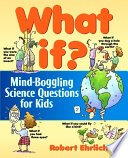
What If
Mind-Boggling Science Questions for Kids
- mentions
- 1
- person
- 1
- podcast
- 1
- episode
- 1
- recommendation
- 1
And uh so in fact, there's a whole book written by a colleague of mine called It What if there were no moon? And then the the whole book just goes talks about the consequences of that.
 Neil deGrasse Tyson · StarTalk Radio · Jul 2026 Listen at 22:50
Why people recommend it
What If is an imaginative exploration of hypothetical scenarios and the scientific consequences that would follow drastic alterations to our natural world. On an episode of StarTalk Radio titled Would You Really Want to Know if You’re in a Simulation? | Cosmic Queries #113 aired in July 2026, host Neil deGrasse Tyson referenced this publication while discussing cosmic phenomena with his audience. Tyson brought up the book, which was written by a professional colleague, to illustrate how scientists analyze extreme theoretical questions. He specifically highlighted the premise of the book, which examines what would happen to Earth if our planet lost its moon, detailing how the text walks the reader through the fascinating physical consequences of such an event. By sharing this example, Tyson demonstrated how scientific inquiry uses speculative scenarios to deepen public understanding of complex astronomical systems and planetary mechanics in an engaging, accessible manner that bridges rigorous scientific analysis with everyday curiosity about the universe we inhabit.
Every mention
Neil deGrasse Tyson And uh so in fact, there's a whole book written by a colleague of mine called It What if there were no moon… 1
“And uh so in fact, there's a whole book written by a colleague of mine called It What if there were no moon? And then the the whole book just goes talks about the consequences of that.”