
Person
Every book John List recommended on podcasts
Key facts
- John List has recommended or discussed 6 books on podcasts, as of January 18, 2023.
- John List has talked about books on 2 podcasts, as of January 18, 2023.
- Those books came up in 2 episodes, as of January 18, 2023.
- The 3 books John List has mentioned in the most episodes, as of January 18, 2023: Anna Karenina, Economics, an introductory analysis and Essays in positive economics.
- The latest episode with a book mention from John List aired on January 18, 2023.
Updated
Across 2 podcasts. Every show John List appears on, in one place — not just one.
John List’s most recommended books
- Anna Karenina by Leo Tolstoy
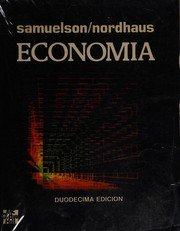
- Economics, an introductory analysis by Paul Anthony Samuelson, Nordhaus, William D., William D. Nordhaus
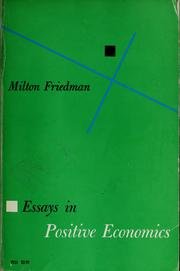
- Essays in positive economics by Milton Friedman
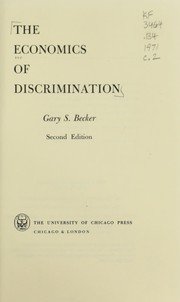
- The economics of discrimination by Gary Stanley Becker
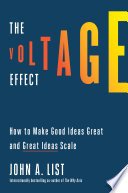
- The Voltage Effect by John A. List
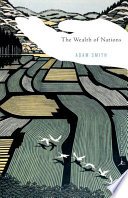
- The Wealth of Nations by Adam Smith
John List appeared on podcasts to discuss several foundational texts in economics and their connection to his own work and career. In a conversation on People I (Mostly) Admire, he referenced Paul Samuelson and William Nordhaus's Economics, an introductory analysis from 1985 to highlight a historical lack of experimentation among economists. He also discussed Gary Becker's 1985 dissertation, The Economics of Discrimination, noting its economic model regarding group animosity, and Milton Friedman's Essays in Positive Economics regarding why economists traditionally relied on naturally occurring evidence rather than running experiments. Additionally, List discussed his own book, The Voltage Effect, as representing the later stage of his career. Speaking on The Tim Ferriss Show, he connected the scaling concepts in his work to Leo Tolstoy's novel Anna Karenina, quoting its famous opening line about unhappy families to illustrate his points. Finally, he expressed admiration for Adam Smith's The Wealth of Nations and its historical context.
Books recommended by John List
-
Anna Karenina
Anna Karenina by Leo Tolstoy is a monumental masterpiece of nineteenth-century literature that examines complex themes of morality, societal expectation, and tragic romance.
Discussed“scaling is not a silver bullet problem rather it is an anna karenina problem”
Where to get it
-
Economics, an introductory analysis
Economics, an introductory analysis by Paul Anthony Samuelson and William D.
Discussed“The first book I used was in 1985. It was by Samuelson and Nordhaus.”
Where to get it
-
Essays in positive economics
Essays in Positive Economics by Milton Friedman is a foundational collection of scholarly writings that establishes the methodological framework for modern economic theory and policy analysis.
Discussed“when you look at Friedman's work on say 53 positive economics book he says economists must rely on evidence cast by the experiments that happen to occur”
Where to get it
-
The economics of discrimination
The Economics of Discrimination by Gary Stanley Becker is a foundational economic text that analyzes the market forces and individual motivations underlying racial and social disparities.
Discussed“On the one hand is what Gary Becker wrote about in his dissertation in 1957, which is people just get satisfaction out of hurting another person in a different group—that's one kind of theory.”
Where to get it
-
The Voltage Effect
The Voltage Effect by John A.
Discussed“we wrote the y-axis in part to Showcase my early field experiments and why the world should use field experiments and the voltage effect is really what I would call the back nine of my career”
Where to get it
-
The Wealth of Nations
The Wealth of Nations by Adam Smith is a foundational 1776 text by the Scottish thinker often regarded as the father of modern economics, exploring free markets, capitalism, and the mechanics of national wealth.
Discussed“and for me the wealth of nations is so beautiful because it's set off”
Where to get it
Books John List wrote
Appearances
Other mentions (10: passing, ad reads, own books)
“What my book is trying to claim about is that all of our failures to scale—and the world is replete with failure after failure after failure—I want that to be viewed as a failure of common sense.”
“Here's another passage from the book: a pharmaceutical company develops a promising new sleep medication in its lab, but the drug doesn't live up to its promise in randomized trials.”
“So, so in the book, I talk about five reasons why there's a voltage effect and I begin with the simple one of false positives.”
“So, so in the book, I talk about five reasons why there's a voltage effect and I begin with the simple one of false positives.”
“And what I say in the book is from the very beginning, if we're about making change in the world we should understand what are the constraints or regulations or changes that we will be facing when we scale an idea and bring that back to the Petri dish and add that to our AB test.”
“And what I say in the book is from the very beginning, if we're about making change in the world we should understand what are the constraints or regulations or changes that we will be facing when we scale an idea and bring that back to the Petri dish and add that to our AB test.”
“You can relive some of it through my book. I talk about some of it through my book, right?”
“You can relive some of it through my book. I talk about some of it through my book, right?”
“And and we learn as as you're going to find out in the book in chapter four, we learned a fair amount about scaling through those exercises as well.”
“And and we learn as as you're going to find out in the book in chapter four, we learned a fair amount about scaling through those exercises as well.”