
Episode · The Ezra Klein Show · 2026-04-28
Books mentioned on What We Got Right — and Wrong — in ‘Abundance’ | The Ezra Klein Show
Mark Dunkelman recommended Making a New Deal by Lizabeth Cohen, Stuck by Yoni Appelbaum, and Cadillac Desert by Marc Reisner, and discussed The Power Elite by C. Wright Mills, The Power Broker by Robert A. Caro, and Abundance by Ezra Klein and others. Derek Thompson recommended Mere Christianity by C. S. Lewis, The Emperor's Children by Claire Messud, The Secret History by Donna Tartt, The Interestings by Meg Wolitzer, and Blood Meridian by Cormac McCarthy, and discussed Bowling Alone by Robert D. Putnam. Ezra Klein recommended The Permanent Problem by Brink Lindsey.
Books mentioned, in the order they came up
-
The Power Elite
The Power Elite by C.
Discussed“and there are books like Cight Mills's power elite and then the the SDS puts out the portion statement and the core notion that they are beginning to seed inside the progressive movement is actually...”
Where to get it
-
The Power Broker
The Power Broker by Robert A.
Discussed“Silent Spring, ultimately the power broker, which is my book is sort of in conversation with the power broker.”
Where to get it
-
Abundance
Abundance by Ezra Klein and Derek Thompson is a widely debated political manifesto that challenges progressive orthodoxy by arguing that liberals must embrace economic growth, regulatory reform, and actual physical building to achieve their goals.
Discussed“I think what abundance has done for the first time really since then is to open up a conversation about whether we need to rethink that core notion of what progressivism is about.”
Where to get it
-
Bowling Alone
Bowling Alone by Robert D.
Discussed“For that latter story, I talked to Bob Putnham, Robert Putnham, the author of Bowling Alone.”
Where to get it
-
The Permanent Problem
The Permanent Problem by Brink Lindsey is a nonfiction book that examines modern economic and social challenges related to abundance, labor, and leisure time.
Recommended“I mean, Brink Lindsay in his sort of abundance adjacent new book, The Permanent Problem, is is circling some of these ideas.”
Where to get it
-
Making a New Deal
Making a New Deal by Lizabeth Cohen is a historical examination of how working-class Chicagoans shaped American politics, labor unions, and consumer culture during the Great Depression and the New Deal era.
Recommended“So uh the first book I always recommend to anyone is Liz Cohen's Making a New Deal, which I think is the greatest pure book of history that I've ever read.”
Where to get it
-
Stuck
Stuck by Yoni Appelbaum is an insightful exploration of American institutional stagnation and the economic barriers that limit upward mobility.
Recommended“The second book which I hope people will pick up is uh yoni apple bomb stuck which gets to a lot of these issues explicitly in the realm of housing talks about how a lack of geographic mobility for many of the reasons that we have here has really been the hindrance to socioeconomic mobility.”
Where to get it
-
Cadillac Desert
Cadillac Desert by Marc Reisner is a classic environmental history detailing the massive dam-building projects and water management policies that shaped the arid American West under figures like Floyd Dominy.
Recommended“But there's a book by uh Mark Reeseman called Cadillac Desert which essentially traces the same arc uh with a guy named Floyd Dominy running the Bureau of Reclamation and building dams all across the West.”
Where to get it
-
Mere Christianity
Mere Christianity by C.S.
Recommended“My three books number one weird choice maybe for reformed Jew but Mere Christianity by CS Lewis in the first 30 pages in particular is probably the most interesting analysis of the concept of morality that I've ever read.”
Where to get it
-
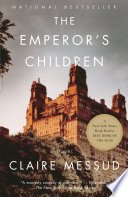
The Emperor's Children
The Emperor's Children by Claire Messud is a sharp social novel that chronicles the lives of three ambitious young cousins navigating career, romance, and intellectual pretension in pre-9/11 New York City.
Recommended“Um, The Emperor's Children by Cla Massud, The Interestings by Me Witzer, and The Secret History by Donna Tart.”
Where to get it
-
The Secret History
The Secret History by Donna Tartt is a gripping psychological thriller following a tightly knit circle of eccentric classics students at an elite New England college whose intellectual arrogance leads to moral decay and murder.
Recommended“Um, The Emperor's Children by Cla Massud, The Interestings by Me Witzer, and The Secret History by Donna Tart.”
Where to get it
-
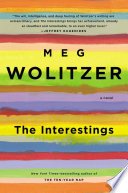
The Interestings
The Interestings by Meg Wolitzer is a sweeping contemporary novel that follows the lives of a tight-knit group of friends who met at a performing arts camp as teenagers, tracing their relationships, ambitions, and disappointments over several decades.
Recommended“Um, The Emperor's Children by Cla Massud, The Interestings by Me Witzer, and The Secret History by Donna Tart.”
Where to get it
-
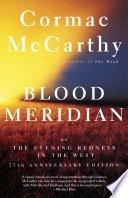
Blood Meridian
Blood Meridian by Cormac McCarthy is a harrowing and visceral historical novel that depicts the extreme violence and bleak reality of the American West through the harrowing journey of a runaway teenager known as the kid.
Recommended“The audio book of Blood Meridian by Cormick McCarthy is like the trippiest possible. It's the It's It's an extraordinary book that that's basically like um a sort of, if you haven't read it, like a sort of 20th century Dante explaining an absolutely hellacious experience”
Where to get it

Other mentions in this episode (13) — ad reads, self-promotion and passing references, never counted
“It has been a little over a year since Derek Thompson and I published Abundance.”
“So, our books came out a little more than a year ago.”
“if you have the misfortune of going to say Fred the St. Louis data website and looking up housing starts in California between say 2021 and 2026, you do not see the publication of the book Abundance by Ezra Klein and Derek Thompson in those statistics.”
“you see that in uh secondwave feminism you see it in the uh the objection to Uh you you see that in the reaction to urban renewal, to the highway program, Silent Spring, ultimately the power broker, which is my book is sort of in conversation with the power broker.”
“A lot of the examples in the book are from California, where I'm from, where I was when we wrote much of the book.”
“I definitely don't want to give the same answer to every question, but I hear the governor of California describing a legislative victory in terms that literally quote our book, a liberalism that builds abundance.”
“Chapter one of our book, The Housing Chapter, does, I think, a very good job explaining the 50-year story of how a set of zoning and permitting and environmental legislation and rules that accumulated around the 1960s and 1970s has slowed housing construction”
“So so something that I wrote about in our housing chapter was the anger in the 60s and the 70s that America was just getting uglier.”
“a time machine materializes right next to us over here takes us back to December 2023 allowing us just enough time to add a chapter 7 to the book called abundance and corporate power.”
“Yeah, Mark, I take your point that a lot of the things we focus on in the book or frankly that you focus on in your book corporate concentration isn't the reason the transmission lines aren't getting built...”
“I think one of the vibes projects in abundance is to try to create a political vibe that is simultaneously progressive in the sense that it cares about social goals and equality and distribution and a bunch of things that you know progressives typically care about and prochemnology.”
“So, I really like the two, three sentences that we had about artificial intelligence in the sci-fi vignette that kicked off our book because while we don't have a fully fleshed out AI policy in that book...”
“I'm glad you made the distinction because I if someone said your book has no vision, I would say, well, it does begin with a, you know, four-page vignette of what the future in 2050 would look like if we got abundance right.”