
Episode · Lex Fridman Podcast · 2021-08-27
Books mentioned on #214 – Jed Buchwald: Isaac Newton and the Philosophy of Science
Jed Buchwald is a historian and philosopher of science at Caltech. Please support this podcast by checking out our sponsors: – GiveWell: https://www.
Jed Buchwald discussed The Structure of Scientific Revolutions by Thomas S. Kuhn, Micrographia by Robert Hooke, Newton: Philosophical Writings by Isaac Newton, The Principia by Isaac Newton and others, Gottfried Wilhelm Leibniz by Gottfried Wilhelm Leibniz, Philosophiae naturalis principia mathematica by Sir Isaac Newton, and Opticks by Isaac Newton.
Books mentioned, in the order they came up
-
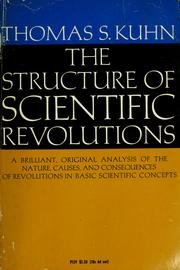
The Structure of Scientific Revolutions
The Structure of Scientific Revolutions by Thomas S.
Discussed“the thing that he's famous for the structure of scientific revolutions came out in 62”
Where to get it
-
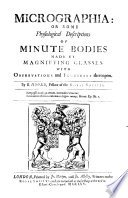
Micrographia
Discussed“and he had written a book in fact called the micrographia which by the way he used a microscope to make the first depictions of things like a fly's eye the structure of you know it had a big influence”
Where to get it
-
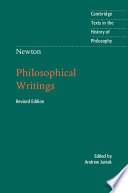
Newton: Philosophical Writings
Discussed“there's two of them one's called the philosophical questions and the other is called the waste book”
Where to get it
-
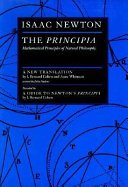
The Principia
The Principia by Isaac Newton, along with I.
Discussed“there's two of them one's called the philosophical questions and the other is called the waste book”
Where to get it
-
Gottfried Wilhelm Leibniz
Discussed“a scholar uh who's a professor at indiana now uh named domenico melli got his hands on a leibnitz manuscript called the ten tammon which was leibniz's attempt to produce an alternative to newton's mechanics”
Where to get it
-
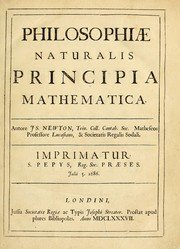
Philosophiae naturalis principia mathematica
Philosophiae Naturalis Principia Mathematica by Sir Isaac Newton is a foundational scientific text published in 1687 that establishes the laws of motion and universal gravitation, fundamentally shaping classical mechanics and modern physics.
Discussed“what mellie found out was that leibniz reverse engineered the principia and cooked it backwards so that he could get the results he wanted”
Where to get it
-
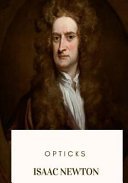
Opticks
Opticks by Isaac Newton is a foundational scientific treatise published in 1704 that details the author's groundbreaking investigations into the nature of light, refraction, reflection, and the color spectrum.
Discussed“in fact the second volume of newton's of the notes really on the great book that he published the optics which he published in 1704”
Where to get it
Other mentions in this episode (1) — ad reads, self-promotion and passing references, never counted
“and i can give you all kinds of examples of that i once wrote a book on the origins of wave theory of light and that is one of the paradigmatic examples that tom used”