Person
Every book Jed Buchwald recommended on podcasts
Jed Buchwald appeared on the Lex Fridman Podcast to discuss Isaac Newton and the philosophy of science. As a guest, Buchwald analyzed historical scientific paradigms, textual manuscripts, and the pivotal figures who shaped modern scientific thought. He discussed Thomas Kuhn's famous work, The Structure of Scientific Revolutions, to explore paradigmatic shifts in science. Delving into the seventeenth century, Buchwald highlighted Robert Hooke's Micrographia, describing how Hooke utilized early microscopy to produce influential depictions of microscopic structures like a fly's eye. He also examined Isaac Newton's legacy by referencing Newton's student notebooks and manuscripts, specifically mentioning Philosophical Questions and the Waste Book. Expanding on Newtonian physics, Buchwald discussed Gottfried Wilhelm Leibniz's manuscript Tentamen Anagogicum—referred to as the ten tammon—and explained how scholarship revealed Leibniz's attempt to reverse-engineer Newton's Philosophiae Naturalis Principia Mathematica to derive desired results. Additionally, Buchwald referenced Newton's major 1704 publication, Opticks. Through these historical texts, Buchwald provided a detailed look into the complex intellectual debates, rivalries, and methodologies that defined the scientific revolution.
Books recommended by Jed Buchwald
-
Gottfried Wilhelm Leibniz
Discussed“a scholar uh who's a professor at indiana now uh named domenico melli got his hands on a leibnitz manuscript called the ten tammon which was leibniz's attempt to produce an alternative to newton's mechanics”
Where to get it
-
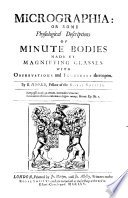
Micrographia
Discussed“and he had written a book in fact called the micrographia which by the way he used a microscope to make the first depictions of things like a fly's eye the structure of you know it had a big influence”
Where to get it
-
Newton: Philosophical Writings
Discussed“there's two of them one's called the philosophical questions and the other is called the waste book”
Where to get it
-
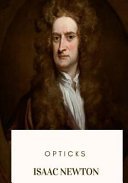
Opticks
Opticks by Isaac Newton is a foundational scientific treatise published in 1704 that details the author's groundbreaking investigations into the nature of light, refraction, reflection, and the color spectrum.
Discussed“in fact the second volume of newton's of the notes really on the great book that he published the optics which he published in 1704”
Where to get it
-
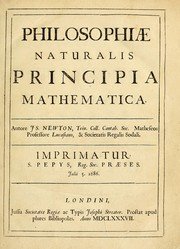
Philosophiae naturalis principia mathematica
Philosophiae Naturalis Principia Mathematica by Sir Isaac Newton is a monumental scientific masterpiece that sets out the laws of motion and universal gravitation, marking a turning point in the scientific revolution.
Discussed“what mellie found out was that leibniz reverse engineered the principia and cooked it backwards so that he could get the results he wanted”
Where to get it
-
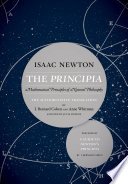
The Principia: The Authoritative Translation and Guide
The Principia: The Authoritative Translation and Guide by Isaac Newton and Julia Budenz presents the foundational mathematical and physical principles of modern science.
Discussed“there's two of them one's called the philosophical questions and the other is called the waste book”
Where to get it
-
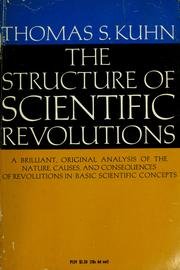
The Structure of Scientific Revolutions
The Structure of Scientific Revolutions by Thomas S.
Discussed“the thing that he's famous for the structure of scientific revolutions came out in 62”
Where to get it
Books Jed Buchwald wrote
Appearances
| Episode | Podcast | Date | Books |
|---|---|---|---|
| #214 – Jed Buchwald: Isaac Newton and the Philosophy of Science | Lex Fridman Podcast | 2021-08-27 | 8 |
Other mentions (1: passing, ad reads, own books)
“and i can give you all kinds of examples of that i once wrote a book on the origins of wave theory of light and that is one of the paradigmatic examples that tom used”