
Person
Every book Joe Folley recommended on podcasts
Joe Folley’s most recommended books
- The Myth of Sisyphus by Albert Camus
- Notes from Underground by Fyodor Dostoevsky
- Thus Spoke Zarathustra by Friedrich Nietzsche
- An Inquiry concerning human understanding; by David Hume
- Better Never to Have Been by David Benatar
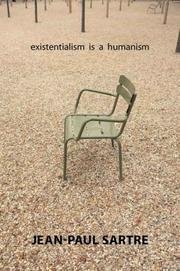
- Existentialism Is a Humanism by Jean-Paul Sartre
- Principia Mathematica by Alfred North Whitehead
- The Alchemist by Paulo Coelho
- The birth of tragedy by Friedrich Nietzsche
- The Brothers Karamazov by Fyodor Dostoevsky
Joe Folley appears on podcasts such as Modern Wisdom as a sharp intellectual interlocutor engaging in deep, sometimes pessimistic philosophical discussions alongside thinkers like Alex O'Connor. Across his podcast appearances, Folley references a wide array of historical texts and foundational philosophical treatises to examine human suffering, logic, and existential meaning. He brings up Ludwig Wittgenstein's Tractatus Logico-Philosophicus to explore how philosophical works primarily resonate with those already inclined to agree with their premises, and contrasts this by describing Jean-Paul Sartre's Existentialism Is a Humanism as an unpersuasive read. Folley also touches upon David Benatar's Better Never to Have Been when discussing anti-natalism and pessimistic views on human existence, while noting David Hume's An Inquiry Concerning Human Understanding as an example of a thinker revising earlier thoughts. Additionally, he references Bertrand Russell and Alfred North Whitehead's monumental Principia Mathematica, highlighting its impenetrable nature as a multi-volume project in mathematical logic. When discussing Albert Camus's The Myth of Sisyphus, Folley engages directly with Camus's thoughts on suicide and the definition of life's meaning, though he ultimately expresses a critical view that the work is somewhat overhyped.
Books recommended by Joe Folley
-
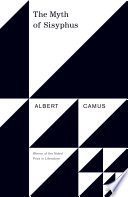
The Myth of Sisyphus
The Myth of Sisyphus by Albert Camus is a prominent philosophical essay examining the absurdist condition, human suffering, and the search for meaning in a seemingly indifferent universe.
Discussed“I think Kimu talks about a few examples at the beginning of the myth of Sephus, doesn't he?”
Where to get it
-
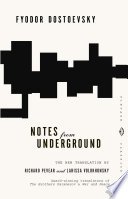
Notes from Underground
Notes from Underground by Fyodor Dostoevsky is a profound psychological novella that explores the tormented inner life, resentment, and irrational impulses of an isolated protagonist living in nineteenth-century Russia.
Discussed“And I think that there's something about say ”
Where to get it
-
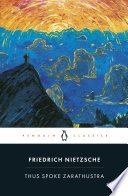
Thus Spoke Zarathustra
Thus Spoke Zarathustra is a foundational philosophical masterpiece by Friedrich Nietzsche that introduces iconic concepts such as the Ubermensch, the eternal recurrence, and the death of God.
Discussed“and then you know this ”
Where to get it
-
An Inquiry concerning human understanding;
Discussed“And he later sort of revises his thoughts into the much shorter inquiry concerning human understanding.”
Where to get it
-
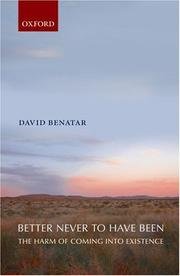
Better Never to Have Been
Better Never to Have Been by David Benatar is a philosophical work that sets forth a rigorous anti-natalist argument regarding the harms of coming into existence.
Discussed“David Benitar is the sort of superstar of antiism. Um he wrote a book called Better Never to Have Been, which sounds like one of these sort of you know, I'm about to write about how terrible how terrible life is.”
Where to get it
-
Existentialism Is a Humanism
Discussed“Whereas if you just randomly pick one of the great philosophers, like if you just pick up Sartra, as I did the other day, I told you this, and read existential is existentialism is a humanism, and think this is complete nonsense.”
Where to get it
-
Principia Mathematica
Principia Mathematica by Alfred North Whitehead and Bertrand Russell is a massive, multi-volume foundational work in mathematical logic that famously attempted to prove the logical basis of mathematics, including taking hundreds of pages to formally demonstrate that one plus one equals two.
Discussed“And although his uh you wrote a three volume insane project um is it two or three volumes? I always get too confused. No, no, nobody's read the whole thing. This is like because it's it's deeply impenetrable. It takes like what 300 pages to prove that one ad one is two.”
Where to get it
-
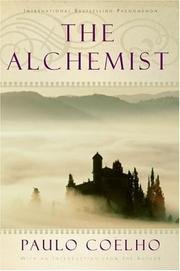
The Alchemist
The Alchemist by Paulo Coelho is a celebrated philosophical novel that follows a young Andalusian shepherd boy named Santiago on his journey across the desert in search of treasure, ultimately discovering a message about listening to one's heart and pursuing personal destiny.
Discussed“I know that ”
Where to get it
-
The birth of tragedy
Discussed“one of his first published works is called the birth of tragedy. ”
Where to get it
-
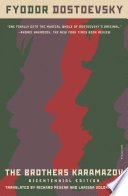
The Brothers Karamazov
The Brothers Karamazov by Fyodor Dostoevsky is a profound philosophical novel that explores deep spiritual questions surrounding faith, free will, morality, and the human condition.
Discussed“He has this ”
Where to get it
-
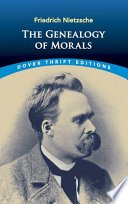
The Genealogy of Morals
The Genealogy of Morals by Friedrich Wilhelm Nietzsche is a profound philosophical critique that attempts to trace the evolution of Western moral concepts, particularly contrasting master and slave morality.
Discussed“And this is in his book, The Genealogy of Morals, where essentially he's trying to give an analysis of Christian morality from his perspective.”
Where to get it
-
The Stranger, The Plague (Coles Notes)
The Stranger by Albert Camus is a foundational philosophical novel that explores themes of existentialism, absurdism, and alienation through the experiences of its protagonist, Meursault.
Discussed“a lot of his early novels like The Stranger is ”
Where to get it
-
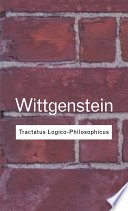
Tractatus Logico-Philosophicus
Tractatus Logico-Philosophicus by Ludwig Wittgenstein is a dense and revolutionary philosophical text exploring the intricate relationship between language, thought, and the boundaries of what can be meaningfully expressed.
Discussed“If you open Vickenstein's Tractus, the first line of the introduction is something like, "I don't think this book will be useful except to anybody who's already like in agreement with the things that it says."”
Where to get it
Appearances
| Episode | Podcast | Date | Books |
|---|---|---|---|
| Is Being Smart Worth the Depression? - Alex O’Connor & Joe Folley - #1012 | Modern Wisdom | 2025-10-27 | 8 |
| Existential Philosophy, Nietzsche, Suffering & Self-Awareness - Joe Folley - #974 | Modern Wisdom | 2025-07-31 | 11 |