

Person
Every book Philip Goff recommended on podcasts
Key facts
- Philip Goff has recommended or discussed 11 books on podcasts, as of April 9, 2025.
- Philip Goff has talked about books on 4 podcasts, as of April 9, 2025.
- Those books came up in 4 episodes, as of April 9, 2025.
- The 3 books Philip Goff has mentioned in the most episodes, as of April 9, 2025: The Varieties of Religious Experience, Mind and Cosmos and The case for God..
- The latest episode with a book mention from Philip Goff aired on April 9, 2025.
Updated
Across 4 podcasts. Every show Philip Goff appears on, in one place, not just one.
Philip Goff’s most mentioned books
- The Varieties of Religious Experience by William James
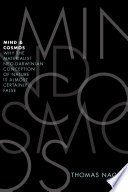
- Mind and Cosmos by Thomas Nagel
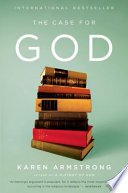
- The case for God. by Karen Armstrong
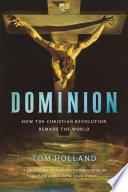
- Dominion by Tom Holland
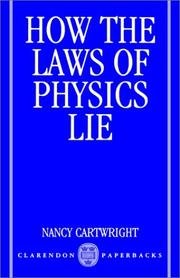
- How the laws of physics lie by Nancy Cartwright
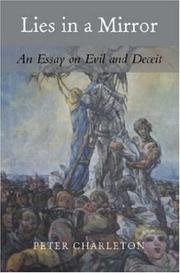
- Lies In a Mirror by Peter Charleton
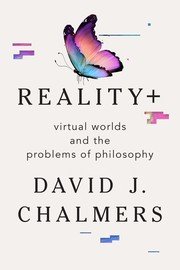
- Reality+ by David J. Chalmers
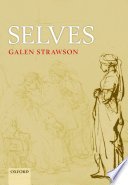
- Selves by Galen Strawson
- Superintelligence by Nick Bostrom
- What Is It Like to Be a Bat? by Thomas Nagel
Philip Goff is a British author, panpsychist philosopher, and professor at Durham University whose research focuses on philosophy of mind and consciousness. Specifically, it focuses on how consciousness can be part of the scientific worldview. During various podcast appearances, Philip Goff has recommended and discussed several notable literary and philosophical works. He recommended William James's classic text, The Varieties of Religious Experience, suggesting it as an ideal starting point for readers and highlighting its chapter on mystical experience as one of the finest works on the subject. Additionally, Goff discussed David J. Chalmers's Reality+ while exploring the simulation hypothesis and cosmic purpose. He examined Karen Armstrong's The Case for God in the context of the history of religion and changing definitions of belief, and he mentioned Tom Holland's Dominion to talk about the historical influence and radical origins of early Christianity. Goff also referenced Thomas Nagel's Mind and Cosmos to draw comparisons regarding its critical reception and his own philosophical work, as well as Nagel's influential paper What Is It Like to Be a Bat? when examining the fundamental definition of consciousness in the philosophy of mind.
Books Philip Goff recommended or discussed
-
The Varieties of Religious Experience
Recommended“If people needed to start with one or if they were only going to read one, where would you have them start? I would suppose the most recognizable of his writing for at least an American audience would probably be the varieties of religious experience.”
Where to get it
-
Mind and Cosmos
Discussed“a similar book was written more than 10 years ago 15 years ago nearly by the p great philosopher Thomas Nagel yes Mr. bat called Mind and Cosmos and he got absolutely destroyed in reviews.”
Where to get it
-
The case for God.
Recommended“So her book, her great book, The Case for God, which is a bad title. I think that's a strong title.”
Where to get it
-
Dominion
Discussed“I mean there's wonderful recent book Dominion by Tom Holland which is again the history of the influence of Christianity. What a bloody radical idea that was.”
Where to get it
-
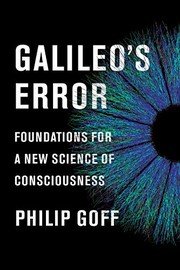
Galileo's Error
Discussed“Although I do—the final chapter of my book, Galileo's Era, is more experimental. So the first four chapters are the cold-blooded case for the panpsychist view as the best solution to the hard problem of consciousness.”
Where to get it
-
How the laws of physics lie
Discussed“my colleague the philosopher of science nancy cartwright he's got this book how the laws of physics lie where she says you know physicists explore uh things in very specific circumstances and then in an unwarranted way generalize that”
Where to get it
-
Lies In a Mirror
Discussed“They have an active center that tries to bring people in. I believe they are producing a book that I contributed to, concerning different philosophers' opinions on God and some of the big questions.”
Where to get it
-
Reality+
Discussed“or the simulation hypothesis Nick Bostonramm's famous for exploring and David Charas in his recent book reality plus you know maybe we're in a computer simulation and there's some you know random software engineer who set it all up”
Where to get it
-
Selves
Discussed“my PhD Mentor Galen strawson has a book selves where he defends the idea that there are unified selves but they just last a couple of seconds”
Where to get it
-
Superintelligence
Discussed“and these questions from nick bostrom and the other guys at the future of humanities institute have been something i've really enjoyed thinking about ever since i read super intelligence”
Where to get it
-
What Is It Like to Be a Bat?
Discussed“So Nagel said in his famous paper what's it like to be a bat from the 70s, he said something's conscious if there's something that it's like to be it”
Where to get it

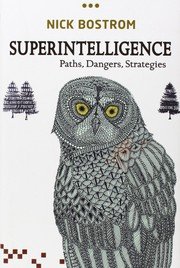

Philip Goff talked about Superintelligence, one of the books trending on podcasts right now.
Books Philip Goff wrote
Appearances
Other mentions (8: passing, ad reads, own books)
“And in fact one final thing physical science kicked off with Galileo taking consciousness outside of the domain of science for this precise reason because he thought correctly I think you can't capture those qualities in purely mathematical language. If we want mathematical science, we got to take consciousness out. And I think that's really I mean this is my”
“the final chapter of my book galileo's era is more experimental so the first four chapters are the cold-blooded case for the panzerkist view is that the best solution to the hard problem of consciousness”
“the final chapter of my book galileo's era is more experimental so the first four chapters are the cold-blooded case for the panzerkist view”
“i mean the way i did it i wrote my academic book first it's just some fundamental reality and then a more accessible book galileo's era where the arguments you know not as rigorously worked out so then i can say the proper arguments that you know the further arguments there”
“i mean the way i did it i wrote my academic book first it's just some fundamental reality and then a more accessible book galileo's era where the arguments you know not as rigorously worked out so then i can say the proper arguments that you know the further arguments there”
“i mean i think he's a a fantastic and very important philosopher even though i totally just fundamentally disagree with almost everything he thinks but yeah it was a proud moment as i talk about him my book galileo's era i managed to persuade him he was wrong about something just just a tiny thing”
“so the subtitle of my book is foundations for a new science of consciousness so i'm not doing science”
“and you know so and what i've tried to press my you know the reason for the title of my book galileo's error is that you know we shouldn't be surprised that our standard scientific approach can't account for consciousness”