
Person
Every book Morgan Housel recommended on podcasts
Across 8 podcasts. Every show Morgan Housel appears on, in one place — not just one.
Morgan Housel’s most recommended books
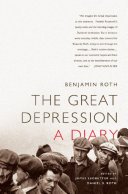
- The Great Depression: A Diary by Benjamin Roth
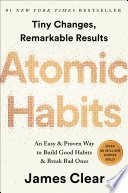
- Atomic Habits by James Clear
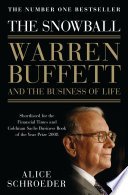
- The Snowball by Alice Schroeder
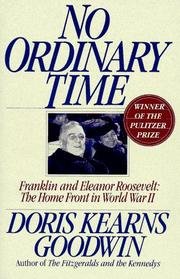
- No Ordinary Time by Doris Kearns Goodwin
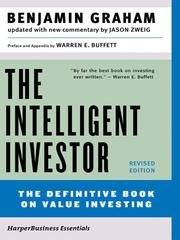
- The intelligent investor by Benjamin Graham
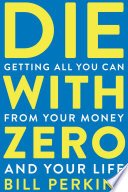
- Die with Zero by Bill Perkins, William O. Perkins
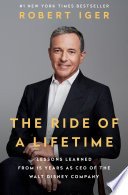
- The Ride of a Lifetime by Robert Iger
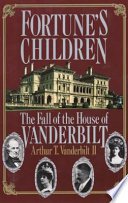
- Fortune's Children by Arthur T. Vanderbilt
- The Science of Fear by Dan Gardner
- The Splendid and the Vile by Erik Larson
Morgan Housel has discussed and recommended several influential books across various podcast appearances. While on The Diary Of A CEO with Steven Bartlett, Housel recommended Benjamin Graham's The Intelligent Investor as an important book that offers timeless wisdom about investing, despite being written in 1930s English. On the same podcast, he mentioned Alice Schroeder's biography of Warren Buffett, The Snowball, to illustrate compound interest. During appearances on The Daily Stoic and The Jordan Harbinger Show, Housel expressed his admiration for Benjamin Roth's The Great Depression: A Diary, describing it as the greatest economic book ever written. He referenced this diary, kept by an Ohio bankruptcy attorney during the 1930s, to highlight how people living through historic crises did not know how they would end and to illustrate that human behaviors during economic depressions never change. Additionally, when asked by the hosts of My First Million for great history books to read, Housel recommended Erik Larson's The Splendid and the Vile for its focus on both military operations and the human element on the ground during World War II.
Books recommended by Morgan Housel
-
The Great Depression: A Diary
Benjamin Roth's firsthand diary of the Great Depression provides a rare economic and psychological window into daily survival during the 1930s.
Recommended“There's a great book that I love. I think it's the greatest economic book ever written. It's called The Great Depression: A Diary.”
Where to get it
-
Atomic Habits
Atomic Habits by James Clear is a widely praised guide on habit formation, behavior change, and systems over goals.
Discussed“Atomic Habits has sold over 25 million copies and is still going stronger than ever kind of thing.”
Where to get it
-
The Snowball
The Snowball by Alice Schroeder is widely recognized as the definitive, highly detailed biography of legendary investor Warren Buffett.
Recommended“There's a book called The Snowball, which is kind of the most detailed do biography of Warren Buffett, and it would talk about how when he was on his adulthood, he wouldn't want to get haircuts because in his mind, a haircut would cost $10,000”
Where to get it
-
No Ordinary Time
No Ordinary Time by Doris Kearns Goodwin is an acclaimed historical biography that details how Franklin and Eleanor Roosevelt managed the United States during the extraordinary years of World War II.
Discussed“The best example of this I come across is Doris Kearns Goodwin's book No Ordinary Time. It's a biography of FDR during World War II.”
Where to get it
-
The intelligent investor
The Intelligent Investor by Benjamin Graham is a foundational guide to value investing that emphasizes long-term strategy, market analysis, and emotional discipline over speculation.
Recommended“a guy named Benjamin Graham wrote a book called The Intelligent Investor. He wrote it in the 1930s, so it is written in 1930s English.”
Where to get it
-
Die with Zero
Die with Zero by Bill Perkins and William O.
Discussed“you know that's why it's like the converse to all this is Bill Perkins book die with zero of like spend it while you're here enjoy it while you're here”
Where to get it
-
The Ride of a Lifetime
The Ride of a Lifetime is a business memoir by Robert Iger detailing his leadership experiences and career at Disney.
Discussed“perfect example of this in a book is Bob iger's book the ride of a lifetime he's he's the CEO of Disney”
Where to get it
-
Fortune's Children
Fortune's Children by Arthur T.
Recommended“it's called Fortune's children and it's about how the Vanderbilt heirs spent their money and blew their fortune”
Where to get it
-
The Science of Fear
The Science of Fear by Dan Gardner is a pop science book exploring the human perception of fear and risk.
Recommended“is a book by a guy named Dan gner who wrote a book called the science of fear the title's basically self-explanatory and it's not a deep science book I would say it's more of a pop science book but that book really changed how I think about fear”
Where to get it
-
The Splendid and the Vile
The Splendid and the Vile by Erik Larson is a gripping historical non-fiction account of Winston Churchill and London during the Blitz.
Recommended“I think one of the best World War II books because it's not only a book about the military operations but also the human element on the ground is Eric larsson's book The Splendid in the vial which is a pretty recent book”
Where to get it
-
The tao of Charlie Munger
The Tao of Charlie Munger by David Clark is a curated collection of succinct quotes and foundational wisdom from the legendary investor and business partner of Warren Buffett.
Recommended“Morgan Housel: This book, it's called The Tao of Charlie Munger.”
Where to get it
-
Tribe
Tribe by Sebastian Junger is a non-fiction book that explores the psychological need for community, human connection, and the challenges veterans face when reintegrating into modern society.
Recommended“There's a great book written by an author named Sebastian Junger the book is called tribes and it's a very short book”
Where to get it
-
Your Money and Your Brain
Your Money and Your Brain by Jason Zweig is an influential look at behavioral finance that examines how human biology and psychology drive financial decision-making.
Recommended“Jason's book your money in your brain which came out probably 2005 2006 and it was one of the first behavioral Finance books out there and his book was kind of a bold look at like hey money is not spreadsheets it's dopamine and cortisol”
Where to get it
-
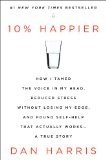
10% Happier
10% Happier by Dan Harris is a bestselling memoir and guide that chronicles a network news anchor's skeptical journey into meditation, mindfulness, and the neuroscience of emotional regulation.
Discussed“There's an interesting book called 10% Happier and it's about meditation and from everyone's like oh can meditation change your life and his point was like it can make you 10% happier but like that's pretty cool and I think that's true for money as well”
Where to get it
-
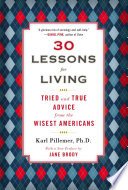
30 Lessons for Living
Discussed“There's a very good book written by a gerontologist named Carl Pillmer. He wrote a book called 30 lessons for living where he interviewed a bunch of elderly Americans who were like 90 to 100 years old.”
Where to get it
-
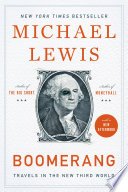
Boomerang
Boomerang by Michael Lewis is a nonfiction book examining how the global financial crisis played out in various countries and U.S.
Discussed“And in fact several Michael Lewis books like Boomerang have been based off of Vanity Fair pieces that he wrote.”
Where to get it
-
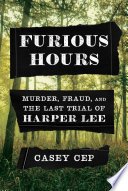
Furious Hours
Furious Hours: Murder, Fraud, and the Last Trial of Harper Lee by Casey N.
Discussed“I just read this book called Furious Hours, which is sort of a true crime book, but it's also about uh Harper Lee who wrote To Kill a Mockingbird.”
Where to get it
-
How to Get Rich
How to Get Rich by Felix Dennis is a frank and practical exploration of wealth accumulation written by a successful magazine publishing mogul.
Discussed“there's an entrepreneur named Felix Dennis who wrote A book many years ago called how to get rich”
Where to get it
-
Invest Like Warren Buffett
Critiqued“and that's why there are hundreds of books titled you know some version of how to invest like Warren Buffett and they all it's all so overly simplified when actually what they do is is really complex”
Where to get it
-
Mirror Thinking
Mirror Thinking by Fiona Murden is a psychological exploration of the human mirror neuron system and how external behaviors and environments become imprinted upon individuals.
Discussed“and i had a psychologist on the show very recently called fiona murden who wrote a book called mirror thinking about the mirror neuron”
Where to get it
The other 8 books Morgan Housel recommended or discussed, ranked
- Sapiens by Yuval Noah Harari
- Steve Jobs by Walter Isaacson
- The 4-Hour Workweek by Timothy Ferriss
- The Big Change by Frederick Lewis Allen
- The Premonition by Michael Lewis
- The Psychology of Money by Morgan Housel
- Will by Will Smith
- Working by Robert A. Caro
Books Morgan Housel wrote
Appearances
Other mentions (32: passing, ad reads, own books), the 30 most recent
“the three books I've written, Psychology of Money, same as Ever, The Art of Spending Money, every every half decent thought that's ever entered my head about money is in those three books.”
“the three books I've written, Psychology of Money, same as Ever, The Art of Spending Money, every every half decent thought that's ever entered my head about money is in those three books.”
“the three books I've written, Psychology of Money, same as Ever, The Art of Spending Money, every every half decent thought that's ever entered my head about money is in those three books.”
“at the end of my first book, the psychology of money, I there's a chapter about the psychology of my money.”
“I wrote about it in my first book, The Psychology of Money. I was a valet at a five-star hotel in Los Angeles.”
“I use this in the book, The Art of Spending Money. The Vanderbilt family was the richest family that the world had ever seen.”
“I use this in the psychology of money. It's an astounding story. It's a guy named Ronald Reed.”
“And so you ultimately can like ident oh my god that was like that guy in the book who couldn't stop um gambling even after he'd won or he had predicted the stock market correctly once and then he predicted it incorrectly the next time and then ended up killing himself and it's and it's it's for so many moments”
“I use a story in in Same as Ever about during the Revolutionary War, during the Battle of Long Island, George Washington and his troops were cornered by the British.”
“I use a story in 'Same as Ever' about during the Revolutionary War, during the Battle of Long Island, George Washington and his troops were cornered by the British.”
“And to me, this is kind of the core of Same as Ever. It's like stop pretending that you think you can know what's going to happen next in the future.”
“My I I did not want to write Psychology Money. I put it off for years and years and years.”
“Yes, my- I did not want to write Psychology of Money, and I put it off for years and years and years.”
“I just read this book called Furious Hours, which is sort of a true crime book, but it's also about uh Harper Lee who wrote To Kill a Mockingbird.”
“This was one of the lessons for when I started writing Psychology of Money. I wanted to like reinvent myself.”
“I tried it with Psychology of Money. When I set out to write Psychology of Money, I said I'm going to write a new book from scratch.”
“The audiobook version of Psychology of Money outsells the physical version two to one.”
“Morgan Housel: So after Psychology of Money, I was really debating what to write next for my next book.”
“I think in many ways, Psychology of Money is the psychology of you, the individual.”
“And Same as Ever is the psychology of us as a collective.”
“the Yale Finance Professor James Choi was telling us that most people preferred to get their personal finance advice not from economists like him but from the authors of popular books like Morgan hausel I am the author of the book the psychology of money and I'm a partner at the collaborative fund”
“Like, obviously, you're in The Psychology of Money, mostly at the end, where you kind of talk about your habits and your parents a bit too, which is an interesting story.”
“So, like you were asking me about having a job; one of the benefits—like when my publisher offered me what was not as much money as I would have hoped for The Obstacle Is the Way, I was like, ‘Sure, whatever,’ right?”
“I would say that the summation of The Psychology of Money is that turning down money is one of the hardest things to do in the world.”
“one is James Clear who wrote a book called Atomic habits and the other is Mark Manson who wrote the book The subtle art of not giving a [ __ ]”
“one is James Clear who wrote a book called Atomic habits and the other is Mark Manson who wrote the book The subtle art of not giving a [ __ ]”
“his book is called the behavior Gap and so so so he wrote about behavioral Finance uh for a long time”
“he said it's called Atomic habits and I didn't say this but at the time I was like that sounds like a dumb name but for those who don't know I think Atomic habits has now sold five or six million copies it's probably the bestselling book of The Last Five Years”
“so before we get started you got a new book out psychology of money”
“man this book is phenomenal and everyone that is listening if you want it's the rich dad poor dad of 2020 um with with a better looking author”