Episode · Modern Wisdom · 2025-07-31
Books mentioned on Existential Philosophy, Nietzsche, Suffering & Self-Awareness - Joe Folley - #974
Joe Folley is a philosopher, writer, and host of the Unsolicited Advice YouTube channel. Philosophy has a way of finding us in one form or another, sometimes in a book, sometimes in a moment of crisis.
Books mentioned, in the order they came up
-
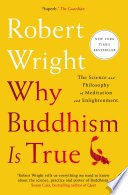
Why Buddhism is True
Why Buddhism is True by Robert Wright is a popular exploration of evolutionary psychology and meditation, arguing that ancient Buddhist philosophies align closely with modern scientific understandings of the human mind.
Discussed“I think Robert Wright in why Buddhism is true evolutionary psychologist who then pivoted to do mindfulness a lot of retreats”
Where to get it
-
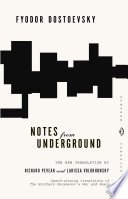
Notes from Underground
Notes from Underground by Fyodor Dostoevsky is a profound 1864 novella exploring human psychology, spite, and the flaws of utopian thinking through an isolated, cynical narrator.
Discussed“So again, this is a really prominent theme in notes from underground. ”
Where to get it
-
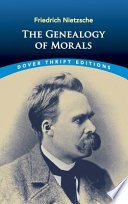
The Genealogy of Morals
The Genealogy of Morals by Friedrich Wilhelm Nietzsche is a foundational philosophical work that investigates the origins and evolution of moral concepts, particularly distinguishing between master and slave morality.
Discussed“And this is in his book, The Genealogy of Morals, where essentially he's trying to give an analysis of Christian morality from his perspective.”
Where to get it
-
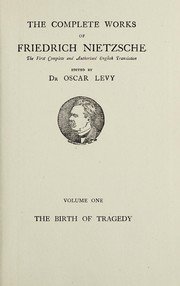
The birth of tragedy
Discussed“one of his first published works is called the birth of tragedy. ”
Where to get it
-
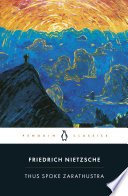
Thus Spoke Zarathustra
Thus Spoke Zarathustra is a foundational philosophical masterpiece by Friedrich Nietzsche that introduces iconic concepts such as the Ubermensch, the eternal recurrence, and the death of God.
Discussed“the figure of the last man which is a character in thus zarustra where the last man is sort of a kind of passive nihilist”
Where to get it
-
The Stranger, The Plague (Coles Notes)
The Stranger by Albert Camus is a foundational work of absurdist literature that explores the profound alienation and emotional detachment of its protagonist, Meursault, against the backdrop of colonial Algeria.
Discussed“a lot of his early novels like The Stranger is ”
Where to get it
-
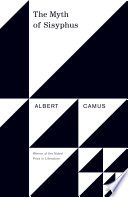
The Myth of Sisyphus
The Myth of Sisyphus by Albert Camus is a philosophical essay exploring the human condition, the concept of the absurd, and the fundamental meaninglessness of the universe through the metaphor of Sisyphus rolling a boulder up a hill for eternity.
Discussed“So the myth of Cisphus in Kamu's writing is meant to symbolize this kind of it's meant to stand in for us all.”
Where to get it
-
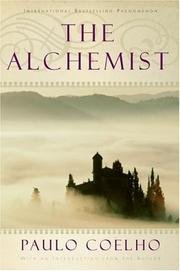
The Alchemist
The Alchemist by Paulo Coelho is a philosophical novel about an Andalusian shepherd boy named Santiago who travels in search of treasure and discovers his personal legend.
Discussed“I know that ”
Where to get it
-
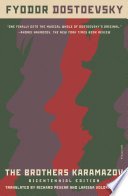
The Brothers Karamazov
The Brothers Karamazov by Fyodor Dostoevsky is a profound philosophical novel that delves deeply into faith, doubt, morality, and free will through the tumultuous relationships of the Karamazov family.
Discussed“He has this ”
Where to get it
Other mentions in this episode (1) — ad reads, self-promotion and passing references, never counted
“nature's very keen on was atomic habits for the 1800s. ”