
Person
Every book C. Bradley Thompson recommended on podcasts
C. Bradley Thompson’s most recommended books
- An Essay Concerning Human Understanding by John Locke
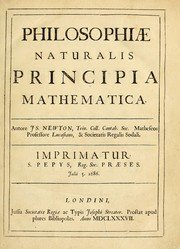
- Newtons Principia by Sir Isaac Newton, Sir
- Nicomachean Ethics by Aristotle
- Xenophon̓s Memorabilia of Socrates by Xenophon
- A Defence of the Constitutions of Government of the United States of America by John Adams
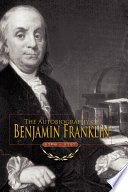
- Benjamin Franklin's Autobiography by Benjamin Franklin, P. M. Zall
- Common Sense by Thomas Paine
- De Officiis by Marcus Tullius Cicero
- Diary and Autobiography of John Adams by John Adams
- Dissertation on the Canon and Feudal Law by John Adams - undifferentiated
C. Bradley Thompson appears on interview programs such as The Rubin Report, where he discusses American history, the intellectual origins of the Founding Fathers, and classical philosophy. As evident from his academic focus, Thompson examines historical figures through the lens of Enlightenment thought, classical education, and foundational political philosophy. During his podcast appearances, he has discussed several pivotal historical texts. Thompson explained how intellectual giants like Francis Bacon, through his work Novum Organum, and Sir Isaac Newton, through Philosophiae Naturalis Principia Mathematica, deeply influenced the scientific and philosophical worldview of the American founders. He also highlighted John Locke's An Essay Concerning Human Understanding as a transformative text that shaped both John Adams and the broader intellectual framework of the American Founding. Additionally, Thompson discussed Benjamin Franklin's Autobiography to illustrate early American pursuits of moral perfection, and contrasted biblical texts with classical moral philosophies like Aristotle's Nicomachean Ethics in early American education.
Books recommended by C. Bradley Thompson
-
An Essay Concerning Human Understanding
An Essay Concerning Human Understanding by John Locke is a monumental work of philosophy that investigates the foundations of human knowledge, origin of ideas, and limits of human understanding, arguing that the mind is a blank slate upon which experience writes.
Discussed“And Sir Isaac Newton in his Principia Mathematica, and John Locke, in his Essay Concerning Human Understanding”
Where to get it
-
Newtons Principia
Sir Isaac Newton's foundational scientific treaty, Newtons Principia, establishes the universal laws of motion and gravitation, fundamentally altering humanity's understanding of the physical cosmos.
Discussed“he's introduced to two books that that change his life The first is Newton's Principia Mathematica and the second is John Locke's essay concerning human understanding”
Where to get it
-
Nicomachean Ethics
The Nicomachean Ethics by Aristotle is a foundational work of ancient Greek philosophy that examines virtue, human flourishing, moral character, and the ultimate pursuit of the good life.
Discussed“well it's it's never the Bible it is Aristotle Nicomachean ethics Cicero cicero's de o'fee key Seneca and epictetus”
Where to get it
-
Xenophon̓s Memorabilia of Socrates
Discussed“Adams was a young Adams again 21 22 year old Adams is he was always fascinated with this ancient fable called the choice of Hercules which was first told in Xenophon's memorabilia”
Where to get it
-
A Defence of the Constitutions of Government of the United States of America
A Defence of the Constitutions of Government of the United States of America by John Adams is a comprehensive historical treatise examining the principles of republican governance and political theory.
Discussed“so you know Adams wrote a great treatise called a defense of the Constitution's of the United States of America in which if read shall in a very shallow way and without really reading what Adams is actually saying one”
Where to get it
-
Benjamin Franklin's Autobiography
Discussed“Benjamin Franklin when he was the same age as Adams decides that he wants to achieve moral perfection and you can read about this in in Franklin's autobiography which and if you think about it I mean this is extraordinary”
Where to get it
-
Common Sense
Common Sense by Thomas Paine is a deeply influential 1776 political pamphlet that articulated arguments for American independence from Great Britain and helped ignite the American Revolution.
Discussed“in to that end he drafted a document or a pamphlet called thoughts on government and it's a kind of proto Constitution and it it was in many ways other than Tom Paine's Common Sense it was the most influential pamphlet written during I think the Revolutionary period”
Where to get it
-
De Officiis
Discussed“well it's it's never the Bible it is Aristotle Nicomachean ethics Cicero cicero's de o'fee key Seneca and epictetus”
Where to get it
-
Diary and Autobiography of John Adams
Discussed“which is interesting if you if you read his diary his autobiography all of his political writings and more”
Where to get it
-
Dissertation on the Canon and Feudal Law
Discussed“he wrote his first major treatise in 1765 was called a dissertation on the Canon in feudal law”
Where to get it
-
Epictetus
Epictetus by Epictetus comprises the surviving teachings and discourses of the ancient Stoic philosopher on self-governance, reason, and personal resilience.
Discussed“Well it's it's never the Bible it is Aristotle Nicomachean ethics Cicero cicero's de o'fee key Seneca and epictetus”
Where to get it
-
Holy Bible (NIV)
Holy Bible (NIV) by Various Authors is a foundational collection of sacred scriptures that has shaped Western civilization, religious traditions, and literary history for millennia.
Discussed“or what it for instance what are the books that one can read Well it's it's never the Bible it is Aristotle Nicomachean ethics Cicero cicero's de o'fee key Seneca and epictetus”
Where to get it
-
Letters from John Adams to His Constituents
Discussed“he wrote what I think is still to this day the most importance certainly I think the most brilliant Revolutionary tract that was published it was the title is the no Vangelis letters”
Where to get it
-
Novum organum
Discussed“English scientists, and philosophers like Francis Bacon in his Novum Organum.”
Where to get it
-
Philosophiae naturalis principia mathematica
Philosophiae Naturalis Principia Mathematica by Sir Isaac Newton is a foundational scientific text published in 1687 that establishes the laws of motion and universal gravitation, fundamentally shaping classical mechanics and modern physics.
Discussed“And Sir Isaac Newton in his Principia Mathematica, and John Locke, in his Essay Concerning Human Understanding”
Where to get it
-
Seneca in English
Discussed“Well it's it's never the Bible it is Aristotle Nicomachean ethics Cicero cicero's de o'fee key Seneca and epictetus”
Where to get it
-
The Autobiography of Benjamin Franklin
The Autobiography of Benjamin Franklin by Benjamin Franklin offers a foundational personal and philosophical account of one of America's most prominent founding figures.
Discussed“and you can read about this in in Franklin's autobiography which and if you think about it I mean this is extraordinary”
Where to get it
-
The Works Of John Adams, Second President Of The United States: With A Life Of The Author, Notes And Illustrations; Volume 9
Discussed“so the passage that you just read and much of what you reference here that this was all in his biography so he was just writing this to himself”
Where to get it
-
Thoughts on government
Discussed“in to that end he drafted a document or a pamphlet called thoughts on government and it's a kind of proto Constitution and it it was in many ways other than Tom Paine's Common Sense it was the most influential pamphlet written during I think the Revolutionary period”
Where to get it
-
Tom Paine
Discussed“other than Tom Paine's Common Sense it was the most influential pamphlet written during I think the Revolutionary period”
Where to get it
Appearances
Other mentions (2: passing, ad reads, own books)
“Francis Bacon in his Novum Organum. And Sir Isaac Newton in his Principia Mathematica, and John Locke, in his Essay Concerning Human Understanding,”
“And Sir Isaac Newton in his Principia Mathematica, and John Locke, in his Essay Concerning Human Understanding, And they took the enlightenments ideas of the laws of nature,”