
Episode · How I Write · 2025-06-11
Books mentioned on Paul Harding: A New Way To Think About Writing | How I Write
I interviewed Paul Harding, who won the Pulitzer Prize for Fiction for his very first novel Tinkers. Unlike most novelists, he’s not really interested in plots, and only halfway interested in characters.
David Perell discussed Tinkers by Paul Harding and others, Zen and the Art of Motorcycle Maintenance by Robert M. Pirsig, The Sound and the Fury by William Faulkner, War and Peace by Leo Tolstoy, and The Magic Mountain by Thomas Mann. Paul Harding discussed Housekeeping by Marilynne Robinson, Ironweed by William Kennedy, Absalom, Absalom! by William Faulkner, MOBY-DICK; or, THE WHALE by Herman Melville, and Terra Nostra by Carlos Fuentes.
Books mentioned, in the order they came up
-
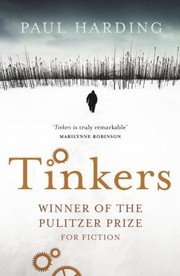
Tinkers
Tinkers by Paul Harding is a critically acclaimed debut novel that explores memory, mortality, and the life of a dying clockmaker.
Discussed“I interviewed Paul Harding who won the Pulitzer Prize for fiction for his very first novel called Tinkers.”
Where to get it
-
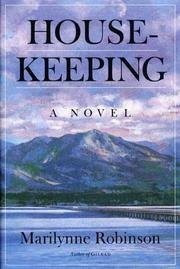
Housekeeping
Housekeeping by Marilynne Robinson is a celebrated debut novel that explores themes of grief, transience, and the profound, haunting isolation experienced by two orphaned sisters raised by eccentric relatives in a remote Idaho town.
Discussed“one of my favorite words from my fave rave writer teacher friend Marilyn Robinson that's in her first novel housekeeping is co-extensivity I just thought what if I just don't think of there being any difference between the interior or the exterior”
Where to get it
-
Ironweed
Discussed“I actually remember at the time thinking about you know William Kennedy and Ironweed his novel Ironweed. It was another thing like he he couldn't get it published.”
Where to get it
-
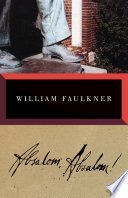
Absalom, Absalom!
Absalom, Absalom! by William Faulkner is a monumental American novel exploring family trauma, ambition, race, and the heavy burdens of the past in the deep South.
Discussed“Um, one of the things that I love is that you you can't get the whole thing the first time you read Abselum Abselum.”
Where to get it
-
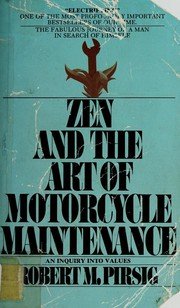
Zen and the Art of Motorcycle Maintenance
Zen and the Art of Motorcycle Maintenance by Robert M.
Discussed“I can't tell you how many people I know who've read Zen and the Art of Motorcycle Maintenance like six times and they're like that guy Persik, Robert Persik.”
Where to get it
-
MOBY-DICK; or, THE WHALE
Moby-Dick by Herman Melville is an epic American novel that chronicles the obsessive, self-destructive quest of Captain Ahab to hunt down the giant white whale that maimed him.
Discussed“you get that with Melville, too. you know, Moby Dick, like the language is so it hits this super saturation point”
Where to get it
-
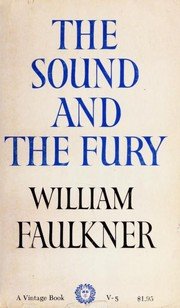
The Sound and the Fury
The Sound and the Fury is a modernist novel by William Faulkner that employs stream-of-consciousness techniques to chronicle the decline of the Compson family.
Discussed“and you said, "Okay, I'm going to go read The Sound and the Fury. I'm going to go take on some really hard works.”
Where to get it
-
War and Peace
Leo Tolstoy’s War and Peace is a monumental historical novel blending grand military strategy with intimate domestic life against the backdrop of the Napoleonic Wars.
Discussed“I'm going to get really into Magic Mountain and War in Peace, and I'm going to do the work it takes to really read those books”
Where to get it
-
The Magic Mountain
Thomas Mann's The Magic Mountain is a monumental early twentieth-century philosophical novel that follows a young engineer named Hans Castorp during an extended, transformative stay at a tuberculosis sanatorium in the Swiss Alps.
Discussed“I'm going to get really into Magic Mountain and War in Peace, and I'm going to do the work it takes to really read those books”
Where to get it
-
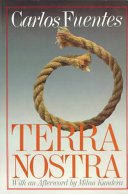
Terra Nostra
Discussed“my favorite books to read are the big blockbusters, War in Peace and Carlos Fentes Teranostra.”
Where to get it
Other mentions in this episode (2) — ad reads, self-promotion and passing references, never counted
“So, I just kept refreshing the page and I think it was it was Elizabeth Stout was Olive Kitridge. So, you know, I was like, you know, I was just doing something getting ready and all of Kitridge and you know, getting all of Kitridge all of that's who won the year before.”
“If you don't, you won't be excluded from any of the meaning. How about Shakespeare? Um there's something very democratic about not only the fact that he's always writing about all different classes of people”