
Episode · The Joe Rogan Experience · 2026-10-28
Joe Rogan & Jimmy Carr: books mentioned on The Joe Rogan Experience #2571
#2571 - Jimmy Carr
Jimmy Carr is a comedian, television personality, and writer. His new book, "On Jokes: The Hidden Mechanics of Funny," co-authored with Amanda Baker and Abi Grant, is available now.
Joe Rogan recommended Dissolving Illusions by Suzanne Humphries and others and The Wisdom of Insecurity by Alan Watts. Jimmy Carr recommended The Matter With Things by Iain McGilchrist and What's Our Problem? by Tim Urban, and discussed The fourth turning by William Strauss and others, Finnegans Wake by James Joyce, The Hero with a Thousand Faces by Joseph Campbell, The master and his emissary by Iain McGilchrist, Amusing Ourselves to Death by Neil Postman, 1984 by George Orwell, and Factfulness by Hans Rosling and others.
Books mentioned, in the order they came up
-
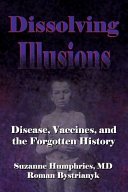
Dissolving Illusions
Dissolving Illusions by Suzanne Humphries and Roman Bystrianyk is a controversial book that examines the history of vaccination, infectious diseases, and public health policies.
Recommended“Yeah, she's I just want to tell people that are listening, there's a great book called Dissolving Illusions. And if you just countercheck all the things that she put in that book, you can read it all online, you'll find out she's telling the truth.”
Where to get it
-
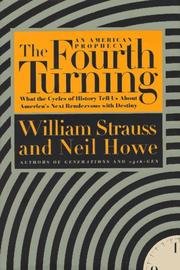
The fourth turning
The Fourth Turning by William Strauss and Neil Howe is a profound exploration of generational cycles and historical patterns that posits history moves through recurring seasons of crisis and renewal.
Discussed“So there's a theory that like that the this guy Neil how wrote this book called the fourth turning in like 1996 and he predicted everything that's happening in the world right now. He he basically said like the world moves in these uh four eras first, second, third and fourth turning”
Where to get it
-
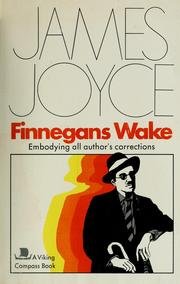
Finnegans Wake
Finnegans Wake by James Joyce is an experimental, highly complex work of modern fiction known for its dense, multilingual portmanteau language and cyclical structure.
Discussed“There's a book called Finnegan's Wake by James Joyce it's like arguably the greatest work of literature in the western cannon. It's a wonderful book and a guy called Joseph Campbell studied it for his PhD and he wrote about the myths in inherent in James Joyce's uh Finnegan's wake”
Where to get it
-
The Hero with a Thousand Faces
The Hero with a Thousand Faces by Joseph Campbell is a seminal study of comparative mythology that outlines the universal narrative structure of the hero's journey, detailing stages such as departure, initiation, and return.
Discussed“He wrote this book uh he wrote his dissertation on this book took him years and then afterwards he did a like too long didn't read version of it which is called the hero has a thousand faces and the hero's journey and then George Lucas picked up those books and he made Star Wars.”
Where to get it
-
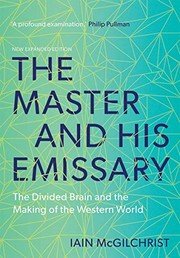
The master and his emissary
The Master and His Emissary by Iain McGilchrist is a work of neuropsychology and philosophy that explores how the brain's two hemispheres perceive the world differently and how those differences have shaped human history and culture.
Discussed“You know this Ian McGill Chris guy, you probably had him on. He wrote the master in his emissary. So, he wrote this book about how the right brain and the left brain don't do different things. They do the same thing differently.”
Where to get it
-
The Matter With Things
The Matter With Things by Iain McGilchrist is a sweeping philosophical and neurological inquiry into how the two hemispheres of the brain shape human perception, culture, and our modern obsession with material reductionism.
Recommended“And he wrote this book called The Master and Its Chemistry. This fellow, he's old. He's maybe 80. Uh, Master and Hing Emistry. And he wrote another book called The Matter with Things. Uh, they're both phenomenal.”
Where to get it
-
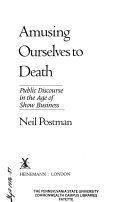
Amusing Ourselves to Death
Amusing Ourselves to Death by Neil Postman is a media critique arguing that the shift from a print-based culture to a television-dominated society degrades public discourse by turning serious political and intellectual subjects into mere entertainment.
Discussed“But then that that thing Neil Postman had he wrote this brilliant book in like 1984, right, called Amusing Ourselves to Death. And it was about Ronald Reagan getting elected. And it was basically he said we've gone from reading newspapers to watching the news on TV.”
Where to get it
-
1984
1984 by George Orwell is a classic dystopian novel depicting a totalitarian regime characterized by extreme surveillance, historical denial, and psychological manipulation.
Discussed“And so obviously that applies to now. So his thing was George Orwell wasn't right. Ordis Huxley was right. So it wasn't about like um 1984 and this authoritarian regime taking control from above.”
Where to get it
-
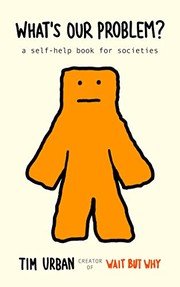
What's Our Problem?
What's Our Problem? by Tim Urban is a self-help guide for societies that analyzes political tribalism, societal polarization, and how human thinking mechanisms shape modern discourse.
Recommended“Did you read that um you know Tim Urban? You ever had him on the show? No, he wrote this book called What's Our Problem? It's like one of my favorite books of the last 10 years, right? And so the book is it's not about left and right, it's about how you think about things.”
Where to get it
-
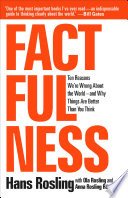
Factfulness
Factfulness by Hans Rosling, Ola Rosling, and Anna Rosling Rönnlund is a nonfiction book that uses global data to challenge common human misconceptions and pessimism about the state of the world.
Discussed“It's a hard thing to say, but that that uh was a great Steven Pinker book uh about things getting better. There was a great um book, Factfulness, about Yeah, things are reader book. Things can be terrible and still be getting better than they were.”
Where to get it
-
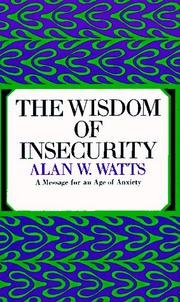
The Wisdom of Insecurity
The Wisdom of Insecurity is a philosophical book by Alan Watts that examines human anxiety and the psychological challenges of living in an era of rapid social change.
Recommended“I I just finished it. This Allan Watts book from um is it the 1950? Is it the the the what is it? The um the the wisdom of insecurity. Oh, no. I haven't read that. It's fantastic. I I just finished it.”
Where to get it
Other mentions in this episode (3) — ad reads, self-promotion and passing references, never counted
“You know, there's a theory about that on the that's what the whale represents, the belly of the whale in the Bible that you're that you're living in the um uh you're living in the ruins of a civilization that you can no longer build.”
“You're allowed to burn a book if you buy it, right? And I look, if you buy a book, you're like, "This book could suck it." Or if you're one of those people, they're like, "I [ __ ] hate JK Rollins now for trans people forever." And you want to light Harry Potter books on fire.”
“And then thinking about what you really want as opposed to Yes. That line from Fight Club, isn't it? The uh we spend our lives making money to buy things to impress people we don't give a And think about how much that's hijacked by social media where people are just chasing likes all day.”