

Book · 1998 · nyt:young-adult-paperback-monthly=2022-09-04
The Book Thief
- mentions
- 37
- people
- 6
- podcasts
- 4
- episodes
- 19
- critical mentions
- 0
This is the part that blew my mind initially, and it was a good hook for the book, by the way!
What they say about it
- Discusses details from the book“You mention in the book”17
- Shares stories and lessons“lots of different adventures and stories”2
The best things said about it
I recall in the book how we decided to run a marathon together, and I thought we could hold hands across the finish line, but she responded, 'Actually, I love you dearly,' before smoking me and finishing several seconds ahead, which encapsulates her personality wonderfully in that tiny anecdote.
As I describe in the book, I probably accumulated post-traumatic stress from trying to do a good job caring for my patients while feeling as if I were only putting a Band-Aid over a hemorrhage.
Speaking of the office, you mentioned this shocking statistic in the book, which is that 40% of our professional time is spent trying to convince other people or get buy-in on decisions.
One thing that you'd said in the book that I am so guilty of—confidence increases faster than accuracy.
Because the book begins with a story about 17,000 people getting arrested within 10 days, which, you know, is quite astonishing.
A lot of the book was hard to read because you grew up in what sounds like Abu Ghraib-level abuse and control.
Where and when it comes up
Mentions per year
How it comes up
Most mentions, by podcast
6 people who brought it up
Why people recommend it
The Book Thief by Markus Zusak is a historical novel set in Nazi Germany, narrated by Death and centered on a young foster girl who steals books and shares them with others. During an episode of The Jordan Harbinger Show featuring Dr. Anthony Fauci, the host and guest discussed Fauci's memoir rather than Zusak's novel, touching upon themes of public service, consistency, political attacks during the AIDS crisis compared to modern times, and personal anecdotes involving marathons and family support. In other episodes of the same podcast, Jordan Harbinger and various guests touched upon unrelated psychological and societal topics, including the weaponization of information in populism, the nature of secrets, and brainwashing vulnerabilities. Although the title of Markus Zusak's famous novel surfaced in the broader metadata tags of these podcast transcripts, the discussions themselves centered primarily on Dr. Fauci's autobiographical reflections and sociological explorations of modern media, public health challenges, and political polarization rather than the literary details of the fictional story itself.
Every mention
Jordan Harbinger You mentioned in the book that populism sees information as a weapon. 17
“You mentioned in the book that populism sees information as a weapon.”
“You note in the book that how often our mind wanders to a secret is one of the gauges of how unhealthy it is.”
“It sure seems that way from the reading of the book; aside from your foray into basketball, you were kind of on a straight path.”
“The point you’re making about the activists is significant; it’s a major part of the book that contrasts and compares the attacks on me during the AIDS years with the attacks on me now.”
“You wrote some other scary, interesting things in the book too.”
“Right, it's not practical, and there's no judgment in the book about not being able to leave.”
“So I read the book, and I was thinking, 'All right, this guy is going to some crazy place in the mountains. What's this all about?'”
“But then, of course, after I read the book, I was like, 'No, there's no misunderstanding here. These people are potentially very dangerous.'”
“Speaking of the office, you mentioned this shocking statistic in the book, which is that 40% of our professional time is spent trying to convince other people or get buy-in on decisions.”
“In the book, you even remark about the school and military performance of popular versus non-popular kids.”
“In the book, we talk about ASAP, or AAP, and you make the decision as soon as possible if it's a two-way door or as late as possible if it's a one-way door.”
“One thing that you'd said in the book that I am so guilty of—confidence increases faster than accuracy.”
“One thing that really stuck out for me in the book was the comparison thing, right?”
“You mention in the book that perpetrators are often grandiose or vulnerable narcissists. Is that the majority of cases?”
“Because the book begins with a story about 17,000 people getting arrested within 10 days, which, you know, is quite astonishing.”
“What you describe in the book sounds like something I would expect to read from someone who grew up in a rural province in Afghanistan or Peshawar, not in White Rock or outside of Vancouver.”
“A lot of the book was hard to read because you grew up in what sounds like Abu Ghraib-level abuse and control.”
Anthony Fauci Fortunately, I had a partner, Dr. Christine Grady, whom I describe in the book; she’s an amazing person who… 5
“Fortunately, I had a partner, Dr. Christine Grady, whom I describe in the book; she’s an amazing person who supported me and made sure the family unit functioned well.”
“I recall in the book how we decided to run a marathon together, and I thought we could hold hands across the finish line, but she responded, 'Actually, I love you dearly,' before smoking me and finishing several seconds ahead, which encapsulates her personality wonderfully in that tiny anecdote.”
“Interestingly, as I discuss in the book, he didn’t take as much offense as one might think; he maintained our good rapport.”
“I know during COVID, people thought you were the one making the policies, and I admit I was probably one of those people, but you're more just a communicator of those policies; is that correct? Yes, I did mention that in the book.”
“As I describe in the book, I probably accumulated post-traumatic stress from trying to do a good job caring for my patients while feeling as if I were only putting a Band-Aid over a hemorrhage.”
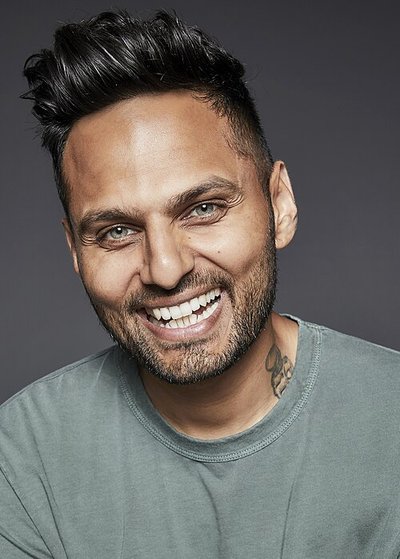 Jay Shetty I was reading in the book where you're talking about these monks. 2
“I was reading in the book where you're talking about these monks.”
“So one of the things you say early in the book is you talk about selfless sacrifice, and there's this great quote in there that one of the monks had shared with you about that: 'In the shade you don't want to sit, plant a tree.'”
Andrew Gold So you got this—I hate saying this: In the book, it was slightly incorrect according to what he told me on… 1
“So you got this—I hate saying this: In the book, it was slightly incorrect according to what he told me on the podcast!”
Michael McQueen Although interestingly in the book, I found some fascinating research about how most of what we do to try a… 1
“Although interestingly in the book, I found some fascinating research about how most of what we do to try and speak to people's emotions about, you know, say giving to charities or feeling compelled to change with sustainability, it doesn't work in ways that surprised me; like we actually empathy doesn't scale well.”
Nir Eyal So that's where I got the idea of that screen sign that comes in every copy of the book. 1
“So that's where I got the idea of that screen sign that comes in every copy of the book.”
Mentioned on the show without a named speaker10
“This is the part that blew my mind initially, and it was a good hook for the book, by the way!”
“Great episode on that, guys; I read the book a few years ago. To answer a question you had about the 11:00 p.m. start time, as I recall, you're correct in their desire to employ the cover of darkness. There was also another, probably more important issue that led to that decision; per my recollection of the book, it was”
“And you kind of—it was just like that one line, sort of throwaway, whatever, in the book.”
“I think we talk about sticky notes in sort of the book where you compare sticky notes and like you can only hold one at a time.”
“I don't really—I open the book with the story of Danny Marino and mention that to this day, I wonder whether I handled that case right.”
“There was a real denialism about that, and in the book, I do a deep dive into this.”
“And that's kind of a line that we try to explore here, and we went back and forth in the book and in any project that we do where we say, 'All right, what is our intellectual responsibility to our audience?'”
“Find your meditation practice; I give a ton in the book.”
“Well, there's lots of stories like that in the book, lots of different adventures and stories. And in the book, what I'm trying to do at the end of each one is talk about, 'Okay, what did I learn? How does that help me in my business career or in life in general?'”
“It seems like you were adept at making some super high profile and powerful friends; especially in the book you talk about France and meeting all these, I can't remember who they were, but it's kind of like these old money, well-connected type folks. How did that happen, and is that skill, or is that luck?”
Also mentioned in the same episodes
Other mentions (44: passing, ad reads, own books)
“I've got some great notes from the book, but like you, you're like a ninth-degree black belt at creating impactful content.”
“I mean, it is just like people might say it's unlikely there's other life out there, but from reading the book, it seems like there's just a near certainty that there is because there's so many things in the Goldilocks zone on so many different stars—the habitable zone.”
“And I got to dive into science fiction in the book too, where it was like planets maybe even better than science fiction worlds.”
“I—we have to talk about Breezy because it gets talked about in the book in a way that's so funny and we must get into it!”
“I'm sure this was a few years ago, especially because the book was written quite a while ago.”
“But it was really interesting for me because it felt like, and I describe it this way in the book, that I went from my life as a grayscale, one-dimensional drawing to, all of a sudden, crawling off the page into a three-dimensional, color-filled reality.”
“It was very funny writing the book because I wanted to get into the new ideas.”
“The Book Thief for example have been bestsellers for years and still have a devoted following”
“It can—the book can be about anything.”
“No, it was definitely not always there. Definitely, if you read the book, you know that it was not always there.”
“As I say in the book, it's easy to start denigrating from there. Right?”
“But as I say in the book, French revolutionaries also severed heads, and samurai did, and Scottish clans did, and they all had a reason. I mean it wasn't just that they were called savages.”
“Yeah, the book goes into a lot of detail on that. How armed are these guys?”
“In the book, you kind of talk about it briefly; you say it has everything Rangoon has, but what does that mean? That's kind of like saying, 'Oh, this place is everything Pyongyang has in North Korea.'”
“I will just add that, um, you know, I'm pretty critical of the drug war in the book; however, I did meet some DEA agents along the way who I respected greatly, who I found to be, you know, moral driven people.”
“Yeah, so I get into it a lot in the book.”
“That's why I wrote the book.”
“I love the book; I wish I’d written it now that I’m qualified to do that, although that doesn’t stop people these days, now that I think about it.”
“I don't know where it comes from. I see it throughout the book; I don't know where it was born.”
“I feel like I'm finally able to tell my truth, but there's also this awareness as I sit across from my parents that this is not the book they would have written and their book is no less true.”
“It's funny; I talk in the book about how when my parents told me, you know, I'd spent my whole life saying I love you to my dad, and it was true, I loved him before this revelation.”
“One of the things that's been really wonderful about sharing the book is that people immediately tell me their family secrets.”
“It's funny how I've realized all families have them, and people feel less alone when they read the book because I who has been so private have maintained a certain level of Hollywood.”
“You mentioned in the book that most of the fraud, at least as far as the embezzlement stuff, could be avoided with simple accounting controls. And I let my wife do this—she might be robbing me blind, but it's her money too, so whatever!”
“There was a little confusion in the book about him; he seemed to be some sort of smuggler type guy or doing something, and I just remember the story of him with the German plane or something.”
“I often called it in the book 'the alliance of financial rogues'.”
“You talk a lot about the Chinese mining companies in the book, and we don't have to get into too much detail, but basically, it's a kind of like a, I mean, it's like a slave operation in many ways.”
“He said Freeport was, and I write about this in the book, on the wrong side of some oil and gas bets, and they had to make a commitment to the market to cut in half the company's debt load, and that meant selling assets.”
“So if your client is the whole mob, who are you loyal to: the mob or the guy who you're representing? So I write about this in the book because this is a perfect example of something the mob does, but so do a lot of corporations and powerful politicians.”
“And I tell a story in the book about a time when a lower-ranking guy wanted to flip, but we couldn't do it through his lawyer. So we sent his girlfriend on a sort of backdoor mission to tell us that he wanted to flip.”
“I mean, there's plenty of examples; I use some in the book of guys who spend millions and millions of dollars. Um, El Chapo, Joaquín Guzmán, spent five million dollars on his lawyers; he's doing life.”
“I tell stories in the book about Cy Vance, the Manhattan DA, of whom I am very critical; he accepted donations from defense attorneys and would often give their clients favorable treatment or no prosecution at all.”
“I give an example in the book about a case I worked on regarding a major league baseball player.”
“Yeah, so every copy of the book comes with -- oh, did you tear it out already?”
“And when I learned this—ironically, I talk about it in the book—my father was an alcoholic and had tried to get sober many, many times. I'll never forget it, Jay.”
“No joke, brother, it's in the book: I have to hug Bella one more time every day—not just once a day, plus one more time every day. My daughter's going to get extra hugs because Kobe does that.”
“So this kind of divergent thinking or thinking for yourself, or directing your own writing, your own destiny—that sort of started early, and this guy Funky Sam later on, this is sort of where the book begins, right?”
“Honestly, I'm really so grateful for everything you do, and I have been following and listening to you, and you sent me the book a long time ago already, so I really appreciate everything you're doing today.”
“I love that the book starts at Jumbo's Clown Room because I used to go there all the time, by the way.”
“Some of the other cases in the book, and of course, we'll link to the book in the show notes, the girl who was kidnapped and enslaved for 18 years.”
“One of the worst situations for me on that front, and I do talk about it in the book, is where the father comes in and takes two little girls hostage, ultimately killing them by shooting them in the head, and then kills himself.”
“But this is the reason why I love this story and why I put it early in the book: I want us to remember that no matter what came before, no matter how hard a moment of change is, we have an opportunity for what I like to call a wouldn't-go-back moment.”
“There was one time, which I don't write about in the book, where he wanted advice from me.”
“He had like 10 plates of food, and I’m like, 'Oh my god, I don’t know what I’m supposed to do.'/But he also had, I write about this in the book too, this shrine to Bethlehem that I can only describe as a model train Bethlehem.”