

Person
Steven Pinker's book recommendations
Across 10 podcasts. Every show Steven Pinker appears on, in one place — not just one.
Steven Pinker’s most recommended books
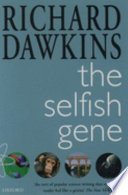
- The Selfish Gene by Richard Dawkins
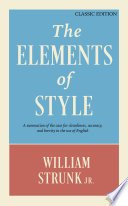
- The Elements of Style by William Strunk Jr.
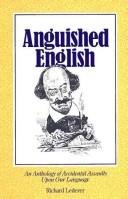
- Anguished English by Richard Lederer
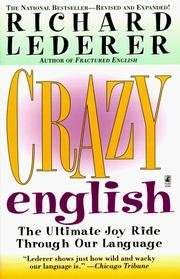
- Crazy English by Richard Lederer
- Mental Immunity by Andy Norman
- The Idea of Decline in Western History by Arthur Herman
- 36 Arguments for the Existence of God by Rebecca Goldstein
- Blink by Malcolm Gladwell
- Ever Since Darwin by Stephen Jay Gould
- Order Without Law by Robert C. Ellickson
Steven Arthur Pinker is a Canadian cognitive psychologist, psycholinguist, popular science author, and public intellectual. He is an advocate of evolutionary psychology and the computational theory of mind. Pinker is the Johnstone Family professor of psychology at Harvard University. During various podcast appearances on platforms such as How I Write, The Daily Stoic, The Jordan Harbinger Show, and Lex Fridman Podcast, Pinker recommended and discussed several books relating to language, cognitive psychology, and history. He recommended Richard Lederer's Crazy English and Anguished English as delightful works highlighting quirks, oddities, and blunders in the English language. Pinker also recommended Andy Norman's Mental Immunity, using it to draw an analogy between virulent biological pathogens and virulent cognitive ideas. To illustrate the long historical trend of intellectuals predicting civilizational collapse, Pinker recommended Arthur Herman's The Idea of Decline in Western History. When asked how to speak about artificial intelligence and engineering culture to the public, he suggested reading sections of his own book, Enlightenment Now. Additionally, Pinker discussed Charles Darwin's historical works The Expression of the Emotions in Man and Animals and The Variations of Animals and Plants Under Domestication, and he referenced Robin Hanson and Kevin Simler's The Elephant in the Brain when discussing benign hypocrisies and common pretenses.
Books recommended by Steven Pinker
-
The Selfish Gene
The Selfish Gene by Richard Dawkins is a prominent popular science book exploring evolution through a gene-centric view of natural selection.
Discussed“It was made famous 50 years ago in Richard Dawkins's book the the selfish gene where it because it poses a puzzle for evolutionary biology...”
Where to get it
-
The Elements of Style
The Elements of Style by William Strunk Jr.
Discussed“it was reiterated centuries later in the famous style manual the elements of style by white where professor in lectures at Cornell that EB White recalled and then turned into a book would say that the first rule of writing is omit needless words.”
Where to get it
-
Anguished English
Anguished English by Richard Lederer is a humorous and entertaining collection that explores the hilarious blunders, fractured syntax, and amusing oddities of the English language.
Recommended“Letterer has written a number of delightful books like Crazy English and Anguished English.”
Where to get it
-
Crazy English
Crazy English by Richard Lederer is a well-known exploration of the bizarre, contradictory, and humorous aspects of the English language.
Recommended“Letterer has written a number of delightful books like Crazy English and Anguished English.”
Where to get it
-
Enlightenment Now
Enlightenment Now by Steven Pinker is a widely acclaimed book that uses data and numerous charts to argue for long-term human progress, global prosperity, and the triumphs of reason and science.
Recommended“well I'd the short answer would be to read the sections that I wrote an Enlightenment”
Where to get it
-
Mental Immunity
Mental Immunity by Andy Norman is a philosophy book that explores how to protect the human mind from dangerous, manipulative, and virulent ideas by applying principles akin to biological immunology.
Recommended“my friend philosopher andrew norman wrote a book called i think mental immunity where he pushes very hard the analogy between virulent pathogens and virulent ideas”
Where to get it
-
The Idea of Decline in Western History
The Idea of Decline in Western History by Arthur Herman is an insightful historical examination that traces how successive generations of thinkers have predicted the impending collapse of Western civilization.
Recommended“and there's a very a good book by arthur hermann called the idea of decline in western civilization which which shows that sometime starting probably with the romantic movement in the mid-19th century there has been a whole parade of people saying it's uh we're on the verge of collapse”
Where to get it
-
36 Arguments for the Existence of God
Discussed“when she talked about her novel 36 arguments for the existence of God a work of fiction which is kind of a great”
Where to get it
-
Blink
Blink by Malcolm Gladwell is a popular psychology book that examines the power of the adaptive unconscious and how people make snap judgments based on thin slicing.
Discussed“about 20 years ago as a result of a bestseller by malcolm gladwell called blink there was the popular idea people in in business love it that you should go with your gut”
Where to get it
-
Ever Since Darwin
Discussed“Stephen Jay Gould first collection ever since Darwin also excellent example of lively writing”
Where to get it
-
Order Without Law
Discussed“Um but in the in the case of say you know Austramm and others like I think it's Larry Ellson order without law where the the the theory was that nothing short of enforcement by a third party can get people to stop overg grazing the commons.”
Where to get it
-
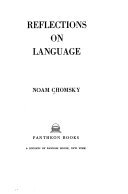
Reflections on Language
Discussed“it was one of the things I would say the I read as a college student the book reflections on language by Noam Chomsky spent most of his career here at MIT”
Where to get it
-
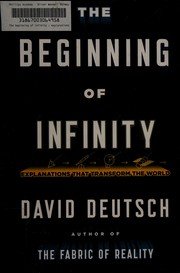
The beginning of infinity
The Beginning of Infinity by David Deutsch is a profound work of popular science and philosophy exploring human progress, knowledge creation, and cosmic optimism.
Discussed“certainly this book enlightenment now is influenced by David Deutsch as the beginning of infinity a rather deep reflection on knowledge and the power of knowledge to improve the human condition”
Where to get it
-
The Better Angels of Our Nature
The Better Angels of Our Nature by Steven Pinker is a sweeping historical and data-driven book arguing that violence has steadily declined over the course of human history.
Discussed“in the better angels i talked about for example the the decline of tribal raiding and feuding and and then blood feuds”
Where to get it
-
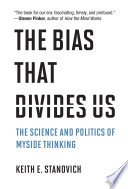
The Bias That Divides Us
Discussed“this is one of the conclusions from keith stanovich in his book the bias that divides us”
Where to get it
-
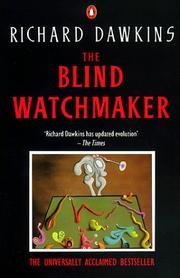
The Blind Watchmaker
The Blind Watchmaker by Richard Dawkins is a seminal science book arguing that the complex adaptations of living organisms are shaped by natural selection rather than conscious design.
Discussed“Richard Dawkins two books the blind watchmaker and The Selfish Gene or enormous Li influential partly for mainly for the content but also for the writing style”
Where to get it
-
The elephant in the brain
The Elephant in the Brain by Kevin Simler and Robin Hanson is an insightful exploration of human behavior, hidden motives, and the unconscious evolutionary reasons behind why people act the way they do.
Discussed“I think a better a somewhat different case um other than an an outer lie would be a um a kind of um a gental benign hypocrisy where people where you have a common pretense and you're sometime collaborator Robin Hansen writes about that in his book with Kevin Similar where he gives some examples and I actually repeat them”
Where to get it
-
The Expression of the Emotions in Man and Animals
The Expression of the Emotions in Man and Animals by Charles Darwin is a classic scientific text examining the evolutionary origins and universal nature of emotional displays across species.
Discussed“NEIL: He had a whole book on it. STEVEN: A whole book on the expression of the emotions in animals and man.”
Where to get it
-
The History, Civil, Political and Military, of the Southern Rebellion
Discussed“I read a book called the history of force self-published by a political scientist named James Payne on the historical decline of violence and that was one of the inspirations for the better angels of our nature”
Where to get it
-
The Variations of Animals and Plants Under Domestication, Volume 1
The Variations of Animals and Plants Under Domestication, Volume 1 by Charles Darwin is a foundational scientific work exploring how traits are altered through selective breeding and domestication.
Discussed“NEIL: He had a whole book on it. STEVEN: A whole book on the expression of the emotions in animals and man.”
Where to get it


Books by Steven Pinker
-
The Language Instinct
-

The Blank Slate
-
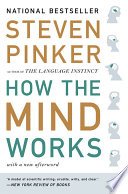
How the Mind Works
-

Words and rules
-
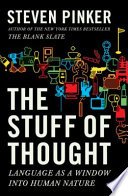
The Stuff of Thought
-
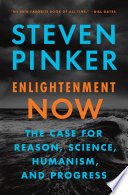
Enlightenment Now
-
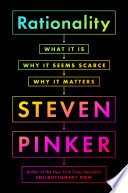
Rationality
-
The Better Angels of Our Nature
-
The Sense of Style
-
Language learnability and language development
-
When Everyone Knows That Everyone Knows...
-

The best American science and nature writing 2004
-
Language, Cognition, and Human Nature
-

Visual Cognition
-
Lexical & conceptual semantics
-
Seven Words You Can't Say on Television
-
Virtuous Violence
-
Secret Life of Verbs
Appearances
Other mentions (34: passing, ad reads, own books), the 30 most recent
“So the title of the book is When Everyone Knows That Everyone Knows... And there's a story behind that. The subtitle is Common Knowledge and the Mysteries of Money, Power and Everyday Life.”
“In a more recent book, Rationality, I tried to figure out what would seem to be obvious, namely that rationality is a good thing and science is a good thing.”
“I came to it from psychology in particular the psychology of language in a book that I wrote 15 years ago the stuff of thought language is a window into human nature”
“Now the the answer to your puzzle and that's I I devote a chapter in the book uh to what common knowledge could actually consist of and and I'm a psychologist.”
“Oh uh one possibility is to revisit the uh all the indicators of progress. What's the report card on the world 10 years after I published uh enlightenment now?”
“So here's the the what I what I proposed in a previous book, The Stuff of Thought, Language is a window into human nature.”
“And there's a whole chapter called weasel words in when everyone knows that everyone knows it's about indirect language.”
“In in the the book I have a chapter called the cancelling instinct where I try to as a psychologist to try to figure out just what's going on.”
“And here I I reiterate an idea that I developed in my previous book rationality of why rational species can entertain.”
“And likewise, I have a quote from Thomas Edison in Enlightenment Now on how the electricity will liberate women.”
“and in the case of Larry Summers part of it was that he based some of his arguments on a chapter in one of my books called gender in the blank slate the modern denial of human nature so I felt I already had a dog in that fight”
“that's another chapter in my book rationality it pertains to what sometimes called expected utility theory”
“he he did write a book that for which i wrote a forward called everybody lies”
“i do have a graph in my previous book enlightenment now showing working hours in the united states and europe which have gone uh way down for more than 60 hours a week to fewer than 40 hours”
“i know that's uh something i deal with in in enlightenment now uh because if i'm just saying well look at the way the new york times sensationalizes this the story this morning”
“so this is i mean this is kind of a theme of my last book uh enlightenment now i also go into the psychology in more detail in my new book rationality which is among other things about how our sense of risk and probability and prevalence are driven by images and anecdotes and narratives”
“so this is i mean this is kind of a theme of my last book uh enlightenment now i also go into the psychology in more detail in my new book rationality which is among other things about how our sense of risk and probability and prevalence are driven by images and anecdotes and narratives”
“and then in better angels of our nature uh a term of course that i stole from abraham lincoln but it fit the idea perfectly i showed that it's not just a theoretical possibility it's happened”
“and and then enlightenment now i broadened that to other measures of human well-being such as poverty and illiteracy and work hours and and uh happiness”
“not only did an enlightenment now do i present the case for liberal cosmopolitan humanism against nationalist populist reactionary thinking”
“if i can allude to another cheeky passage toward the end of enlightenment now i say well is do we need to have uh”
“In the case of Larry Summers, part of it was that he based some of his arguments on a chapter in one of my books called Gender in the Blank Slate, the Modern Denial of Human Nature.”
“I read a book called the history of force self-published by a political scientist named James Payne on the historical decline of violence and that was one of the inspirations for the better angels of our nature”
“and then it is was a topic of my book the blank slate in the modern denial of human nature”
“so the the blank slate the modern denial of human nature just was released in 2016 with an afterword was about the idea that that there is no such thing as human nature that we are blank slates written on by our parents by by the culture by education”
“and of course that was what led to my more recent book the better angels of our nature”
“absolutely so I second to last book the one just before my current book enlightenment now but the previous book was called the sense of style it was a writing manual where I began to began”
“absolutely so I second to last book the one just before my current book enlightenment now”
“he wrote the foreword to the french translation of the better angels of our nature”
“but I I uh in my my style manual the sense of style I um recommend hanging on to them”