
Person
Every book Mike Munger recommended on podcasts
Across 2 podcasts. Every show Mike Munger appears on, in one place — not just one.
Mike Munger’s most recommended books
- The Federalist papers by Alexander Hamilton, James Madison, John Jay, James Madison, John Jay
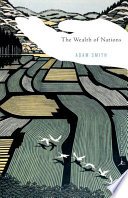
- The Wealth of Nations by Adam Smith
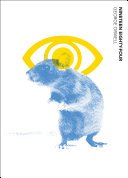
- 1984 by George Orwell
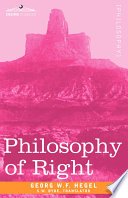
- Philosophy of Right by Georg H. W. Hegel
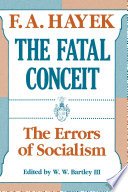
- The Fatal Conceit by F. A. Hayek
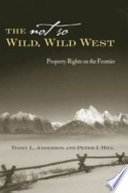
- The Not So Wild, Wild West by Terry Lee Anderson
Mike Munger is an academic and commentator. He has discussed multiple works across economics and political philosophy on podcasts. He quoted F.A. Hayek's The Fatal Conceit to explain how individuals must constantly adjust their lives and thoughts to live simultaneously within different orders according to different rules. Munger brought up Georg Wilhelm Friedrich Hegel's Philosophy of Right to explain the philosophical origins of romanticism and views on the state, and referenced Adam Smith's The Wealth of Nations to illustrate the division of labor using the famous pin factory example and the theorem that the division of labor is limited by the extent of the market. He also mentioned George Orwell's 1984 while discussing societal surveillance, quoted James Madison from the Federalist Papers on government structure and ambition counteracting ambition, and referenced Terry Anderson and P.J. Hill's The Not So Wild, Wild West to show how people in the old West organized property rights without a centralized state.
Books recommended by Mike Munger
-
The Federalist papers
The Federalist papers by Alexander Hamilton, James Madison, John Jay, James Madison, John Jay is a foundational collection of essays advocating for the ratification of the United States Constitution.
Discussed“so the number of them have actually said you know those federalist papers that really interesting”
Where to get it
-
The Wealth of Nations
The Wealth of Nations by Adam Smith is a foundational text in classical economics that explores the nature and causes of national wealth through the division of labor, productivity, and free markets.
Discussed“The pin factory he writes about as one example. You can read about that in the Wealth of Nations and there other places.”
Where to get it
-
1984
George Orwell's classic dystopian novel 1984 presents a chilling vision of a totalitarian society characterized by perpetual surveillance, historical denial, and severe psychological manipulation.
Discussed“he used the metaphor of the prison panopticon as a way to illustrate the sort of society that and the the actually a number of authors in the the book 1984 is clearly that sort of constant surveillance of everyone”
Where to get it
-
Philosophy of Right
Philosophy of Right by Georg Wilhelm Friedrich Hegel is a foundational political philosophy text published in 1821 that explores the evolution of right, morality, and the ethical life of the state.
Discussed“So in 1821, Friedrich Hegel published a book, The Philosophy of Right.”
Where to get it
-
The Fatal Conceit
The Fatal Conceit by F.A.
Discussed“So now going back to, and this is from the fatal conceit, part of our present difficulty is that we must constantly adjust our lives, our thoughts, and our emotions in order to live simultaneously within different kinds of orders, according to different rules.”
Where to get it
-
The Not So Wild, Wild West
Discussed“in a way there's a book by Carrie Anderson and PJ Hill called the not so wild wild west they talk about the California Gold Fields and the fact that people came up with ways of allocating property rights and adjudicated dispute”
Where to get it

Books Mike Munger wrote
Appearances
| Episode | Podcast | Date | Books |
|---|---|---|---|
| Public Choice and Politics Without Romance (with Mike Munger) | EconTalk | 2026-09-28 | 2 |
| What Is Capitalism? (with Mike Munger) | EconTalk | 2025-07-07 | 2 |
| Michael Munger on Antitrust | EconTalk | 2022-04-25 | 1 |
| Political Science, Trump, and Libertarianism | Mike Munger | POLITICS | Rubin Report | The Rubin Report | 2017-07-21 | 3 |
Other mentions (1: passing, ad reads, own books)
“So your next book which is called tomorrow 3.0 this is sort of partly what it's going to be about”