
Person
Every book Michael Orthofer recommended on podcasts
Michael Orthofer’s most recommended books
- School for atheists by Arno Schmidt
- The loser by Thomas Bernhard
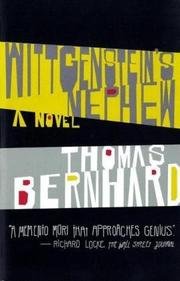
- Wittgenstein's Nephew by Thomas Bernhard
- Crime and Punishment by Fyodor Dostoevsky
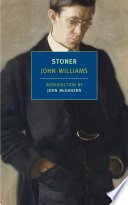
- Stoner by John Williams
- The Last Samurai by Helen Dewitt
Michael Orthofer appears as a guest on Conversations with Tyler, where he shares extensive insights into global fiction, translated literature, and the editorial landscape of lesser-known or overlooked literary classics. During the interview, Michael Orthofer recommends Arno Schmidt's School for Atheists, suggesting it as an accessible entry point in English before attempting the author's more demanding work, Bottom's Dream. He also expresses a deep admiration for Thomas Bernhard, highlighting Wittgenstein's Nephew as his personal favorite alongside The Loser. Expanding beyond his primary recommendations, Michael Orthofer discusses the broader scope of Russian literature, arguing that readers miss immense cultural depth if they restrict themselves strictly to widely established top-tier masterpieces like Crime and Punishment or War and Peace. Moreover, he touches upon John Williams's novel Stoner and Helen DeWitt's The Last Samurai as prime examples of critically acclaimed works that unfortunately vanished from public view for extended periods before experiencing literary rediscovery. Through these thoughtful reflections, Michael Orthofer establishes himself as a knowledgeable advocate for deep reading, translation, and the preservation of neglected artistic masterworks.
Books recommended by Michael Orthofer
-
School for atheists
School for Atheists by Arno Schmidt is a dense, linguistically inventive novel by the pioneering German postmodernist writer, offering a satirical and intellectually demanding exploration of post-World War II Germany, religion, and philosophy.
Recommended“well if you eventually want to read bottoms dream then the school for atheists is the one term that's in English now”
Where to get it
-
The loser
The Loser by Thomas Bernhard is a profound and intensely psychological novel by the celebrated Austrian author that explores obsession, artistic failure, and the crushing weight of perfectionism through the lens of Glenn Gould and classical music.
Recommended“my favorite and then the loser they don't go gay yeah”
Where to get it
-
Wittgenstein's Nephew
Wittgenstein's Nephew by Thomas Bernhard is a brilliant autobiographical novel that examines the author's complex, poignant friendship with Paul Wittgenstein, a nephew of the famous philosopher, highlighting shared eccentricities, institutionalization, and the tragicomic nature of human existence in mid-century Vienna.
Recommended“I don't think I've been disappointed by any any Bernhardt Wittgenstein's nephews my favorite”
Where to get it
-
Crime and Punishment
Crime and Punishment by Fyodor Dostoevsky is a profound psychological novel that explores guilt, morality, and the severe consequences of moral relativism and nihilism.
Discussed“and I mean we have these established books like Warren peace or Crime and Punishment but Russian literature goes so so much deeper”
Where to get it
-
Stoner
Stoner by John Williams is a critically acclaimed 20th-century novel that follows the quiet, melancholy academic life of an unheralded university professor against the backdrop of mid-century America.
Discussed“stoner John Williams this is a book that disappeared from view for a long time”
Where to get it
-
The Last Samurai
The Last Samurai by Helen DeWitt is a critically acclaimed and inventive novel that follows a single mother raising a precocious young boy in Tokyo as he becomes obsessed with Akira Kurosawa's film.
Discussed“Helen do it's the Last Samurai was just refine distorted and Amazon and excited to get my copy”
Where to get it

Appearances
| Episode | Podcast | Date | Books |
|---|---|---|---|
| Michael Orthofer on Why Fiction Matters | Conversations with Tyler | 2016-07-27 | 6 |
Other mentions (1: passing, ad reads, own books)
“he did the definitive magic mountain in Boonton Vaux and but he's always been translating a low Schmidt for decades”