
Person
Every book Gergely Orosz recommended on podcasts
Key facts
- Gergely Orosz has recommended or discussed 24 books on podcasts, as of October 29, 2026.
- Gergely Orosz has talked about books on 1 podcast, as of October 29, 2026.
- Those books came up in 20 episodes, as of October 29, 2026.
- The 3 books Gergely Orosz has mentioned in the most episodes, as of October 29, 2026: A Philosophy of Software Design, AI Engineering and Software Engineering at Google.
- The latest episode with a book mention from Gergely Orosz aired on October 29, 2026.
Updated
Gergely Orosz’s most recommended books
- A Philosophy of Software Design by John K. Ousterhout
- AI Engineering by Chip Huyen
- Software Engineering at Google by Titus Winters
- Vibe Coding by Gene Kim
- Code Complete by Steve McConnell
- Observability Engineering by Charity Majors
- Building Resilient Distributed Systems by Sam Newman
- Designing Data-Intensive Applications by Martin Kleppmann
- Refactoring by Martin Fowler
- Test-driven Development by Kent Beck
Gergely Orosz appeared on podcasts discussing various software engineering and technical books, sharing recommendations and insights from his reading. He discussed Will Larson's books, noting that he took a lot of guidance from An Elegant Puzzle and highlighting the interesting ideas presented in Crafting Engineering Strategy. Orosz brought up Addy Osmani’s short book Software Engineering - The Soft Parts, praising it as a free and really good read during a conversation about writing workflows. When talking with Charity Majors, Orosz reacted to the substantially expanded second edition of Observability Engineering and recommended it in the episode outro. He also mentioned Chip Huyen’s book AI Engineering, noting that it captured durable ideas that do not frequently change in the field. Additionally, Orosz highlighted John K. Ousterhout’s A Philosophy of Software Design, pointing out that many people in the tech world view it as one of the best books providing specific, actionable ways to think about software design, and he recommended it to listeners in his closing remarks.
Books recommended by Gergely Orosz
-
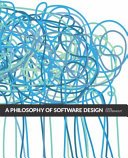
A Philosophy of Software Design
A Philosophy of Software Design by John K.
Recommended“It's one of the philosophy of software design. I just love this book. It's still to this day, the only book that actually compares architecture approaches between like groups of students and what we can learn from that.”
Where to get it
-
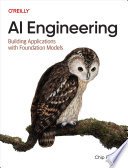
AI Engineering
AI Engineering by Chip Huyen provides a comprehensive examination of building and navigating systems within the fast-paced field of artificial intelligence.
Recommended“And there are books coming up. I remember you interviewed Chip and she has a lovely book on how to build as an AI engineer. Yeah. Yeah. She she actually captured a lot of the things that are not really changing anymore.”
Where to get it
-
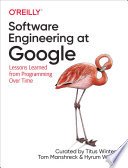
Software Engineering at Google
Software Engineering at Google by Titus Winters, Tom Manshreck, and Hyrum Wright documents the engineering practices, cultural values, and scaling strategies that sustain Google's massive codebases.
Discussed“Speaking of hard hard lessons and and documenting them, can we talk about software engineering Google, the book that you're quite well known for?”
Where to get it
-
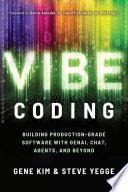
Vibe Coding
Vibe Coding by Gene Kim and Steve Yegge is a book exploring the intersection of modern software development, artificial intelligence tools, and shifting industry practices.
Discussed“So, in this book, Vibe Coding, I remember last time you were on the podcast, this book was about to come out and I was reading an early version of it or so.”
Where to get it
-
Code Complete
Code Complete by Steve McConnell is a comprehensive software construction guide that covers software engineering best practices, debugging, detailed design, and coding style.
Discussed“Code Complete is a single bus book on code construction which includes coding, debugging, detailed design, testing, and many more topics. It's also the most detailed one with an impressive 900 pages.”
Where to get it
-
Observability Engineering
Observability Engineering by Charity Majors, Liz Fong-Jones, and George Miranda is a comprehensive technical guide on monitoring and managing complex software systems.
Discussed“And when it comes to observability, I cannot not mention your book Observability Engineering and you have a second edition.”
Where to get it
-
Building Resilient Distributed Systems
Discussed“So I I wanted to talk to you about your latest book that is just coming out. Building resilience distributed systems. Yeah. What is the book about and why did you feel this is a good time to write it?”
Where to get it
-
Designing Data-Intensive Applications
Designing Data-Intensive Applications by Martin Kleppmann is widely regarded as an essential guide for engineers building large-scale back-end systems and distributed architectures.
Discussed“Designing data intensive applications has been the go-to book for anyone building large back-end systems. 9 years after publishing this book, the second edition is here. Martin Kleppmann is the author of this generational book.”
Where to get it
-
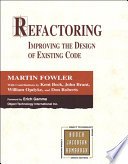
Refactoring
Refactoring by Martin Fowler, Kent Beck, John Brant, William Opdyke, and Don Roberts is a foundational software engineering text that explores how to improve the design of existing code and make maintainability more manageable.
Discussed“So speaking about refactoring, LM are very good at refactoring and and you you've written the book back in 1999 called Refactoring. This is now the second edition which 20 years later it's it's been refreshed.”
Where to get it
-
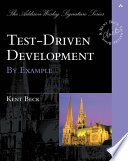
Test-driven Development
Discussed“And then when did TDD come along? Because there was a book that you you wrote that came out, I think two years later, uh, test-driven development by example. And how did it relate to XP?”
Where to get it
-
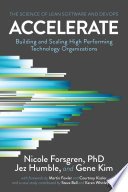
Accelerate
Accelerate by Nicole Forsgren, PhD, Jez Humble, and Gene Kim is a research-backed guide that examines software delivery performance, organizational culture, and DevOps practices.
Recommended“the the book accelerate uh I think had had a huge impact as well I see it on the shelves of almost every engineering leader and if you've not read it I I think it's a great read to start with at least”
Where to get it
-
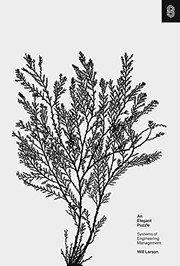
An Elegant Puzzle
An Elegant Puzzle by Will Larson is a respected guide on engineering management that offers practical frameworks and systems thinking for scaling engineering organizations.
Recommended“And and so so positively or I I remember the both the elegant puzzle and staff engineer. I read it and I took I took a lot of guidance from it.”
Where to get it
-
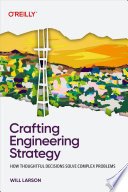
Crafting Engineering Strategy
Crafting Engineering Strategy by Will Larson is a specialized management book that offers strategic frameworks for engineering leaders navigating organizational growth and technical direction.
Recommended“And certainly, I think Crafting Enduring Strategy came out last year and I think it's you know, the the newest one, but I think there's like a lot of interesting ideas in there for for sure.”
Where to get it
-
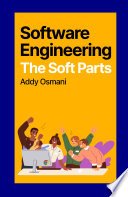
Software Engineering - The Soft Parts
Software Engineering - The Soft Parts by Addy Osmani is a concise guide focused on the non-technical and organizational skills vital for engineering success.
Recommended“You've written the short book Software Engineering the Soft Parts, a free book, about 50 pages, a really good read.”
Where to get it
-
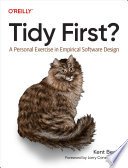
Tidy First?
Tidy First? by Kent Beck is a software development book that explores the philosophy and practice of small, deliberate structural changes to codebases to improve maintainability before tackling larger feature implementations.
Recommended“And then I also enjoyed Kent Beck's tidy first book. It's a really thin book, but I just like how crisp every single idea is, even though like that book might be a bit less relevant when you're writing a bit less code”
Where to get it
-
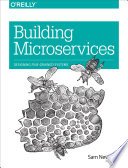
Building Microservices
Discussed“You have written the book Building Microservices uh in in 2015 you started to write it in 2014 and as reference Uber started to talk about how they have thousands of microservices in 2015.”
Where to get it
-
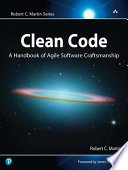
Clean Code
Clean Code by Robert C.
Discussed“slightly different topic, but you and Uncle Bob, Robert Martin, had an interesting discussion about his book Clean Code Online where you you both like wrote uh your your thoughts on on different parts and there were a few parts where you your opinions diverged”
Where to get it
-
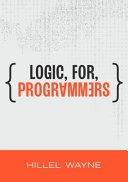
Logic for Programmers
Discussed“In your book Logic for Programmers, you argue that formal logic is probably one of the most useful parts for for day-to-day engineering. Why why is this?”
Where to get it
-
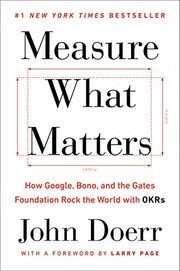
Measure what matters
Measure What Matters by John Doerr is a prominent business and management book that popularizes the objectives and key results framework.
Critiqued“the book Measure What Matters was published in 2018 and from there on it's really blown up and I think everyone's like using OKRs cuz it like there's this narrative that OKRs make Google successful.”
Where to get it
-
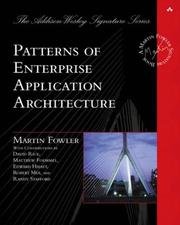
Patterns of Enterprise Application Architecture
Patterns of Enterprise Application Architecture by Martin Fowler is an influential software development manual cataloging tested design strategies for large-scale business systems.
Discussed“You wrote the book patterns of enterprise application architecture in 2002 and this was a collection of more than 40 patterns uh things like lazy load identity map template view and many others.”
Where to get it
The other 4 books Gergely Orosz recommended or discussed, ranked
- Programming TypeScript by Boris Cherny
- Site Reliability Engineering by Betsy Beyer
- Software Architecture by Mary Shaw
- The Mythical Man-Month by Frederick P. Brooks Jr.
Books Gergely Orosz wrote
Appearances
Other mentions (45: passing, ad reads, own books), the 30 most recent
“Before, he spent more than 10 years at Google, was the lead author of the book Software Engineering at Google, and ran the company's readability program.”
“You probably read the SRE book that existed, which is the Google SRE book, right?”
“Sam Newman is the author who wrote probably the most widely read book on microservices. And yet, as you heard, he said that microservices are an architecture of the last resort.”
“And his latest book, Building Resilient Distributed Systems, is out now. Today, we cover specs versus code as the source of truth and why Sam says that production is truth.”
“And then, as closing, we I think a lot of what we talked about is it's important to hold the architecture in your head, to think about the architecture, think how to modularize. Now, for engineers who want to get better at this kind of high-level thinking, strategic thinking, architectural thinking, outside of reading your book”
“So, where can people get your book? You can go and order it now. If you can go and buy it from a local bookshop, that's always a great idea. It's also going to be available for people on the right platform in in sort of digital form.”
“Boris Cherny, Tibor Bata uh OpenAI they both have been really really good software engineers. Boris wrote one of the first TypeScript books. The first TypeScript book from O'Reilly.”
“I'm sure at some point you'll get to mythical man month. Yeah, I've got it already.”
“Instead, he went back to classic software engineering books. The pragmatic programmer, a philosophy of software design, and domain driven design.”
“Instead, he went back to classic software engineering books. The pragmatic programmer, a philosophy of software design, and domain driven design.”
“Instead, he went back to classic software engineering books. The pragmatic programmer, a philosophy of software design, and domain driven design.”
“Check out the show notes below for an interview with John Auster How, the author of a Philadelphia software design, a book I really love, and related deep dives for AI engineering and context engineering.”
“You've written Leading Effective Teams 2 years ago and last year Vibe Coding.”
“You've written Leading Effective Teams 2 years ago and last year Vibe Coding.”
“He's taught TLA+, a popular formal specification language across the industry, wrote the book Logic for Programmers, and will soon be joining Anthesis.”
“And my plan was leave Uber, finish writing the software engineer's guidebook, which is something I started writing at Uber, just finish it in six months.”
“There's a book about a chaos. I'm not sure if Chaos Monkeys covers it, but, but it has been really well documented where Meta went full on, on wartime mode.”
“Right now, this book stayed surprisingly durable for AI because it doesn't, it didn't contain too much about coding to start with. But the non-technical parts, things like understand the business, think about software architecture, those are more relevant”
“When did XP extreme programming recall start to become big? Was it as you gave it a name and you started telling people or then there was your book which came out in the year 2000?”
“If you've read Designing Data-Intensive Applications, you know that building systems that scale is all about trade-offs, but one thing isn't a trade-off, that's enterprise features. The moment you land bigger customers, you need SSO, directory sync, R back, audit logs, all the things they expect out of the box.”
“He is one of the authors of the Agile Manifesto in 2001, the author of the popular book Refactoring, and regularly publishes articles on software engineering on his blog.”
“there was your book about enterprise uh architecture patterns there was also the gang of four book there was a lot of talk when I was interviewing around that time on interviews they were asking me questions about how to do a factory pattern”
“You're an author of a lot of different books, leading effective engineering teams.”
“This came out about a year ago, and now your latest book is is called Beyond Vibe Coding.”
“So I start I got a Python book you know Python 101 and then you you emailed me saying could you do Android?”
“And so you know today like when I was writing my book the software engineers guide book that was published uh two years ago one topic I was really unsure of should I include it or not a little bit to your agile thing was genai”
“last time we talked you just finished Tidy First. You were actually signed this book when we were in in in San Francisco.”
“Yeah, but it feels a bit like, you know, the Harry Potter wand. Like when when you watch the movies, like, you know, at first it sounds magical when you read the book, like you can do all these spells, but if you're a hardcore Harry Potter fan”
“Before we jump back into the episode, I want to let you know that the audiobook version of my bestselling book, The Software Engineers Guide Book, is out now. You can get it on all major audiobook platforms”
“Here's a review from the book from senior principal engineer Tanya Reley who is the author of the staff engineer's path. From performance reviews to P95 latency, from team dynamics to testing”