Person
Every book Francis Ford Coppola recommended on podcasts
Francis Ford Coppola appeared on The Daily Stoic to discuss how philosophy, historical context, and classic literature have profoundly shaped his life, worldview, and cinematic career. As a legendary filmmaker and voracious reader, Coppola reflected on the complex events leading up to monumental historical shifts, recommending Mike Duncans The Storm Before the Storm for its illumination of the history preceding Caesar crossing the Rubicon. He also expressed great enthusiasm for Stephen Greenblatts scholarship, strongly recommending The Swerve as an incredible book that introduced him deeply to Epicurean philosophy, while also praising Greenblatts Will in the World and Tyrant for their exploration of Shakespearean politics and the enduring practice of adapting old stories into fresh contexts. Coppola recommended Gore Vidals historical novel Burr as a great read and detailed how reading the sixteenth-century Chinese classic The Story of the Stone, also known as Dream of the Red Mansion, directly inspired changes in his film Megalopolis by capturing the profound significance of characters dream lives. Additionally, he discussed Johann Wolfgang von Goethe's Wilhelm Meister as a prime example of literary borrowing, comparing Goethe's emulation of Shakespeare to Shakespeare's own inspiration drawn from Plutarch, Montaigne, and classical folklore.
Books recommended by Francis Ford Coppola
-
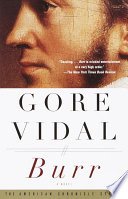
Burr
Burr by Gore Vidal is a historical fiction novel that offers a provocative and unconventional look at the life of one of America's founding fathers, Aaron Burr.
Recommended“By the way, have you ever read Gore Vidal's book on Aaron Burr? No, that's another great book.”
Where to get it
-
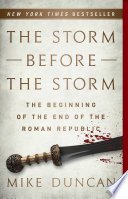
The Storm Before the Storm
The Storm Before the Storm by Mike Duncan is a compelling historical account chronicling the turbulent decades leading up to the collapse of the Roman Republic.
Recommended“One of my favorite books is called "The Storm Before the Storm," and the idea is that we just see Caesar crossing the Rubicon one day as if it just popped into his head, as if there wasn't all this history and all these other events leading up to this major event.”
Where to get it
-
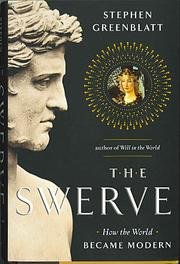
The swerve
The Swerve by Stephen Greenblatt is a historical nonfiction book that explores how the rediscovery of a long-lost Roman poem by Lucretius in 1417 helped ignite the modern world.
Recommended“there's a wonderful book that I recommend to you that you'll thank me a million times that it's a good read it's called the swerve have you ever heard of it yes Incredible Book oh you read it yes Ste stepen Steven greenblood is a is a is a treasure yeah he he wrote he's a Shakespearean scholar but he”
Where to get it
-
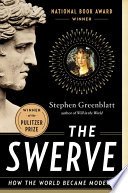
The Swerve: How the World Became Modern
The Swerve: How the World Became Modern by Stephen Greenblatt is a historical non-fiction work that traces the rediscovery of Lucretius's ancient philosophical poem On the Nature of Things by Poggio Bracciolini in 1417, arguing that this recovery helped ignite the Renaissance and shape modernity.
Recommended“There's a wonderful book that I recommend to you that you'll thank me a million times for; it's called "The Swerve." Have you ever heard of it?”
Where to get it
-
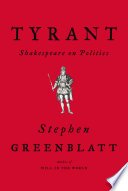
Tyrant: Shakespeare on Politics
Tyrant: Shakespeare on Politics is a critical analysis by Stephen Greenblatt that examines how William Shakespeare used his plays to explore the mechanics of power, corruption, and tyranny in political leadership.
Recommended“He has a book called "Tyrant" as well, which I loved, but I was thinking there's a common theme between this movie and Apocalypse Now, as well as the theme of Shakespeare: the ability to find old stories and place them in a new context while preserving the arcs, characters, and morals.”
Where to get it
-
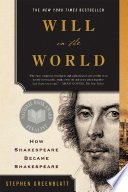
Will in the World: How Shakespeare Became Shakespeare (Anniversary Edition)
Will in the World: How Shakespeare Became Shakespeare by Stephen Greenblatt is a widely acclaimed biographical study that reconstructs the life and cultural environment of William Shakespeare to understand the origins of his genius.
Recommended“All right, let's talk because you mentioned Shakespeare. Greenblatt wrote this amazing book called "Will in the World" that I found incredible.”
Where to get it
-
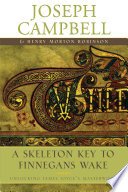
A Skeleton Key to Finnegans Wake
Discussed“And maybe a period where it's an apparent disaster, but over time, you know, I once read an article that James Joyce was talking about 'Finnegans Wake.' And he said, 'I'm going to put so much interesting stuff in this that it's going to take, you know, uh, 50 years for people to figure out what's in it and it'll”
Where to get it
-
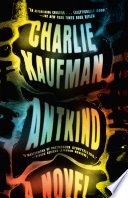
Antkind
Antkind by Charlie Kaufman is a wildly surreal, epic debut novel that follows a disgruntled film critic on a bizarre, cross-country odyssey after he discovers a potentially masterpiece-level, three-month-long stop-motion movie.
Discussed“Sure, he wrote a book, a novel called 'Antkind,' a seven- or eight-hundred-page book called 'Antkind.' And that's what Google said: if you want to read something about being a... so I got it, and damned, if you know, as I said, everything I read changes my movie, but this book is changing my life because it's so, I finished”
Where to get it
-
De Bello Gallico Libri Vii.
Discussed“Well, the schoolboys in the founding of our nation were reading Caesar and the Gallic Wars. They knew it all by heart.”
Where to get it
-
De Rerum Natura
De Rerum Natura by Titus Lucretius Carus is a classical philosophical poem exploring Epicurean physics, atomism, and the nature of the universe.
Discussed“Yeah, on the nature of things.”
Where to get it
-
Ideal and Actual in the Story of the Stone
Discussed“For example, one time I chose a great Chinese book called "The Story of the Stone" or "Dream of the Red Mansion" written in the 16th century. I found myself trying to change Megalopolis to be more like that, which I actually did, because that was one of the few books I ever read where the dream life of the”
Where to get it
-
Papyrus
Papyrus by Irene Vallejo is a narrative history of books and the written word in the ancient world, tracing the origins of libraries, scrolls, and literature.
Discussed“I was just reading a book called "Papyrus," which covers the history of paper and early writings. One of the things the author notes is that scrolls, because they weren't books, were stored in specific boxes that often held seven scrolls.”
Where to get it
-
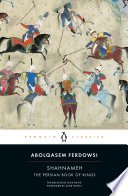
Shahnameh
Shahnameh by Abolqasem Ferdowsi is a monumental and influential early Persian epic that chronicles the mythical and historical tales of ancient kings, embodying timeless themes of good and evil.
Discussed“Have you ever read that beautiful Persian book called the Shahnameh by Ferdowsi? No, that's like Gilgamesh! It's an early Persian epic, and it's great—a tale of kings!”
Where to get it
-
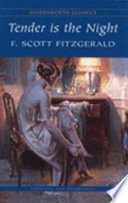
Tender is the Night
Tender is the Night by Francis Scott Fitzgerald is a classic American novel depicting the rise and tragic fall of a promising psychologist and his wealthy wife during the 1920s.
Discussed“That it wasn't successful at first, so he and his editor straightened out something, I guess, I don't know which version I have. But I think what's unusual is that in the original 'Tender Is the Night,' there's a huge flashback in the middle of it that goes back and tells the story of Nicole and Dick Diver.”
Where to get it
-
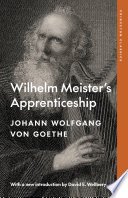
Wilhelm Meister's Apprenticeship
Discussed“He wrote a book called "Wilhelm Meister" and that was him stealing from Shakespeare. That is Goethe saying, "I want to be as much like Shakespeare as I can be," while Shakespeare was stealing from Plutarch, from Montaigne, from Danish legends, and from other plays—everyone has been stealing from one another.”
Where to get it
Books Francis Ford Coppola wrote
Appearances
| Episode | Podcast | Date | Books |
|---|---|---|---|
| Francis Ford Coppola Opens Up About How Philosophy Has Inspired His Life and Career | The Daily Stoic | 2024-09-14 | 15 |