
Person
David Eagleman's books and book recommendations
Across 3 podcasts. Every show David Eagleman appears on, in one place — not just one.
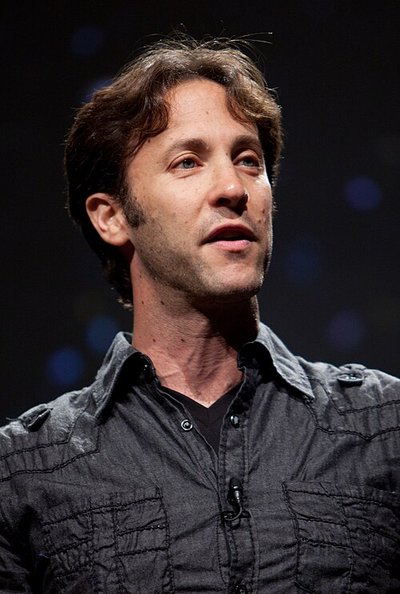
David Eagleman is an American neuroscientist, bestselling author, and science communicator. He teaches neuroscience at Stanford University and has founded several neurotech startups. He directs the non-profit Center for Science and Law, which seeks to align the legal system with modern neuroscience. He is known for his work on brain plasticity, time perception, synesthesia, and neurolaw. On podcast programs like The Tim Ferriss Show and Lex Fridman Podcast, Eagleman has shared several book recommendations and discussed works that shaped his intellectual journey. He frequently recommended Italo Calvino's Invisible Cities, praising it as an extraordinary magical realism book featuring conversations between Marco Polo and Kublai Khan. When asked for reading suggestions from his favorite authors, Eagleman recommended Gabriel García Márquez's One Hundred Years of Solitude, Jorge Luis Borges's Labyrinths, Toni Morrison's Beloved, and William Faulkner's The Bear. Furthermore, he discussed how Carl Sagan's Cosmos significantly influenced his career path after he spent his childhood watching the television series and reading the book.
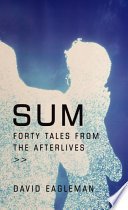
Books by David Eagleman


Books recommended by David Eagleman
-
Invisible Cities
Invisible Cities by Italo Calvino is a fantastical novel structured as a dialogue between Marco Polo and Kublai Khan, describing numerous imagined and magical cities across the Khan's empire.
Recommended“Italo Calvino's Invisible Cities is an extraordinary book about Marco Polo talking to the Great Khan, Kublai Khan, about different cities in the Khan's Empire, and it's magical realism.”
Where to get it
-
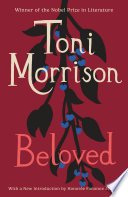
Beloved
Beloved by Toni Morrison is a powerful historical fiction novel that tells the harrowing story of Sethe, an escaped enslaved woman haunted by the trauma of her past and the literal ghost of her daughter.
Recommended“A Hundred Years of Solitude, if someone hasn't read that, Borges' Labyrinths, Toni Morrison's Beloved, essentially anything by Faulkner, The Bear is a great one.”
Where to get it
-
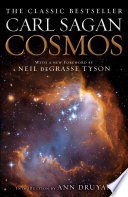
Cosmos
Cosmos by Carl Sagan is a popular science book that explores the universe, astronomy, and the interconnectedness of all life and matter through scientific inquiry.
Recommended“i grew up uh with cosmos both watching the pbs series and then reading the book and that influenced me a huge amount in terms of what i do”
Where to get it
-
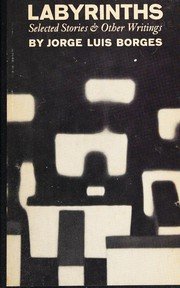
Labyrinths
Labyrinths is a celebrated collection of short stories, essays, and parables by the influential Argentine writer Jorge Luis Borges, known for its mind-bending explorations of infinity, labyrinths, mirrors, and reality.
Recommended“A Hundred Years of Solitude, if someone hasn't read that, Borges' Labyrinths, Toni Morrison's Beloved, essentially anything by Faulkner, The Bear is a great one.”
Where to get it
-
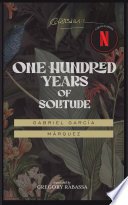
One Hundred Years of Solitude
One Hundred Years of Solitude by Gabriel García Márquez is a landmark novel that chronicles the multi-generational history of the Buendía family in the fictional town of Macondo and stands as a masterwork of magical realism.
Recommended“A Hundred Years of Solitude, if someone hasn't read that, Borges' Labyrinths, Toni Morrison's Beloved, essentially anything by Faulkner, The Bear is a great one.”
Where to get it
-
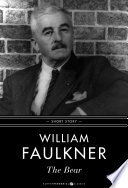
The Bear
The Bear by William Faulkner is a classic novella that explores themes of wilderness, heritage, and the complex relationship between humans and nature in the American South.
Recommended“A Hundred Years of Solitude, if someone hasn't read that, Borges' Labyrinths, Toni Morrison's Beloved, essentially anything by Faulkner, The Bear is a great one.”
Where to get it
-
Alice in Wonderland
Alice in Wonderland by Lewis Carroll is a classic literary masterpiece following a young girl who falls down a rabbit hole into a fantastical, nonsensical underground realm populated by peculiar creatures.
Discussed“I was very calm I was thinking about Alice in Wonderland and how this must have been”
Where to get it
-
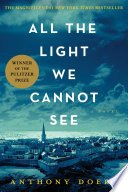
All the Light We Cannot See
All the Light We Cannot See by Anthony Doerr is a Pulitzer Prize-winning historical novel that intertwines the lives of a blind French girl and a German boy during World War II.
Discussed“uh anthony door wrote a book called all the light we cannot see which actually uh was inspired by incognito by exactly what we were talking about earlier about how you can only see a little bit of the what we call visible light in the electromagnetic radiation”
Where to get it
-
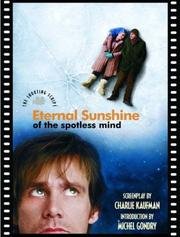
Eternal sunshine of the spotless mind
Discussed“Eternal Sunshine at the Spotless Mind Right did you ever see this movie”
Where to get it
-
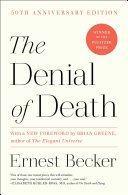
The Denial of Death
The Denial of Death by Ernest Becker is a Pulitzer Prize-winning psychological and philosophical study arguing that human civilization is ultimately driven by an unconscious terror of mortality.
Discussed“you know i i don't know if you're familiar with a philosopher named ernest becker he wrote a book called denial of death”
Where to get it
-
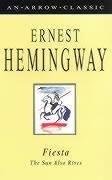
The Sun Also Rises
The Sun Also Rises by Ernest Hemingway is a classic Lost Generation novel chronicling the disillusionment, travels, and romantic entanglements of a group of American and British expatriates in Europe.
Discussed“um snows of kilimanjaro uh oh wow short stories that i love”
Where to get it

Appearances
Other mentions (17: passing, ad reads, own books)
“what I wrote about in my book incognito in years ago was this issue that really the way to think about the brain is that we are a team of rivals.”
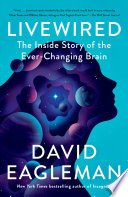
“This was my last book livewired is all about this brain plasticity stuff.”
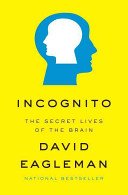
“so what my book Incognito was about of course was that almost everything in the brain is happening unconsciously you just don't have any access to it and really no awareness or acquaintance with it either”
“what's interesting by the way I talked about this in the brain plasticity course um and in my book live wir what's interesting is that given who you are and what you've already packed down into your Machinery that determines what is relevant to you for the next thing”
“and um and in my book live wir what's interesting is that given who you are and what you've already packed down into your Machinery that determines what is relevant to you”
“well I I'm I'm running a couple of new books and um so one of them is called Empire of the invisible and this is about all the stuff that we don't see”
“does Neuroscience have an explanation for this sort of thing in my book incognito the way I cast the whole thing is that the right way to think about the brain is like a Team of Rivals”
“does Neuroscience have an explanation for this sort of thing in my book Incognito”
“this is what my next book is about it's called Empire of the invisible”
“so so this was my last book called livewired and I'm using this term livewired”
“So this was my last book called Livewired, and I'm using this term livewired to indicate that this is the—it’s—you can't think of it like hardware or software; it's liveware!”
“This, by the way, is why I wrote my book Incognito some years ago, which is about everything that's running under the hood that we don't have access to.”
“And in my last book, Livewired, I talk about how memory actually has to get moved around in the brain and moved into different states,”
“then it simplifies it and we come to understand something that that was my goal in livewire which i've written over 10 years by the way is to try to distill things down to the principles of what plastic systems are trying to accomplish”
“changing livewire the name of the book is is like so i'll tell you exactly right but i'll tell you why i chose livewire instead of plasticity”
“i gave this the end of my book incognito”
“i gave this the end of my book incognito so the whole book of incognito is about you know all the what's happening in the brain”