
Person
Every book David Bessis recommended on podcasts
David Bessis is a mathematician and educator who discusses mathematical thinking and cognitive concepts on podcasts. During his appearances, Bessis has explored several notable books to illustrate complex ideas about human behavior, learning, and the mind. He referenced Steven Pinker's book The Blank Slate to discuss genetic determinism and how parents of multiple children often observe divergent outcomes that lead them to think traits are entirely genetic. When talking about how ordinary people can discover mathematical methods, Bessis brought up René Descartes's seventeenth-century work A Discourse on the Method, noting that it begins with the author describing how an ordinary person developed a powerful method. Furthermore, Bessis referenced Daniel Kahneman's Thinking, Fast and Slow to explain instinctive versus deliberate thinking modules in the brain. He even proposed expanding Kahneman's framework by adding a third, super slow mode of thinking which he defined as the mathematician's approach of examining and learning from moments when intuition is proven wrong.
Books recommended by David Bessis
-
A Discourse on the Method
Discussed“When you read Decart, Decart in the 17th century is saying, "Hey, you know, I have this crazy method that made me so smart. I was a regular person." That's really, if you read the scores on method, it really starts like that.”
Where to get it
-
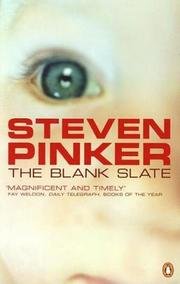
The Blank Slate
The Blank Slate by Steven Pinker is a thought-provoking exploration of human nature that challenges traditional dogmas regarding blank slate theories, genetic determinism, and the innate biological foundations of behavior.
Discussed“That's one of the thing that Steven Pinkers mentioned in his book. You know, every every parent of two kids starts to think that things are genetic because they're so different.”
Where to get it
-
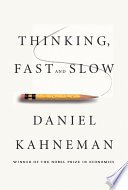
Thinking, Fast and Slow
Thinking, Fast and Slow by Daniel Kahneman is a seminal psychology book that explores the dual systems of the human mind: the fast, intuitive system and the slow, logical system.
Discussed“So I have to go back to the canonical example from Kenman about the ball and the bat. uh uh so when um so the central theory of of Kenman and Ferski is that there are basically two kind of modules in the brain to uh reach conclu conclusion one is system one is uh your instinctive answer when you”
Where to get it

Books David Bessis wrote
Appearances
| Episode | Podcast | Date | Books |
|---|---|---|---|
| Nature, Nurture, and Identical Twins (with David Bessis) | EconTalk | 2026-01-19 | 2 |
| A Mind-Blowing Way of Looking at Math (with David Bessis) | EconTalk | 2025-10-27 | 3 |
Other mentions (6: passing, ad reads, own books)
“I I saw that post when I was um making the final corrections on on my book before the publication on of the American edition and I was really disturbed.”
“When I was writing the book, I probably Googled all the pop math books I could find and they were all starting with the same promise. And every every time I I read the pitch about a new book, I thought my heart was beating. I thought, okay, someone wrote the book already. And then I I I went on”
“This is the topic of the book. What do you do inside your head when you become better at mathematics?”
“And after I I I wrote that in my book, I found like maybe 20 instances of famous mathematician writing the same exact thing. You don't read that book. You should not read that book. They're not made to be read.”
“An example I give in the book is that of a banana cake recipe.”
“And uh the there's um a famous mathematician called Misha Gmoff and I and I quote him in my book because he said something very interesting about Romanu. He said you know it's not the exact sentence but it's really the spirit of the sentence. I'm just inventing the quote but you can find the actual quote in my book.”