Person
Every book Ariel Ekblaw recommended on podcasts
Ariel Ekblaw appears on podcasts as a space colonization researcher and innovator who delves into the technical, architectural, and philosophical dimensions of humanity's future in space. Based on her discussions, she is deeply engaged in conceptualizing self-assembling space megastructures, swarm robotics, and the design of intelligent, decentralized space habitats. Throughout her conversations, Ekblaw frequently connects her scientific work and childhood inspirations to prominent science fiction literature and non-fiction accounts of space exploration. She highlights Isaac Asimov's foundational science fiction works, such as the Foundation Trilogy, as early influences that shaped her imagination regarding futuristic civilizations. Furthermore, she draws heavily upon Neal Stephenson's novel Seveneves, referencing its concepts of arklets and crawling robots to illustrate real-world engineering solutions for repairing punctures and managing decentralized living arrangements in extraterrestrial environments. Ekblaw also references Arthur C. Clarke's 2001: A Space Odyssey to address the fine line between helpful sensing technology and intimidating artificial intelligence like HAL within habitat design. Beyond fiction, she recommends and discusses Scott Kelly's memoir Endurance, using the astronaut's year-long journey in space to illuminate the physiological changes experienced by human bodies in orbit. Through these literary references, Ekblaw bridges the gap between speculative science fiction and actionable aerospace engineering.
Books recommended by Ariel Ekblaw
-
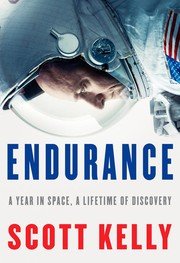
Endurance
Endurance by Scott Kelly is a gripping memoir written by the astronaut detailing his remarkable year spent living and working aboard the International Space Station.
Recommended“so scott kelly wrote this amazing book after he spent a year in space”
Where to get it
-
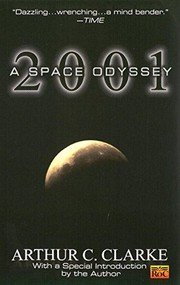
2001
Arthur C.
Discussed“The future of space habitats is one of intelligent structures—maybe not all the way to HAL from the 2001: A Space Odyssey reference that scares people about a habitat having a mind of its own—but certainly, we're building systems now where the habitat has sensing technology that allows it to communicate its basic functions.”
Where to get it
-
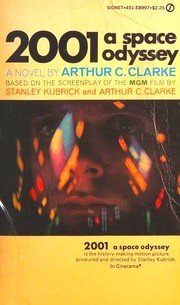
2001, a Space Odyssey
2001, a Space Odyssey by Arthur C.
Discussed“maybe not all the way to hal and the you know 2001 space odyssey reference that scares people about the habitat having a mind of its own”
Where to get it
-
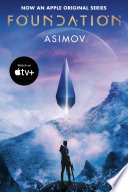
Foundation
Foundation by Isaac Asimov is a classic science fiction masterpiece chronicling a visionary mathematician's efforts to preserve human knowledge and shorten a dark age through the establishment of a psychohistory-guided colony.
Discussed“probably a sick asimov foundation trilogy”
Where to get it
-
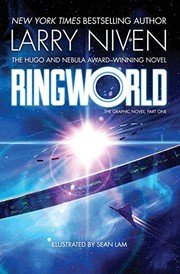
Ringworld
Discussed“my third one is the ring world just because every science fiction book ever that's worth anything has a ring world in it and uh it's just a donut”
Where to get it
-
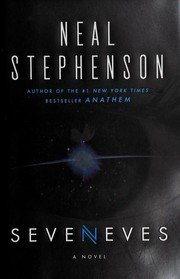
Seveneves
Seveneves by Neal Stephenson is a hard science fiction epic that begins with the catastrophic destruction of the moon and follows humanity's desperate efforts to survive in orbital habitats.
Discussed“Now, though, my favorite is Neal Stephenson and Seveneves.”
Where to get it
-
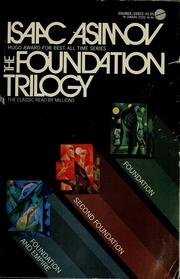
The Foundation Trilogy
The Foundation Trilogy is a seminal science fiction series by Isaac Asimov that follows the efforts of mathematician Hari Seldon to preserve human knowledge and civilization through a dark age using psychohistory.
Discussed“What were your favorite sci-fi authors when you were growing up? Probably Isaac Asimov's Foundation Trilogy.”
Where to get it
Books Ariel Ekblaw wrote
Appearances
| Episode | Podcast | Date | Books |
|---|---|---|---|
| #271 – Ariel Ekblaw: Space Colonization and Self-Assembling Space Megastructures | Lex Fridman Podcast | 2022-03-23 | 12 |
Other mentions (1: passing, ad reads, own books)
“one of the projects in the book that i gave you which is a catalog of the projects that we've worked on over the last five years is the social robot that was developed at the media lab”